How does rice get from fields to our plates?
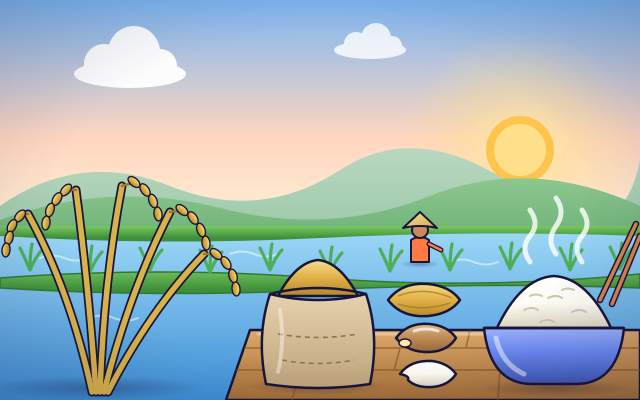
Follow rice from a flooded field to your plate: cut it, dry it, rub off the husk and, if you like, polish it white.
The big idea: A grain of rice is a seed inside a hard husk. Drying keeps it from spoiling, husking makes brown rice, and polishing off the brown layer makes white rice.
It's like a peanut: first you crack off the hard shell, and then you can rub off the thin brown skin too, or leave it on.
The interactive parts didn't load. The explanations below still work; try reloading the page.
The journey of a grain of rice
- Rice grows in flooded fields called paddies. The water keeps weeds down. After about four months the plants turn golden, heavy with grain.
- The field is drained and the stalks are cut. Then they are beaten or shaken so the grains fall off. That is called threshing.
- Fresh grains hold a lot of water. Spread out in the sun, they dry. Dry grain does not get moldy, and it does not get squashed in the machines.
- Each grain wears a hard coat called a husk. Two rubber rollers rub it off and a fan blows it away. What is left is brown rice.
- Brown rice still has a thin brown layer called bran. A polisher can rub the bran off to make white rice. This step is a choice.
- The rice is bagged and sent to shops. At home it is boiled. Each grain soaks up water, swells and turns soft.
The rice plant and its grain
Tap the parts of the plant, then look into the round glass: it shows one grain, cut open.
- Panicle. The panicle is the drooping head at the top of each stalk. It holds a hundred or more grains.
- Stem and leaves. The leaves use sunlight to make the plant's food. The stems are hollow, like drinking straws.
- Roots in the mud. The roots hold the plant in the mud under the water and take in water and minerals.
- Husk. The husk is the hard outer coat. It protects the grain, but people cannot eat it, so the mill rubs it off.
- Bran. Bran is the thin brown layer under the husk. Brown rice keeps it. White rice has had it polished off.
- Germ. The germ is the part that would sprout into a new rice plant. It is small but full of good things.
- Starchy middle. The white middle is packed with starch, the food the baby plant would use to grow. White rice is just this part.
A miniature rice mill
Dry the rice, then switch on the husker and the polisher. Look in the round glass to see what lands in the sack.
Experiment: What happens if you send wet rice straight into the husker?
- Leave the rice wet and switch on the husker. Look at the grains in the round glass.
- Now dry the rice a little at a time and watch the broken grains.
- Dry it as far as you can. Is that better or worse?
What we found: Wet grains are soft, so the rollers squash and break them. Grains that are dried too much turn brittle and crack. In between there is a just-right dryness where almost every grain comes out whole.
Turn on JavaScript to try it yourself.
An order for brown rice
A shop wants brown rice with at least 85 of every 100 grains whole. Set up the mill, then run the batch.
What a rice mill does
Rice is the seed of a kind of grass. It feeds more than half of the people on Earth. Most rice grows in flooded fields called paddies. Rice plants do not need to stand in water, but they do not mind it, and most weeds cannot live there. So the water works like a weed blanket.
When the plants turn golden, the field is drained and the stalks are cut. Shaking or beating the stalks knocks the grains off. This is called threshing. Each grain is still wrapped in a hard husk, a bit like a peanut in its shell.
Next the grain has to dry. Fresh grain is damp inside. Damp grain grows mold in the storehouse, and it is so soft that machines squash it. So the grain is spread out in the sun or blown with warm air until it is dry enough, but not so dry that it turns brittle and cracks.
At the mill, rubber rollers rub off the husks and a fan blows them away. What is left is brown rice, which still has a thin brown skin called bran. A polisher can rub the bran off to make white rice. White rice keeps longer and cooks faster. Brown rice keeps more fiber and vitamins. The peanut picture is not perfect: a rice husk is rubbed off, not cracked open.
Key words
- Paddy
- A flooded field where rice grows. Rice still in its husk is also called paddy, or rough rice.
- Threshing
- Knocking the grains off the cut stalks.
- Husk
- The hard outer coat of a rice grain. People cannot eat it.
- Bran
- The thin brown layer under the husk. Brown rice still has it.
- Endosperm
- The white, starchy middle of the grain.
- Moisture content
- How much water is inside the grain.
Check your thinking
-
What does the husker take off the grain?
Show the answer
The hard husk. The rollers rub off the hard husk. Brown rice comes out.
-
Why is rice dried before it goes to the mill?
Show the answer
Wet grain goes moldy and gets squashed in the machines. Mold needs water, and soft, damp grains break between the rollers.
-
What is the difference between brown rice and white rice?
Show the answer
White rice has had its brown bran rubbed off. Both are the same grain. Polishing takes the bran off brown rice and leaves white rice.
-
The rollers in the husker are set far too close together. What happens?
Show the answer
Grains get crushed. Rollers that squeeze too hard break the grains. Too far apart, and husks stay on.
-
A mill starts with 100 kilograms of dried rough rice. About how much white rice can it make?
Show the answer
About 70 kilograms. The husk is about 20 percent of the weight and the bran and germ about 10 percent, so roughly 70 percent is left.
-
Why does rice get bigger and softer when it is cooked?
Show the answer
The grains soak up hot water and swell. The starch inside each grain takes in water and swells.
You're a Food & farming expert!
You watched, looked inside, tried it, solved the challenge and went deeper. Pick another question below, or switch the age at the top to see this topic another way.
More about food & farming
 #293
Food & farming
How do potatoes grow underground?
Explore underground stems, developing tubers, and harvesting in a virtual potato bed.
#293
Food & farming
How do potatoes grow underground?
Explore underground stems, developing tubers, and harvesting in a virtual potato bed.
 #294
Food & farming
How does hydroponic farming work?
Grow plants with nutrient solution and compare ways to support roots without soil.
#294
Food & farming
How does hydroponic farming work?
Grow plants with nutrient solution and compare ways to support roots without soil.
 #295
Food & farming
How does aquaponics connect fish and plants?
Trace water through fish tanks, bacterial processing, and plant roots.
#295
Food & farming
How does aquaponics connect fish and plants?
Trace water through fish tanks, bacterial processing, and plant roots.
 #296
Food & farming
How does drip irrigation water crops?
Arrange pipes and emitters and compare water delivery to different root zones.
#296
Food & farming
How does drip irrigation water crops?
Arrange pipes and emitters and compare water delivery to different root zones.
Keep exploring
Games to play next
- Ratio KitchenScale recipes, fill ratio tables and find the better buy.
- Garden AutomationProgram a garden robot with sensor rules — then watch a whole day play out.
- Label LabPut the right labels on beautiful science diagrams, from bean plants to heart chambers.
Guide for grown-ups
- How to start homeschooling: a step-by-step guide for familiesA guide for parents · 7 min read
Science games by grade
Science worksheets by grade
- Preschool Science Worksheets
- Pre-K Science Worksheets
- Kindergarten Science Worksheets
- 1st Grade Science Worksheets
- 2nd Grade Science Worksheets
- 3rd Grade Science Worksheets
- 4th Grade Science Worksheets
- 5th Grade Science Worksheets
- 6th Grade Science Worksheets
- 7th Grade Science Worksheets
- 8th Grade Science Worksheets