How do potatoes grow underground?
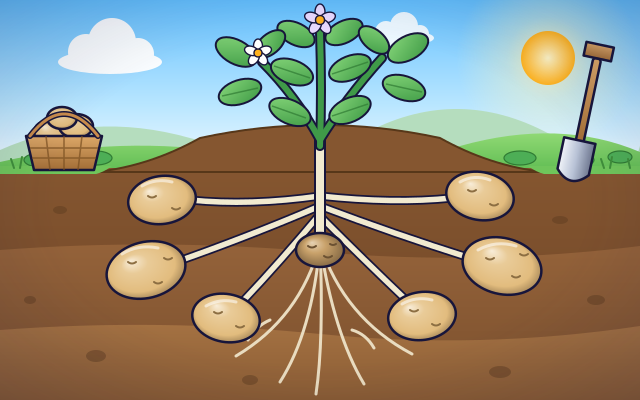
A potato plant makes food in its leaves and stores it underground, in the swollen tips of special stems. Those are the potatoes.
The big idea: A potato is not a root. It is the fat tip of an underground stem, filled with food that the leaves made from sunlight.
It's like a lunchbox: the leaves cook the food in the sunshine, and the plant packs it away underground in potatoes.
The interactive parts didn't load. The explanations below still work; try reloading the page.
What happens under the soil
- A new potato plant starts from an old potato, called a seed potato. Its small dents are called eyes, and each eye is a bud.
- Sprouts grow from the eyes. Shoots push up into the light and open their leaves. Roots grow down to find water.
- Under the soil, the plant grows special stems that creep sideways. They are called stolons, and they are not roots.
- The leaves make sugar from sunlight. The sugar travels down to the tips of the stolons. The tips swell and become potatoes.
- Farmers heap soil around each plant. This is called hilling. It keeps the potatoes in the dark, because light turns them green and bitter.
- After about four months the leaves turn yellow and die back. The potatoes are ready. From one seed potato come many new ones.
A potato plant, above and below
Tap each part of the plant. Which parts are stems and which are roots?
- Leaves. The leaves use sunlight, air and water to make sugar. All the food in a potato was made up here.
- Flowers. Potato plants bloom with white or purple flowers. When they bloom, the potatoes underground have started to swell.
- Stem. The stem holds the leaves up to the light. Inside it, tiny tubes carry water up and sugar down.
- Seed potato. The seed potato fed the young plant until its leaves could make food. Now it is shrinking and wrinkled.
- Roots. The thin roots take in water and minerals. Potatoes do not grow on the roots.
- Stolon. A stolon is a stem that grows sideways underground. A potato forms at its tip.
- Tuber (a new potato). A tuber is the swollen tip of a stolon, packed with starch. It is the plant's food store, and ours too.
- Eye. The eyes are buds. If you plant the potato, each eye can sprout into a new plant.
Sun, shade and the potato bed
Move the weeks forward and watch under the soil. Shade one plant with the umbrella, and heap soil around it with the spade. Then dig them up and compare.
Experiment: What happens to the potatoes if the leaves are kept in the shade?
- Open the umbrella over the plant on the right.
- Slide the weeks all the way to 16.
- Dig up both plants and compare the potatoes.
What we found: The shaded plant makes fewer and smaller potatoes. The potatoes grow in the dark, but all their food is made by the leaves in the light. Less light on the leaves means less food to store.
Turn on JavaScript to try it yourself.
A good harvest
Harvest at least 20 good potatoes from three plants. Heap soil over them in time, and dig when they are ready.
Why potatoes are stems, not roots
A potato grows underground, so many people think it is a root. It is not. A potato is the swollen tip of a special stem. You can tell because a potato has eyes, and eyes are buds. Roots never have buds.
It starts when a farmer plants a seed potato in spring. Sprouts grow from its eyes. Some push up into the light and open into leaves. Thin roots grow down to drink. Then pale stems called stolons creep out sideways under the soil.
All summer the leaves make sugar from sunlight, air and water. The plant sends the sugar down to the tips of the stolons, and the tips swell up into potatoes. The potato is the plant's lunchbox for next year. If nobody digs it up, it will sprout in spring and use that food to grow.
Farmers heap soil around the plants so the potatoes stay in the dark. A potato that sees light turns green and bitter, and the green parts should not be eaten. When the leaves turn yellow and die back, the potatoes are ready to dig. The lunchbox picture is not perfect: nobody packs the box. The plant moves the food itself, inside tiny tubes in its stems.
Key words
- Tuber
- A swollen underground stem tip that stores food. A potato is a tuber.
- Stolon
- A stem that grows sideways. On a potato plant it grows underground and a tuber forms at its tip.
- Eye
- A bud on a potato. A new shoot can grow from it.
- Photosynthesis
- How leaves make sugar from sunlight, air and water.
- Starch
- The food packed inside a potato. Plants make it from sugar.
- Hilling
- Heaping soil around a potato plant to keep the potatoes covered and in the dark.
Check your thinking
-
What part of the plant is a potato?
Show the answer
The swollen tip of an underground stem. Potatoes form at the tips of underground stems called stolons. Their eyes are buds, and only stems have buds.
-
Where is the food inside a potato made?
Show the answer
In the leaves, using sunlight. Leaves make sugar from sunlight, air and water. The plant sends it down and stores it in the potatoes.
-
A potato plant grows all summer in deep shade. What will its harvest be like?
Show the answer
Fewer, smaller potatoes. With less light the leaves make less food, so there is less to store underground.
-
Why do farmers heap soil around potato plants?
Show the answer
To keep light off the potatoes so they do not turn green. Light makes potatoes turn green and bitter. A blanket of soil keeps them dark.
-
A gardener's soil stays at 28 degrees Celsius all summer. The plants grow tall and leafy but give few potatoes. Why?
Show the answer
Warm soil tells the plant to grow leaves instead of filling tubers. Tubers form best in cool soil, near 15 to 20 degrees Celsius. In hot soil the plant puts its sugar into shoots.
-
How can you tell the potatoes are ready to dig?
Show the answer
The leaves turn yellow and die back. Yellow leaves mean the plant has finished sending food down. The potatoes are full.
You're a Food & farming expert!
You watched, looked inside, tried it, solved the challenge and went deeper. Pick another question below, or switch the age at the top to see this topic another way.
More about food & farming
 #294
Food & farming
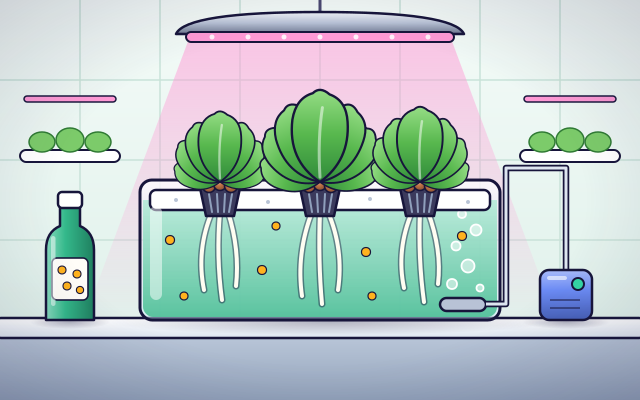
How does hydroponic farming work?
Grow plants with nutrient solution and compare ways to support roots without soil.
#294
Food & farming
How does hydroponic farming work?
Grow plants with nutrient solution and compare ways to support roots without soil.
 #295
Food & farming
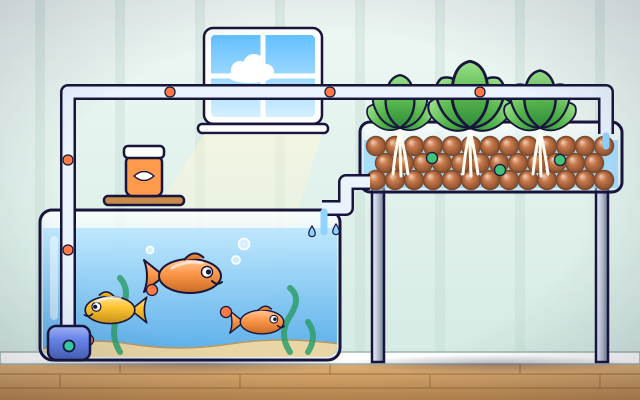
How does aquaponics connect fish and plants?
Trace water through fish tanks, bacterial processing, and plant roots.
#295
Food & farming
How does aquaponics connect fish and plants?
Trace water through fish tanks, bacterial processing, and plant roots.
 #296
Food & farming
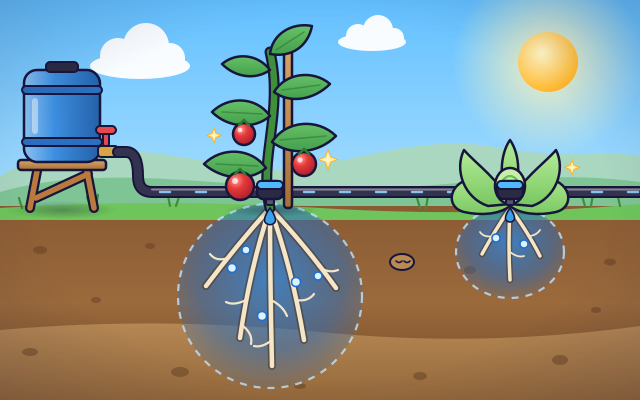
How does drip irrigation water crops?
Arrange pipes and emitters and compare water delivery to different root zones.
#296
Food & farming
How does drip irrigation water crops?
Arrange pipes and emitters and compare water delivery to different root zones.
 #297
Food & farming
How does crop rotation help farms?
Plan several seasons and explore changing nutrient needs, pests, and soil cover.
#297
Food & farming
How does crop rotation help farms?
Plan several seasons and explore changing nutrient needs, pests, and soil cover.
Keep exploring
Games to play next
- Ratio KitchenScale recipes, fill ratio tables and find the better buy.
- Garden AutomationProgram a garden robot with sensor rules — then watch a whole day play out.
- Label LabPut the right labels on beautiful science diagrams, from bean plants to heart chambers.
Guide for grown-ups
- How to start homeschooling: a step-by-step guide for familiesA guide for parents · 7 min read
Science games by grade
Science worksheets by grade
- Preschool Science Worksheets
- Pre-K Science Worksheets
- Kindergarten Science Worksheets
- 1st Grade Science Worksheets
- 2nd Grade Science Worksheets
- 3rd Grade Science Worksheets
- 4th Grade Science Worksheets
- 5th Grade Science Worksheets
- 6th Grade Science Worksheets
- 7th Grade Science Worksheets
- 8th Grade Science Worksheets