How are pickles made?
A cucumber becomes a pickle when acid soaks into it. Vinegar brings the acid quickly. Salt water lets friendly bacteria make it slowly.
The big idea: Pickling makes food sour with acid. The tiny living things that spoil food cannot grow in acid, so pickles keep for months.
It's like a castle moat: sour acid all around the cucumber keeps out the tiny living things that would spoil it.
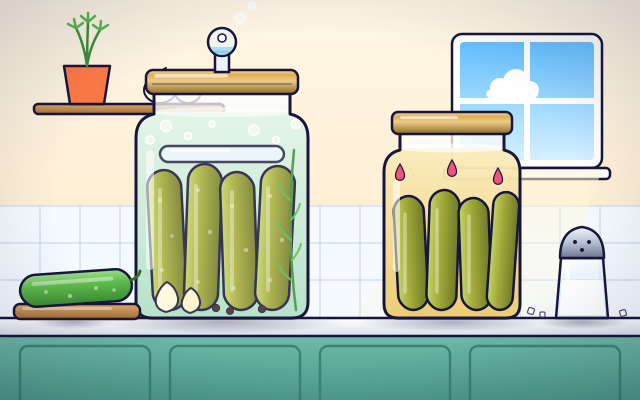
The interactive parts didn't load. The explanations below still work; try reloading the page.
Two ways to make a pickle
- A fresh cucumber lasts about a week. Then tiny living things called microbes start to eat it, and it turns soft. Pickling stops them.
- There are two ways to make a pickle. You can pour in sour vinegar, or you can use salt water and wait.
- Vinegar is a sour liquid full of acid. The acid soaks into the cucumber in a day or two, so this way is fast.
- In the other jar, salt pulls some water out of the cucumber and stops most microbes. But one friendly kind of bacteria can live in salt water.
- The friendly bacteria eat the cucumber's sugar and make sour acid. The salt water turns cloudy and bubbles for a week or two.
- Both jars are sour now. The microbes that spoil food cannot grow in acid, so the pickles stay crunchy and good for months.
Inside a fermenting jar
Tap each part of the jar. The round glass shows the helpers that are too small to see.
- Cucumbers. Small, firm cucumbers work best. Their skin carries the friendly bacteria, and their sugar is the bacteria's food.
- Salt brine. Brine is water with salt stirred in. It holds back the microbes that spoil food and pulls a little water out of the cucumbers.
- Friendly bacteria. Lactic acid bacteria are far too small to see. They eat sugar and give off sour lactic acid.
- Gas bubbles. Bubbles show that the bacteria are busy. The gas is carbon dioxide, the same gas that makes drinks fizzy.
- Glass weight. A weight keeps every cucumber under the brine. Anything that pokes out into the air can grow mold.
- Lid with a vent. The lid has a little vent. It lets the gas escape so the jar does not pop, and it keeps air and dust out.
- Dill and garlic. Dill, garlic and peppercorns give pickles their flavor. They do not do the pickling. The acid does.
Two jars: vinegar and salt water
Add salt to the salt-water jar, then move the days forward. Which jar turns sour first? What happens with no salt, or far too much?
Experiment: What happens in the salt-water jar if you leave out the salt?
- Set the salt to the middle and slide the days to 14. Look at both jars.
- Now take all the salt out and look again.
- Try the most salt you can. Do the helpers still work?
What we found: With no salt, all sorts of microbes grow and the cucumbers turn mushy. With a middle amount of salt, only the friendly acid-making bacteria do well, so the jar turns sour. With far too much salt, even the helpers stop. The vinegar jar is sour from the first day because its acid was poured in.
Turn on JavaScript to try it yourself.
The perfect pickle
Make pickles that are sour and still crunchy. Choose the salt and how many days to wait, then taste them.
How acid keeps food good
Food goes bad because tiny living things called microbes eat it. They are everywhere: in the air, on your hands and on the skin of every cucumber. They love food that is wet, a little sweet and not sour. A fresh cucumber is all three, so it lasts only about a week.
Pickling changes the food so that those microbes cannot live in it. The trick is acid, the same kind of thing that makes lemons taste sour. Most microbes that spoil food cannot grow where it is very sour. So a cucumber soaked in acid stays good for months.
There are two ways to get the acid in. The quick way is to pour vinegar, which is already sour, over the cucumbers. The acid soaks in within a day or two. The slow way is to cover the cucumbers with salt water and wait. Salt stops most microbes, but one friendly kind of bacteria does not mind it. Those bacteria eat the sugar in the cucumber and give off sour lactic acid. This is called fermenting, and it takes a week or more.
The salt has to be just right. With too little, the spoiling microbes grow as well and the cucumbers turn mushy. With far too much, even the friendly bacteria stop working. The castle moat picture is not perfect: a moat only keeps things out, while the acid soaks right through the cucumber and changes its taste.
Key words
- Brine
- Water with salt dissolved in it.
- Acid
- Something that tastes sour, like lemon juice or vinegar.
- Fermentation
- When tiny living things change food, such as bacteria turning sugar into sour acid.
- Microbe
- A living thing too small to see without a microscope, such as a bacterium, a yeast or a mold.
- pH
- A number that tells how sour something is. Lower numbers are more sour.
- Osmosis
- Water moving out of the cucumber toward the salty water around it.
Check your thinking
-
Why do pickles stay good for months?
Show the answer
Acid stops the microbes that spoil food. The tiny living things that spoil food cannot grow where it is very sour.
-
In the salt-water jar, where does the sour acid come from?
Show the answer
Friendly bacteria make it from the cucumber's sugar. Bacteria eat sugar and give off lactic acid. The salt only keeps other microbes away.
-
You forget to put any salt in the salt-water jar. What happens?
Show the answer
Spoiling microbes grow too, and the cucumbers go mushy. Salt holds back the spoiling microbes. Without it, they grow along with the helpers.
-
Which jar turns sour faster?
Show the answer
The vinegar jar, because its acid is poured in. Vinegar is already sour. In the other jar the bacteria have to make the acid, and that takes days.
-
A pickle maker ferments one batch at 18 degrees Celsius and one at 28. What should she expect from the warm batch?
Show the answer
Sour sooner, but softer. Warmth speeds up the bacteria, and it also speeds up the enzymes that soften the cucumber's cell walls.
-
Why must the cucumbers stay under the brine?
Show the answer
Mold can grow on anything that pokes out into the air. Mold needs air. Under the salty water there is almost none.
You're a Food & farming expert!
You watched, looked inside, tried it, solved the challenge and went deeper. Pick another question below, or switch the age at the top to see this topic another way.
More about food & farming
 #292
Food & farming
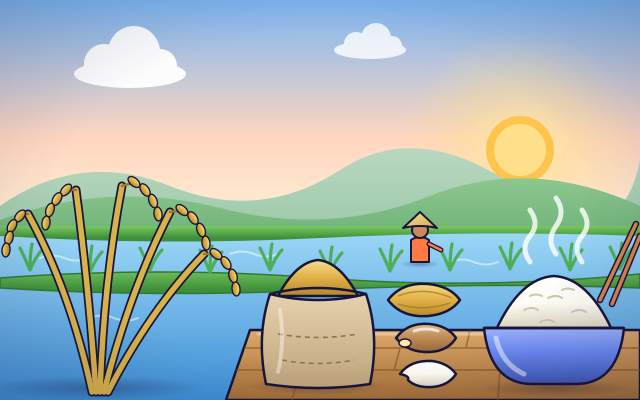
How does rice get from fields to our plates?
Follow harvesting, drying, husking, and optional polishing through a miniature processing line.
#292
Food & farming
How does rice get from fields to our plates?
Follow harvesting, drying, husking, and optional polishing through a miniature processing line.
 #293
Food & farming
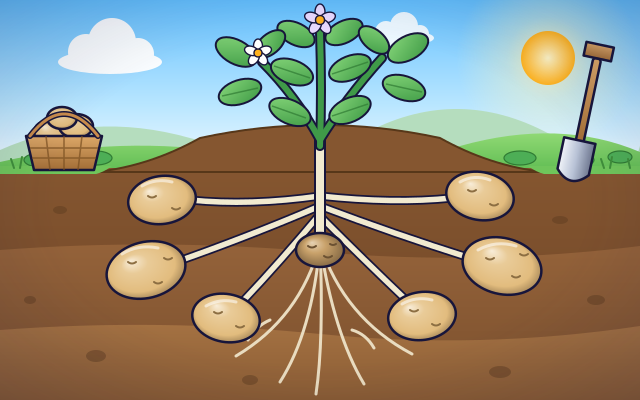
How do potatoes grow underground?
Explore underground stems, developing tubers, and harvesting in a virtual potato bed.
#293
Food & farming
How do potatoes grow underground?
Explore underground stems, developing tubers, and harvesting in a virtual potato bed.
 #294
Food & farming
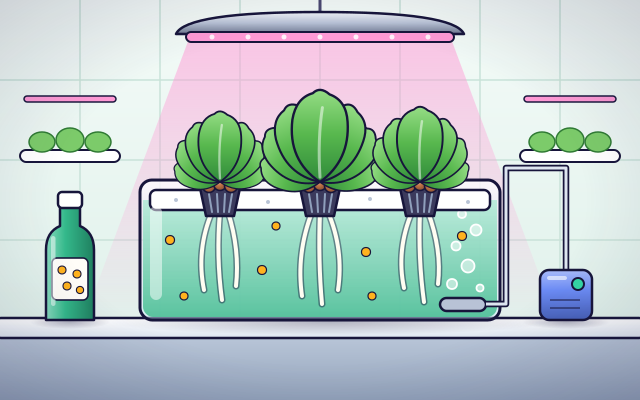
How does hydroponic farming work?
Grow plants with nutrient solution and compare ways to support roots without soil.
#294
Food & farming
How does hydroponic farming work?
Grow plants with nutrient solution and compare ways to support roots without soil.
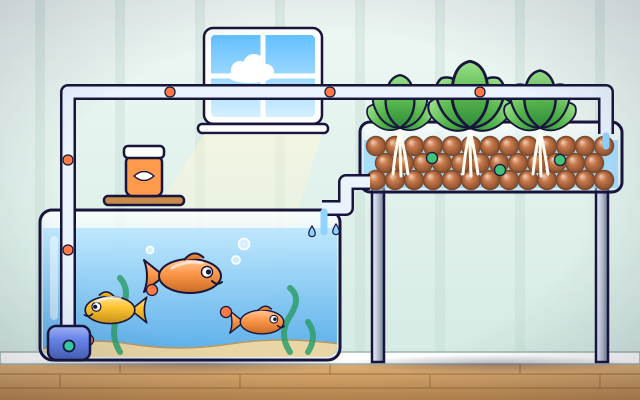 #295
Food & farming
How does aquaponics connect fish and plants?
Trace water through fish tanks, bacterial processing, and plant roots.
#295
Food & farming
How does aquaponics connect fish and plants?
Trace water through fish tanks, bacterial processing, and plant roots.
Keep exploring
Games to play next
- Ratio KitchenScale recipes, fill ratio tables and find the better buy.
- Garden AutomationProgram a garden robot with sensor rules — then watch a whole day play out.
- Label LabPut the right labels on beautiful science diagrams, from bean plants to heart chambers.
Guide for grown-ups
- How to start homeschooling: a step-by-step guide for familiesA guide for parents · 7 min read
Science games by grade
Science worksheets by grade
- Preschool Science Worksheets
- Pre-K Science Worksheets
- Kindergarten Science Worksheets
- 1st Grade Science Worksheets
- 2nd Grade Science Worksheets
- 3rd Grade Science Worksheets
- 4th Grade Science Worksheets
- 5th Grade Science Worksheets
- 6th Grade Science Worksheets
- 7th Grade Science Worksheets
- 8th Grade Science Worksheets