How do foaming soap dispensers make foam?
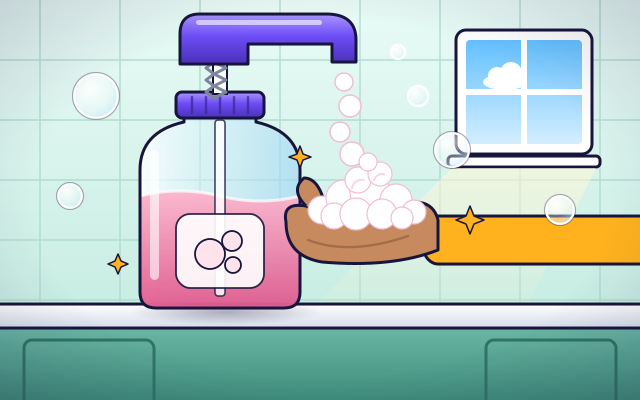
A foaming pump squeezes soap and air together, then pushes them through a tiny net to make creamy foam.
The big idea: The soap in the bottle is runny. The pump pushes soap and lots of air through a fine mesh, which chops the air into tiny bubbles wrapped in soap.
It's like blowing through a straw into soapy water: air gets wrapped in soap and makes bubbles. The pump does the blowing, and a tiny net makes the bubbles small.
The interactive parts didn't load. The explanations below still work; try reloading the page.
From runny soap to fluffy foam
- Press the pump and a puff of foam lands in your hand. But look in the bottle: the soap in there is not foamy at all.
- The soap in the bottle is thin and watery. It sloshes like juice. Hidden in the neck of the bottle is a clever pump.
- When you push down, you squeeze two pumps at once. A big one is full of air. A small one is full of soap. So every push sends lots of air and a little soap.
- The soap and the air meet in a little room called the mixing chamber. They tumble together and make big, messy bubbles.
- Next the big bubbles are pushed through a mesh, a net with very tiny holes. Each big bubble is chopped into many tiny ones, all about the same size.
- Let go, and a spring pushes the pump head back up. Fresh soap is pulled up the tube and fresh air flows in, ready for the next push. Soap plus air plus mesh makes foam!
Look inside a foaming pump
Tap each part of the pump. Watch the soap in pink and the air in blue.
- Pump head. This is the part you press. It pushes both pumps down at the same time and has a spout for the foam.
- Spring. The spring squashes when you push. When you let go, it pushes the head back up so the pump can fill again.
- Air chamber. The big chamber is full of air. Foam is mostly air, so this pump is much bigger than the soap pump.
- Soap chamber. The small chamber holds a little runny soap. Each push squirts that soap up toward the air.
- Dip tube. This thin tube is like a drinking straw. When the pump springs back up, soap is pulled up the tube from the bottom of the bottle.
- Mixing chamber. Here the soap and the air meet and tumble together. They make big, messy bubbles.
- Mesh. The mesh is a net with very tiny holes. Pushing the bubbly mix through it chops big bubbles into lots of tiny ones.
- Nozzle. The foam leaves through the nozzle and lands in your hand, already fluffy.
Soap, air and mesh
Press the pump and look at the foam through the magnifier. Then change the air and the mesh. What does each one do?
Experiment: What will come out if you take the mesh away but keep the air?
- Press the pump with plenty of air and the fine mesh.
- Change the mesh to None and look in the magnifier.
- Put the fine mesh back, then slide the air down to none.
What we found: Foam needs three things. Soap makes the bubble skins. Air fills the bubbles. The fine mesh chops them tiny. Take away the air and you get runny soap. Take away the mesh and you get a few big, sloppy bubbles.
Turn on JavaScript to try it yourself.
Fix the pump
This pump is set up wrong. Change the air and the mesh so one press fills the dotted dome with creamy foam.
How the pump makes foam
Foam is a crowd of bubbles, and a bubble is just a little bit of air with a thin skin of soapy water around it. So a handful of foam is mostly air! That is why it feels so light and why a tiny amount of soap can cover both of your hands.
The soap in a foaming bottle is thin and runny, almost like water. A foaming pump is really two pumps joined together. When you push down, a big pump squeezes out a lot of air and a small pump squeezes out a little soap. They always work together, so every push gets the same mix.
The soap and the air meet in a small mixing chamber and make big, messy bubbles. Then the pump pushes them through a mesh, which is a net with very tiny holes. The mesh chops each big bubble into many tiny bubbles that are all about the same size. Tiny bubbles pack together closely, and that makes the foam thick and creamy.
When you let go, a spring pushes the pump back up. That pulls more soap up the tube and lets more air in. Blowing through a straw into soapy water also makes bubbles, but they are big and they pop quickly, because a straw has no mesh to make them small.
Key words
- Foam
- Lots of tiny bubbles packed together.
- Mesh
- A net with very tiny holes.
- Mixing chamber
- The small space in the pump where the soap and the air first meet.
- Surfactant
- The part of soap that helps water stretch into bubble skins.
- Check valve
- A one-way door that lets soap or air go in but not back out.
Check your thinking
-
What is foam mostly made of?
Show the answer
Air. Each bubble is a bit of air wrapped in a thin skin of soapy water, so foam is mostly air.
-
What does the mesh do?
Show the answer
It chops big bubbles into many tiny ones. Pushing the bubbly mix through tiny holes breaks big bubbles into small ones of about the same size.
-
You fill a foaming pump with thick, gooey soap. What is most likely to happen?
Show the answer
It clogs the tiny holes in the mesh. The mesh holes are very small. Thick soap cannot squeeze through, so foaming soap has to be runny.
-
You let go of the pump. What pushes the head back up?
Show the answer
A spring. The spring was squashed by your push. When you let go it stretches out again and lifts the head.
-
A foaming pump is changed so that it sends far more air than its soap can wrap up. What happens to the foam?
Show the answer
It becomes dry and sputtery, with gaps where air escapes. Each bubble needs a liquid film around it. With too little liquid for the air, films break and the extra air simply blows through.
You're a Everyday objects expert!
You watched, looked inside, tried it, solved the challenge and went deeper. Pick another question below, or switch the age at the top to see this topic another way.
More about everyday objects
 #152
Everyday objects
How does a click pen extend and retract?
Inspect the spring and rotating mechanism inside a transparent retractable pen.
#152
Everyday objects
How does a click pen extend and retract?
Inspect the spring and rotating mechanism inside a transparent retractable pen.
 #153
Everyday objects
How does a mechanical pencil advance its graphite?
Press the button and watch tiny gripping parts move and hold the graphite.
#153
Everyday objects
How does a mechanical pencil advance its graphite?
Press the button and watch tiny gripping parts move and hold the graphite.
 #154
Everyday objects
How does a stapler join sheets of paper?
Follow a staple as it pierces paper and bends against the stapler's base.
#154
Everyday objects
How does a stapler join sheets of paper?
Follow a staple as it pierces paper and bends against the stapler's base.
 #155
Everyday objects
How does a can opener cut around a lid?
Trace the gripping and cutting wheels as they travel around a virtual can.
#155
Everyday objects
How does a can opener cut around a lid?
Trace the gripping and cutting wheels as they travel around a virtual can.
Keep exploring
Games to play next
- Machine RepairFix levers, pulleys, gears and ramps so every contraption works.
- Science QuizzesOlly's Science Quiz Show: plants, animals, the body, weather, space and more, for every grade.
Guide for grown-ups
- How to start homeschooling: a step-by-step guide for familiesA guide for parents · 7 min read
Science games by grade
Science worksheets by grade
- Preschool Science Worksheets
- Pre-K Science Worksheets
- Kindergarten Science Worksheets
- 1st Grade Science Worksheets
- 2nd Grade Science Worksheets
- 3rd Grade Science Worksheets
- 4th Grade Science Worksheets
- 5th Grade Science Worksheets
- 6th Grade Science Worksheets
- 7th Grade Science Worksheets
- 8th Grade Science Worksheets