How does hydroponic farming work?
Soil is not what feeds a plant. In hydroponics, roots hang in water that carries the minerals, and something else holds the plant up.
The big idea: Soil gives a plant three things: water, minerals and something to hold on to. Give it those another way, and the plant needs no soil.
It's like a smoothie instead of a sandwich: the same goodness the plant would find in soil, already mixed into its drink.
The interactive parts didn't load. The explanations below still work; try reloading the page.
What soil really does
- A plant in a pot gets three things from its soil: water, minerals to build its body, and a place for its roots to hold on.
- Look closely: the plant needs light, air, water and minerals. Soil is just one way to deliver the water and minerals.
- Growers stir a measured amount of mineral plant food into water. This mix is called a nutrient solution.
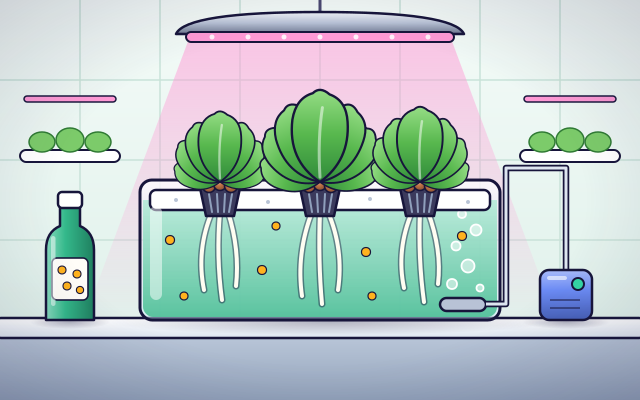
- A small basket of clay pebbles holds the plant. Its roots hang in the solution and drink. An air pump blows bubbles, because roots need air too.
- There are different ways to do it. Roots can hang under a floating raft, sit in a bed of pebbles that fills and drains, or lie in a thin stream.
- With no soil, farms can be stacked on shelves indoors under lamps. The same water goes round and round, so very little is wasted.
Inside a floating-raft system
Tap each part. Together they do every job that soil used to do.
- Grow light. The lamp does the sun's job. Leaves use its light to make the plant's food.
- Leaves. The leaves take in light and air and make sugar. That part works just the same with or without soil.
- Net cup. The net cup is a small basket. It holds the plant in place, and the roots grow out through its holes.
- Clay pebbles. Baked clay pebbles fill the cup and grip the stem. They hold the plant but do not feed it.
- Roots. The roots hang in the solution and take in water and minerals. Healthy roots are white.
- Nutrient solution. The nutrient solution is water with minerals stirred in. It gives the roots what soil would give.
- Air pump and air stone. The pump pushes air through a bubbly stone. The bubbles put air into the water, because roots need to breathe.
Three ways to grow without soil
Add plant food to the water and watch three kinds of systems. Then switch the pumps off. Which roots get into trouble first?
Experiment: What will a lettuce look like if its roots get plain water and no plant food?
- Start with plain water. Look at the leaves.
- Add plant food a little at a time and watch.
- Keep adding until there is far too much. What happens to the leaf tips?
What we found: With plain water, the lettuce stays small and pale: it has water but no minerals to build with. With the right amount of plant food it grows big and green, with no soil at all. With far too much, the salty water pulls water out of the roots and the leaf tips turn brown.
Turn on JavaScript to try it yourself.
Grow a big lettuce
Grow a lettuce of at least 200 grams. Set the plant food, the light and the pump, then press Grow.
How plants grow in water
It is easy to think that plants eat soil. They do not. A plant makes its own food in its leaves, using light, air and water. From the ground it needs only water, a small amount of minerals and a place for its roots to hold on.
Hydroponics means growing plants without soil. The minerals are stirred into water to make a nutrient solution, and the roots sit right in it. Something else holds the plant up: a little basket of clay pebbles, a foam raft or a block of spun rock. These things do not feed the plant. They only hold it.
Roots need air as well as water. In soil there are tiny air spaces between the crumbs. In a water tank, a pump blows bubbles to put air into the water. Other systems let the roots sit half in air: a bed of pebbles that fills and drains, or a thin stream trickling along a pipe.
Hydroponic farms can grow food indoors, on shelves, all year round, and they use the same water again and again. But they need pumps and lamps that must never stop for long, and someone has to check the water often. The smoothie picture is not perfect: a plant does not get energy from its drink. Its energy still comes from light.
Key words
- Hydroponics
- Growing plants without soil, with their roots in water that carries dissolved minerals.
- Nutrient solution
- Water with plant food (minerals) stirred in.
- Growing medium
- Something that holds a plant's roots in place of soil, such as clay pebbles.
- Minerals
- Tiny amounts of things from rocks and soil that plants need to build their bodies.
- Conductivity
- A measurement that tells how much plant food is dissolved in the water.
- Osmosis
- Water moving toward the side with more stuff dissolved in it.
Check your thinking
-
In hydroponics, where do the plant's minerals come from?
Show the answer
They are stirred into the water. The grower mixes minerals into the water. The pebbles only hold the plant.
-
Why does a tank of nutrient solution need an air pump?
Show the answer
Roots need air as well as water. Roots breathe. In still water they would run out of air.
-
What do the clay pebbles do?
Show the answer
Hold the plant up. The pebbles only hold the plant. Its food comes from the water and the light.
-
A grower adds far too much plant food. What happens?
Show the answer
The leaf tips turn brown and growth slows. Very salty water pulls water out of the roots, so the plant dries from the inside.
-
The power fails for a day. Which system's roots are in danger soonest: a deep tank with a raft, a bed of wet pebbles, or a thin flowing film?
Show the answer
The thin film, because the roots have almost no water once the flow stops. A film channel holds very little water, so the roots dry within hours. Pebbles stay damp longer, and a deep tank stays wet but slowly loses its oxygen.
-
Where does a hydroponic plant get the energy to grow?
Show the answer
From light on its leaves. The minerals are building materials. The energy comes from light, just as it does outdoors.
You're a Food & farming expert!
You watched, looked inside, tried it, solved the challenge and went deeper. Pick another question below, or switch the age at the top to see this topic another way.
More about food & farming
 #295
Food & farming
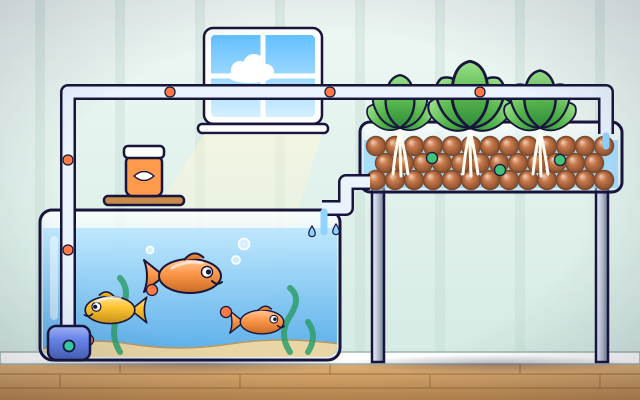
How does aquaponics connect fish and plants?
Trace water through fish tanks, bacterial processing, and plant roots.
#295
Food & farming
How does aquaponics connect fish and plants?
Trace water through fish tanks, bacterial processing, and plant roots.
 #296
Food & farming
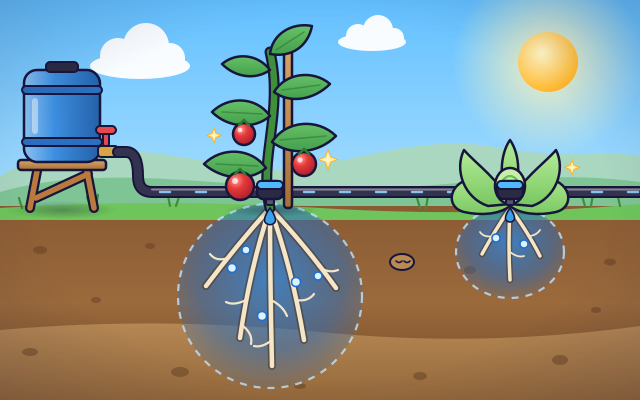
How does drip irrigation water crops?
Arrange pipes and emitters and compare water delivery to different root zones.
#296
Food & farming
How does drip irrigation water crops?
Arrange pipes and emitters and compare water delivery to different root zones.
 #297
Food & farming
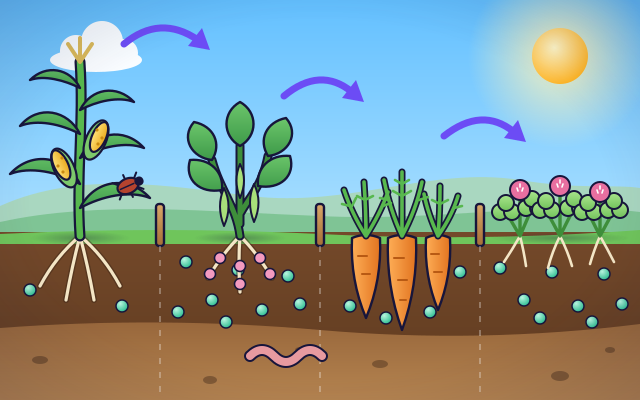
How does crop rotation help farms?
Plan several seasons and explore changing nutrient needs, pests, and soil cover.
#297
Food & farming
How does crop rotation help farms?
Plan several seasons and explore changing nutrient needs, pests, and soil cover.
 #298
Food & farming
How do farmers use natural pest control?
Introduce beneficial organisms and observe effects on pests and crop damage.
#298
Food & farming
How do farmers use natural pest control?
Introduce beneficial organisms and observe effects on pests and crop damage.
Keep exploring
Games to play next
- Garden AutomationProgram a garden robot with sensor rules — then watch a whole day play out.
- Ratio KitchenScale recipes, fill ratio tables and find the better buy.
- Label LabPut the right labels on beautiful science diagrams, from bean plants to heart chambers.
Guide for grown-ups
- How to start homeschooling: a step-by-step guide for familiesA guide for parents · 7 min read
Science games by grade
Science worksheets by grade
- Preschool Science Worksheets
- Pre-K Science Worksheets
- Kindergarten Science Worksheets
- 1st Grade Science Worksheets
- 2nd Grade Science Worksheets
- 3rd Grade Science Worksheets
- 4th Grade Science Worksheets
- 5th Grade Science Worksheets
- 6th Grade Science Worksheets
- 7th Grade Science Worksheets
- 8th Grade Science Worksheets