How is maple syrup made?
Maple trees give a thin, watery sap. Boil away almost all the water, and what is left is thick, sweet maple syrup.
The big idea: Sap is water with a little sugar in it. Boiling sends the water off as steam but keeps the sugar, so about forty buckets of sap shrink into one bucket of syrup.
It's like soup simmering on the stove: the longer it bubbles, the more water leaves as steam, and the thicker and stronger the soup becomes.
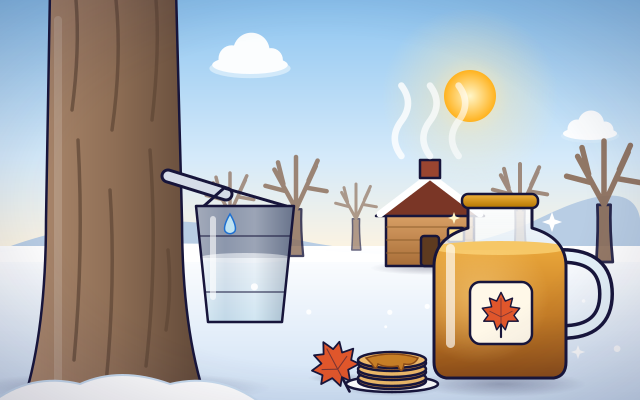
The interactive parts didn't load. The explanations below still work; try reloading the page.
From sap to syrup
- Maple syrup is thick, golden and sweet. It starts as something that looks like plain water, hidden inside a maple tree. How does one become the other?
- In summer, maple leaves make sugar from sunlight. The tree stores it in its wood for the winter. At the end of winter, that sugar dissolves into the watery sap.
- Sap only runs when nights freeze and days thaw. Warming wood pushes the sap outward. A small spout tapped into the trunk lets some of it drip into a bucket.
- The sap is poured into a wide pan over a fire. The water boils off as steam, but the sugar cannot leave. The sap gets darker, thicker and sweeter.
- The maker watches a thermometer. Syrup is ready when it boils a little hotter than water does. Then it is poured through a filter that catches gritty minerals.
- About forty buckets of sap make just one bucket of syrup. The other thirty-nine were water that floated away as steam. No sugar was added, and none was lost.
Look inside a sugar camp
Tap each part, from the tree trunk to the syrup jug. Some of them move!
- Sapwood. The pale outer wood of the trunk is full of tiny tubes. The tree stores sugar here, and in late winter the tubes fill with sweet, watery sap.
- Spout. A short spout, also called a spile, fits into a small hole drilled in the trunk. Sap from the cut tubes runs along it and drips out.
- Sap bucket. The bucket collects the sap one drop at a time. On a good day a tap can fill it. A lid keeps out rain, snow and bits of bark.
- Firebox. Wood burns in the firebox under the pan. The flames run along the whole bottom of the pan so the sap boils hard.
- Evaporator pan. The pan is wide and shallow so that lots of sap touches the hot metal and lots of steam can escape. Fresh sap flows in at one end and thickens as it moves along.
- Thermometer. Thin sap boils at the same temperature as water. As it gets thicker, it boils hotter. A little hotter than boiling water means it has become syrup.
- Filter and jug. Hot syrup is poured through a thick cloth filter. It catches a gritty powder called sugar sand, so the syrup in the jug is clear.
Collect sap and boil it down
Tap the tree to collect buckets of sap, then turn up the fire. Watch how much is left when the dial reaches the green syrup zone.
Experiment: You boil forty cups of sap until it becomes syrup. How much syrup do you get?
- Tap the bucket on the tree four times to fill the pan with forty liters of sap.
- Turn the fire up and watch the level fall.
- Turn the fire down when the dial comes near the green zone, and off when it is inside.
- Read how many liters are left in the pan.
What we found: Forty liters of sap shrank to less than one liter of syrup. Nearly all of the sap was water, and it left as steam. The sugar stayed behind in the pan the whole time, crowded into the little bit of liquid that was left.
Turn on JavaScript to try it yourself.
Fill the syrup jug
Fill the jug to the line with real syrup. Pour only when the dial is in the green zone.
Why forty buckets make one
A sugar maple spends the summer making sugar in its leaves. It cannot use it all at once, so it stores the extra in its trunk and roots. At the end of winter the tree gets ready to grow new leaves, and that stored sugar dissolves in the watery sap inside the wood.
Sap does not flow all the time. It needs a special kind of weather: nights below freezing and days above it. When the trunk warms up after a cold night, pressure builds inside the wood and pushes the sap outward. If someone has put a small spout in the trunk, sap drips out of it. The sugaring season lasts only a few weeks, and it ends when the buds open.
Sap looks and tastes almost like water, because that is mostly what it is. Only about two parts in a hundred are sugar. To make syrup, people boil the sap in wide pans. The water turns to steam and leaves, but the sugar stays. After a long boil, forty buckets of sap have become one bucket of syrup. The heat also turns the syrup golden brown and gives it its maple flavor.
Syrup must be just right. Too thin, and it can spoil. Too thick, and sugar crystals grow in the jug. Makers use a thermometer, because thick syrup boils a little hotter than water. Simmering soup is a good picture of what happens, with one difference: soup is ready whenever you like it, but syrup has to stop at exactly the right thickness. Indigenous peoples of northeastern North America were the first to make maple sugar, long before anyone else learned how.
Key words
- Sap
- The watery liquid that moves inside a tree. Maple sap has a little sugar in it.
- Spout
- A small tube, also called a spile, set into a hole in the trunk so sap can drip out.
- Evaporation
- Water turning into steam and leaving, as it does from a boiling pan.
- Concentration
- How much sugar is crowded into the liquid. Syrup is far more concentrated than sap.
- Sugar sand
- Gritty minerals from the sap that come out as it thickens. A filter catches them.
- Sugarhouse
- The building where sap is boiled into syrup. It is also called a sugar shack.
Check your thinking
-
What is maple sap mostly made of?
Show the answer
Water. Sap is nearly all water, with just a little sugar dissolved in it.
-
Why do forty buckets of sap make only one bucket of syrup?
Show the answer
Most of the sap is water, and it boils away. Thirty-nine of the forty buckets were water. It left as steam, and the sugar stayed.
-
What weather makes sap drip from a tapped maple?
Show the answer
Freezing nights followed by warmer days. The tree needs a freeze to fill up and a thaw to push the sap out. That is why the season is so short.
-
How does a syrup maker know the syrup is ready?
Show the answer
It boils a little hotter than plain water does. The more sugar in the water, the hotter it has to be to boil. A thermometer shows when there is enough.
-
What would happen if a maker stopped boiling too soon?
Show the answer
The syrup would be thin and watery, and it could spoil. With too much water left, it is not really syrup yet, and it does not keep well.
You're a Food & farming expert!
You watched, looked inside, tried it, solved the challenge and went deeper. Pick another question below, or switch the age at the top to see this topic another way.
More about food & farming
 #283
Food & farming
How does fruit become jam?
Combine fruit, sugar, and pectin and observe thickening as the mixture cools.
#283
Food & farming
How does fruit become jam?
Combine fruit, sugar, and pectin and observe thickening as the mixture cools.
 #284
Food & farming
How is peanut butter made?
Follow peanuts through shelling, roasting, grinding, and mixing to compare textures.
#284
Food & farming
How is peanut butter made?
Follow peanuts through shelling, roasting, grinding, and mixing to compare textures.
 #285
Food & farming
How is chewing gum made?
Mix a virtual gum base with flavorings, then roll, cut, and wrap it.
#285
Food & farming
How is chewing gum made?
Mix a virtual gum base with flavorings, then roll, cut, and wrap it.
 #286
Food & farming
How is breakfast cereal made?
Choose a cereal style and follow cooking, shaping, drying, toasting, and packaging.
#286
Food & farming
How is breakfast cereal made?
Choose a cereal style and follow cooking, shaping, drying, toasting, and packaging.
Keep exploring
Games to play next
- Ratio KitchenScale recipes, fill ratio tables and find the better buy.
- Garden AutomationProgram a garden robot with sensor rules — then watch a whole day play out.
- Label LabPut the right labels on beautiful science diagrams, from bean plants to heart chambers.
Guide for grown-ups
- How to start homeschooling: a step-by-step guide for familiesA guide for parents · 7 min read
Science games by grade
Science worksheets by grade
- Preschool Science Worksheets
- Pre-K Science Worksheets
- Kindergarten Science Worksheets
- 1st Grade Science Worksheets
- 2nd Grade Science Worksheets
- 3rd Grade Science Worksheets
- 4th Grade Science Worksheets
- 5th Grade Science Worksheets
- 6th Grade Science Worksheets
- 7th Grade Science Worksheets
- 8th Grade Science Worksheets