How does fruit become jam?
Fruit, sugar and tiny threads called pectin cook into a hot, runny mix. As it cools, the threads join into a net and the jam sets.
The big idea: Fruit has long, thin threads called pectin. With enough sugar and a little sour juice, the threads link into a net as the jam cools, and the net traps the juice so it cannot run.
It's like a sponge full of water: a soft net holds the liquid in tiny pockets, so it wobbles but does not pour.
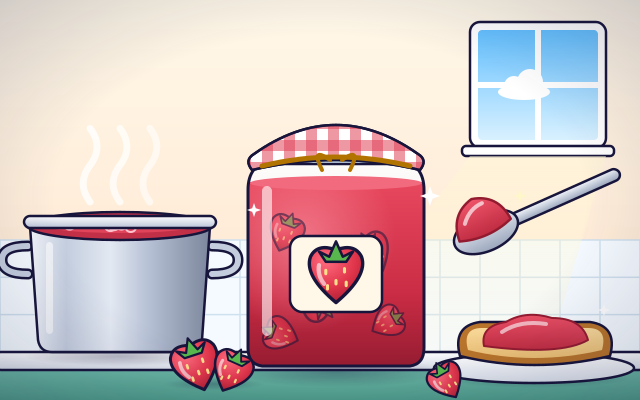
The interactive parts didn't load. The explanations below still work; try reloading the page.
From runny fruit to jam
- Crushed fruit is juicy and runs everywhere. Jam is made from the same fruit, yet it sits on a spoon in a soft, wobbly heap. What changed?
- Fruit and sugar are boiled together in a wide pot. The heat softens the fruit and breaks it open, and some of the water boils away as steam.
- Zoom in. Cooking frees long, thin threads called pectin from the fruit. In the hot juice they drift apart, because they push each other away and hold on to water.
- Two helpers fix that. Sugar grabs hold of the water, pulling it off the threads. Sour lemon juice calms the pushing. Now the threads can touch.
- As the jam cools, the threads slow down and stick together wherever they touch. They build a net that reaches everywhere, with the juice caught in its holes.
- The jam has set: it wobbles, but it stays on the spoon. All that sugar also keeps it from spoiling, so a sealed jar lasts for months.
Look inside a jar of jam
Tap the jar and the parts in the magnifying glass. It shows the jam about a million times bigger.
- Fruit pieces. Soft pieces of cooked fruit hang in the jam. The net around them is firm enough to stop them from sinking or floating.
- Pectin threads. Pectin is made of long, thin threads that come from the walls of the fruit's cells. Apples and oranges have lots. Strawberries have only a little.
- Link points. Where two threads meet, they stick. Thousands and thousands of these link points join the threads into one big net.
- Trapped juice. Most of the jam is still liquid juice. It sits in the tiny pockets of the net, like water in a sponge, so the jam wobbles but does not pour.
- Sugar. Sugar does three jobs. It makes the jam sweet, it grabs water so the threads can link, and it keeps the jam from spoiling.
- Fruit acid. Acid is what makes fruit taste sour. It stops the pectin threads from pushing each other away. Sweet fruits often need a squeeze of lemon.
- Sealed lid. The jar is filled while the jam is hot, and the lid is closed right away. As the jam cools, the lid is pulled down tight and keeps germs out.
Cook it, cool it, test it
Put fruit, sugar, pectin and lemon in the pot, cook it, then cool it. Watch the drip test and the threads in the magnifying glass as the jam cools.
Experiment: A good jam mix is thin and runny when it is hot. What happens as it cools?
- Tap the fruit, then set the sugar, pectin and lemon sliders near the middle.
- Press Cook and wait for the pot to boil.
- Press Cool it down. Watch the drips on the tilted plate and the threads in the magnifying glass.
- Try again with no sugar or no pectin. What happens?
What we found: The hot jam ran down the plate. As it cooled, each drip moved more slowly, and then it stopped. In the magnifying glass the pectin threads joined into a net. Without sugar, or without enough pectin, the net never formed and the jam stayed runny.
Turn on JavaScript to try it yourself.
Peach jam that sets
Peaches are sweet and low in pectin. Make a peach jam that sets just right: not runny and not rubbery.
The net that holds the juice
Fruit is made of millions of tiny cells, a bit like a wall made of bricks. Between the cells is a kind of glue made of long, thin threads called pectin. When you cook fruit, the cells break open and the pectin threads float out into the juice.
At first the threads cannot join up. Each one is wrapped in water, and the threads push each other away, a little like two magnets turned the wrong way round. So the hot mix stays thin. Jam makers add two helpers. Sugar grabs the water and pulls it off the threads. Sour juice, like lemon, stops the pushing.
Now the threads can touch, but while the jam is hot they are jiggling too fast to stick. As the jam cools, they slow down and hold on wherever they meet. Soon there is one giant net filling the whole jar. The juice is still there, caught in the holes of the net. That is why jam wobbles when you shake it but does not pour.
Some fruits make this easy. Apples, oranges and currants are full of pectin. Strawberries, peaches and cherries have less, so cooks add pectin from a packet. A jar of jam is a lot like a wet sponge, with one difference: you cannot squeeze the juice out of jam, because the holes in its net are far too small to see.
Key words
- Pectin
- Long, thin threads found in fruit. They can link up to make jam set.
- Gel
- Something soft and wobbly that is mostly liquid held in a net, like jam or jelly.
- Set
- What jam does when it changes from runny to firm enough to hold its shape.
- Acid
- The sour part of fruit, such as the juice of a lemon.
- Preserve
- To treat food so that it keeps for a long time without spoiling.
Check your thinking
-
Why is jam runny when it is hot but firm when it is cold?
Show the answer
Cooling lets the pectin threads link into a net. Hot threads jiggle too much to stick. As they cool and slow down, they link up and trap the juice.
-
A cook leaves the sugar out of a jam. What is most likely to happen?
Show the answer
It stays runny, because water still clings to the threads. Sugar pulls water away from the pectin. Without it, the threads stay wrapped in water and cannot link.
-
Why do cooks often add lemon juice to jam made from sweet fruit?
Show the answer
The sour juice stops the threads from pushing each other away. Pectin threads push apart unless the mix is sour enough. Sweet fruits need extra acid.
-
Which fruit can usually make jam set without pectin from a packet?
Show the answer
Apples, because they are full of pectin. Apples, oranges and currants are rich in pectin. Strawberries and peaches need some help.
-
A jam turns out stiff and rubbery. What probably went wrong?
Show the answer
There was too much pectin, so the net is too strong. More threads make more links. Too many links make a net that is tough instead of soft.
You're a Food & farming expert!
You watched, looked inside, tried it, solved the challenge and went deeper. Pick another question below, or switch the age at the top to see this topic another way.
More about food & farming
 #284
Food & farming
How is peanut butter made?
Follow peanuts through shelling, roasting, grinding, and mixing to compare textures.
#284
Food & farming
How is peanut butter made?
Follow peanuts through shelling, roasting, grinding, and mixing to compare textures.
 #285
Food & farming
How is chewing gum made?
Mix a virtual gum base with flavorings, then roll, cut, and wrap it.
#285
Food & farming
How is chewing gum made?
Mix a virtual gum base with flavorings, then roll, cut, and wrap it.
 #286
Food & farming
How is breakfast cereal made?
Choose a cereal style and follow cooking, shaping, drying, toasting, and packaging.
#286
Food & farming
How is breakfast cereal made?
Choose a cereal style and follow cooking, shaping, drying, toasting, and packaging.
 #287
Food & farming
How does pasteurization work?
Follow controlled factory heating and cooling and visualize changes in microbial numbers.
#287
Food & farming
How does pasteurization work?
Follow controlled factory heating and cooling and visualize changes in microbial numbers.
Keep exploring
Games to play next
- Ratio KitchenScale recipes, fill ratio tables and find the better buy.
- Garden AutomationProgram a garden robot with sensor rules — then watch a whole day play out.
- Label LabPut the right labels on beautiful science diagrams, from bean plants to heart chambers.
Guide for grown-ups
- How to start homeschooling: a step-by-step guide for familiesA guide for parents · 7 min read
Science games by grade
Science worksheets by grade
- Preschool Science Worksheets
- Pre-K Science Worksheets
- Kindergarten Science Worksheets
- 1st Grade Science Worksheets
- 2nd Grade Science Worksheets
- 3rd Grade Science Worksheets
- 4th Grade Science Worksheets
- 5th Grade Science Worksheets
- 6th Grade Science Worksheets
- 7th Grade Science Worksheets
- 8th Grade Science Worksheets