How is glass made?
Sand, soda ash, limestone and recycled glass melt into a glowing liquid that is blown, floated or shaped, then cooled slowly.
The big idea: When sand is melted with soda ash and limestone, it becomes a glowing, honey-like liquid. While it is hot it can be blown, poured flat or shaped. Then it must cool slowly, or it cracks.
It's like
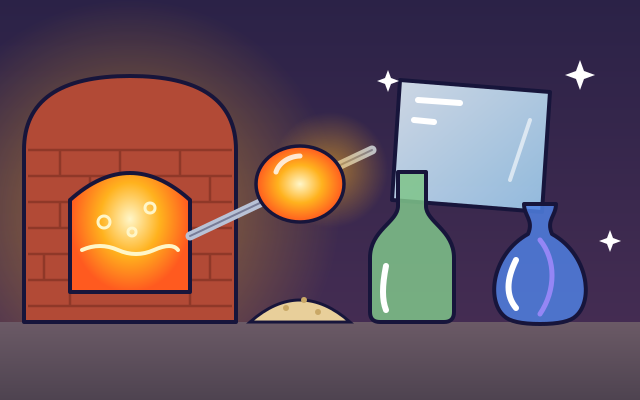
The interactive parts didn't load. The explanations below still work; try reloading the page.
From sand to sparkling glass
- Most glass is made from sand, soda ash and limestone. Factories also add crushed recycled glass, called cullet, which melts easily and saves energy.
- The mix goes into a huge furnace that is hotter than lava, around 1,500 degrees Celsius. The powders melt into a glowing liquid, and bubbles float up and pop.
- For bottles, a blob of hot glass called a gob drops into a metal mold. Air is blown in, pushing the glass against the mold walls to make a bottle.
- Window glass is made by pouring hot glass onto a pool of melted tin. The glass floats on top and spreads out into a perfectly flat, smooth sheet.
- Glass artists gather hot glass on the end of a long pipe, blow into it to make a bubble and shape it with tools. Bits of metal powder add colors.
- Hot glass must cool slowly. If the outside cools much faster than the inside, the glass squeezes and pulls on itself and can crack. So it travels through a long, warm tunnel called a lehr.
- When we recycle glass, it is crushed into cullet and melted again. Glass can be recycled again and again, which saves sand and energy.
Inside a glass factory
This cutaway shows the furnace, a bottle mold and the cooling tunnel. Tap each part.
- Batch of raw materials. The batch is the mix of sand, soda ash, limestone and crushed recycled glass that is pushed into the furnace.
- Melting tank. Inside the furnace is a big pool of melted glass. It glows orange because it is so hot, around 1,500 degrees Celsius.
- Burners. Burners blow flames across the top of the glass to keep it hot. Some furnaces use electricity too.
- Bubbles rising. When the powders melt, they give off gas. The bubbles float up and pop, so the finished glass is clear, not bubbly.
- Feeder and shears. Hot glass flows out of a hole in the feeder. Shears snip it into blobs, called gobs, each the right size for one bottle.
- Bottle mold. The mold opens and closes like a clam. Air is blown into the gob so the glass stretches out against the mold and becomes a bottle.
- Cooling tunnel (lehr). New glass rides through a long, warm tunnel. It cools a little at a time, so every part shrinks evenly and nothing cracks.
- Atoms in glass. In a crystal, tiny particles line up in neat rows. In glass they are jumbled, like a liquid that froze before it could line up. That is why glass is clear and has no grains.
Glass works: melt, shape and cool
Choose what to make and how fast to cool it. Then check your glass in the stress viewer: glowing rainbow bands mean the glass is squeezed and pulled inside.
Experiment: What happens if hot glass is cooled very fast?
- Make a bottle and cool it fast. Check it in the stress viewer.
- Make another bottle and cool it slowly.
- Compare the rainbow bands and look for cracks.
What we found: Fast cooling makes the outside shrink and harden while the inside is still hot. That squeezes and pulls the glass, shown by the rainbow bands, and too much of it makes the glass crack. Slow cooling keeps it safe.
Turn on JavaScript to try it yourself.
Fill the glass shop order
The shop needs a bottle, a window and a vase, and none of them may crack. Make all three.
Why glass is clear, and why it cracks
Sand is mostly a material called silica. Each grain of sand is cloudy because light bounces off its edges and cracks. When sand is melted, those edges disappear, and when the liquid cools it becomes one smooth piece that light can pass straight through.
Pure sand melts only at a very high temperature, more than 1,700 degrees Celsius. Adding soda ash lets it melt at a lower temperature, which saves energy. But soda glass would slowly dissolve in water, so limestone is added to make it tough and waterproof.
Glass is special because it does not melt all at once like ice. As it heats up, it slowly gets softer and stretchier, like warm toffee. That gives glassmakers time to blow it, press it, or float it flat to make bottles, vases and windows.
Glass must cool slowly. Glass shrinks as it cools, and if the outside cools and shrinks much faster than the inside, the two parts push and pull on each other. That stress can crack the glass, so new glass rides through a warm tunnel that cools it gently.
Key words
- Silica
- Silicon dioxide, the main ingredient of sand and of most glass.
- Cullet
- Crushed recycled glass added to the batch; it melts easily and saves energy.
- Annealing
- Cooling glass slowly so it does not crack.
- Float glass
- Flat glass made by floating molten glass on a bath of molten tin.
- Amorphous
- Jumbled, with no neat repeating pattern.
Check your thinking
-
What is the main ingredient of most glass?
Show the answer
Sand (silica). Sand is mostly silica, which becomes clear glass when melted and cooled.
-
Why does new glass travel through a warm tunnel called a lehr?
Show the answer
To cool it slowly so it does not crack. Slow, even cooling stops the outside and inside from pulling on each other.
-
How is flat window glass made?
Show the answer
By floating hot glass on melted tin. The hot glass spreads out on the flat, smooth tin, so it becomes perfectly flat.
-
Why do glass factories add recycled glass to the batch?
Show the answer
It melts more easily, saving energy and sand. Cullet melts at a lower temperature than raw materials and reduces the sand needed.
-
Why does glass soften gradually instead of melting at one exact temperature like ice?
Show the answer
Its atoms form a disordered network with no repeating structure. With no regular crystal structure to break, viscosity simply falls steadily as temperature rises.
You're a Making everyday things expert!
You watched, looked inside, tried it, solved the challenge and went deeper. Pick another question below, or switch the age at the top to see this topic another way.
More about making everyday things
 #16
Making everyday things
How does cotton become clothing?
Follow cotton from the plant through spinning, weaving or knitting, dyeing, cutting, and sewing. Design a shirt and inspect its fabric up close.
#16
Making everyday things
How does cotton become clothing?
Follow cotton from the plant through spinning, weaving or knitting, dyeing, cutting, and sewing. Design a shirt and inspect its fabric up close.
 #17
Making everyday things
How are plastic toys made?
Design a simple toy, explore an injection mold, and watch the material fill its shape. Cool, assemble, and decorate the finished pieces.
#17
Making everyday things
How are plastic toys made?
Design a simple toy, explore an injection mold, and watch the material fill its shape. Cool, assemble, and decorate the finished pieces.
 #18
Making everyday things
How are bricks made?
Prepare virtual clay, shape bricks, dry them, and fire them in a kiln. Compare brick shapes and arrange them into different wall patterns.
#18
Making everyday things
How are bricks made?
Prepare virtual clay, shape bricks, dry them, and fire them in a kiln. Compare brick shapes and arrange them into different wall patterns.
 #19
Making everyday things
How is pottery made?
Shape clay on a virtual pottery wheel. Explore drying, kiln firing, and glazing, and see how each stage changes the object.
#19
Making everyday things
How is pottery made?
Shape clay on a virtual pottery wheel. Explore drying, kiln firing, and glazing, and see how each stage changes the object.
Keep exploring
Games to play next
- Machine RepairFix levers, pulleys, gears and ramps so every contraption works.
- Geometry Architect 3DCount, build and fold solids like a real architect.
- Sorting FactoryTurn a work order into if/else rules and watch the conveyor sort every item.
Guide for grown-ups
- How to start homeschooling: a step-by-step guide for familiesA guide for parents · 7 min read
Science games by grade
Science worksheets by grade
- Preschool Science Worksheets
- Pre-K Science Worksheets
- Kindergarten Science Worksheets
- 1st Grade Science Worksheets
- 2nd Grade Science Worksheets
- 3rd Grade Science Worksheets
- 4th Grade Science Worksheets
- 5th Grade Science Worksheets
- 6th Grade Science Worksheets
- 7th Grade Science Worksheets
- 8th Grade Science Worksheets