How do hailstones grow?
Inside a tall storm cloud, wind blowing upward holds an ice seed in the air while it collects coat after coat of ice.
The big idea: A hailstone grows while an upward wind holds it inside a storm cloud. Very cold water drops freeze onto it in layers. When it gets too heavy for the wind, it falls.
It's like dipping a candle in wax again and again. Every dip adds a coat. A hailstone gets a new coat of ice in each part of the cloud.
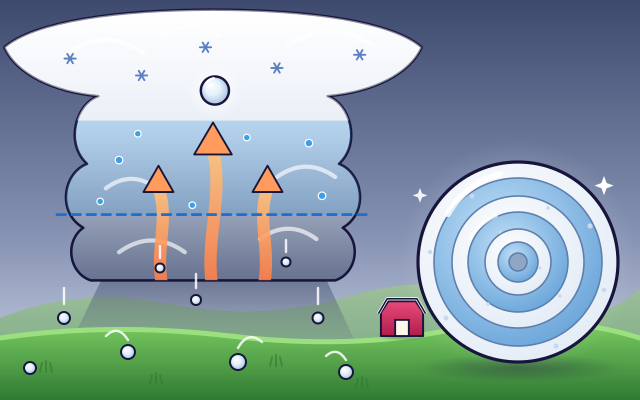
The interactive parts didn't load. The explanations below still work; try reloading the page.
How a hailstone grows
- A dark cloud rolls in on a warm afternoon, and balls of ice bounce on the grass. Ice from a summer sky? The answer is high inside the cloud.
- Warm, damp air rises fast inside a storm cloud. This upward wind is called an updraft. It can blow faster than a car on a highway.
- High in the cloud it is colder than freezing, yet many water drops are still liquid. When one touches a tiny seed of ice, it freezes onto it in an instant.
- The updraft carries the stone through different parts of the cloud. Where it is very cold, drops freeze fast and trap air: cloudy white ice. Where it is wetter, water freezes slowly: clear ice.
- As the stone grows, it gets heavier and falls faster through the air. When the updraft can no longer hold it up, it drops out of the cloud.
- Slice a hailstone and you find rings, like an onion. Each ring is one coat of ice. Hail can hurt, so always watch it from indoors.
Look inside a hailstorm
Tap the parts of the cloud, then the rings of the cut hailstone.
- Updraft. The updraft is a wind that blows upward through the middle of the storm. It holds the hailstones up while they grow.
- Freezing level. Air gets colder as you go up. Above this line the temperature is below freezing, even on a hot summer day.
- Supercooled drops. These drops are colder than freezing but still liquid. They need something to freeze onto. When they hit ice, they freeze right away.
- Icy cloud top. The flat top of the storm is the coldest part. Up here drops freeze the moment they touch the stone, trapping tiny bubbles of air.
- Ice seed. In the middle of every hailstone is its seed: a frozen raindrop or a small, soft ball of ice. Everything else froze on around it.
- Clear ice. A clear ring grew where the cloud was wetter. The water spread over the stone and froze slowly, so the air bubbles could get out.
- Cloudy ice. A white ring grew where the cloud was very cold. Each drop froze at once and trapped tiny bubbles of air. The bubbles make the ice look milky.
Storm lab: wind and ice
Set how hard the wind blows upward, or tap the cloud for a gust. Watch the stone hover, grow coats of ice and fall.
Experiment: What happens to a hailstone if the upward wind is stronger?
- Use a gentle wind and watch a stone until it lands.
- Now use a strong wind and watch the next one.
- Compare their sizes and count the rings in each.
What we found: A stronger upward wind holds the stone in the cloud longer, so more ice freezes onto it. It falls only when it is too heavy for the wind. Big hail means a very strong storm.
Turn on JavaScript to try it yourself.
Golf-ball hail
Pick an upward wind that grows a stone the size of a golf ball: it must land between the two yellow rings.
How hail grows and falls
Hail comes from the tallest storm clouds. These clouds can be more than ten kilometers high, taller than the highest mountain. The air gets colder as you go up, so even on a hot day the top of the cloud is far below freezing.
Inside the storm, warm air rushes upward. This updraft carries water drops high into the cold. Many of the drops stay liquid even though they are colder than freezing. They are waiting for something to freeze onto. When one hits a small seed of ice, it freezes onto it at once.
The updraft holds the growing stone in the air, the way air from a hair dryer can hold up a ball. In the coldest parts of the cloud the stone gets a white, cloudy coat full of tiny air bubbles. In wetter parts it gets a clear coat. That is why a hailstone cut in half has rings like an onion.
The stone falls when it is too heavy for the wind to hold. A weak storm drops small hail the size of peas. A very strong storm can hold stones until they are as big as golf balls or even bigger. Hail falls fast, so the safe place to watch it is indoors, away from windows.
Key words
- Updraft
- A wind that blows upward inside a storm cloud.
- Supercooled
- Liquid water that is colder than freezing but has not frozen yet.
- Accretion
- Growing by collecting things that stick on, such as water drops freezing onto a hailstone.
- Freezing level
- The height in the sky where the air temperature is 0 °C.
- Fall speed
- How fast something falls through the air. Bigger hailstones fall faster.
Check your thinking
-
What holds a hailstone up inside a storm cloud while it grows?
Show the answer
A strong wind blowing upward. The updraft pushes up on the stone as hard as gravity pulls it down, so it stays in the cloud.
-
Why does a hailstone finally fall?
Show the answer
It gets too heavy for the upward wind to hold. Each coat of ice adds weight. When the stone needs more push than the wind has, it drops.
-
A storm drops hail as big as golf balls. What does that tell you about the storm?
Show the answer
Its upward wind was very strong. Only a very strong updraft can hold a heavy stone long enough for it to grow that big.
-
Why is one ring in a hailstone white and cloudy?
Show the answer
The drops froze so fast that they trapped tiny air bubbles. In the coldest part of the cloud, drops freeze the moment they land, before the air can escape.
-
Where should you be when hail is falling?
Show the answer
Indoors, away from windows. Hailstones fall fast and can hurt. A building keeps you safe until the storm passes.
You're a Earth & weather expert!
You watched, looked inside, tried it, solved the challenge and went deeper. Pick another question below, or switch the age at the top to see this topic another way.
More about earth & weather
 #448
Earth & weather
How does fog form near the ground?
Change air temperature and moisture and watch tiny droplets appear.
#448
Earth & weather
How does fog form near the ground?
Change air temperature and moisture and watch tiny droplets appear.
 #449
Earth & weather
How does dew appear on grass?
Cool a model surface and follow water vapor condensing into droplets.
#449
Earth & weather
How does dew appear on grass?
Cool a model surface and follow water vapor condensing into droplets.
 #450
Earth & weather
How does frost form?
Explore ice crystals growing on a cold surface from water vapor.
#450
Earth & weather
How does frost form?
Explore ice crystals growing on a cold surface from water vapor.
 #451
Earth & weather
How do hurricanes develop?
Explore warm ocean water, moisture, rotation, and storm organization in a simplified model.
#451
Earth & weather
How do hurricanes develop?
Explore warm ocean water, moisture, rotation, and storm organization in a simplified model.
Keep exploring
Games to play next
- Weather LabPredict the weather in a box, then run a fair test to find out why.
- River MysterySomething changed the river. Sample sites with a limited budget, follow the evidence and find where the change begins.
- Landform ExplorerMountains, valleys, peninsulas and deltas — learn the shapes of the land and find them on Earth.
Guide for grown-ups
- How to start homeschooling: a step-by-step guide for familiesA guide for parents · 7 min read
Science games by grade
Science worksheets by grade
- Preschool Science Worksheets
- Pre-K Science Worksheets
- Kindergarten Science Worksheets
- 1st Grade Science Worksheets
- 2nd Grade Science Worksheets
- 3rd Grade Science Worksheets
- 4th Grade Science Worksheets
- 5th Grade Science Worksheets
- 6th Grade Science Worksheets
- 7th Grade Science Worksheets
- 8th Grade Science Worksheets