How does a hand pump raise water?
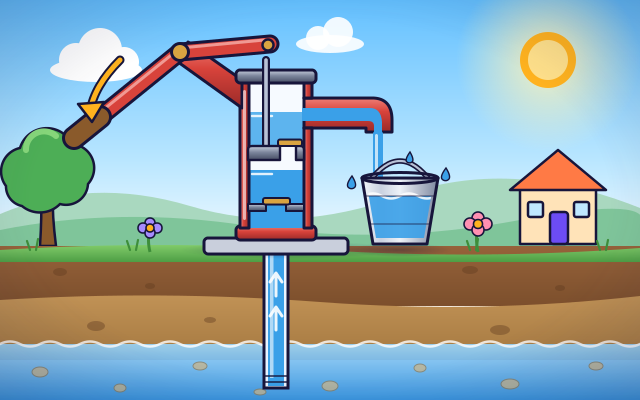
A hand pump uses a piston and two one-way valves to bring water up from under the ground, one stroke at a time.
The big idea: The piston makes room for water to rise, and two one-way valves take turns: one lets water in, the other lifts it out.
It's like drinking through a straw: you make room at the top and the drink is pushed up. A valve then holds it, like pinching the straw.
The interactive parts didn't load. The explanations below still work; try reloading the page.
From the well to the bucket
- The water we need is deep under the ground, at the bottom of a pipe. A hand pump can bring it up without any electricity.
- The handle is a lever. When you push the long end down, the short end pulls a rod up, and the rod lifts the piston inside the cylinder.
- As the piston rises, it leaves space below it. The air outside presses down on the water in the ground and pushes it up the pipe, through the bottom valve.
- When the piston comes down, the bottom valve shuts, so the water cannot fall back. The valve in the piston opens, and water slips through to the top side.
- On the next push, the piston valve closes and the piston carries the water above it up to the spout. At the same time, new water is pulled in below.
- Every stroke repeats the trick: lift water out on the way up, and let more through on the way down. The two valves keep it moving one way.
Look inside a hand pump
Tap each part of the pump. Watch what moves!
- Handle. The handle is a lever. A long, easy push at your end becomes a strong pull on the piston rod.
- Piston rod. The rod joins the handle to the piston. When the handle goes down, the rod pulls the piston up.
- Piston. The piston fits snugly inside the cylinder. Going up, it lifts the water above it and makes room for more below.
- Piston valve. A flap in the piston. It opens to let water pass above the piston on the way down, and shuts to lift water on the way up.
- Cylinder. The cylinder is the smooth tube the piston slides in. A wider cylinder moves more water with each stroke.
- Foot valve. A flap at the bottom of the cylinder. It opens when water is pushed up from the pipe and shuts so the water cannot fall back.
- Riser pipe. The pipe reaches down into the water under the ground. Water climbs up it when the piston rises.
- Spout. When the piston lifts the water high enough, it runs out of the spout and into your bucket.
Follow the water through the valves
Move the handle slowly up and down. Watch the two valves take turns, and follow the water from the pipe to the spout.
Experiment: When the piston moves back down, what stops the water in the pipe from falling back into the ground?
- Push the handle down slowly. Watch the water climb the pipe and the bottom valve open.
- Let the handle up slowly. Which valve shuts? Which one opens?
- Push down again and watch the water above the piston.
What we found: The bottom valve, called the foot valve, shuts as soon as the piston starts down. It holds the water in the pipe. Meanwhile the piston valve opens and lets water get above the piston, ready to be lifted out.
Turn on JavaScript to try it yourself.
Fix the pump
This pump has stopped working. Pump and watch the water, then tap the part that is broken to fix it and get water flowing.
Why the water climbs
It looks as if a pump sucks water up, but really the air does the pushing. Air is all around us, and it presses on everything, including the water under the ground. Most of the time we do not notice, because it presses equally everywhere.
When you push the handle down, the piston slides up inside the cylinder and leaves more space underneath. Now there is less pushing back inside the pump than there is outside. The air pressing on the water in the ground wins, and it shoves water up the pipe to fill the space. Drinking through a straw works the same way.
The clever part is the two one-way valves. A one-way valve is like a door that opens in only one direction. The foot valve at the bottom lets water come up but shuts if it tries to go back down. The valve in the piston lets water pass above the piston on the way down, then shuts so the piston can lift that water on the way up.
So each stroke does two jobs. Going up, the piston lifts water out of the spout and pulls new water in below. Going down, it slips through the water to get ready for the next lift. The straw idea is not a perfect match, because a straw has no valves: stop sipping and your drink runs back down. The pump's valves hold every bit of water it has gained.
Key words
- Piston
- A plug that slides up and down inside a tube and fits it snugly.
- One-way valve
- A flap or ball that lets water through in one direction only.
- Foot valve
- The one-way valve at the bottom of the pump that stops water falling back down the pipe.
- Air pressure
- The push of the air all around us on everything it touches.
- Priming
- Getting water into a pump so its seals are wet and airtight and it can start lifting.
Check your thinking
-
What does the foot valve do when the piston moves down?
Show the answer
It shuts, so water cannot fall back. The foot valve is a one-way door. It closes as soon as water tries to go back down.
-
What really pushes the water up the pipe?
Show the answer
Air pressing down on the water in the ground. The piston makes room. The air outside then pushes the water up to fill that room.
-
The piston valve gets stuck open. What happens when you pump?
Show the answer
No water rises, because the piston cannot make an empty space. With a hole that never closes, air just slips through the piston, so nothing pushes the water up.
-
The water table is 14 meters down. Why can a lift pump at the surface not raise the water?
Show the answer
Atmospheric pressure can only support a water column of about 10 meters. Atmospheric pressure of about 101 kilopascals balances roughly 10.3 meters of water. No amount of pumping at the top can push it higher.
-
You swap the cylinder for a wider one. What changes?
Show the answer
More water each stroke, but a harder push. A wider piston lifts a bigger slice of water, and a bigger slice of water is heavier.
You're a Forces & mechanisms expert!
You watched, looked inside, tried it, solved the challenge and went deeper. Pick another question below, or switch the age at the top to see this topic another way.
More about forces & mechanisms
 #179
Forces & mechanisms
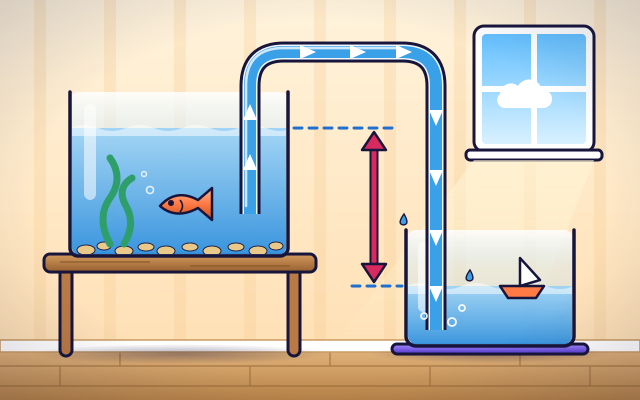
How does a siphon move water between containers?
Connect virtual containers and investigate how differences in water level drive flow.
#179
Forces & mechanisms
How does a siphon move water between containers?
Connect virtual containers and investigate how differences in water level drive flow.
 #197
Forces & mechanisms
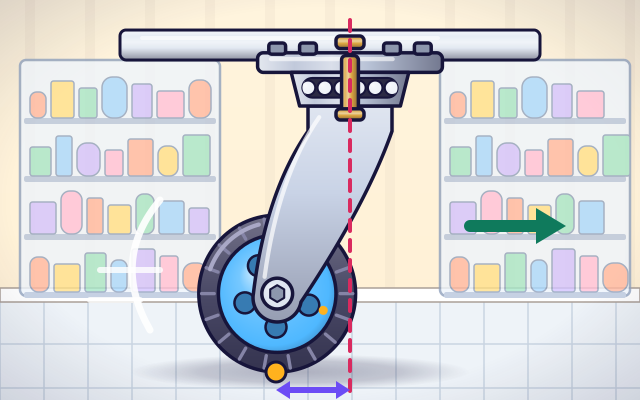
How do shopping-cart wheels swivel into position?
Push a model cart and watch offset caster wheels follow changes in direction.
#197
Forces & mechanisms
How do shopping-cart wheels swivel into position?
Push a model cart and watch offset caster wheels follow changes in direction.
 #103
Forces & mechanisms
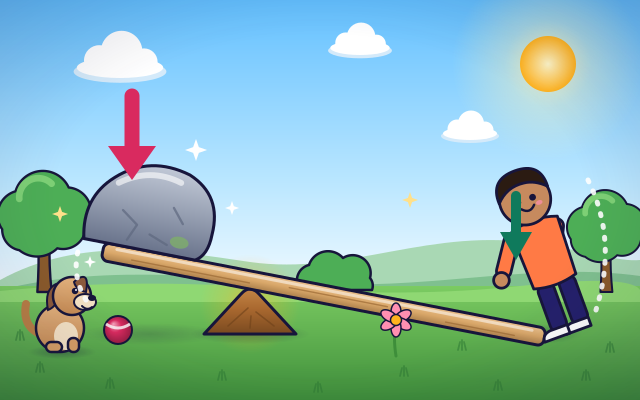
How do levers help us lift heavy objects?
Move the pivot point and compare the effort needed to lift different loads.
#103
Forces & mechanisms
How do levers help us lift heavy objects?
Move the pivot point and compare the effort needed to lift different loads.
 #104
Forces & mechanisms
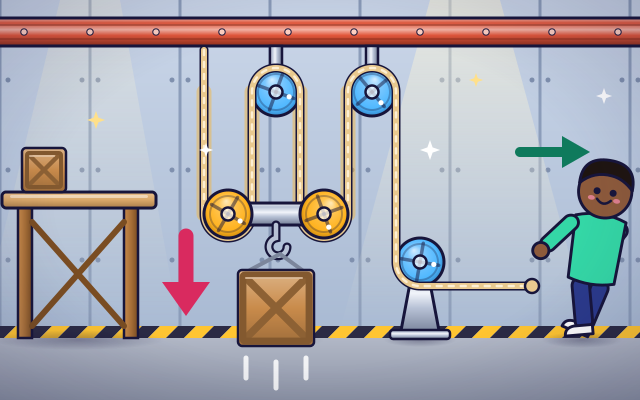
How do pulleys make lifting easier?
Thread ropes through virtual pulleys and compare pulling distance with lifting effort.
#104
Forces & mechanisms
How do pulleys make lifting easier?
Thread ropes through virtual pulleys and compare pulling distance with lifting effort.
Keep exploring
Games to play next
- Machine RepairFix levers, pulleys, gears and ramps so every contraption works.
- Marble MountainLay straights, curves, drops and splitters to roll marbles down the mountain.
- Bridge LabBuild a bridge from beams, brace it with triangles, and stay on budget.
Guide for grown-ups
- How to start homeschooling: a step-by-step guide for familiesA guide for parents · 7 min read
Science games by grade
Science worksheets by grade
- Preschool Science Worksheets
- Pre-K Science Worksheets
- Kindergarten Science Worksheets
- 1st Grade Science Worksheets
- 2nd Grade Science Worksheets
- 3rd Grade Science Worksheets
- 4th Grade Science Worksheets
- 5th Grade Science Worksheets
- 6th Grade Science Worksheets
- 7th Grade Science Worksheets
- 8th Grade Science Worksheets