How does a siphon move water between containers?
A siphon is a tube full of water that carries water up over an edge and down to a lower place, with no pump at all.
The big idea: Water flows through a full tube from the higher water surface to the lower one. The bigger the drop, the faster it goes. When the levels match, it stops.
It's like a chain hanging over a railing: the longer, heavier side slides down and pulls the shorter side up and over.
The interactive parts didn't load. The explanations below still work; try reloading the page.
Emptying a tank with a tube
- It is time to change some of the water in the fish tank. The tank is much too heavy to lift and tip. How can we get the water out?
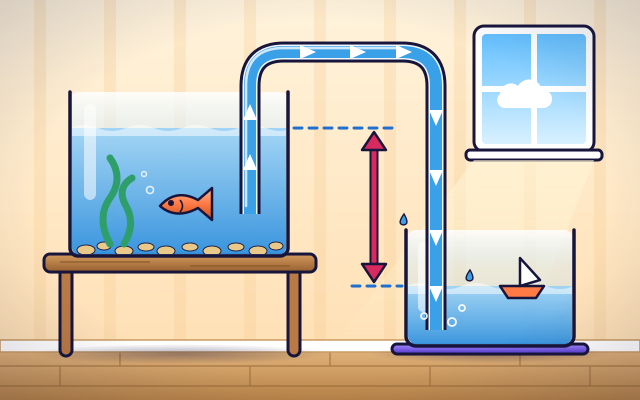
- We use a tube. One end goes deep in the tank and the other end goes in a tub lower down. First the tube must be filled completely with water.
- The water climbs up the short side, over the top, and down the long side. The long side is heavier, so it falls and the rest follows, like a chain.
- As the tub fills, its water surface rises to meet the tank's. The drop between them gets smaller, the flow slows, and when the levels match, it stops.
- Lift the tub higher than the tank, and the water runs back the other way. A siphon always flows from the higher surface to the lower one.
- Lift an end out of the water and air gets into the tube. The chain of water is broken and the flow stops. A siphon needs a full tube and a lower place to go.
Look closely at a siphon
Tap each part of the siphon. Follow the water from the tank to the tub.
- Upper container. The water starts here. Its surface is higher than the water in the tub, and that is why it can flow.
- Inlet end. Water goes into the tube here. This end must stay under the water, or air will get in.
- Rising side. The short side of the tube. Here the water flows uphill, pushed by the air pressing on the tank and pulled along by the water ahead of it.
- Crest. The highest part of the tube. The water goes over the top here and starts to come down.
- Falling side. The long side of the tube. There is more water on this side, so it is heavier and falls, and that keeps everything moving.
- Outlet end. Water leaves the tube here. This end has to be lower than the water surface in the tank.
- Lower container. The water ends up here. As the tub fills, its surface rises and the flow slows down.
- Height difference. The drop between the two water surfaces. A bigger drop makes the water flow faster. No drop means no flow.
Which way will it flow?
Fill the tube. Then drag the tub up and down and watch which way the water flows, and how fast.
Experiment: The siphon is flowing into the tub. What will happen if you lift the tub above the tank?
- Press Fill the tube and watch the water go from the tank to the tub.
- Drag the tub up until its water is higher than the tank's.
- Find the height where the flow stops.
What we found: The water always flows from the higher water surface to the lower one. Lift the tub above the tank and the flow turns around. When the two surfaces are level, it stops.
Turn on JavaScript to try it yourself.
Fill the tub to the band
Fill the tub so the water stops inside the green band. Choose the tub's height, then start the siphon.
Why water climbs over the top
A siphon looks like magic: water climbs up a tube, over an edge and down the other side, with no pump. The secret is that the tube is completely full of water, and the place where the water comes out is lower than the surface of the water it came from.
Think of the water in the tube as two columns that meet at the top. One side is short and the other is long. The long side holds more water, so it is heavier. It falls, and as it falls it leaves less push at the top of the tube. The air pressing down on the water in the tank then pushes more water up the short side to follow.
The size of the drop matters. The drop is the difference in height between the two water surfaces. A big drop makes the water rush. A small drop makes it trickle. When the two surfaces are level, there is no drop at all and the flow stops. Lift the tub above the tank and the water runs back the other way.
A siphon stops working if air gets into the tube, because the water is no longer joined from end to end. The chain idea is useful, but it is not perfect. A real chain is hooked together. Water is held together by the air pressing on it and by its own slight stickiness, so a siphon cannot lift water over a hump taller than about 10 meters.
Key words
- Siphon
- A tube full of liquid that carries it up over an edge and down to a lower level.
- Priming
- Filling the tube completely with liquid so there is no air inside.
- Crest
- The highest point of the tube.
- Head
- The drop in height between the two water surfaces. It is what drives the flow.
- Air pressure
- The push of the air on everything it touches, including the water in the tank.
Check your thinking
-
A siphon joins a tank and a tub. Which way does the water flow?
Show the answer
From the higher water surface to the lower one. Only the heights of the two water surfaces matter. Water runs from the higher one to the lower one.
-
Why does a siphon stop if you lift one end out of the water?
Show the answer
Air gets in and breaks the column of water. The water in the tube must be joined from end to end. Air makes a gap, so nothing pulls the rest along.
-
The water surfaces in the tank and the tub are at exactly the same height. What happens?
Show the answer
The flow stops. With no drop between the surfaces, neither side is heavier, so nothing moves.
-
You bend the tube so its hump is higher, but the tank and tub stay where they are. What happens to the flow?
Show the answer
Nothing changes, as long as the tube stays full. Only the difference between the two water surfaces sets the flow, not the height of the hump.
-
Where must the outlet of a siphon be for the tank to drain?
Show the answer
Lower than the water surface in the tank. The water needs a lower place to go. The bigger the drop, the faster it runs.
You're a Forces & mechanisms expert!
You watched, looked inside, tried it, solved the challenge and went deeper. Pick another question below, or switch the age at the top to see this topic another way.
More about forces & mechanisms
 #197
Forces & mechanisms
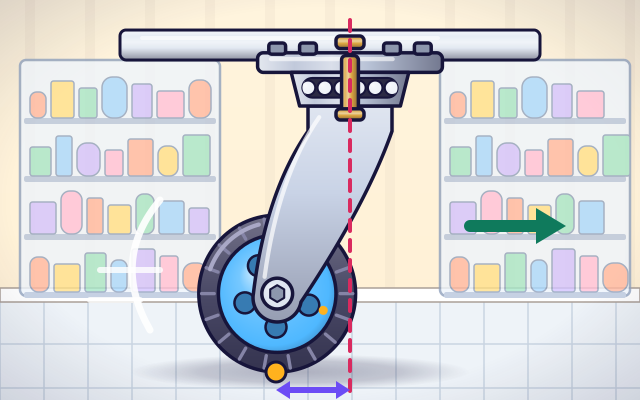
How do shopping-cart wheels swivel into position?
Push a model cart and watch offset caster wheels follow changes in direction.
#197
Forces & mechanisms
How do shopping-cart wheels swivel into position?
Push a model cart and watch offset caster wheels follow changes in direction.
 #103
Forces & mechanisms
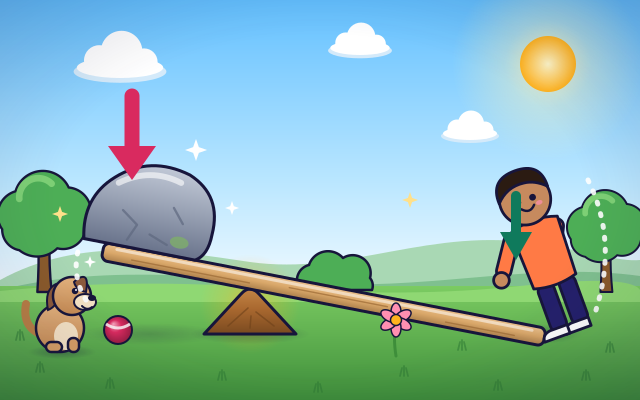
How do levers help us lift heavy objects?
Move the pivot point and compare the effort needed to lift different loads.
#103
Forces & mechanisms
How do levers help us lift heavy objects?
Move the pivot point and compare the effort needed to lift different loads.
 #104
Forces & mechanisms
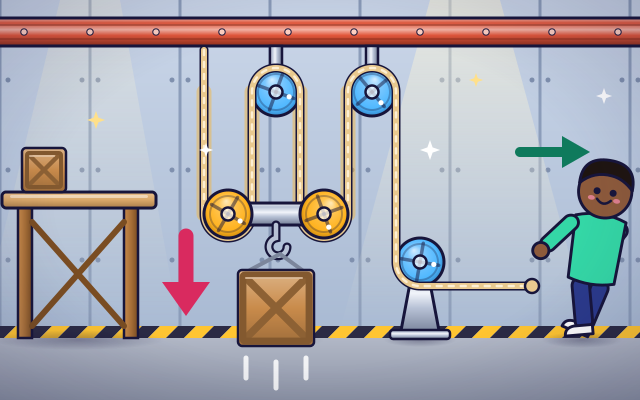
How do pulleys make lifting easier?
Thread ropes through virtual pulleys and compare pulling distance with lifting effort.
#104
Forces & mechanisms
How do pulleys make lifting easier?
Thread ropes through virtual pulleys and compare pulling distance with lifting effort.
 #105
Forces & mechanisms
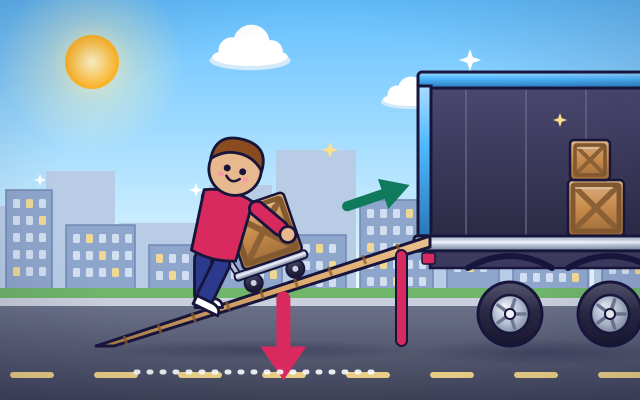
How do ramps reduce lifting effort?
Change a ramp's slope and compare pushing force, travel distance, and height gained.
#105
Forces & mechanisms
How do ramps reduce lifting effort?
Change a ramp's slope and compare pushing force, travel distance, and height gained.
Keep exploring
Games to play next
- Marble MountainLay straights, curves, drops and splitters to roll marbles down the mountain.
- Machine RepairFix levers, pulleys, gears and ramps so every contraption works.
- Bridge LabBuild a bridge from beams, brace it with triangles, and stay on budget.
Guide for grown-ups
- How to start homeschooling: a step-by-step guide for familiesA guide for parents · 7 min read
Science games by grade
Science worksheets by grade
- Preschool Science Worksheets
- Pre-K Science Worksheets
- Kindergarten Science Worksheets
- 1st Grade Science Worksheets
- 2nd Grade Science Worksheets
- 3rd Grade Science Worksheets
- 4th Grade Science Worksheets
- 5th Grade Science Worksheets
- 6th Grade Science Worksheets
- 7th Grade Science Worksheets
- 8th Grade Science Worksheets