How is peanut butter made?
Peanuts are shelled, roasted and ground. Grinding breaks them open and lets out their oil, which turns dry crumbs into a creamy spread.
The big idea: A peanut is about half oil, locked inside tiny cells. Grinding breaks the cells open. The oil flows out around the ground-up bits, and the dry nuts become a paste. The longer you grind, the smoother it gets.
It's like squeezing an orange: the juice was hiding inside all along. Grinding breaks peanuts open, and the oil hiding inside turns the crumbs into a spread.
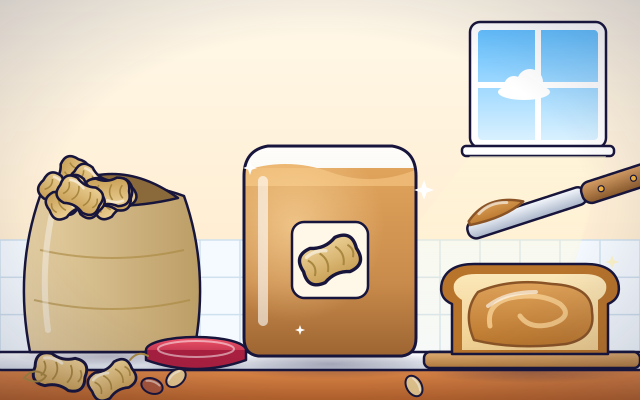
The interactive parts didn't load. The explanations below still work; try reloading the page.
How peanuts become a spread
- A peanut is hard and dry, and it snaps when you bite it. Peanut butter is soft enough to spread with a knife. Yet it is made of almost nothing but peanuts.
- Peanuts do not grow on trees. After a peanut flower fades, a thin stalk called a peg grows down into the soil. A pod with peanuts inside forms on its tip.
- At the factory, rollers squeeze the pods just hard enough to crack the shells. Then a fan blows. The light shells fly away, and the heavier peanuts fall straight down.
- The peanuts tumble in a hot drum until they are golden brown. Roasting dries them and gives them their rich, nutty taste. Afterward, soft rollers rub off their thin red skins.
- Grinding breaks the peanuts into smaller and smaller bits. It breaks open their cells, too, and the oil inside runs out. Soon the bits are swimming in oil: a thick paste.
- A little salt is mixed in, and the warm paste is poured into jars. For crunchy peanut butter, chopped peanut pieces are stirred into the smooth paste.
Look inside a peanut butter factory
Follow the peanuts from left to right. Tap each machine to see it work.
- Sheller. Ribbed rollers turn toward each other and squeeze each pod just enough to crack its shell without squashing the peanuts inside.
- Shell blower. A fan blows across the falling mix. Bits of shell are light, so the air carries them off. Peanuts are heavier, so they drop straight into the tray.
- Roaster. A turning drum keeps the peanuts tumbling in hot air so they roast evenly. They dry out, turn golden and get their nutty flavor.
- Skin remover. After roasting, the papery red skins are loose. Soft rollers or brushes rub them off, and air carries them away. The peanuts often split into halves.
- Grinder. One rough plate spins against another with the peanuts in between. They are ground smaller and smaller, their oil is squeezed out, and a warm paste pours from the spout.
- Mixer and filler. Paddles stir in a little salt, and chopped peanuts if the batch is crunchy. Then the warm, runny paste is pumped into jars, where it cools and thickens.
Roast, grind and compare
Run peanuts through the line by tapping each machine. Change the roasting and grinding times, make a few batches and compare the samples on the board.
Experiment: What happens to roasted peanuts as you grind them for longer and longer?
- Set the grinding time to short. Tap the sheller, the roaster, the grinder and the mixer in turn.
- Look at the sample on the board and at the close-up.
- Set the grinding time to long and run another batch.
- Compare the two samples. Which one would spread on bread?
What we found: A short grind gave dry, chopped pieces. A long grind gave a smooth, shiny paste, and nothing was added to make it wet. Grinding broke the peanuts open and let out their own oil, and the tiny bits floating in that oil are peanut butter.
Turn on JavaScript to try it yourself.
One crunchy order
The order is for crunchy peanut butter with a golden roast. Make a batch that matches.
Why grinding makes a spread
Peanuts are odd. They are not really nuts at all: they are seeds, like peas and beans, and they grow underground. After a peanut plant flowers, thin stalks called pegs grow down into the soil, and a pod swells on the end of each one. Farmers dig the plants up, dry them and send the pods to be shelled.
A raw peanut is pale and does not taste like much. Roasting changes that. In a hot, turning drum the peanuts dry out and turn golden brown, and new flavors are made, the same way that bread gets tastier when it is toasted. Roast them too long, though, and they turn dark and bitter.
Now for the trick. About half of every peanut is oil, but you cannot see it, because it is locked inside tiny cells. Grinding smashes the cells open. At first you just get chopped pieces. Keep grinding and the pieces get smaller, more oil runs out, and the crumbs begin to stick together. Grind even longer and you have millions of tiny bits floating in oil. That is peanut butter. Squeezing an orange is a good picture of it, with one difference: peanut butter keeps all the solid bits and the oil together.
Crunchy peanut butter is made by stirring chopped peanuts into smooth paste. In some jars the oil slowly floats to the top, and you have to stir it back in. Some people are allergic to peanuts, and even a tiny bit can make them ill. So always ask before you share any food that has peanuts in it.
Key words
- Legume
- A plant that grows its seeds in pods, such as peas, beans and peanuts.
- Kernel
- The part of the peanut you eat: the seed inside the shell.
- Roasting
- Cooking with dry heat, which browns food and gives it new flavors.
- Suspension
- Tiny solid bits spread through a liquid, like the peanut bits in peanut oil.
- Stabilizer
- Something added in a small amount to stop the oil from floating to the top.
Check your thinking
-
Peanut butter is wet and creamy, but no water is added. Where does the liquid come from?
Show the answer
Oil that was inside the peanuts. About half of a peanut is oil. Grinding breaks the peanut open and lets the oil out.
-
A batch of peanut butter feels gritty. What would make the next batch smoother?
Show the answer
Grinding it for longer. Longer grinding makes smaller bits and frees more oil. That is what makes it smooth.
-
Why are peanuts roasted before they are ground?
Show the answer
Roasting gives them their golden color and nutty taste. Raw peanuts are pale and taste like raw beans. Heat browns them and makes new flavors.
-
How does the factory separate cracked shells from the peanuts?
Show the answer
A fan blows the light shells away while the heavy peanuts fall. Shell pieces are much lighter than peanuts, so moving air carries them off and leaves the peanuts behind.
-
How is crunchy peanut butter made?
Show the answer
Chopped peanuts are stirred into smooth paste. The crunch comes from pieces added back into a creamy paste.
You're a Food & farming expert!
You watched, looked inside, tried it, solved the challenge and went deeper. Pick another question below, or switch the age at the top to see this topic another way.
More about food & farming
 #285
Food & farming
How is chewing gum made?
Mix a virtual gum base with flavorings, then roll, cut, and wrap it.
#285
Food & farming
How is chewing gum made?
Mix a virtual gum base with flavorings, then roll, cut, and wrap it.
 #286
Food & farming
How is breakfast cereal made?
Choose a cereal style and follow cooking, shaping, drying, toasting, and packaging.
#286
Food & farming
How is breakfast cereal made?
Choose a cereal style and follow cooking, shaping, drying, toasting, and packaging.
 #287
Food & farming
How does pasteurization work?
Follow controlled factory heating and cooling and visualize changes in microbial numbers.
#287
Food & farming
How does pasteurization work?
Follow controlled factory heating and cooling and visualize changes in microbial numbers.
 #288
Food & farming
How does fruit ripen?
Explore changes in color, firmness, aroma, and stored carbohydrates over time.
#288
Food & farming
How does fruit ripen?
Explore changes in color, firmness, aroma, and stored carbohydrates over time.
Keep exploring
Games to play next
- Ratio KitchenScale recipes, fill ratio tables and find the better buy.
- Garden AutomationProgram a garden robot with sensor rules — then watch a whole day play out.
- Label LabPut the right labels on beautiful science diagrams, from bean plants to heart chambers.
Guide for grown-ups
- How to start homeschooling: a step-by-step guide for familiesA guide for parents · 7 min read
Science games by grade
Science worksheets by grade
- Preschool Science Worksheets
- Pre-K Science Worksheets
- Kindergarten Science Worksheets
- 1st Grade Science Worksheets
- 2nd Grade Science Worksheets
- 3rd Grade Science Worksheets
- 4th Grade Science Worksheets
- 5th Grade Science Worksheets
- 6th Grade Science Worksheets
- 7th Grade Science Worksheets
- 8th Grade Science Worksheets