How do jet engines produce thrust?
Suck, squeeze, burn, blow: follow the air through a see-through jet engine and find out where the push comes from.
The big idea: A jet engine pulls air in, squeezes it, heats it by burning fuel and lets it rush out the back much faster than it came in. Throwing air backward pushes the engine forward.
It's like a balloon you let go: air rushes out the back and the balloon shoots forward. A jet engine does this without stopping, because it keeps refilling itself with air.
The interactive parts didn't load. The explanations below still work; try reloading the page.
Suck, squeeze, burn, blow
- An airliner is as heavy as a row of houses, yet the engines under its wings push it to very high speed. Let's make one see-through and look inside.
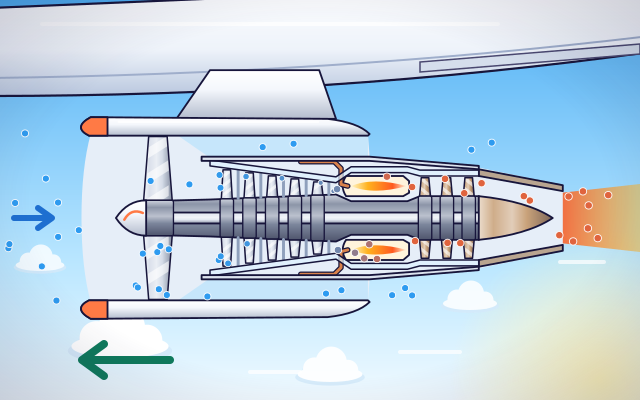
- At the front, a huge fan spins many times each second. It pulls in an enormous amount of air. Some goes into the middle of the engine, and the rest flows around it.
- Inside the core, row after row of spinning blades push the air into a smaller and smaller space. This part is the compressor. Squeezed air is packed tight, and it warms up too.
- In the combustion chamber, fuel is sprayed into the squeezed air and burns with a steady flame. The gas becomes very hot, and hot gas pushes hard to spread out.
- On its way out, the hot gas blows through the turbine and spins it like a pinwheel. A shaft joins the turbine to the compressor and the fan, so the engine keeps itself turning.
- Finally the gas blasts out of the narrow nozzle, far faster than the air came in. The engine pushes the gas backward, so the gas pushes the engine and the plane forward.
Inside a see-through jet engine
Tap each part, from the front to the back, and watch what it does to the air.
- Fan. The fan is the big wheel of blades you see at the front of the engine. It pulls in air and pushes it backward.
- Bypass duct. Most of the air from the fan never goes through the hot middle. It flows around it in this outer tunnel and shoots out the back, giving a strong, quiet push.
- Compressor. The compressor is many rows of small spinning blades. Each row pushes the air into less space, so the air is squeezed more and more.
- Fuel nozzles. Fuel nozzles spray jet fuel into the squeezed air as a fine mist, so it mixes well and burns evenly.
- Combustion chamber. In the combustion chamber the fuel burns in a steady flame, like a gas stove that never goes out. It heats the air until it is far hotter than an oven.
- Turbine. The turbine is a set of blade wheels in the hot gas. The rushing gas spins them, and that spinning powers the front of the engine.
- Shaft. The shaft is a strong rod down the middle of the engine. It joins the turbine at the back to the compressor and fan at the front, so the hot gas keeps the whole engine turning.
- Exhaust nozzle. The exhaust nozzle is the narrow opening at the back. Squeezing through it makes the gas go even faster, like water from a hose when you cover part of the end.
Follow the air through the engine
Drag the parcel of air through the engine and watch the dials. Then change the fuel. Where is the air squeezed most? Where is it hottest? Where is it fastest?
Experiment: Where inside the engine is the air squeezed the most?
- Drag the air parcel slowly from the front to the back.
- Watch the pressure dial. Where does it reach its highest point?
- Now watch the speed dial in the nozzle. Then add more fuel and look again.
What we found: The air is squeezed the most at the end of the compressor. Burning the fuel then makes it very hot. After that the pressure falls again as the gas spins the turbine and speeds up through the nozzle, so it leaves much faster than it came in.
Turn on JavaScript to try it yourself.
Build it, then run it
Put the parts in order from front to back. Then set the fuel so the thrust is in the green zone without overheating the turbine, and press Run the test.
Where the push comes from
A jet engine does four jobs, one after another, all the time. People who work on engines remember them as suck, squeeze, burn, blow. A big fan sucks air in. A compressor squeezes it. Fuel burns in it. And the hot gas blows out the back.
Why squeeze the air first? Fuel burned in open air just makes a gentle flame. Fuel burned in tightly squeezed air releases its energy in a small space, so the gas pushes very hard to get out. The engine is built so the only easy way out is backward.
On the way out the gas spins a turbine, like wind spinning a pinwheel. A shaft joins the turbine to the fan and the compressor, so once the engine is running it keeps itself going as long as it has fuel.
The push itself is the balloon idea. The engine throws gas backward very fast, and the gas pushes the engine forward just as hard. A balloon runs out of air in a second. A jet engine keeps swallowing new air, so it can push for hours. Most of the push in an airliner engine comes from the big fan blowing air around the hot core.
Key words
- Thrust
- The forward push made by throwing air or gas backward.
- Compressor
- Rows of spinning blades that squeeze air into a smaller space and raise its pressure.
- Combustion chamber
- The part of the engine where fuel burns in the compressed air.
- Turbine
- A wheel of blades that hot gas spins, like wind spinning a pinwheel.
- Pressure ratio
- How many times the compressor multiplies the pressure of the air.
- Bypass ratio
- How much air flows around the core compared with how much flows through it.
Check your thinking
-
What actually pushes a jet plane forward?
Show the answer
Gas thrown backward very fast pushes the engine forward. It works like a balloon you let go. It does not need air behind it to push against.
-
What is the right order of jobs inside a jet engine?
Show the answer
Suck, squeeze, burn, blow. Air is pulled in, squeezed, heated by burning fuel and then blown out the back.
-
Why does the engine squeeze the air before burning fuel in it?
Show the answer
Burning in squeezed air makes a much stronger push. Squeezed air packs the energy of the burning fuel into a small space, so the gas pushes out much harder.
-
What keeps the fan and compressor spinning while the engine runs?
Show the answer
The turbine, which is spun by the hot gas and joined to them by a shaft. Hot gas spins the turbine, and the shaft carries that spin to the front of the engine.
-
An engine at cruising height takes in much thinner air than at sea level. With the same exhaust speed, what happens to its thrust?
Show the answer
It falls, because less mass of air passes through each second. Thrust is about mass flow times the change in speed. Thinner air means less mass each second, so less thrust.
-
Where is the gas in a jet engine hottest?
Show the answer
In the combustion chamber, where the fuel burns. Burning fuel heats the gas far above the temperature of an oven.
You're a Flight & transportation expert!
You watched, looked inside, tried it, solved the challenge and went deeper. Pick another question below, or switch the age at the top to see this topic another way.
More about flight & transportation
 #128
Flight & transportation
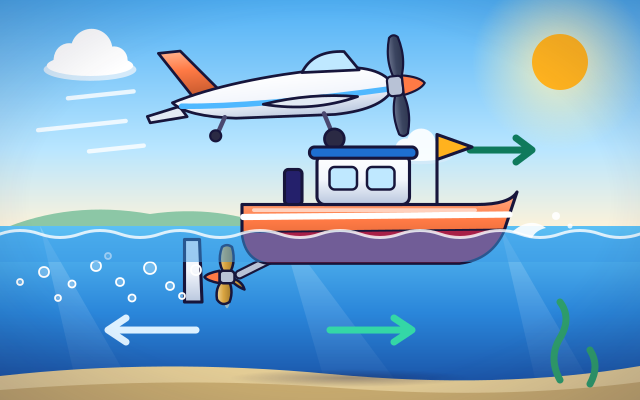
How do propellers push vehicles forward?
Rotate blades through air or water and inspect the direction of the resulting flow.
#128
Flight & transportation
How do propellers push vehicles forward?
Rotate blades through air or water and inspect the direction of the resulting flow.
 #129
Flight & transportation
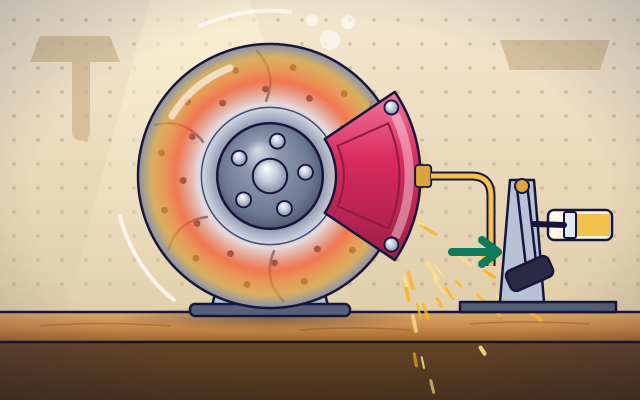
How do disc brakes stop a vehicle?
Press pads against a spinning disc and compare stopping under different simulated conditions.
#129
Flight & transportation
How do disc brakes stop a vehicle?
Press pads against a spinning disc and compare stopping under different simulated conditions.
 #130
Flight & transportation
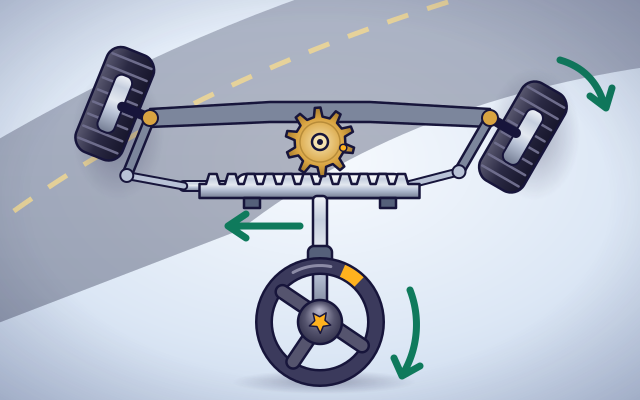
How does a car's steering system work?
Trace steering-wheel movement through a rack, linkages, and the front wheels.
#130
Flight & transportation
How does a car's steering system work?
Trace steering-wheel movement through a rack, linkages, and the front wheels.
 #131
Flight & transportation
How does a differential help a car turn?
Drive around corners and compare the speeds of the inner and outer wheels.
#131
Flight & transportation
How does a differential help a car turn?
Drive around corners and compare the speeds of the inner and outer wheels.
Keep exploring
Games to play next
- Plane Flight SimulatorTake off from the runway and thread numbered sky hoops in order. Every clean flight is a new personal best.
- City Driving AdventureExplore the city behind the wheel, park safely and collect roadside deliveries.
- Machine RepairFix levers, pulleys, gears and ramps so every contraption works.
Guide for grown-ups
- How to start homeschooling: a step-by-step guide for familiesA guide for parents · 7 min read
Science games by grade
Science worksheets by grade
- Preschool Science Worksheets
- Pre-K Science Worksheets
- Kindergarten Science Worksheets
- 1st Grade Science Worksheets
- 2nd Grade Science Worksheets
- 3rd Grade Science Worksheets
- 4th Grade Science Worksheets
- 5th Grade Science Worksheets
- 6th Grade Science Worksheets
- 7th Grade Science Worksheets
- 8th Grade Science Worksheets