How do paddles move and steer a kayak?
A paddle pushes on the water and the water pushes back on the kayak. Where you push decides whether you go, turn, slow down or back up.
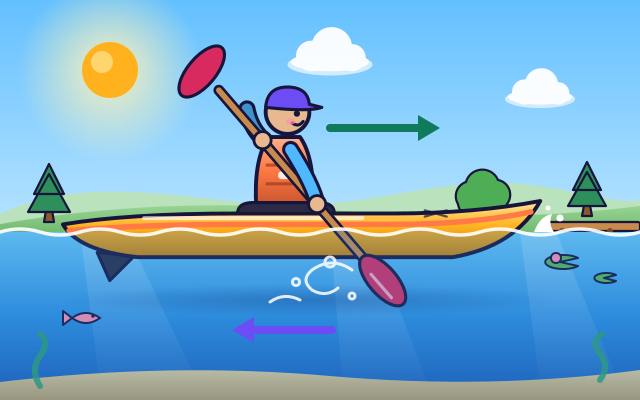
The big idea: When the blade pushes water backward, the water pushes the kayak forward. A push on one side also swings the nose away from that side, so paddlers swap sides to go straight and reach wide to turn.
It's like sitting on a wheeled chair and pushing off a wall with one hand: you roll away from the push, and if you push from one side, you spin too.
The interactive parts didn't load. The explanations below still work; try reloading the page.
Push the water, move the boat
- A kayak sits still on a calm lake. It has no engine and no sail, just a paddle with a blade at each end. How can a paddle move a boat, and steer it too?
- The paddler dips a blade in near her feet and pulls it back. The blade pushes water backward. The water pushes back on the blade just as hard, and that push slides the kayak forward.
- Seen from above, a stroke on the right side pushes the kayak forward, but it also swings the nose a little to the left. So paddlers swap sides, left then right, and the wiggles cancel out.
- To turn on purpose, the paddler reaches far out and sweeps the blade in a wide curve from the nose to the tail. Pushing far from the middle of the boat swings it around quickly.
- To slow down, the paddler pushes the blade forward instead of pulling it back. Now the water pushes the kayak backward. It slows, stops, and with more strokes it reverses.
- So one paddle does four jobs. Pull back to go, sweep wide to turn, push forward to slow or reverse. Every time, the kayak moves the opposite way to the water you push.
The parts of a kayak and its paddle
Tap each part of the kayak and the paddle. Watch what it does!
- Blade. The blade is the wide, flat end of the paddle. Its big face catches a lot of water, so the paddler has something solid to push against.
- Shaft. The shaft joins the two blades. The paddler holds it with both hands, pulling with one hand while pushing with the other.
- Cockpit. The paddler sits low in the cockpit with feet on footrests. Sitting low keeps the kayak steady. Paddlers always wear a life jacket.
- Hull. The hull is long, narrow and smooth, so it slips forward easily. But it is hard to push sideways, which helps the kayak keep going the way it points.
- Bow. The bow is the pointed front of the kayak. It parts the water smoothly, and a stroke that starts near the bow has the most turning power.
- Stern. The stern is the back of the kayak. Trailing a blade in the water beside the stern steers the kayak, like a rudder.
- Skeg. The skeg is a small fin under the stern. It stops the back of the kayak from sliding sideways, so the kayak keeps to a straight line.
Try every stroke
Press Left or Right for each kind of stroke. Or drag a blade through the water yourself. Find out what each stroke does to the kayak.
Experiment: You paddle forward on the right side only, again and again. Where will the kayak go?
- Press Forward stroke, Right four times. Watch the trail.
- Now go right, left, right, left. What is different?
- Try a Sweep stroke, then a Reverse stroke.
What we found: Paddling on the right pushes the kayak forward, but it also swings the nose to the left, so the kayak curves away from the paddle. Swapping sides keeps it straight. A wide sweep turns it fast, and a reverse stroke slows it or sends it backward.
Turn on JavaScript to try it yourself.
Around the island
Paddle around the island and reach the dock. Use as few strokes as you can, and do not bump the rocks.
Pushing on water
You cannot push yourself along by pushing on your own boat. You have to push on something outside it. For a kayak, that something is the water. When the blade pushes water backward, the water pushes the blade, and so the paddler and the kayak, forward. Pushes always come in pairs like this.
A kayak paddle works on one side at a time, and that side is not the middle of the boat. A push on the right moves the kayak forward, but it also swings the nose to the left. That is why paddlers go left, right, left, right. Each stroke undoes the little turn of the one before.
To turn on purpose, you use the same effect and make it bigger. In a sweep stroke the blade reaches far out and travels in a wide curve. The farther from the middle of the kayak you push, the harder it turns. Try opening a door by pushing near the hinge, then near the handle, and you will feel the difference.
To slow down, you push water forward, so the water pushes you backward. A few of these reverse strokes will stop the kayak and then send it backward. Real paddlers always wear a life jacket, stay close to a grown-up, and practice these strokes in calm, shallow water first.
Key words
- Blade
- The wide, flat end of a paddle that pushes on the water.
- Forward stroke
- Pulling the blade back beside the kayak, which pushes the kayak forward.
- Sweep stroke
- A wide, curved stroke used to turn the kayak.
- Reverse stroke
- Pushing the blade forward, which slows the kayak or sends it backward.
- Torque
- A turning push. It is bigger when you push farther from the middle.
- Reaction force
- The push you get back when you push on something.
Check your thinking
-
What pushes a kayak forward?
Show the answer
The water pushing back on the blade. The blade pushes water backward, and the water pushes back just as hard, moving the kayak forward.
-
You paddle only on the left side. Which way does the kayak curve?
Show the answer
To the right. A stroke swings the nose away from the paddle side, so strokes on the left curve the kayak to the right.
-
Why does a wide sweep stroke turn the kayak more than a stroke close to the boat?
Show the answer
It pushes farther from the middle, so it has more turning power. A push far from the middle turns something more easily, like pushing a door near its handle.
-
What does a reverse stroke do?
Show the answer
It pushes water forward, so the kayak slows or goes backward. The kayak always moves the opposite way to the water you push.
-
What does the little fin called a skeg do?
Show the answer
It helps the kayak keep going straight. The skeg stops the back of the kayak from sliding sideways.
You're a Flight & transportation expert!
You watched, looked inside, tried it, solved the challenge and went deeper. Pick another question below, or switch the age at the top to see this topic another way.
More about flight & transportation
 #140
Flight & transportation
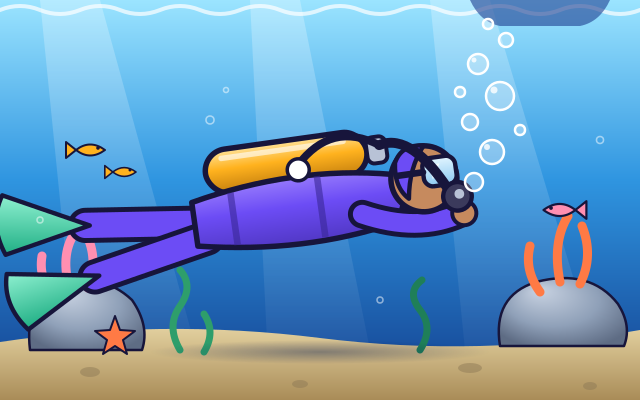
How do scuba regulators deliver breathing gas?
Follow compressed gas through a simplified regulator as surrounding water pressure changes.
#140
Flight & transportation
How do scuba regulators deliver breathing gas?
Follow compressed gas through a simplified regulator as surrounding water pressure changes.
 #141
Flight & transportation
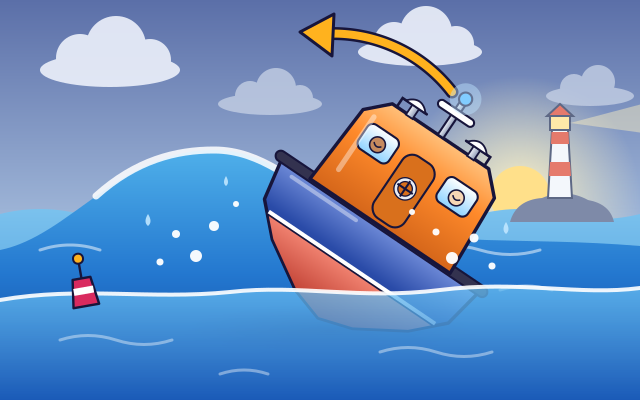
How do self-righting lifeboats turn upright again?
Tilt model boats and compare how hull shape and weight placement affect recovery.
#141
Flight & transportation
How do self-righting lifeboats turn upright again?
Tilt model boats and compare how hull shape and weight placement affect recovery.
 #142
Flight & transportation
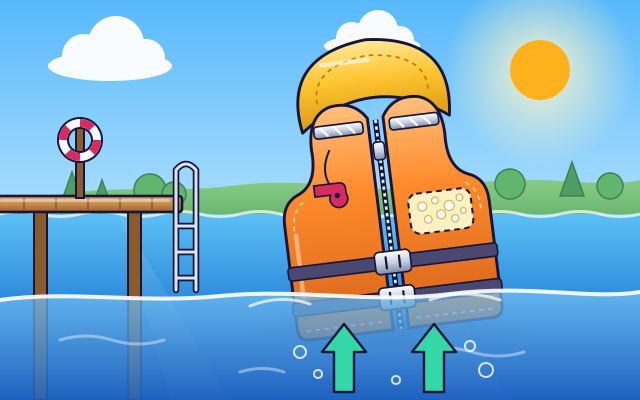
How do life jackets help people float?
Explore buoyant material, body position, and stability around a floating character.
#142
Flight & transportation
How do life jackets help people float?
Explore buoyant material, body position, and stability around a floating character.
 #195
Flight & transportation
How does a gas pump stop when the tank is full?
Follow fuel through pumping and metering, then explore the nozzle's shutoff mechanism.
#195
Flight & transportation
How does a gas pump stop when the tank is full?
Follow fuel through pumping and metering, then explore the nozzle's shutoff mechanism.
Keep exploring
Games to play next
- Downriver Kayak SlalomFind the rhythm of the current, one paddle stroke at a time.
- Plane Flight SimulatorTake off from the runway and thread numbered sky hoops in order. Every clean flight is a new personal best.
- Machine RepairFix levers, pulleys, gears and ramps so every contraption works.
Guide for grown-ups
- How to start homeschooling: a step-by-step guide for familiesA guide for parents · 7 min read
Science games by grade
Science worksheets by grade
- Preschool Science Worksheets
- Pre-K Science Worksheets
- Kindergarten Science Worksheets
- 1st Grade Science Worksheets
- 2nd Grade Science Worksheets
- 3rd Grade Science Worksheets
- 4th Grade Science Worksheets
- 5th Grade Science Worksheets
- 6th Grade Science Worksheets
- 7th Grade Science Worksheets
- 8th Grade Science Worksheets