How does a gas pump stop when the tank is full?
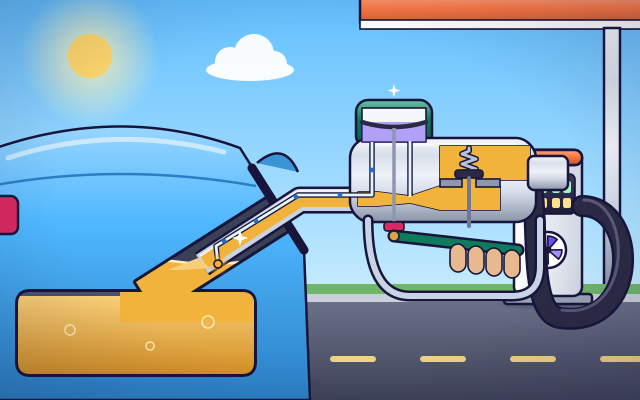
Fuel is pumped up from a tank under the ground and counted by a meter. A tiny hole near the nozzle's tip senses a full tank and shuts the valve with a click.
The big idea: While fuel flows, the nozzle sucks a little air in through a tiny hole near its tip. When rising fuel covers the hole, the air stops, the suction pulls a thin disc, and the valve snaps shut.
It's like sipping through a straw. Air comes easily until the end dips into the drink. Then you feel a strong pull. The nozzle feels that same pull and lets go.
The interactive parts didn't load. The explanations below still work; try reloading the page.
From the tank to the click
- A car pulls up to the pump. The fuel is stored in a huge tank buried under the ground. A grown-up lifts the nozzle and starts to fill up.
- A pump sitting down in the tank pushes the fuel up a pipe and into the dispenser, the tall box you see beside the car.
- In the dispenser, the fuel turns a meter. Each turn lets through exactly the same amount, so counting the turns measures the fuel. The display shows how much and what it costs.
- Now look inside the nozzle. Squeezing the lever lifts a valve off its seat. Fuel rushes through, squeezes past a narrow place, and pours down the spout.
- Near the tip of the spout is a tiny hole joined to a thin tube. The fuel rushing past the narrow place sucks air in through the hole, like sipping through a straw.
- When the fuel rises and covers the hole, no more air can get in. The sucking suddenly pulls hard on a thin rubber disc. The disc lets go of a latch and the valve snaps shut. Click!
Look inside a fuel nozzle
Tap each part. Watch it move when you find it. This is a simplified nozzle.
- Lever. A grown-up squeezes the lever. It pushes up on a rod that lifts the valve.
- Valve and spring. The valve is a stopper pressed onto its seat by a spring. The lever lifts it to let fuel through. When the lever lets go, the spring snaps it shut.
- Narrow throat. Here the passage gets narrow. The fuel has to speed up to squeeze through, and fast-moving fuel pulls on whatever is beside it. That makes the sucking.
- Sensing tube. A thin tube runs inside the spout, from the tiny hole at the tip back to the narrow throat. Air travels along it.
- Sensing hole. This tiny hole is the nozzle's sensor. While it is in the air, air flows in. When fuel covers it, the air stops.
- Rubber disc. A thin rubber disc, called a diaphragm, sits over a small chamber. When the hole is covered, the sucking gets strong and pulls the disc inward.
- Latch. The latch holds the lever's pivot in place. When the disc moves, the latch lets go, the lever drops and the valve shuts. That is the click you hear.
- Spout. The spout is the metal pipe that goes into the car's filler pipe. Fuel pours out of its end.
What makes the click?
Tap the lever to start the fuel and watch the tank fill. Then try again, and plug the tiny hole near the tip before the tank is full.
Experiment: What tells the nozzle that the tank is full?
- Squeeze the lever. Where is the fuel when the nozzle clicks?
- Start again with a new car. Squeeze, and this time tap the tiny hole to plug it.
- Did the nozzle click even though the tank was not full?
What we found: The nozzle clicks off whenever the tiny hole is covered, whether by fuel or by a plug. The hole is the sensor. It does not matter how much fuel is in the tank or what the meter says.
Turn on JavaScript to try it yourself.
Stop on the dollar
The driver wants exactly $18.00 of fuel. Watch the meter and stop the fuel as close as you can.
A nozzle that feels
The fuel at a filling station is stored in big tanks buried under the ground. When a grown-up lifts the nozzle, a pump down in the tank starts pushing fuel up a pipe to the dispenser, the tall box with the hose.
Inside the dispenser the fuel passes through a meter. The meter is like a little waterwheel made very exactly: every turn lets through the same amount of fuel. A sensor counts the turns, and a small computer shows the amount and the price. Inspectors check these meters, so you get what you pay for.
The clever part is the nozzle. While fuel flows, it rushes through a narrow place inside the nozzle. Fast-moving fuel pulls on things beside it, so it sucks air along a thin tube from a tiny hole near the tip of the spout. As long as the hole is in the air, the air flows easily.
When the tank is nearly full, fuel rises up the filler pipe and covers the hole. Now no air can get in. The sucking suddenly pulls hard on a thin rubber disc. The disc lets go of a latch, and a spring snaps the valve shut. Click! No electricity is needed. It is just like the straw: when its end goes under your drink, you feel the pull. Fuel burns easily, so only grown-ups fill a tank, with the engine off.
Key words
- Dispenser
- The cabinet beside the car that holds the meter, the display and the hose.
- Meter
- A device that measures how much fuel has gone through.
- Venturi
- A narrow place in a pipe, where a flowing liquid speeds up and makes suction.
- Diaphragm
- A thin, flexible disc that moves when the pressure on its two sides is different.
- Suction
- A pull made by lower pressure, like the pull in a straw.
Check your thinking
-
What makes the nozzle shut off?
Show the answer
Fuel covers the tiny hole near the tip of the spout. With the hole covered, no air can get in. The suction pulls a rubber disc that releases the latch.
-
How does the pump know how much fuel you took?
Show the answer
A meter turns as the fuel flows, and its turns are counted. Every turn of the meter lets through the same amount, so counting turns measures the fuel.
-
You plug the tiny hole with a finger of clay while fuel flows into an empty tank. What happens?
Show the answer
The nozzle clicks off, even though the tank is nearly empty. The nozzle cannot tell fuel from a plug. A covered hole always means shut off.
-
Why does fuel speed up in the narrow place?
Show the answer
The same amount has to squeeze through a smaller space. Like a river that runs faster where its banks are close together.
-
Who should use a fuel pump?
Show the answer
A grown-up, with the engine switched off. Fuel burns very easily, so filling up is a job for grown-ups.
You're a Flight & transportation expert!
You watched, looked inside, tried it, solved the challenge and went deeper. Pick another question below, or switch the age at the top to see this topic another way.
More about flight & transportation
 #196
Flight & transportation
How does a manual wheelchair move and turn?
Operate push rims independently and explore steering, caster wheels, and brakes.
#196
Flight & transportation
How does a manual wheelchair move and turn?
Operate push rims independently and explore steering, caster wheels, and brakes.
 #1
Flight & transportation
How do airplanes fly?
Explore wings, engines, and flight controls. Watch airflow around a wing, adjust speed and wing angle, and try taking off and landing.
#1
Flight & transportation
How do airplanes fly?
Explore wings, engines, and flight controls. Watch airflow around a wing, adjust speed and wing angle, and try taking off and landing.
 #2
Flight & transportation
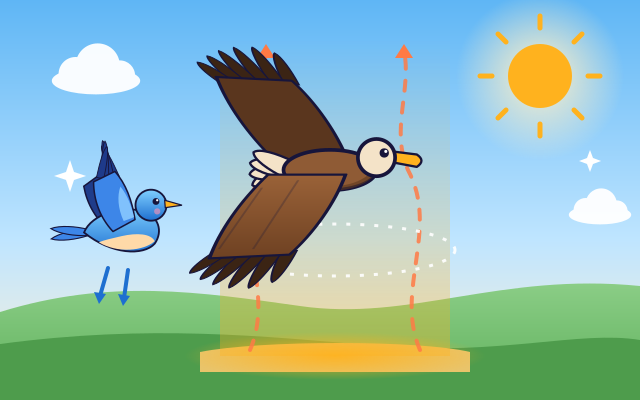
How do birds fly?
Watch wings and feathers in slow motion. Compare flapping, soaring, and gliding, then experiment with different wing shapes and flying conditions.
#2
Flight & transportation
How do birds fly?
Watch wings and feathers in slow motion. Compare flapping, soaring, and gliding, then experiment with different wing shapes and flying conditions.
 #3
Flight & transportation
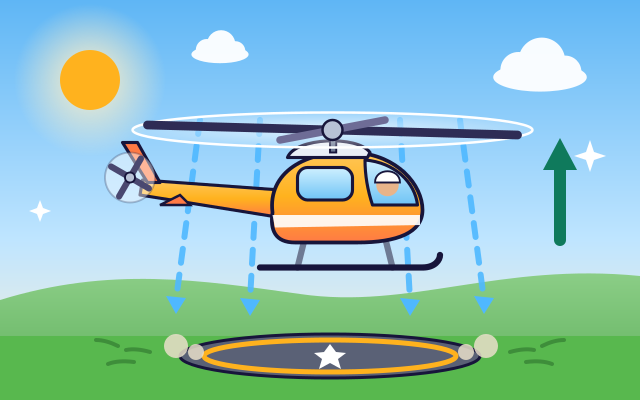
How do helicopters fly and hover?
Explore the main rotor, tail rotor, and controls. Adjust a simplified helicopter's lift and direction to take off, hover, turn, and land.
#3
Flight & transportation
How do helicopters fly and hover?
Explore the main rotor, tail rotor, and controls. Adjust a simplified helicopter's lift and direction to take off, hover, turn, and land.
Keep exploring
Games to play next
- Machine RepairFix levers, pulleys, gears and ramps so every contraption works.
- Timetable TerminalRead the departure board, count the minutes and catch your connection on time.
- City Driving AdventureExplore the city behind the wheel, park safely and collect roadside deliveries.
Guide for grown-ups
- How to start homeschooling: a step-by-step guide for familiesA guide for parents · 7 min read
Science games by grade
Science worksheets by grade
- Preschool Science Worksheets
- Pre-K Science Worksheets
- Kindergarten Science Worksheets
- 1st Grade Science Worksheets
- 2nd Grade Science Worksheets
- 3rd Grade Science Worksheets
- 4th Grade Science Worksheets
- 5th Grade Science Worksheets
- 6th Grade Science Worksheets
- 7th Grade Science Worksheets
- 8th Grade Science Worksheets