How do life jackets help people float?
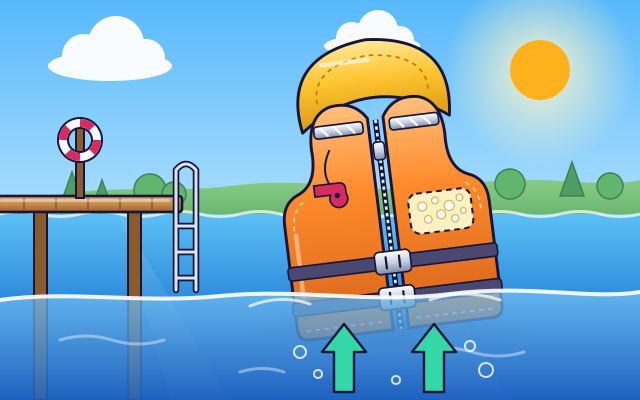
Foam full of tiny sealed bubbles adds lots of float and hardly any weight, and putting it in front turns your face up to the sky.
The big idea: A life jacket makes you bigger without making you much heavier, so the water pushes you up harder. Most of the foam is in front, which rolls you onto your back with your face up.
It's like hugging a beach ball to your chest in the pool. The air wants to be on top of the water, so it lifts you and rolls you onto your back.
The interactive parts didn't load. The explanations below still work; try reloading the page.
How a life jacket keeps your face up
- Before anyone steps onto the dock, on goes a life jacket. It is light and puffy, and it feels like a small cushion. So how can it hold up a whole person?
- This is a float-test dummy, built to float like a person. A body is nearly as heavy as the water around it, so it floats very low. The mouth is under water.
- Inside the jacket are thick pads of foam. Zoom in and you find thousands of tiny bubbles, each one sealed shut. Foam is mostly trapped gas, so it is very light for its size.
- With the jacket on, the dummy takes up more room but weighs almost the same. The water pushes back harder, and the dummy rises until its head is well clear.
- Most of the foam is on the chest. It always heads for the surface, so it tips the wearer back until the face points at the sky. A collar behind the head holds it up.
- A jacket only works if it stays on you. It must be the right size, zipped and clipped, with the straps pulled snug so it cannot slide up over your head.
Look inside a life jacket
Tap each part of the jacket. Every one has a job to do in the water.
- Bright cover. The tough fabric cover is a bright color on purpose. Orange, yellow and red stand out against blue or gray water, so helpers can spot you.
- Foam panels. Thick pads of foam fill the front, with thinner ones at the back. Each tiny bubble in the foam is sealed, so the foam never soaks up water.
- Collar. The big collar is a floating pillow. When you lean back in the water it sits behind your head and keeps your mouth and nose in the air.
- Straps and buckles. A zip and strong buckles close the jacket, and you pull the straps until it fits snugly. A snug jacket lifts you. A loose one just floats up by itself.
- Leg strap. Children's jackets have a strap that passes between the legs. It stops the jacket from sliding up when you are in the water.
- Whistle. A whistle is tied to the jacket. Its sharp sound carries much farther over water than a shout, and blowing it takes less effort.
- Reflective tape. Strips of silvery tape bounce light straight back toward a flashlight or a searchlight. At night they make the jacket flash brightly.
Float test: where should the foam go?
Give the dummy foam in front or on the back, add a collar and tighten or loosen the straps. Watch the ring around its mouth. You can also push it under and let go.
Experiment: Where should most of the foam go so that the dummy floats face up?
- Start with no foam. Look at the ring around the dummy's mouth.
- Put foam on the back only. Then move it to the front.
- Add the collar. Then try the straps loose.
What we found: With no jacket the dummy floats, but so low that its mouth is under water. Foam on the back floats up and tips the face down. Foam on the front lifts the chest, so the dummy leans back with its face to the sky. A collar props the head higher, and loose straps let the jacket slide up instead of lifting the body.
Turn on JavaScript to try it yourself.
Pass the float test
Build a jacket that floats the dummy face up with its mouth at least 6 cm above the water. Then press Jump in!
How a life jacket holds your head up
Anything in water gets pushed up by the water. The push is called buoyancy, and it is as strong as the weight of the water that the thing shoves out of the way. Big, light things get a big push and float. Small, heavy things get a small push and sink.
Your body is mostly water, so it is almost exactly as heavy as the water it pushes aside. That is why you nearly float. With a deep breath in your chest you bob with just the top of your head out, and your legs, which are heavier, hang down. Nearly floating is not good enough, because your mouth and nose are still under water.
A life jacket fixes this. Its foam is made of thousands of tiny sealed bubbles, so it takes up a lot of room but weighs very little. Wearing it makes you much bigger but hardly any heavier. The water pushes up harder, and you rise until your head is clear. Most of the foam is on the front of the jacket. Foam always heads for the surface, so the foam on your chest rolls you onto your back with your face up, and the collar holds up your head.
A jacket must fit. If it is too big or the straps are loose, it floats up around your ears while you slip down inside it. So always wear one on a boat and near open water, in your own size, zipped, clipped and snug, and stay close to a grown-up. Hugging a beach ball works in a similar way, but a ball is one big bubble that can pop. Foam has thousands of little ones.
Key words
- Buoyancy
- The upward push of water on anything in it.
- Density
- How heavy something is for its size. Things less dense than water float.
- Closed-cell foam
- Plastic full of tiny gas bubbles that are each sealed, so water cannot soak in.
- Displace
- To push water out of the way and take up its space.
- Newton
- The unit for measuring a push or a pull. Lifting a small apple takes about 1 newton.
- Airway
- The mouth and nose: the way air gets into your body.
Check your thinking
-
Why does foam make a life jacket float so well?
Show the answer
It is full of tiny sealed bubbles, so it is very light for its size. Lots of room and very little weight means a big push up from the water.
-
Why is most of the foam on the front of a life jacket?
Show the answer
It floats up and turns the wearer onto their back, face up. Foam always heads for the surface. On the chest, that rolls you back so your face is out of the water.
-
What happens in the water if a life jacket is too big or its straps are loose?
Show the answer
It slides up around the head while the body slips lower. The foam lifts the jacket, not you, unless the jacket is fastened snugly to your body.
-
Why can a person float with only a little extra help?
Show the answer
A body is almost as heavy as the water it pushes aside, so it nearly floats already. Because a body is so close to floating, a few liters of foam are enough to lift the head clear.
-
What is the collar of a life jacket for?
Show the answer
It holds the head up so the mouth and nose stay in the air. The collar is a floating pillow behind the head.
You're a Flight & transportation expert!
You watched, looked inside, tried it, solved the challenge and went deeper. Pick another question below, or switch the age at the top to see this topic another way.
More about flight & transportation
 #195
Flight & transportation
How does a gas pump stop when the tank is full?
Follow fuel through pumping and metering, then explore the nozzle's shutoff mechanism.
#195
Flight & transportation
How does a gas pump stop when the tank is full?
Follow fuel through pumping and metering, then explore the nozzle's shutoff mechanism.
 #196
Flight & transportation
How does a manual wheelchair move and turn?
Operate push rims independently and explore steering, caster wheels, and brakes.
#196
Flight & transportation
How does a manual wheelchair move and turn?
Operate push rims independently and explore steering, caster wheels, and brakes.
 #1
Flight & transportation
How do airplanes fly?
Explore wings, engines, and flight controls. Watch airflow around a wing, adjust speed and wing angle, and try taking off and landing.
#1
Flight & transportation
How do airplanes fly?
Explore wings, engines, and flight controls. Watch airflow around a wing, adjust speed and wing angle, and try taking off and landing.
 #2
Flight & transportation
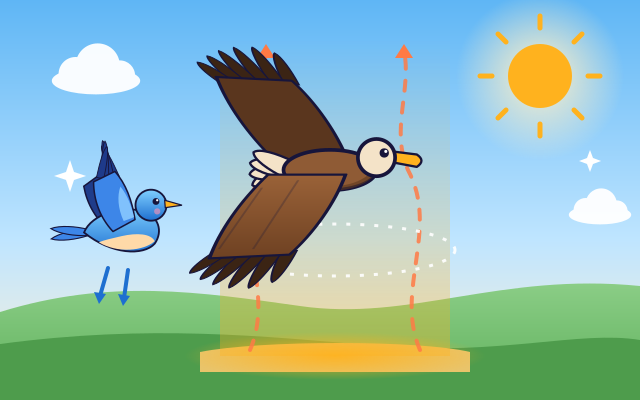
How do birds fly?
Watch wings and feathers in slow motion. Compare flapping, soaring, and gliding, then experiment with different wing shapes and flying conditions.
#2
Flight & transportation
How do birds fly?
Watch wings and feathers in slow motion. Compare flapping, soaring, and gliding, then experiment with different wing shapes and flying conditions.
Keep exploring
Games to play next
- Downriver Kayak SlalomFind the rhythm of the current, one paddle stroke at a time.
- Plane Flight SimulatorTake off from the runway and thread numbered sky hoops in order. Every clean flight is a new personal best.
- Machine RepairFix levers, pulleys, gears and ramps so every contraption works.
Guide for grown-ups
- How to start homeschooling: a step-by-step guide for familiesA guide for parents · 7 min read
Science games by grade
Science worksheets by grade
- Preschool Science Worksheets
- Pre-K Science Worksheets
- Kindergarten Science Worksheets
- 1st Grade Science Worksheets
- 2nd Grade Science Worksheets
- 3rd Grade Science Worksheets
- 4th Grade Science Worksheets
- 5th Grade Science Worksheets
- 6th Grade Science Worksheets
- 7th Grade Science Worksheets
- 8th Grade Science Worksheets