How do laser cutters cut shapes?
Mirrors steer a beam of light, a lens squeezes it into a tiny hot dot, and motors move the dot along your drawing.
The big idea: A laser cutter makes a narrow beam of light, bounces it off mirrors to a moving head and focuses it with a lens into a dot smaller than a pinhead. All that light in one tiny spot burns a thin line through the material, and motors steer the dot along the path you drew.
It's like using a magnifying glass to squeeze sunshine into one bright, hot dot, while a robot arm moves the dot along your drawing.

The interactive parts didn't load. The explanations below still work; try reloading the page.
From a drawing to a wooden star
- Zoe draws a star on her tablet and sends it to the laser cutter. The machine will follow her lines exactly, with a grown-up in charge of the controls.
- A flashlight's light spreads out and gets weaker. Inside the cutter, a long glass tube makes laser light, which stays together in one thin, straight, powerful beam.
- The tube stays still. Three mirrors bounce the beam along the rails to the cutting head, so the beam always arrives, wherever the head moves.
- In the head, a lens bends the beam into a dot thinner than a pencil line. With all that light in one tiny spot, the wood there burns away in an instant, and a puff of air blows the smoke clear.
- Two motors move the head: one slides it left and right, the other slides the whole bar forward and back. Together they trace Zoe's star, and the dot burns a thin line all the way round.
- When the line meets itself, the star is cut free. Lift it out and it matches the drawing exactly. The edges are a little brown where the light burned through.
Look inside a laser cutter
This is a laser cutter seen from above, with its lid open. Tap each part to see what it does.
- Laser tube. The laser tube is where the light is made. Electricity makes the gas inside glow, and a beam of laser light shoots out of one end.
- Mirrors. Three mirrors bounce the beam from the tube, along the side, across the bar and into the head. They must be lined up very carefully.
- Moving bar. The bar slides forward and back on two rails. A motor and a toothed belt move it by tiny, exact steps.
- Cutting head. The head slides left and right along the bar. It carries the last mirror and the lens, and it points the beam straight down at the material.
- Focusing lens. The lens bends the beam inward so that it meets at one tiny point on the material. That is where it gets hot enough to cut.
- Honeycomb bed. The material lies on a bed of thin metal walls shaped like a honeycomb. The beam passes down between them, so it does not bounce back and burn the underside.
- Exhaust fan. Cutting makes smoke. The fan pulls it out of the machine and through a filter or a pipe, so the air in the room stays clean.
- Safety lid. The lid must be closed before the laser will fire. Its window blocks the beam, so people watching are safe. A grown-up always runs the machine.
Draw, cut and engrave
Pick a pattern or draw your own. The laser will trace it twice: once at low power and once at high power. Drag the head to guide it, then try to pop both shapes out.
Experiment: The same pattern is traced at low power and at high power. What will be different?
- Choose a pattern, or draw one on the wood.
- Drag the laser head, or press Fire, until both copies are traced.
- Press Pop out. Which shape comes free?
What we found: At low power the dot only scorched a shallow groove in the top of the wood: that is engraving, and the shape stayed stuck. At high power the dot burned all the way through, so the shape popped out. The same machine can draw on a surface or cut right through it, just by changing how much light it uses.
Turn on JavaScript to try it yourself.
Make a smiley badge
Make a wooden badge with a smiley face. The face must only be engraved, and the round outline must be cut right through. Choose the power for each.
Cutting with a dot of light
On a sunny day a magnifying glass can squeeze sunlight into a small, bright dot. The dot gets hot because all the light that fell on the whole lens has been packed into one tiny place. A laser cutter uses the same idea, but with a much stronger and much neater light.
The light is made in a long tube at the back of the machine. Laser light is special: instead of spreading out like the light from a lamp, it travels in one thin, straight beam. Three mirrors bounce the beam along the machine to the cutting head, and a lens in the head squeezes it into a dot thinner than a pencil line.
Where the dot lands, the material gets so hot that it turns to smoke in an instant. Motors slide the head left and right and forward and back, following the lines of a drawing, so the dot burns a thin path. If the laser is strong and moves slowly, it cuts all the way through. If it is weak or moves quickly, it only marks the surface. That is called engraving.
Laser cutters need care. The beam can burn skin and harm eyes, so it is shut inside a box with a lid that must be closed. Cutting makes smoke, so a fan pulls it away. And because the machine works by burning, a grown-up always stays to watch it.
Key words
- Laser
- A source of light that travels in one thin, straight, strong beam.
- Focus
- The point where a lens brings a beam of light together into its smallest spot.
- Kerf
- The thin slot that the beam burns away as it cuts.
- Engraving
- Marking the surface without cutting all the way through.
- Gantry
- The bar that slides across the machine and carries the cutting head.
- Interlock
- A safety switch that turns the laser off when the lid is opened.
Check your thinking
-
What does the lens in the cutting head do?
Show the answer
It squeezes the beam into a tiny, very hot dot. Packing all the light into one small spot makes that spot hot enough to burn through.
-
How does the dot of light follow a drawing?
Show the answer
Motors slide the head left and right and the bar forward and back. Two motors work together so the head can reach any point on the bed.
-
You want to draw a picture on wood without cutting it out. What should you change?
Show the answer
Use less power, or move faster. Less light in each spot only marks the surface. That is engraving.
-
Why must the lid be closed while the laser is working?
Show the answer
To keep the beam and the smoke safely inside. The beam can burn and harm eyes, so it stays shut in, and a fan takes the smoke away.
-
Why can a carbon dioxide laser not cut a sheet of clear glass or a polished copper plate well?
Show the answer
They absorb too little of its light, or reflect it, so they do not heat up enough in the right way. Cutting needs the material to absorb the beam's wavelength and turn it to heat in a small spot. Shiny metal reflects most of this light, and glass tends to crack rather than vaporize.
You're a Making everyday things expert!
You watched, looked inside, tried it, solved the challenge and went deeper. Pick another question below, or switch the age at the top to see this topic another way.
More about making everyday things
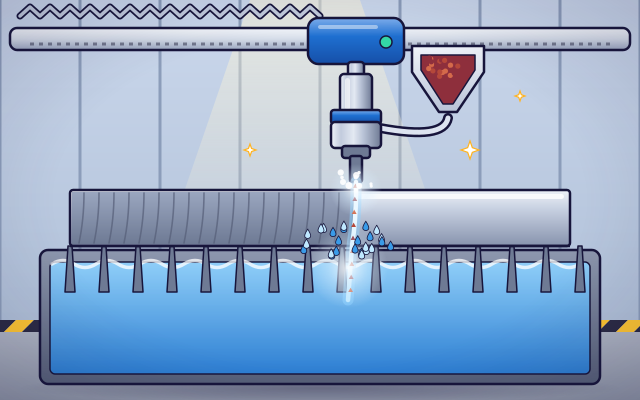 #320
Making everyday things
How do waterjet cutters cut tough materials?
Guide a simulated jet through different samples and compare the cuts.
#320
Making everyday things
How do waterjet cutters cut tough materials?
Guide a simulated jet through different samples and compare the cuts.
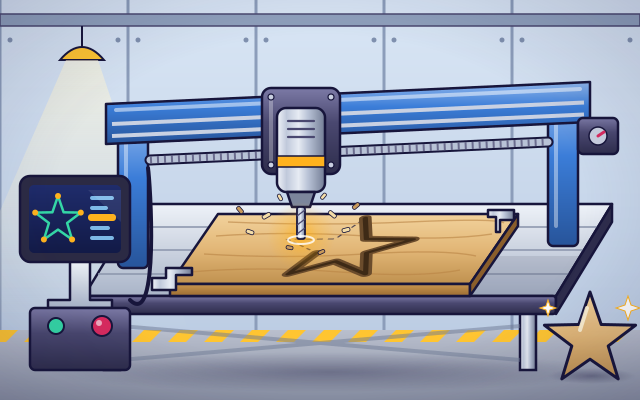 #321
Making everyday things
How do computer-controlled machines carve precise parts?
Follow a cutting tool as it removes material along planned paths.
#321
Making everyday things
How do computer-controlled machines carve precise parts?
Follow a cutting tool as it removes material along planned paths.
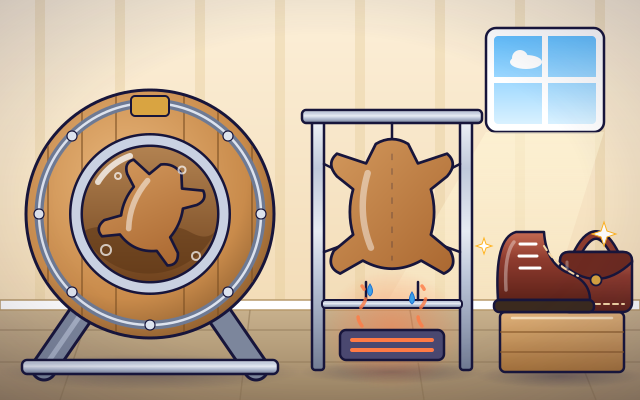 #322
Making everyday things
How is leather made?
Follow prepared hides through tanning, drying, softening, and finishing.
#322
Making everyday things
How is leather made?
Follow prepared hides through tanning, drying, softening, and finishing.
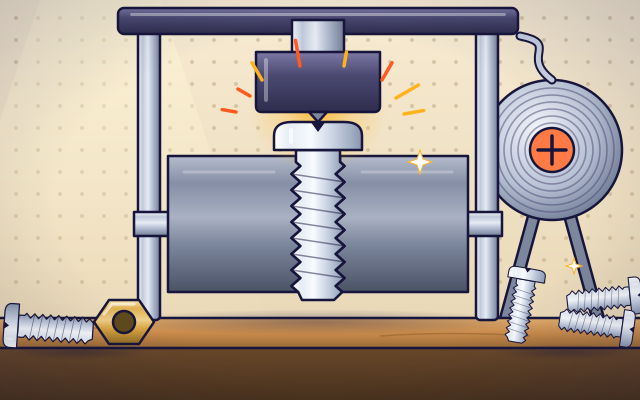 #323
Making everyday things
How are screws manufactured?
Shape a head, roll threads into the shaft, and inspect the fastener.
#323
Making everyday things
How are screws manufactured?
Shape a head, roll threads into the shaft, and inspect the fastener.
Keep exploring
Games to play next
- Geometry Architect 3DCount, build and fold solids like a real architect.
- Machine RepairFix levers, pulleys, gears and ramps so every contraption works.
- Sorting FactoryTurn a work order into if/else rules and watch the conveyor sort every item.
Guide for grown-ups
- How to start homeschooling: a step-by-step guide for familiesA guide for parents · 7 min read
Science games by grade
Science worksheets by grade
- Preschool Science Worksheets
- Pre-K Science Worksheets
- Kindergarten Science Worksheets
- 1st Grade Science Worksheets
- 2nd Grade Science Worksheets
- 3rd Grade Science Worksheets
- 4th Grade Science Worksheets
- 5th Grade Science Worksheets
- 6th Grade Science Worksheets
- 7th Grade Science Worksheets
- 8th Grade Science Worksheets