How do waterjet cutters cut tough materials?
A pump squeezes water through a hole thinner than a pin. Add sharp sand and the thin, fast jet slices steel, stone and glass.
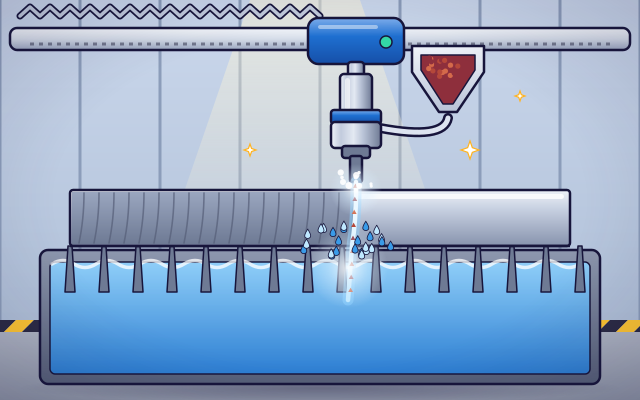
The big idea: A waterjet cutter squeezes water to an enormous pressure and lets it out through a tiny hole in a jewel. The jet is thin and extremely fast. For hard materials, sharp sand is mixed in, and each grain chips away a little as it flies through.
It's like a river carving a canyon, but millions of times faster: water carrying sand grinds its way through rock, a tiny bit at a time.
The interactive parts didn't load. The explanations below still work; try reloading the page.
How water cuts steel
- Water from a hose just splashes off a steel plate. It seems far too soft to cut anything. But squeeze it hard enough, and water becomes one of the toughest cutting tools there is.
- A special pump uses a big piston to push a thin rod into a small chamber full of water. All that push on such a small area squeezes the water to about four thousand times the pressure of the air around you.
- The squeezed water escapes through a hole thinner than a pin, drilled in a hard jewel. It bursts out as a thread of water moving faster than a jet plane.
- Plain water can cut soft things, but not steel. So hard, sharp sand called garnet is drawn into the jet. Each speeding grain chips off a speck of metal, and millions of grains every second wear a slot right through.
- Motors guide the head along the shape to be cut. The jet goes right through the plate and into a tank of water underneath, which soaks up its leftover power. The steel stays cool the whole time.
- Foam and rubber need only plain water. Glass, stone and steel need the sand. And because the jet cuts without heat, nothing melts, burns or bends.
Look inside a waterjet cutter
The cutting head has been cut open to show the path of the water. Tap each part.
- Pump. The pump squeezes water to an enormous pressure, far higher than in a fire hose or a pressure washer.
- High-pressure tube. Thick steel tubing carries the squeezed water to the cutting head. It is coiled like a spring so that it can flex as the head moves.
- Jewel with a tiny hole. A hard jewel with a hole thinner than a pin. Squeezing through that tiny hole is what turns the pressed water into a very fast jet.
- Sand hopper. The hopper holds garnet, a hard reddish sand with sharp edges. A tube feeds a steady trickle of it down to the cutting head.
- Mixing chamber. The fast jet rushing through this little chamber sucks the sand in from the side, so the grains join the water.
- Nozzle tube. The water and sand rush down a narrow, very hard tube that lines them up into one thin stream, about as wide as a pencil lead.
- Catcher tank. After the jet has cut through, it still has lots of power. A deep tank of water under the workpiece slows it down safely and collects the used sand.
Water alone, or water and sand?
Choose a sample and drag the cutting head across it, first with water alone and then with sand added. The finished cuts are pinned up so that you can compare them.
Experiment: The jet tries to cut steel with water alone, and then with sand added. What will you see?
- Choose the steel sample. Leave the sand switched off and drag the head across.
- Switch the sand on and cut the steel again.
- Look at the pinned-up cuts. Then try foam with water alone.
What we found: Water alone left only a faint scratch on the steel, because water is far softer than steel. With sharp sand in the jet, every grain chipped a little away and the jet went right through. Soft foam did not need the sand at all. The sand does the cutting; the water is what throws it.
Turn on JavaScript to try it yourself.
Three jobs, one morning
Cut the foam, the glass and the steel right through. The whole job must take 18 minutes or less, so do not go slower than each one needs.
The power of squeezed water
Put your thumb over the end of a garden hose and the water shoots out faster. A waterjet cutter takes that idea to the extreme. A powerful pump squeezes the water until it is pressing about four thousand times harder than the air around you. Then the water is let out through a hole in a jewel that is thinner than a pin.
The result is a thread of water moving faster than a jet plane. That thread can slice soft things all by itself: foam, rubber, paper, even cakes and frozen fish in food factories. But water is much softer than steel or stone, so on its own it just bounces off them.
For hard materials, sharp sand called garnet is added. The speeding water sucks the sand in and throws it at the work. Each grain chips away a tiny speck, a bit like sandpaper, but at enormous speed and all in one spot. Millions of grains every second wear a narrow slot right through steel, glass or stone as thick as your hand.
A waterjet has one special talent: it cuts cold. Saws, flames and lasers all heat what they cut, and heat can melt plastic, crack glass or soften hardened steel. A waterjet leaves the material just as it was. The jet is dangerous, so the machine is run by trained grown-ups, and a deep tank of water under the work catches the jet when it comes through.
Key words
- Pressure
- How hard something is being squeezed or pushed on.
- Orifice
- A small hole that a fluid is forced through. In a waterjet it is drilled in a jewel.
- Abrasive
- Hard, sharp grains that wear another material away.
- Erosion
- Wearing something away bit by bit, the way a river wears away rock.
- Kerf
- The narrow slot left by the cut. A waterjet's kerf is about a millimeter wide.
- Heat-affected zone
- The part next to a cut that got hot and was changed by the heat. A waterjet leaves none.
Check your thinking
-
Why is sand added to the water to cut steel?
Show the answer
The hard, sharp grains do the cutting; the water throws them. Water is softer than steel. The grains are harder, and the fast water gives them their punch.
-
Why does the water have to go through such a tiny hole?
Show the answer
Squeezing through a tiny hole makes a thin, very fast jet. Like a thumb over a hose, a small opening turns a hard push into a fast jet.
-
Which of these could plain water cut, with no sand?
Show the answer
A sheet of foam rubber. Soft materials give way to the fast water itself. Hard ones need the grains.
-
A laser cuts by heating. Why might a factory choose a waterjet instead?
Show the answer
It cuts cold, so nothing melts, burns or bends. With no heat, even materials that would melt or crack come out unharmed.
-
An intensifier's oil piston has 20 times the area of its water plunger. Oil arrives at 20 megapascals. About what water pressure results?
Show the answer
400 megapascals. The same force acts on one twentieth of the area, so the pressure is twenty times higher: 20 times 20 is 400.
You're a Making everyday things expert!
You watched, looked inside, tried it, solved the challenge and went deeper. Pick another question below, or switch the age at the top to see this topic another way.
More about making everyday things
 #321
Making everyday things
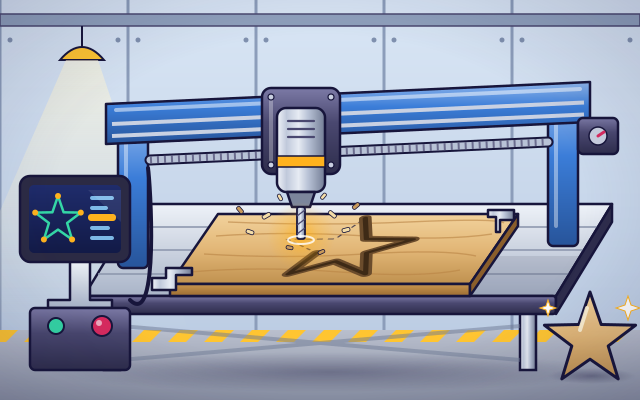
How do computer-controlled machines carve precise parts?
Follow a cutting tool as it removes material along planned paths.
#321
Making everyday things
How do computer-controlled machines carve precise parts?
Follow a cutting tool as it removes material along planned paths.
 #322
Making everyday things
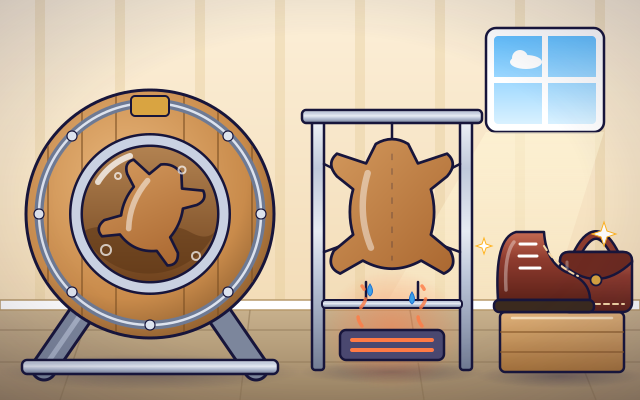
How is leather made?
Follow prepared hides through tanning, drying, softening, and finishing.
#322
Making everyday things
How is leather made?
Follow prepared hides through tanning, drying, softening, and finishing.
 #323
Making everyday things
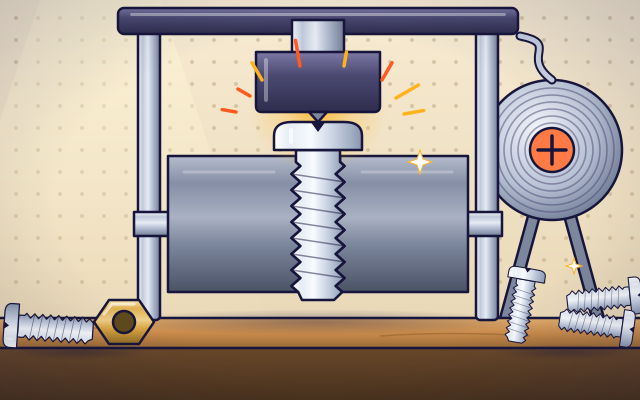
How are screws manufactured?
Shape a head, roll threads into the shaft, and inspect the fastener.
#323
Making everyday things
How are screws manufactured?
Shape a head, roll threads into the shaft, and inspect the fastener.
 #324
Making everyday things
How are foam cushions made?
Watch bubbles form inside material and compare different foam structures.
#324
Making everyday things
How are foam cushions made?
Watch bubbles form inside material and compare different foam structures.
Keep exploring
Games to play next
- Machine RepairFix levers, pulleys, gears and ramps so every contraption works.
- Geometry Architect 3DCount, build and fold solids like a real architect.
- Sorting FactoryTurn a work order into if/else rules and watch the conveyor sort every item.
Guide for grown-ups
- How to start homeschooling: a step-by-step guide for familiesA guide for parents · 7 min read
Science games by grade
Science worksheets by grade
- Preschool Science Worksheets
- Pre-K Science Worksheets
- Kindergarten Science Worksheets
- 1st Grade Science Worksheets
- 2nd Grade Science Worksheets
- 3rd Grade Science Worksheets
- 4th Grade Science Worksheets
- 5th Grade Science Worksheets
- 6th Grade Science Worksheets
- 7th Grade Science Worksheets
- 8th Grade Science Worksheets