How do plant roots and fungi help each other?
Tiny fungus threads join onto tree roots. The tree pays with sugar, and the fungus brings water and minerals from far away.
The big idea: A tree makes sugar but its roots cannot reach far. A fungus cannot make sugar but its thin threads reach everywhere. So they trade, and both grow better.
It's like swapping at lunch: you have extra cookies and no drink, your friend has a big bottle and no cookies. You trade, and both of you have a better lunch.
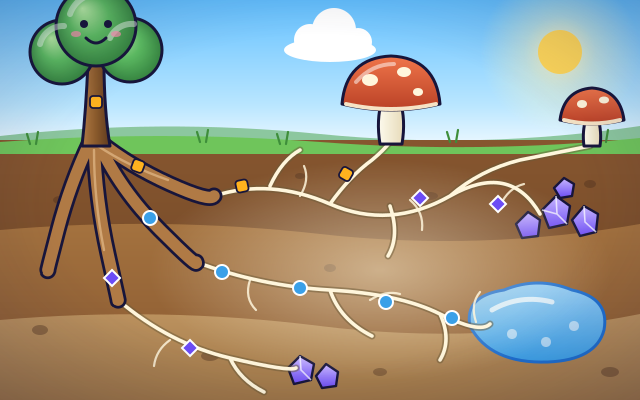
The interactive parts didn't load. The explanations below still work; try reloading the page.
The underground trade
- A tree needs water and minerals from the soil. But roots are thick and grow slowly, so they can only reach the soil close by.
- A fungus lives in the soil too. Its body is a web of threads far thinner than a hair. They spread a long way and slip into gaps too small for any root.
- The threads wrap around the root tips like a sock and push in between the root's cells. This joined-up root and fungus is called a mycorrhiza.
- Now they trade. The tree's leaves make sugar and send some down to the fungus. The fungus sends back water and minerals that it gathered far away.
- When the fungus is well fed, it grows mushrooms to spread its spores. The same web of threads can join onto many plants at once.
- With the fungus's help the tree gets more water and minerals and grows faster. With the tree's sugar the fungus grows too. Both win.
Look under the forest floor
Tap each part to see what it does in the partnership.
- Leaves. The leaves use sunlight to make sugar. Some of that sugar travels down to the roots to pay the fungus.
- Roots. Roots anchor the tree and take in water and minerals. They are thick, so they can only explore the soil close to the tree.
- Where they join. Fungus threads wrap around the root tip and squeeze between its cells. This is the trading place: sugar goes out, and water and minerals come in.
- Fungus threads. These threads are the real body of the fungus. They are far thinner than a hair, so they can reach far and squeeze into the tiniest gaps.
- Mushroom. A mushroom is like the fruit of the fungus. It grows up into the air to spread tiny spores, which can start new fungi. The rest of the fungus stays hidden below.
- Water. Water clings in the small spaces between soil grains. The fungus threads reach water that is too far away, or in gaps too small, for roots.
- Minerals. Minerals are the nutrients a plant needs besides sugar. The fungus is very good at finding them and carries them back to the root.
Run the underground trade
Join the fungus to the root, then change how much sugar the tree shares. Tap the sugar, the water or the minerals to follow where each one goes.
Experiment: What happens if the tree stops sharing its sugar?
- Tap the glowing thread to join the fungus to the root.
- Slide the sugar share to None and watch the threads and the tree.
- Slide it back up and watch again.
What we found: With no sugar, the fungus cannot grow. Its threads shrink back, so less water and fewer minerals reach the tree, and the tree does worse. Sharing some sugar pays the tree back.
Turn on JavaScript to try it yourself.
Spend the sugar wisely
The tree needs water and minerals. It has 4 sugar to pay for fungus threads, and longer threads cost more. Tap what to reach, then press Trade.
The partnership under your feet
Under almost every forest, field and garden there is a hidden partnership. Plant roots and soil fungi join together and help each other. The joined-up root and fungus is called a mycorrhiza, which means fungus-root.
Each partner has something the other needs. A plant can make sugar from sunlight, air and water, but its roots are thick and can only reach the soil close by. A fungus cannot make sugar at all. But its body is a huge web of threads, far thinner than a hair, that spread a long way and squeeze into the tiniest gaps.
So they trade. The fungus wraps its threads around the root tips. The plant sends sugar down to the fungus. The fungus collects water and minerals from far away and passes them to the plant. With this help, most plants grow better, and they cope better when the soil is dry.
When the fungus has plenty of food, it grows mushrooms above the ground to spread its spores. The same fungus can join onto many plants at once, linking them in one web. Scientists are still finding out how much plants share through it. Our lunch-swap comparison breaks down here: friends agree to trade, but a tree and a fungus make no agreement. Each simply grows better when it does its part.
Key words
- Mycorrhiza
- A plant root and a fungus joined together and helping each other. The word means fungus-root.
- Hyphae
- The very thin threads that make up the body of a fungus.
- Mutualism
- A partnership between two living things that helps both of them.
- Minerals
- Nutrients from the soil, such as phosphorus and nitrogen, that plants need to grow.
- Fruiting body
- The part of a fungus, such as a mushroom, that makes and spreads its spores.
Check your thinking
-
What does the tree give to the fungus?
Show the answer
Sugar made in its leaves. A fungus cannot make its own sugar, so the tree pays it with sugar.
-
Why can a fungus reach water and minerals that roots cannot?
Show the answer
Its threads are very thin and spread very far. Threads thinner than a hair can grow a long way and fit into gaps too small for roots.
-
A tree stops sending sugar to its fungus. What happens next?
Show the answer
The fungus shrinks, and the tree gets less water and minerals. Without sugar the fungus cannot keep its threads, so the tree loses its helper.
-
What is a mushroom for?
Show the answer
Spreading the fungus's spores. A mushroom releases spores into the air. The main body of the fungus is the web of threads below.
-
Why is a mycorrhiza called a mutualism?
Show the answer
Both partners gain more than they give up. The plant gains minerals and water worth more to it than the sugar it pays, and the fungus gains sugar it could not make.
You're a Plants & ecosystems expert!
You watched, looked inside, tried it, solved the challenge and went deeper. Pick another question below, or switch the age at the top to see this topic another way.
More about plants & ecosystems
 #249
Plants & ecosystems
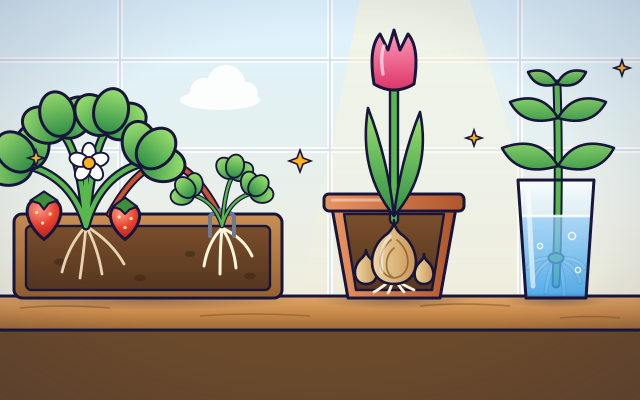
How do plants make new plants without seeds?
Explore runners, bulbs, and cuttings and follow them into new plants.
#249
Plants & ecosystems
How do plants make new plants without seeds?
Explore runners, bulbs, and cuttings and follow them into new plants.
 #250
Plants & ecosystems
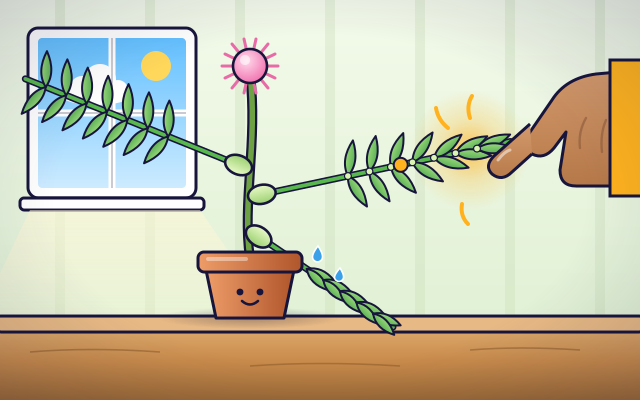
How do sensitive plants fold their leaves?
Trigger a virtual touch and watch changing water pressure move leaf joints.
#250
Plants & ecosystems
How do sensitive plants fold their leaves?
Trigger a virtual touch and watch changing water pressure move leaf joints.
 #93
Plants & ecosystems
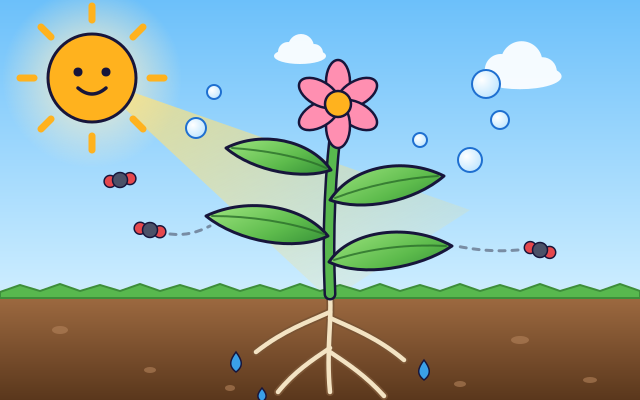
How do plants grow and make their own food?
Explore roots and leaves, adjust light and water, and follow a simplified photosynthesis animation showing the roles of water, carbon dioxide, and sunlight.
#93
Plants & ecosystems
How do plants grow and make their own food?
Explore roots and leaves, adjust light and water, and follow a simplified photosynthesis animation showing the roles of water, carbon dioxide, and sunlight.
 #99
Plants & ecosystems
How do seeds travel to new places?
Compare seeds carried by wind, water, animals, and bursting pods. Design virtual seeds and test how their shapes affect their journeys.
#99
Plants & ecosystems
How do seeds travel to new places?
Compare seeds carried by wind, water, animals, and bursting pods. Design virtual seeds and test how their shapes affect their journeys.
Keep exploring
Games to play next
- Classification ExplorerSort living things by what you can see, then follow and build yes-or-no keys.
- Label LabPut the right labels on beautiful science diagrams, from bean plants to heart chambers.
- Garden AutomationProgram a garden robot with sensor rules — then watch a whole day play out.
Guide for grown-ups
- How to start homeschooling: a step-by-step guide for familiesA guide for parents · 7 min read
Science games by grade
Science worksheets by grade
- Preschool Science Worksheets
- Pre-K Science Worksheets
- Kindergarten Science Worksheets
- 1st Grade Science Worksheets
- 2nd Grade Science Worksheets
- 3rd Grade Science Worksheets
- 4th Grade Science Worksheets
- 5th Grade Science Worksheets
- 6th Grade Science Worksheets
- 7th Grade Science Worksheets
- 8th Grade Science Worksheets