How do sensitive plants fold their leaves?
A sensitive plant folds its leaves in a second when touched. It has no muscles: it moves by shifting water in and out of tiny joints.
The big idea: Each leaf has a joint packed with cells full of water. A touch makes the cells on one side let their water out. They go floppy, and the joint bends.
It's like a bouncy castle: pumped full, its walls stand up firm. Let the air out of one wall, and that side sags and folds.
The interactive parts didn't load. The explanations below still work; try reloading the page.
How a plant moves without muscles
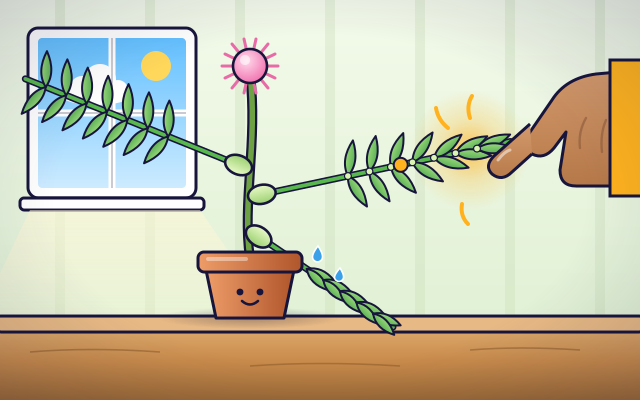
- This is a sensitive plant, a mimosa. Touch the tip of a leaf and its small leaflets fold up in pairs. Then the whole leaf stalk droops.
- How can a plant move so fast? The secret is a small swelling where the leaf stalk meets the stem. It is a joint, and it works like a hinge.
- The joint is packed with cells full of water. The water presses outward on each cell's wall and makes it firm, like a full water balloon. Firm cells hold the leaf up.
- A touch sends a signal racing along the leaf. When it reaches the joint, the cells on the lower side let their water out. They go soft, and the leaf sags down.
- Why does the plant do it? A folded leaf looks small and wilted, and not very tasty. The sudden movement can also startle a bug or shake it off.
- After a few minutes the cells pump their water back in. They swell up and get firm again, and the leaf lifts and opens. That takes about fifteen minutes.
Look inside a moving leaf
Tap each part of the leaf and the close-up of its joint.
- Leaflets. One mimosa leaf is made of many small leaflets in pairs. When touched, each pair folds together, like closing a book.
- Leaflet joints. At the bottom of every leaflet is its own tiny joint. Each one works just like the big joint, so the leaflets can fold one pair at a time.
- Main joint. The swelling where the leaf stalk meets the stem is the main joint. When it bends, the whole leaf drops down.
- Water-filled cells. The joint is packed with cells like tiny water balloons. Full of water they are firm and hold the leaf up. When the lower ones empty, they go soft and the joint bends.
- Touch signal. A touch starts a signal that runs along the leaf to the joints. It is a tiny electrical pulse, a little like the signals in your nerves, but slower.
- Moving water. When the signal arrives, the lower cells let water out into the spaces around them. Later they pump it back in, and the leaf rises again.
Touch test
Tap a leaf, gently or firmly. Watch the joint's cells in the close-up and the pressure dial. Then wait: what does the leaf do?
Experiment: What happens to a folded leaf if you just wait?
- Tap one leaf firmly and watch the close-up.
- Now wait. Watch the minutes counter and the pressure dial.
- Tap another leaf gently and compare.
What we found: The leaf folds in about a second because water leaves the joint's lower cells quickly. It opens again slowly, over about fifteen minutes, because the cells have to pump the water back in.
Turn on JavaScript to try it yourself.
Catch the sun, dodge the bugs
Keep the leaves open to catch sunlight, but fold a leaf just before a bug lands on it. Fill the sun meter to 40.
Moving with water
Most plants move so slowly that you cannot see it. The sensitive plant, a mimosa, is different. Touch a leaf, and in about a second its little leaflets fold together and the whole leaf droops. But a plant has no muscles. So how does it move?
The answer is water. A plant cell is like a tiny water balloon inside a stretchy box. When it is full, the water presses hard on the box and the cell is firm. That push is called turgor pressure. It is what keeps soft leaves and stems standing up, and it is why a plant wilts when it runs short of water.
At the bottom of each mimosa leaf stalk, and each tiny leaflet, there is a joint full of these cells. A touch sends a small electrical signal along the leaf. When it reaches a joint, the cells on one side quickly let their water out. They go soft, the cells on the other side stay firm, and the joint bends like a hinge.
Opening again is slower. The cells must pump the water back in, which takes energy and about fifteen minutes. Folding may protect the plant: a folded leaf looks small and wilted to a hungry animal. Our bouncy-castle comparison breaks down here: a castle is filled with air by a fan, but each plant cell moves water by itself, using the salts dissolved inside it.
Key words
- Turgor pressure
- The push of water inside a plant cell against its wall. It makes the cell firm.
- Pulvinus
- A swollen joint at the base of a leaf or leaflet that bends when its cells gain or lose water.
- Osmosis
- The way water moves through a cell's skin toward the side with more salts or sugars dissolved in it.
- Leaflet
- One of the small leaf-like parts that together make up a single leaf.
- Habituation
- Responding less and less to something that happens again and again without causing harm.
Check your thinking
-
A plant has no muscles. What makes a mimosa leaf move?
Show the answer
Water moving out of cells on one side of a joint. Cells on one side of the joint let their water out and go soft, so the joint bends.
-
Why does the leaf take much longer to open than to fold?
Show the answer
The cells must pump the water back in, which takes time and energy. Letting water out is quick and easy. Pumping it back takes energy and about fifteen minutes.
-
A garden plant has not been watered and its leaves hang limp. What has happened in its cells?
Show the answer
They have lost water, so they are no longer firm. Without enough water the cells cannot press on their walls, so the leaves go soft and wilt.
-
How might folding its leaves help the plant?
Show the answer
Folded leaves look small and wilted, so animals leave them alone. A leaf that suddenly shrinks and droops looks less like a good meal.
You're a Plants & ecosystems expert!
You watched, looked inside, tried it, solved the challenge and went deeper. Pick another question below, or switch the age at the top to see this topic another way.
More about plants & ecosystems
 #93
Plants & ecosystems
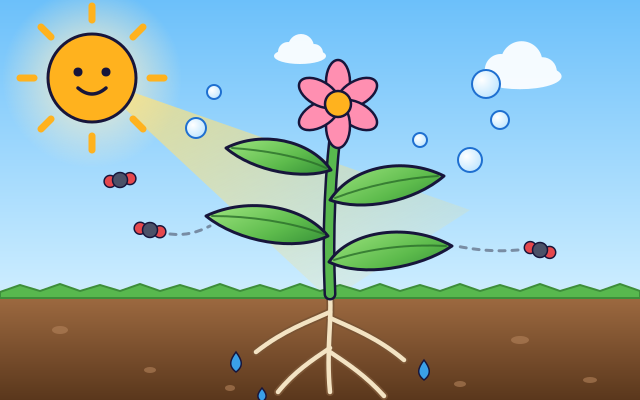
How do plants grow and make their own food?
Explore roots and leaves, adjust light and water, and follow a simplified photosynthesis animation showing the roles of water, carbon dioxide, and sunlight.
#93
Plants & ecosystems
How do plants grow and make their own food?
Explore roots and leaves, adjust light and water, and follow a simplified photosynthesis animation showing the roles of water, carbon dioxide, and sunlight.
 #99
Plants & ecosystems
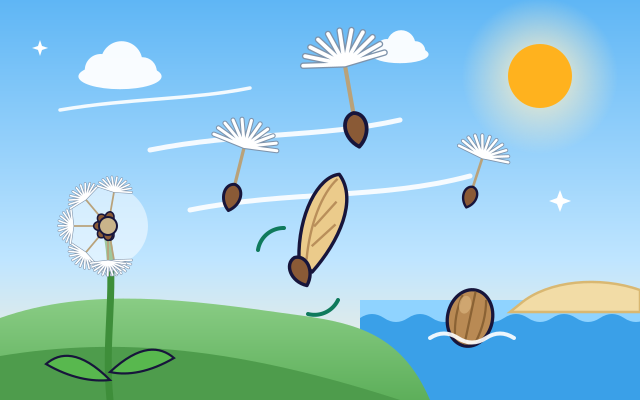
How do seeds travel to new places?
Compare seeds carried by wind, water, animals, and bursting pods. Design virtual seeds and test how their shapes affect their journeys.
#99
Plants & ecosystems
How do seeds travel to new places?
Compare seeds carried by wind, water, animals, and bursting pods. Design virtual seeds and test how their shapes affect their journeys.
 #226
Plants & ecosystems
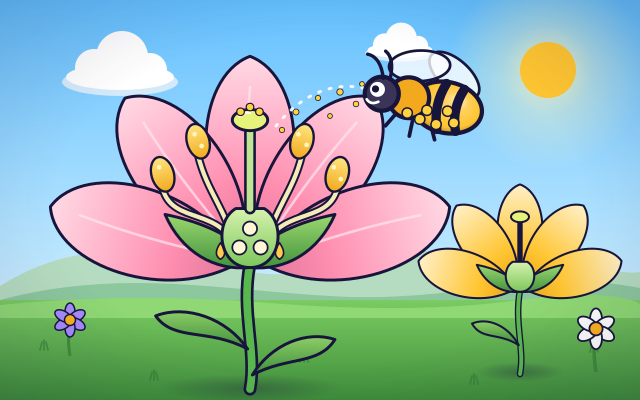
How does flower pollination work?
Move pollen between flower parts and compare insect and wind pollination.
#226
Plants & ecosystems
How does flower pollination work?
Move pollen between flower parts and compare insect and wind pollination.
 #227
Plants & ecosystems
How does water travel from roots to leaves?
Follow colored water through a transparent plant and explore evaporation from leaves.
#227
Plants & ecosystems
How does water travel from roots to leaves?
Follow colored water through a transparent plant and explore evaporation from leaves.
Keep exploring
Games to play next
- Classification ExplorerSort living things by what you can see, then follow and build yes-or-no keys.
- Label LabPut the right labels on beautiful science diagrams, from bean plants to heart chambers.
- Garden AutomationProgram a garden robot with sensor rules — then watch a whole day play out.
Guide for grown-ups
- How to start homeschooling: a step-by-step guide for familiesA guide for parents · 7 min read
Science games by grade
Science worksheets by grade
- Preschool Science Worksheets
- Pre-K Science Worksheets
- Kindergarten Science Worksheets
- 1st Grade Science Worksheets
- 2nd Grade Science Worksheets
- 3rd Grade Science Worksheets
- 4th Grade Science Worksheets
- 5th Grade Science Worksheets
- 6th Grade Science Worksheets
- 7th Grade Science Worksheets
- 8th Grade Science Worksheets