How do plants grow and make their own food?
Roots drink water, leaves breathe in air and sunlight powers a tiny food factory inside every leaf.
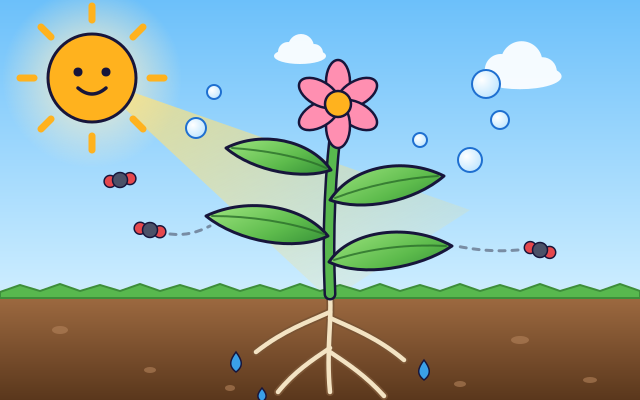
The big idea: Plants make their own food. Their leaves use the energy in sunlight to join water from the soil with carbon dioxide from the air. This makes sugar, and the leaves let out oxygen.
It's like
The interactive parts didn't load. The explanations below still work; try reloading the page.
How a plant makes its own food
- A seed holds a baby plant and a packed lunch of stored food. When it gets water, the root grows down and the shoot pushes up toward the light.
- Roots are covered in tiny hairs that soak up water and minerals. The water travels up thin tubes inside the stem, all the way to the leaves.
- Under each leaf are tiny holes called stomata. A gas from the air, carbon dioxide, drifts in through them, while sunlight pours onto the top of the leaf.
- Inside the leaf cells are tiny green parts called chloroplasts. They catch the sun's energy and use it to join water and carbon dioxide into sugar, the plant's food.
- Making sugar leaves oxygen behind. It floats out through the stomata into the air. People and animals need that oxygen to breathe.
- The sugar travels to every part of the plant. It gives the plant energy and building material for new leaves, longer roots and flowers.
Look inside a plant and a leaf
Tap each part of the plant. The magnifying glass shows the inside of a leaf.
- Roots. Roots anchor the plant so wind can't knock it over, and they soak up water and minerals from the soil.
- Root hairs. Each root is covered in tiny hairs. Together they touch lots and lots of soil, so they can soak up plenty of water.
- Stem. The stem holds the leaves up into the light. Tubes inside it carry water up from the roots and sugar from the leaves to the rest of the plant.
- Leaf. Leaves are wide and flat to catch lots of sunlight. This is where the plant makes its food.
- Stomata. Stomata are tiny holes, mostly under the leaf. They open to let carbon dioxide in and oxygen out, and close to save water when it's dry.
- Chloroplasts. Chloroplasts are tiny green parts inside leaf cells. Their green coloring, chlorophyll, catches the sun's energy and uses it to make sugar.
- Flower. Flowers make seeds. Bright petals and sweet nectar invite bees and butterflies, which carry pollen from flower to flower.
What does a plant need to make food?
Change the light, the water and the carbon dioxide. Watch the food-making speed and see what holds the plant back.
Experiment: If you keep giving the plant more and more light, what happens to how fast it makes food?
- Give the plant just-right water and normal air.
- Start with the light very low, then slide it up a bit at a time.
- Watch the food-making speed and the 'Holding it back' sign.
What we found: More light makes food faster, but only up to a point. Then the plant can't use carbon dioxide any faster, so extra light doesn't help. Whatever is in shortest supply holds the plant back.
Turn on JavaScript to try it yourself.
Greenhouse week
Choose the light, water and air, then grow for a week. Make the plant reach the flower line without wasting energy.
The plant food factory
You eat food to get energy and to grow. Plants need energy and building material too, but they don't eat. Instead they make their own food, using a process called photosynthesis. The word means 'putting together with light'.
A plant needs three ingredients. Water comes up from the roots. Carbon dioxide, a gas in the air, comes in through tiny holes in the leaves. Sunlight brings the energy. Inside the leaves, green chloroplasts catch the light and use its energy to join water and carbon dioxide into sugar.
The sugar is the plant's food. It travels to every part of the plant, where it gives energy and is turned into new leaves, stems, roots, flowers and seeds. Oxygen is left over, and the leaves let it out into the air, which is lucky for us because we need oxygen to breathe.
If any ingredient runs short, food-making slows down. A plant in a dark corner, a plant with dry soil or a plant on a very cold day all grow slowly. Scientists call the ingredient in shortest supply the limiting factor.
Key words
- Photosynthesis
- How plants use sunlight to make sugar from water and carbon dioxide.
- Chlorophyll
- The green substance in chloroplasts that absorbs light energy.
- Stomata
- Tiny holes in leaves that let gases in and out.
- Limiting factor
- The ingredient in shortest supply, which holds the plant back.
- Xylem and phloem
- Tubes in a plant that carry water up and sugar around.
Check your thinking
-
Which three things does a plant need for photosynthesis?
Show the answer
Light, water and carbon dioxide. Water from the roots and carbon dioxide from the air are joined using light energy.
-
Where does the oxygen that plants give out come from?
Show the answer
It's left over when the plant makes sugar. When chloroplasts split water to make sugar, oxygen is left over and floats out of the leaf.
-
A plant gets plenty of light, but food-making won't go any faster. What could be holding it back?
Show the answer
Not enough carbon dioxide. When light is plentiful, another ingredient such as carbon dioxide becomes the limiting factor.
-
Why are most leaves green?
Show the answer
Chlorophyll reflects green light back to our eyes. Chlorophyll absorbs red and blue light and bounces green light away, so leaves look green.
-
Where does most of the material in a big tree come from?
Show the answer
Carbon dioxide from the air. Surprising but true: the carbon in wood comes from carbon dioxide in the air, built into sugar by photosynthesis.
You're a Plants & ecosystems expert!
You watched, looked inside, tried it, solved the challenge and went deeper. Pick another question below, or switch the age at the top to see this topic another way.
More about plants & ecosystems
 #99
Plants & ecosystems
How do seeds travel to new places?
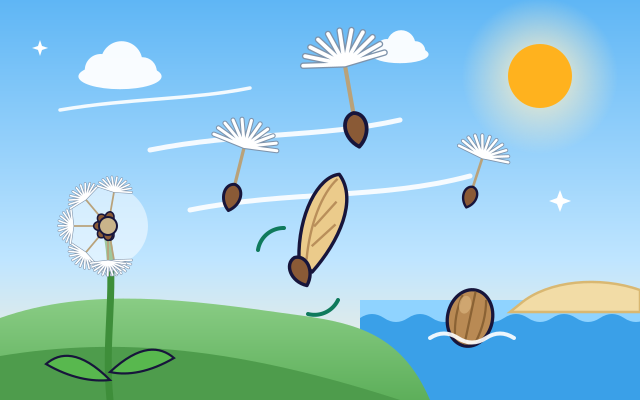
Compare seeds carried by wind, water, animals, and bursting pods. Design virtual seeds and test how their shapes affect their journeys.
#99
Plants & ecosystems
How do seeds travel to new places?
Compare seeds carried by wind, water, animals, and bursting pods. Design virtual seeds and test how their shapes affect their journeys.
 #226
Plants & ecosystems
How does flower pollination work?
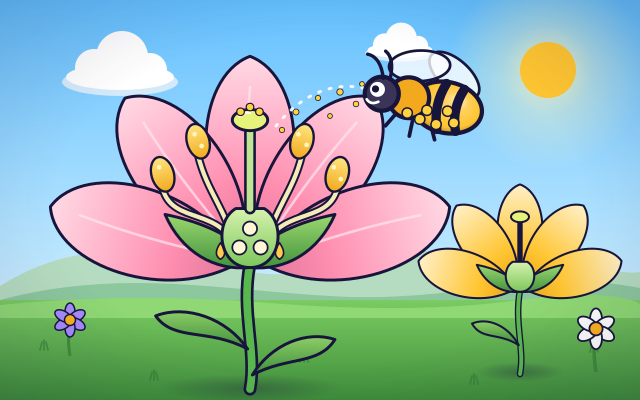
Move pollen between flower parts and compare insect and wind pollination.
#226
Plants & ecosystems
How does flower pollination work?
Move pollen between flower parts and compare insect and wind pollination.
 #227
Plants & ecosystems
How does water travel from roots to leaves?
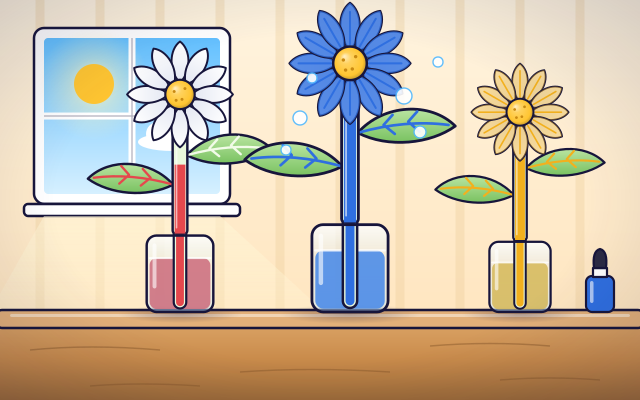
Follow colored water through a transparent plant and explore evaporation from leaves.
#227
Plants & ecosystems
How does water travel from roots to leaves?
Follow colored water through a transparent plant and explore evaporation from leaves.
 #228
Plants & ecosystems
Why do leaves change color in autumn?
Reveal different pigments as the amount of chlorophyll changes through a seasonal timeline.
#228
Plants & ecosystems
Why do leaves change color in autumn?
Reveal different pigments as the amount of chlorophyll changes through a seasonal timeline.
Keep exploring
Games to play next
- Classification ExplorerSort living things by what you can see, then follow and build yes-or-no keys.
- Label LabPut the right labels on beautiful science diagrams, from bean plants to heart chambers.
- Garden AutomationProgram a garden robot with sensor rules — then watch a whole day play out.
Guide for grown-ups
- How to start homeschooling: a step-by-step guide for familiesA guide for parents · 7 min read
Science games by grade
Science worksheets by grade
- Preschool Science Worksheets
- Pre-K Science Worksheets
- Kindergarten Science Worksheets
- 1st Grade Science Worksheets
- 2nd Grade Science Worksheets
- 3rd Grade Science Worksheets
- 4th Grade Science Worksheets
- 5th Grade Science Worksheets
- 6th Grade Science Worksheets
- 7th Grade Science Worksheets
- 8th Grade Science Worksheets