How do plants make new plants without seeds?
Strawberries send out runners, tulips make baby bulbs, and a cut stem can grow new roots. Follow each one into a new plant.
The big idea: Many plants can grow a whole new plant from a stem, a bulb or a runner. The new plant is a copy of its parent, so it has the same leaves, flowers and fruit.
It's like photocopying a drawing instead of drawing a new one: every copy comes out just like the first, quickly and with no surprises.
The interactive parts didn't load. The explanations below still work; try reloading the page.
Three ways to copy a plant
- Most plants you know grow from seeds. But many plants have a second way to make new plants: they grow one from a piece of themselves.
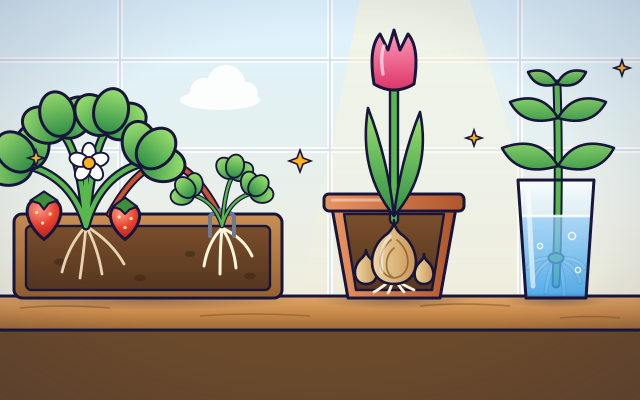
- A strawberry plant sends out a long stem called a runner. A baby plant forms at its tip. Where it touches the soil it grows roots, fed by its parent until it can live alone.
- A tulip bulb is a packed lunch: thick layers full of stored food around a tiny shoot. After the flower fades, the leaves feed new baby bulbs that grow at the side.
- Cut a basil stem just below the bumps where leaves grow, and stand it in water. In a week or two, roots grow from those bumps. Plant it, and it is a whole new basil.
- Each new plant grew from a piece of one parent, so it is a copy. It will have the same leaves, the same flowers and the same tasting fruit. A copy like this is called a clone.
- Gardeners and farmers use these tricks to make many copies of their best plants, fast. Potatoes, bananas and most apples are grown this way.
Look closely at runners, bulbs and cuttings
Tap each part to see how it helps make a new plant.
- Runner. The runner is a long stem that grows away from the parent. It works like a drinking straw, carrying food and water to the baby plant at its tip.
- Baby plant. The baby plant has tiny leaves and the start of roots. When it touches damp soil, the roots grow down, and soon it can feed itself.
- Bulb. Cut a bulb open and you see layers, like an onion. They are thick, special leaves full of stored food. In the middle waits a tiny shoot, ready to grow.
- Baby bulb. A baby bulb grows from the side of the parent bulb. The plant's leaves make food to fill it. Next year it can grow a flower of its own.
- Leaf joint. The bump where leaves join the stem is called a node. It holds tiny buds that can turn into new shoots or new roots, so a cutting needs at least one.
- New roots. Roots do not usually grow from stems. But a cut stem can switch on new roots at a node. Once it has roots, the cutting can take up water and grow.
The copying bench
Tap to pin down the runner, plant the bulb and put the cutting in water. Watch the weeks pass. Which new plant is ready first?
Experiment: Which new plant will be ready first?
- Tap the runner tip, the bulb and the cut stem to start all three.
- Watch the week counters above each one.
- Note the week when each new plant is ready.
What we found: The cutting is ready first, in about four weeks. The runner's baby plant takes about six. The baby bulbs take a whole growing season, because the tulip must flower first and then fill them with food.
Turn on JavaScript to try it yourself.
Right method, right plant
The garden needs a new strawberry, a new tulip and a new basil. Choose the right way to copy each plant, then press Grow.
New plants without seeds
When you think of a new plant, you probably think of a seed. But plants have another way. Many of them can grow a whole new plant from a piece of themselves. No flower and no seed are needed.
A strawberry plant sends out runners: long, thin stems that creep over the ground. A baby plant grows at the tip, puts down roots and soon lives on its own. A tulip grows from a bulb, a store of food under the ground, and baby bulbs form at its side. And a cut piece of stem from plants such as basil or mint can grow new roots in water.
How can a piece of stem do that? The secret is in the little bumps where leaves join the stem. Each bump, called a node, has tiny buds that can grow into a new shoot or new roots. That is why a cutting needs a node, and why the baby plants on a runner form at its nodes.
A plant made this way is a copy of its parent, called a clone. That is handy: a gardener can copy the strawberry with the sweetest fruit again and again. But there is a catch. If a sickness can hurt one of the copies, it can hurt them all. Seeds mix things up, so some seedlings may cope better. Our copy-machine comparison breaks down here: a paper copy stays the same forever, but a plant clone is alive and still grows differently in sun or shade.
Key words
- Clone
- A living thing that is an exact copy of its one parent.
- Runner
- A long stem that grows along the ground and forms baby plants. Its scientific name is a stolon.
- Bulb
- An underground store of food made of thick leaves around a tiny shoot.
- Cutting
- A piece cut from a plant that can grow roots and become a new plant.
- Node
- The joint on a stem where a leaf grows. It holds buds that can make new shoots and roots.
- Vegetative reproduction
- Making new plants from the stem, root or leaf of one parent instead of from seeds.
Check your thinking
-
How does a strawberry plant copy itself?
Show the answer
It sends out a runner with a baby plant on it. The runner carries a baby plant away from the parent, and it roots where it touches the soil.
-
Why is a plant grown from a cutting just like its parent?
Show the answer
It grew from a piece of that one parent. A cutting is part of the parent plant, so the new plant is a copy of it: a clone.
-
You put a piece of stem with no leaf joint in water. What will happen?
Show the answer
No roots grow, because roots start at a leaf joint. The buds that can make roots and shoots sit at the leaf joints, so a cutting needs one.
-
What is one problem with a field where every plant is a copy of the same plant?
Show the answer
One sickness could hurt them all. Copies share the same weak points, so a sickness that can hurt one can hurt every one.
-
What are the layers inside a bulb for?
Show the answer
Storing food for the plant. The layers are thick leaves packed with food, ready for the shoot to use.
You're a Plants & ecosystems expert!
You watched, looked inside, tried it, solved the challenge and went deeper. Pick another question below, or switch the age at the top to see this topic another way.
More about plants & ecosystems
 #250
Plants & ecosystems
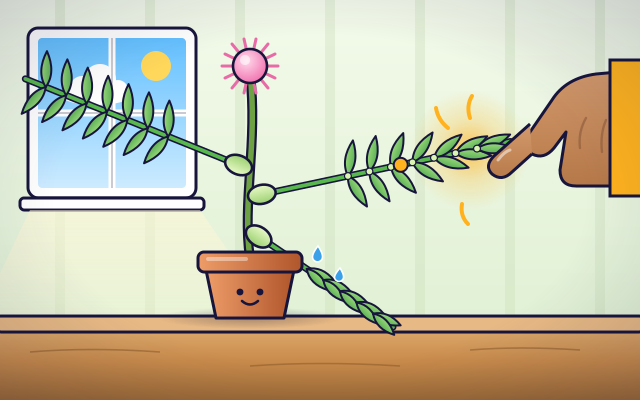
How do sensitive plants fold their leaves?
Trigger a virtual touch and watch changing water pressure move leaf joints.
#250
Plants & ecosystems
How do sensitive plants fold their leaves?
Trigger a virtual touch and watch changing water pressure move leaf joints.
 #93
Plants & ecosystems
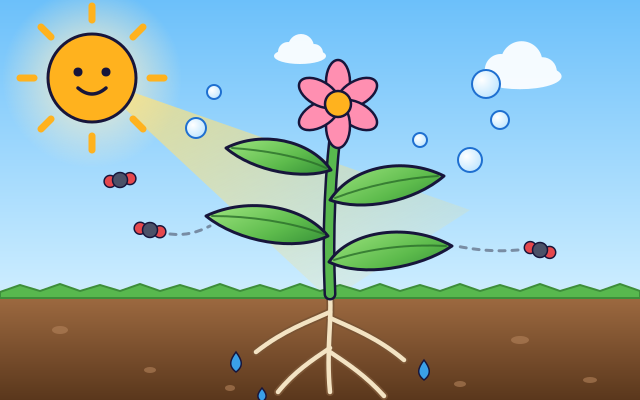
How do plants grow and make their own food?
Explore roots and leaves, adjust light and water, and follow a simplified photosynthesis animation showing the roles of water, carbon dioxide, and sunlight.
#93
Plants & ecosystems
How do plants grow and make their own food?
Explore roots and leaves, adjust light and water, and follow a simplified photosynthesis animation showing the roles of water, carbon dioxide, and sunlight.
 #99
Plants & ecosystems
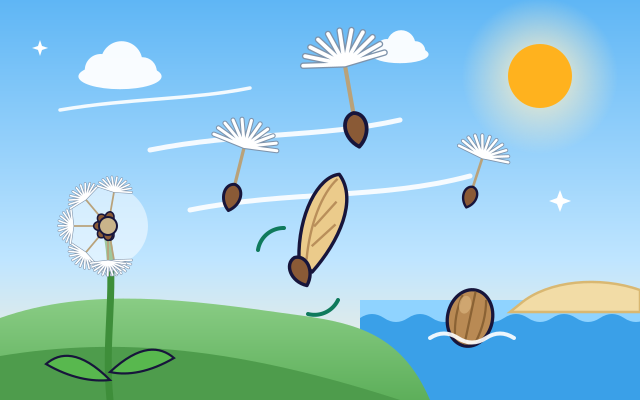
How do seeds travel to new places?
Compare seeds carried by wind, water, animals, and bursting pods. Design virtual seeds and test how their shapes affect their journeys.
#99
Plants & ecosystems
How do seeds travel to new places?
Compare seeds carried by wind, water, animals, and bursting pods. Design virtual seeds and test how their shapes affect their journeys.
 #226
Plants & ecosystems
How does flower pollination work?
Move pollen between flower parts and compare insect and wind pollination.
#226
Plants & ecosystems
How does flower pollination work?
Move pollen between flower parts and compare insect and wind pollination.
Keep exploring
Games to play next
- Label LabPut the right labels on beautiful science diagrams, from bean plants to heart chambers.
- Classification ExplorerSort living things by what you can see, then follow and build yes-or-no keys.
- Garden AutomationProgram a garden robot with sensor rules — then watch a whole day play out.
Guide for grown-ups
- How to start homeschooling: a step-by-step guide for familiesA guide for parents · 7 min read
Science games by grade
Science worksheets by grade
- Preschool Science Worksheets
- Pre-K Science Worksheets
- Kindergarten Science Worksheets
- 1st Grade Science Worksheets
- 2nd Grade Science Worksheets
- 3rd Grade Science Worksheets
- 4th Grade Science Worksheets
- 5th Grade Science Worksheets
- 6th Grade Science Worksheets
- 7th Grade Science Worksheets
- 8th Grade Science Worksheets