How do root bacteria help plants obtain nitrogen?
Bean plants keep helpful bacteria in little bumps on their roots. The bacteria turn nitrogen from the air into plant food, and the plant pays them in sugar.
The big idea: Every plant needs nitrogen to grow green leaves. Air is mostly nitrogen, but plants cannot use it from the air. Bacteria in the root bumps of beans and peas can. They change it into a form the plant can use, and the plant feeds them sugar in return.
It's like a friend who has the key to a locked pantry: you share your lunch with them, and they unlock food that you could never reach alone.
The interactive parts didn't load. The explanations below still work; try reloading the page.
How beans get food from the air
- Two plants share the same poor, sandy soil. The corn is pale and small. The bean beside it is tall and deep green. What is the bean's secret?
- Plants need nitrogen to build green leaves. Air is mostly nitrogen, but it floats around in pairs that are stuck together very tightly. A plant cannot pull them apart.
- Dig down and look at the bean's roots. They are dotted with little round bumps called nodules. Bacteria from the soil came in through the root hairs and now live inside them.
- Inside a nodule, millions of bacteria are at work. They pull each nitrogen pair apart and join the pieces to hydrogen. That makes ammonia, a kind of nitrogen the plant can use.
- The work takes lots of energy, so the plant pays. Its leaves make sugar in sunlight and send some down to the nodules. In return, nitrogen flows up to the leaves.
- At the end of the season the bean's roots and leaves rot in the ground and leave their nitrogen there. Next year, another crop can use it. That is why farmers grow beans, peas and clover.
Look inside a bean plant and a nodule
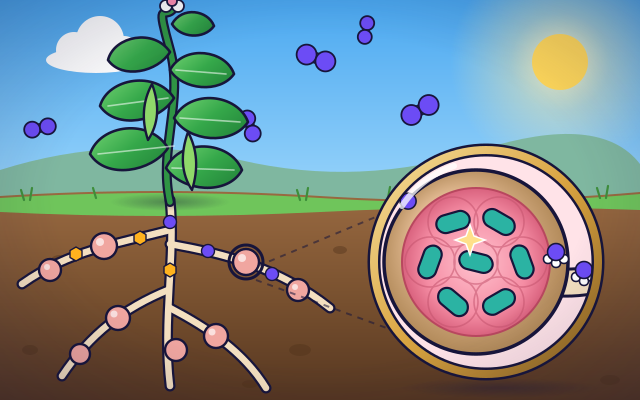
Tap the parts of the bean plant, above and below the ground. The round window shows a nodule cut open.
- Leaves. The leaves use sunlight to make sugar. The plant uses most of it to grow and sends a share down to its nodules.
- Pipes in the stem. Tiny pipes run through the stem and roots. Some carry sugar down from the leaves. Others carry water and nitrogen up from the roots.
- Root hair. Root hairs are tiny tubes on the root. One curls around the right bacteria like a hook, and they travel inside through it.
- Nodule. A nodule is a little round room that the plant builds on its root. It is the bacteria's home and the place where the swap happens.
- Helper bacteria. These bacteria are the workers. They take nitrogen that came from the air and change it into a form the plant can use.
- Pink oxygen carrier. The pink color comes from a special substance that carries oxygen. It gives the bacteria just enough oxygen to work, but not so much that it spoils their tools.
With helpers and without
Both beans grow in poor soil. Add helper bacteria to one of them. Then change the sunlight and compare the two plants.
Experiment: The helper bacteria make nitrogen for the bean. Does the bean need sunlight for that to work?
- Tap the jar to add helper bacteria to the plant on the right.
- Wait for the nodules to swell. Compare the two plants.
- Turn the sunlight down. Watch the sugar, the nodules and the leaves.
What we found: The bean with helpers turned green and grew, while the other stayed pale. But in dim light it made less sugar, so the bacteria had less energy and made less nitrogen. The swap needs both partners to do their part.
Turn on JavaScript to try it yourself.
How much sugar to share?
Grow the bean up to the flag in 8 weeks. The soil is poor. Decide how much of its sugar the plant should send to its helpers.
How the root helpers really work
Plants make their own sugar from sunlight, air and water, but sugar is not enough. To build leaves, roots and seeds they also need nitrogen. Without it a plant stays small and its leaves turn pale yellow.
The strange thing is that nitrogen is everywhere. Almost four fifths of the air is nitrogen. But in air it comes in pairs that are stuck together so tightly that plants cannot pull them apart. It is like food in a locked box.
Beans, peas, clover, lentils and peanuts belong to a plant family called legumes, and they have a helper with the key. Bacteria in the soil move into their roots, and the plant builds little round rooms for them called nodules. Inside, the bacteria pull the nitrogen pairs apart and make a form of nitrogen the plant can use. The work takes a lot of energy, so the plant feeds the bacteria sugar from its leaves.
Our locked-pantry comparison is close, but the plant does more than pay. It builds the room and controls the air inside it. And when a legume dies, the nitrogen in its roots and leaves stays in the soil for the next plants. That is why farmers and gardeners grow beans or clover to feed their soil.
Key words
- Nitrogen
- Something every plant needs to grow and stay green. Most of the air is made of it.
- Legume
- A plant from the bean and pea family.
- Nodule
- A small round bump on a root where helper bacteria live.
- Nitrogen fixation
- Changing nitrogen from the air into a form that plants can use.
- Rhizobia
- The helper bacteria that live in the nodules of beans and peas.
Check your thinking
-
Where do the helper bacteria live?
Show the answer
In bumps on the roots, called nodules. The plant builds nodules on its roots as homes for the bacteria.
-
What does the bean plant give the bacteria in return?
Show the answer
Sugar made in its leaves. The plant makes sugar in its leaves and sends some down to the nodules.
-
A bean plant with healthy nodules is moved into deep shade. What happens to the nitrogen it gets?
Show the answer
It gets less, because it makes less sugar to pay the bacteria. The bacteria run on sugar from the leaves. Less light means less sugar and less nitrogen.
-
Why does corn often grow better in a field where beans grew the year before?
Show the answer
The rotting bean roots and leaves leave nitrogen in the soil. When the bean plant rots, the nitrogen it collected stays in the soil for the next plants.
-
A gardener gives her beans lots of nitrogen fertilizer. When she digs one up, it has very few nodules. What is the best explanation?
Show the answer
With nitrogen freely available, the plant stops spending sugar on nodules. Nodules are costly. When the soil supplies nitrogen cheaply, legumes cut back on forming and feeding them.
You're a Plants & ecosystems expert!
You watched, looked inside, tried it, solved the challenge and went deeper. Pick another question below, or switch the age at the top to see this topic another way.
More about plants & ecosystems
 #239
Plants & ecosystems
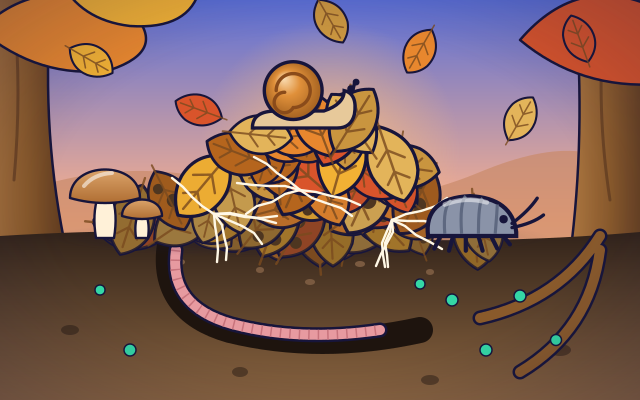
How do decomposers break down fallen leaves?
Accelerate a forest-floor timeline and follow fungi, bacteria, and small animals at work.
#239
Plants & ecosystems
How do decomposers break down fallen leaves?
Accelerate a forest-floor timeline and follow fungi, bacteria, and small animals at work.
 #240
Plants & ecosystems
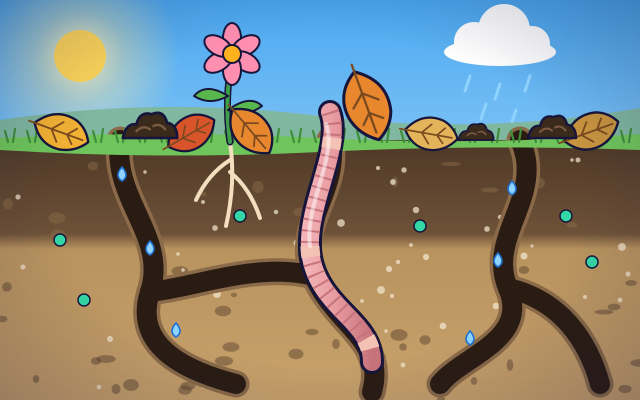
How do earthworms change the ground?
Follow tunnels and compare their effects on air spaces and organic material.
#240
Plants & ecosystems
How do earthworms change the ground?
Follow tunnels and compare their effects on air spaces and organic material.
 #241
Plants & ecosystems
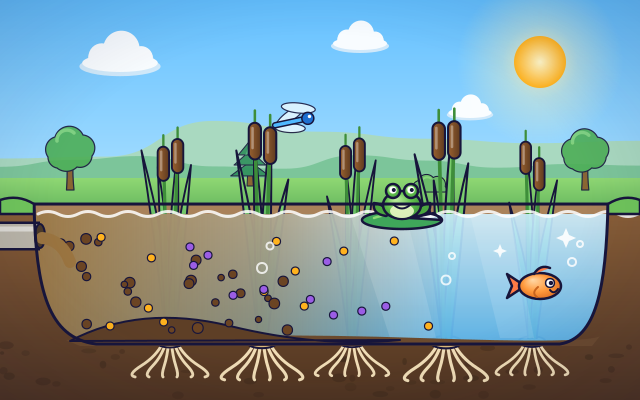
How do wetlands help clean water?
Trace settling particles, plant uptake, and microbial activity through a model wetland.
#241
Plants & ecosystems
How do wetlands help clean water?
Trace settling particles, plant uptake, and microbial activity through a model wetland.
 #242
Plants & ecosystems
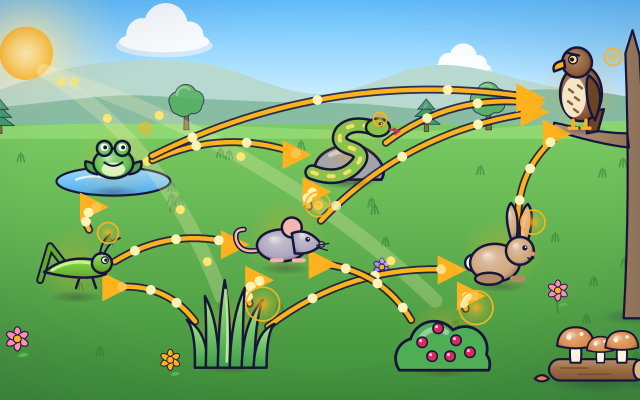
How does energy move through a food web?
Connect organisms and track energy transfers through their feeding relationships.
#242
Plants & ecosystems
How does energy move through a food web?
Connect organisms and track energy transfers through their feeding relationships.
Keep exploring
Games to play next
- Label LabPut the right labels on beautiful science diagrams, from bean plants to heart chambers.
- Classification ExplorerSort living things by what you can see, then follow and build yes-or-no keys.
- Garden AutomationProgram a garden robot with sensor rules — then watch a whole day play out.
Guide for grown-ups
- How to start homeschooling: a step-by-step guide for familiesA guide for parents · 7 min read
Science games by grade
Science worksheets by grade
- Preschool Science Worksheets
- Pre-K Science Worksheets
- Kindergarten Science Worksheets
- 1st Grade Science Worksheets
- 2nd Grade Science Worksheets
- 3rd Grade Science Worksheets
- 4th Grade Science Worksheets
- 5th Grade Science Worksheets
- 6th Grade Science Worksheets
- 7th Grade Science Worksheets
- 8th Grade Science Worksheets