How does energy move through a food web?
Energy starts at the sun, is caught by plants, and passes from one living thing to the next every time something eats.
The big idea: A food web shows who eats what. Energy flows along it from plants to animals, and at every step most of the energy is used up.
It's like passing a snack down a line of friends. Each one eats most of what they get, so the friend at the end gets only a tiny bit.
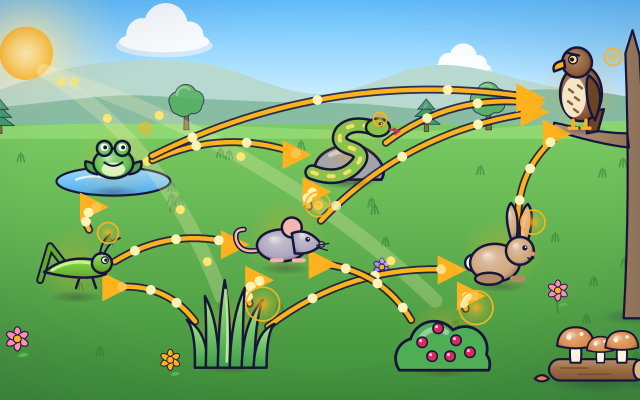
The interactive parts didn't load. The explanations below still work; try reloading the page.
From sunshine to hawk
- Every living thing needs energy to move, grow and stay alive. In this meadow, all of that energy starts in one place: the sun.
- Plants catch sunlight in their leaves and use it to make sugar. They are called producers, because they produce the food that everything else depends on.
- A grasshopper eats grass and gets some of its energy. A frog eats the grasshopper, a snake eats the frog and a hawk eats the snake. That is a food chain. The arrows show which way the energy goes.
- Most animals eat more than one thing, and most are eaten by more than one thing. So the chains cross and join into a food web.
- An animal uses most of the energy it eats to move, grow and keep warm. Only about one tenth is stored in its body for the next eater. So there is less energy at every step.
- When plants and animals die, decomposers such as fungi and bacteria break them down. The nutrients go back into the soil for plants to use again. And the sun keeps sending new energy.
Inside a meadow food web
Tap each living thing. Arrows light up to show where its energy comes from and where it goes.
- The sun. The sun is not alive, but it powers the whole meadow. Its light is the energy that plants catch.
- Grass and berry bush. Plants are producers. They use sunlight, water and air to make sugar, so they are the start of every food chain.
- Grasshopper. A grasshopper is a herbivore: it eats only plants. It is food for frogs, mice and birds.
- Rabbit. A rabbit is a herbivore too. It eats grass and the leaves of bushes, and hawks hunt it.
- Mouse. A mouse is an omnivore: it eats plants and animals. Seeds and berries are its main food, with insects as a snack.
- Frog. A frog is a carnivore: it eats other animals, mostly insects. Snakes and hawks eat frogs.
- Snake. A snake is a carnivore that eats frogs and mice. It is a predator, but it is also prey for the hawk.
- Hawk. The hawk is the top predator of this meadow. It eats rabbits, mice, snakes and frogs, and nothing in the meadow hunts it.
- Decomposers. Fungi and bacteria feed on dead plants, dead animals and droppings. They return the nutrients to the soil for plants to use again.
Build the food web
Tap a food, then tap who eats it (or drag from one to the other). An arrow shows the energy moving. Read the energy number beside each animal.
Experiment: As energy passes from the grass up to the hawk, what happens to the amount?
- Connect the grass to an animal that eats it. Read its energy number.
- Keep connecting until energy reaches the hawk.
- Compare the numbers from the bottom of the chain to the top.
What we found: The energy shrinks at every step. Each living thing uses most of what it eats to move, grow and keep warm, so only about one tenth is left for whoever eats it next.
Turn on JavaScript to try it yourself.
Energy for the hawk
Use no more than 4 arrows to send at least 10 units of energy to the hawk. Then press Check the web.
Chains, webs and energy
Every living thing needs energy. Plants get theirs straight from the sun: they catch sunlight in their leaves and use it to make sugar. Because they make food, plants are called producers. Animals cannot do this, so they have to eat. They are called consumers.
A food chain shows one path the energy takes: grass, then grasshopper, then frog, then snake, then hawk. The arrows point from the food to the eater, because that is the way the energy moves. Animals that eat only plants are herbivores, animals that eat other animals are carnivores, and animals that eat both are omnivores.
In real life the chains are tangled together. A hawk eats snakes, but also mice and rabbits. A mouse eats seeds, but also insects. All the chains in one place joined together make a food web. A web is safer than a single chain: if one food runs short, an animal can eat something else.
Energy gets used up along the way. A rabbit uses most of what it eats to hop, grow and keep warm. Only about a tenth is stored in its body for a hawk to eat. That is why there is plenty of grass, a good number of rabbits and only a few hawks. When anything dies, decomposers such as fungi and bacteria break it down and put the nutrients back into the soil.
Key words
- Producer
- A living thing that makes its own food from sunlight, such as a plant.
- Consumer
- A living thing that gets energy by eating other living things.
- Decomposer
- A living thing, such as a fungus, that breaks down dead plants and animals.
- Food chain
- One path that energy takes from a plant to the animals that eat it and each other.
- Food web
- All the food chains in one place, joined together.
- Trophic level
- A step in a food chain: plants are step one, plant eaters are step two, and so on.
Check your thinking
-
Where does the energy in a food web come from first?
Show the answer
The sun. Plants catch sunlight and store its energy as food. Everything else eats plants, or eats animals that ate plants.
-
In a food chain, which way do the arrows point?
Show the answer
From the food to the animal that eats it. The arrows follow the energy, and energy moves from the thing that is eaten into the thing that eats it.
-
Why are there many more rabbits than hawks in a meadow?
Show the answer
Only a little energy reaches the top of the web, so it can feed only a few hawks. Energy shrinks at every step, so the top of the web can support only a few animals.
-
What happens to most of the energy a rabbit gets from grass?
Show the answer
The rabbit uses it to move, grow and keep warm. Living takes energy. Only about a tenth is stored in the rabbit's body.
-
A disease removes most of the frogs from the meadow food web. Which change is most likely at first?
Show the answer
More grasshoppers, and snakes eating more mice. Grasshoppers lose a predator, so their numbers can rise. Snakes lose a food, so they depend more on their other prey.
-
What do decomposers do?
Show the answer
Break down dead things and return nutrients to the soil. Fungi and bacteria recycle the nutrients in dead plants and animals so that new plants can grow.
You're a Plants & ecosystems expert!
You watched, looked inside, tried it, solved the challenge and went deeper. Pick another question below, or switch the age at the top to see this topic another way.
More about plants & ecosystems
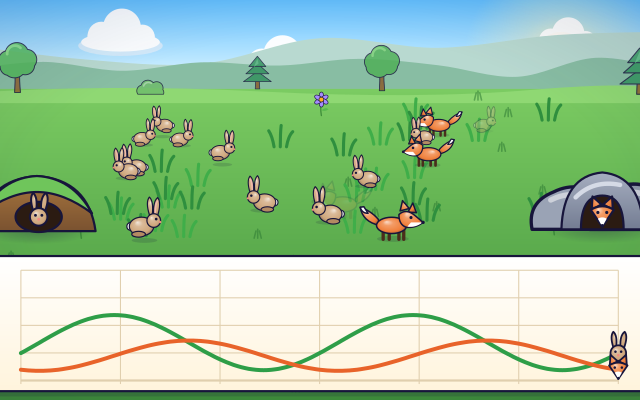 #243
Plants & ecosystems
How do predators and prey affect each other?
Adjust starting populations and observe their changing numbers in a simplified ecosystem.
#243
Plants & ecosystems
How do predators and prey affect each other?
Adjust starting populations and observe their changing numbers in a simplified ecosystem.
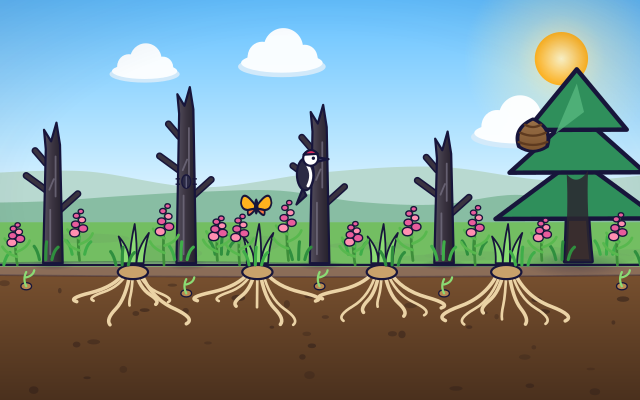 #244
Plants & ecosystems
How does a forest recover after a fire?
Follow surviving roots, arriving seeds, and returning animals through a recovery timeline.
#244
Plants & ecosystems
How does a forest recover after a fire?
Follow surviving roots, arriving seeds, and returning animals through a recovery timeline.
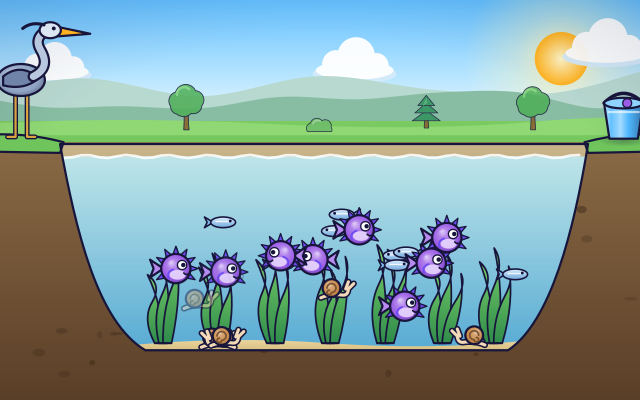 #245
Plants & ecosystems
How can an invasive species change an ecosystem?
Introduce a fictional species and investigate changes in competition and food relationships.
#245
Plants & ecosystems
How can an invasive species change an ecosystem?
Introduce a fictional species and investigate changes in competition and food relationships.
 #246
Plants & ecosystems
How do plants defend themselves?
Compare thorns, tough leaves, and defensive chemicals against different plant-eating visitors.
#246
Plants & ecosystems
How do plants defend themselves?
Compare thorns, tough leaves, and defensive chemicals against different plant-eating visitors.
Keep exploring
Games to play next
- Habitat Builder 3DFind the right home for frogs, camels, polar bears and more.
- Classification ExplorerSort living things by what you can see, then follow and build yes-or-no keys.
- Label LabPut the right labels on beautiful science diagrams, from bean plants to heart chambers.
Draw it or make it
- Layered Woodland Habitat DioramaPaper craft
Guide for grown-ups
- How to start homeschooling: a step-by-step guide for familiesA guide for parents · 7 min read
Science games by grade
Science worksheets by grade
- Preschool Science Worksheets
- Pre-K Science Worksheets
- Kindergarten Science Worksheets
- 1st Grade Science Worksheets
- 2nd Grade Science Worksheets
- 3rd Grade Science Worksheets
- 4th Grade Science Worksheets
- 5th Grade Science Worksheets
- 6th Grade Science Worksheets
- 7th Grade Science Worksheets
- 8th Grade Science Worksheets