How do earthworms change the ground?
Earthworms dig tunnels, pull dead leaves underground and leave rich droppings behind. Bit by bit they make the soil loose, airy and full of plant food.
The big idea: Worms change the ground in three ways. Their tunnels let air and water in. They drag leaves down and mix them with the soil. And their droppings, called casts, are full of food that plants can use.
It's like a tiny plow and mixing spoon in one: it opens up the hard ground and stirs old leaves into it, a little every night.
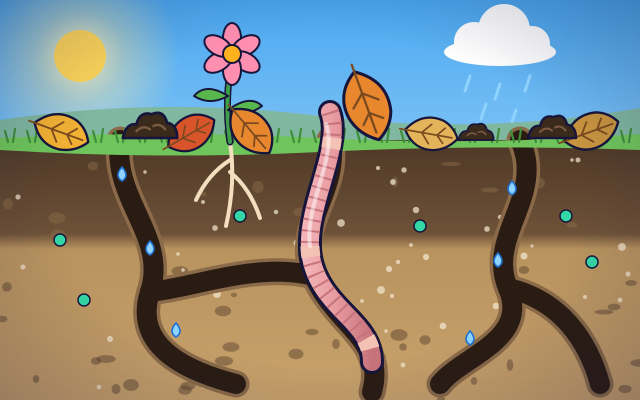
The interactive parts didn't load. The explanations below still work; try reloading the page.
How worms change the soil
- After rain you may spot an earthworm on the lawn, and little heaps of crumbly soil nearby. A worm spends almost all its life underground. What is it doing down there?
- A worm has no legs or bones. It stretches its front end long and thin to push into a crack. Then it swells up to grip the soil and pulls the rest of its body forward.
- Where the worm has been, a tunnel stays open. Rain runs down it and soaks deep into the ground. Air gets in as well, and roots need air just as much as water.
- At night the worm reaches out of its burrow, grips a dead leaf and drags it underground. There the leaf softens and rots, and the worm eats it along with soil.
- The worm swallows soil and bits of leaf and grinds them up inside. What comes out are crumbly droppings called casts. They are rich in plant food, and they mix the leaves right into the soil.
- Soil without worms packs down hard. Rain sits in puddles and roots struggle. Soil with worms is crumbly and full of channels, so water soaks in and plants root deeply.
Look inside worm soil
This is a slice through soil where earthworms live. Tap each part to see how they change it.
- Earthworm. A worm's body is a row of ring-shaped segments, each with its own muscles. It breathes through its damp skin, so it must never dry out.
- Bristles. Each segment has a few tiny stiff bristles. They dig into the tunnel wall like the spikes on running shoes, so the worm can pull itself along.
- Burrow. The burrow is the worm's tunnel. The worm coats the walls with slime, which holds the soil together so the tunnel stays open for a long time.
- Air and water. Tunnels are pipes for air and water. Rain soaks deep down instead of running away, and fresh air reaches the roots and the tiny living things in the soil.
- Leaf pulled down. Worms drag dead leaves into their burrows. That carries food for plants from the top of the ground down to where the roots are.
- Casts. Casts are worm droppings: soil and leaves that have been ground up and mixed together. They make the soil crumbly and feed the plants.
- Roots. Plant roots often grow along old worm tunnels. The way is already open, and the walls are lined with rich casts.
Two boxes of soil
Add worms to the box on the right and watch what they do to the soil. Then make it rain on both boxes and compare.
Experiment: It rains on soil with worms and on soil without. Where does the water soak in faster?
- Tap the jar to add worms to the box on the right. Wait while they dig.
- Look at the leaves on top and the dark layer. What is changing?
- Tap the cloud to make it rain. Compare the puddles.
What we found: The worms dug tunnels, pulled the leaves down and mixed dark material into the pale soil below. When it rained, the water stood in a puddle on the soil without worms, but ran down the tunnels and soaked into the soil with worms.
Turn on JavaScript to try it yourself.
Save the flower bed
A storm is coming, and this hard soil will flood. Get the bed ready so the rain soaks in. Choose the worms, the leaf cover and whether to dig.
How worms really change the ground
An earthworm is a simple animal with a big job. It has no legs, no eyes and no bones. Its body is a row of soft rings, and it moves by making parts of itself long and thin, then short and fat. Tiny bristles grip the soil so it does not slip back.
As a worm travels, it leaves a tunnel. The tunnel is lined with slime, so it stays open. Rain runs down these tunnels and soaks deep into the ground instead of running away or sitting in puddles. Air gets in too. Roots and the tiny living things in soil all need air.
Worms also feed the soil. At night many of them pull dead leaves into their burrows. They swallow soil and leaf bits together, grind them up, and leave crumbly droppings called casts. In this way leaves from the top of the ground are mixed deep into it, and their goodness ends up where roots can reach.
Our plow comparison is not perfect. A plow turns all the soil over at once and breaks the tunnels, while worms work gently for years. And worms are not helpful everywhere: in some northern forests that had no earthworms, worms brought in by people eat the leaf layer that woodland plants depend on.
Key words
- Burrow
- A tunnel that an animal digs to live in.
- Cast
- A worm's dropping: soil and leaf bits ground up together.
- Organic material
- Anything that was once alive, such as dead leaves and roots.
- Pore space
- The gaps in soil that hold air or water.
- Setae
- The tiny bristles a worm uses to grip the soil.
Check your thinking
-
What does a worm leave behind as it moves through soil?
Show the answer
A tunnel that lets air and water in. The tunnel stays open, and air and rain can travel down it.
-
It rains on two gardens. One has many worms and one has none. What do you expect?
Show the answer
Water soaks in faster in the garden with worms. Tunnels carry the rain down into the ground, so fewer puddles form.
-
How do leaves from the top of the ground end up deep in the soil?
Show the answer
Worms drag them into their burrows and leave casts behind. Worms pull leaves down, eat them with soil and leave the mixture behind as casts.
-
Why do worms stay in damp soil and avoid dry, sunny ground?
Show the answer
They breathe through their damp skin, so they must not dry out. A worm has no lungs. Air passes through its wet skin, and that only works while the skin is damp.
-
A farmer plows a field every year and finds very few earthworms. A neighbor who does not plow has many. What is the most likely reason?
Show the answer
Plowing destroys burrows and removes the surface litter that worms feed on. Plowing breaks the burrow system, exposes worms to drying and predators, and buries or removes the litter they feed on.
You're a Plants & ecosystems expert!
You watched, looked inside, tried it, solved the challenge and went deeper. Pick another question below, or switch the age at the top to see this topic another way.
More about plants & ecosystems
 #241
Plants & ecosystems
How do wetlands help clean water?
Trace settling particles, plant uptake, and microbial activity through a model wetland.
#241
Plants & ecosystems
How do wetlands help clean water?
Trace settling particles, plant uptake, and microbial activity through a model wetland.
 #242
Plants & ecosystems
How does energy move through a food web?
Connect organisms and track energy transfers through their feeding relationships.
#242
Plants & ecosystems
How does energy move through a food web?
Connect organisms and track energy transfers through their feeding relationships.
 #243
Plants & ecosystems
How do predators and prey affect each other?
Adjust starting populations and observe their changing numbers in a simplified ecosystem.
#243
Plants & ecosystems
How do predators and prey affect each other?
Adjust starting populations and observe their changing numbers in a simplified ecosystem.
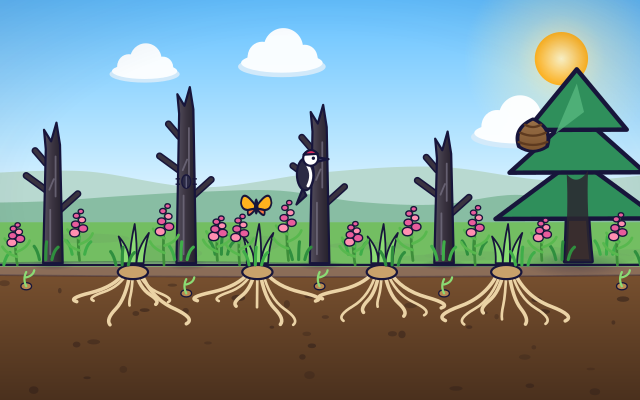 #244
Plants & ecosystems
How does a forest recover after a fire?
Follow surviving roots, arriving seeds, and returning animals through a recovery timeline.
#244
Plants & ecosystems
How does a forest recover after a fire?
Follow surviving roots, arriving seeds, and returning animals through a recovery timeline.
Keep exploring
Games to play next
- Garden AutomationProgram a garden robot with sensor rules — then watch a whole day play out.
- Habitat Builder 3DFind the right home for frogs, camels, polar bears and more.
- Classification ExplorerSort living things by what you can see, then follow and build yes-or-no keys.
Guide for grown-ups
- How to start homeschooling: a step-by-step guide for familiesA guide for parents · 7 min read
Science games by grade
Science worksheets by grade
- Preschool Science Worksheets
- Pre-K Science Worksheets
- Kindergarten Science Worksheets
- 1st Grade Science Worksheets
- 2nd Grade Science Worksheets
- 3rd Grade Science Worksheets
- 4th Grade Science Worksheets
- 5th Grade Science Worksheets
- 6th Grade Science Worksheets
- 7th Grade Science Worksheets
- 8th Grade Science Worksheets