How do wetlands help clean water?
A wetland slows muddy water down so mud can sink, roots can drink the plant food and tiny microbes can eat the waste.
The big idea: A wetland cleans water in three ways: mud settles to the bottom, plant roots take up fertilizer, and microbes break down waste. All three need the water to move slowly.
It's like a jar of muddy water left to stand so the mud sinks. A wetland does that, and adds plants and tiny helpers that take out what you cannot see.
The interactive parts didn't load. The explanations below still work; try reloading the page.
A storm, a wetland and clean water
- When it rains hard, water runs over fields and streets. It picks up soil, plant food called fertilizer, and bits of waste. Then it flows downhill toward a wetland.
- A wetland is shallow water crowded with plants. The water has to squeeze between thousands of stems, so it slows right down and spreads out.
- Fast water can carry mud along, but slow water cannot. The bits of soil sink to the bottom and stay there. This is called settling.
- Some pollution is dissolved, so you cannot see it. Fertilizer in the water is food for plants. The roots soak it up and use it to grow.
- Stems, roots and mud are coated with tiny living things called microbes. They feed on waste in the water and break it into harmless pieces.
- Mud has settled, plants have taken the fertilizer and microbes have eaten the waste. The water leaving the wetland is much cleaner than the water that came in.
A wetland sliced open
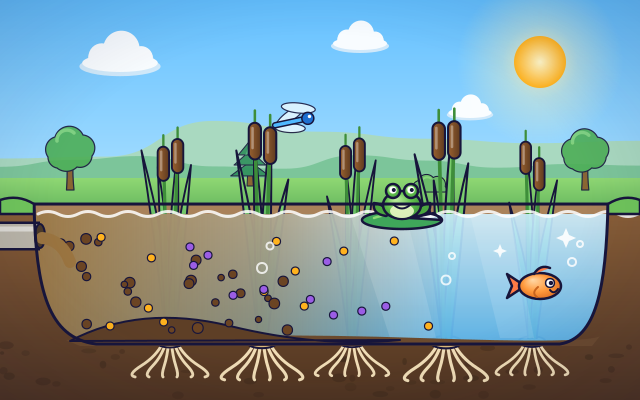
This wetland is cut open so you can see under the water. Tap each part to watch what it does.
- Inflow. Water from fields and streets arrives here. It is brown with soil and carries fertilizer and waste that you cannot see.
- Reeds and cattails. Thousands of stems block the water's path, so it slows and spreads out. Slow water gives every cleaning job more time.
- Settled mud. When the water slows, the soil it was carrying sinks and piles up on the bottom. The water above it turns clearer.
- Roots. Roots soak up fertilizer that is dissolved in the water. The plant uses it to build new leaves and stems.
- Microbes. A slippery coat of microbes covers the stems, roots and mud. They are far too small to see, and they eat waste in the water.
- Wetland animals. A wetland is a home as well as a filter. Frogs, dragonflies, fish, ducks and herons all find food and shelter here.
- Outflow. The water spills over a low gate into the pond. It is much clearer now, and it carries far less fertilizer and waste.
Model wetland: do plants matter?
Tap the planting spots to add or pull out reeds. Follow the brown mud, the yellow plant food and the purple waste as they travel through.
Experiment: What happens to the water coming out if you plant more reeds?
- Start with no reeds. Look at the jar of water coming out.
- Plant four or more reeds and wait a moment.
- Compare the two jars. Where did the mud, the plant food and the waste go?
What we found: With no plants the water races through and comes out brown. Reeds slow it down. Then the mud has time to sink, the roots drink the plant food and the microbes on the stems eat the waste.
Turn on JavaScript to try it yourself.
Get ready for the storm
You have four reeds. Plant them, set the gate, then send the storm. Make the pond three quarters clean without flooding the bank.
Nature's water cleaner
A wetland is land that is wet for most of the year: a marsh, a swamp or the reedy edge of a lake. The water is shallow, and it is crowded with plants such as reeds and cattails.
When rain washes over farms and streets, it picks up soil, fertilizer and bits of waste. In a wetland this dirty water has to push between thousands of stems, so it slows down. Slow water cannot carry soil, so the mud sinks to the bottom. That is the first cleaning job, called settling.
The second job belongs to the plants. Fertilizer is food for plants, and it is dissolved in the water where you cannot see it. Roots soak it up and use it to grow. The third job belongs to microbes, living things too small to see. They coat every stem and root, and they eat the waste and break it into harmless pieces.
A wetland is not a magic filter. A big storm can push water through too fast, and too much pollution can overload it. The water that comes out is cleaner, but you still should not drink it. Wetlands also soak up floods and give homes to frogs, fish and birds. That is why people protect them, and even build new ones.
Key words
- Wetland
- Land that is covered with shallow water, or soaked, for most of the year.
- Settling
- When bits of soil sink to the bottom of still or slow water.
- Nutrients
- Plant food, such as the fertilizer farmers put on fields.
- Microbes
- Living things too small to see, such as bacteria.
- Residence time
- How long the water stays in the wetland.
- Runoff
- Rain water that flows over the ground instead of soaking in.
Check your thinking
-
Why does water slow down in a wetland?
Show the answer
It has to squeeze between lots of plant stems. Thousands of stems block the way, so the water slows and spreads out.
-
What happens to the soil in muddy water when the water slows down?
Show the answer
It sinks to the bottom. Only fast water can carry soil along. In slow water it settles.
-
Fertilizer is dissolved in the water. What takes it out?
Show the answer
Plant roots soak it up. Fertilizer is plant food. Roots take it in and the plant uses it to grow.
-
A huge storm sends water rushing through the wetland very fast. What happens?
Show the answer
The water comes out dirtier, because there was less time to clean it. Every cleaning job needs time. Fast water leaves before the jobs are done.
-
Where in a wetland would you expect the coarsest sediment, such as sand, to pile up?
Show the answer
Near the inflow, because heavy particles settle first. Heavier particles sink fastest, so they drop out almost as soon as the water slows.
-
Besides cleaning water, what else does a wetland do?
Show the answer
It soaks up floods and gives animals a home. Wetlands hold flood water like a sponge, and many animals live in them.
You're a Plants & ecosystems expert!
You watched, looked inside, tried it, solved the challenge and went deeper. Pick another question below, or switch the age at the top to see this topic another way.
More about plants & ecosystems
 #242
Plants & ecosystems
How does energy move through a food web?
Connect organisms and track energy transfers through their feeding relationships.
#242
Plants & ecosystems
How does energy move through a food web?
Connect organisms and track energy transfers through their feeding relationships.
 #243
Plants & ecosystems
How do predators and prey affect each other?
Adjust starting populations and observe their changing numbers in a simplified ecosystem.
#243
Plants & ecosystems
How do predators and prey affect each other?
Adjust starting populations and observe their changing numbers in a simplified ecosystem.
 #244
Plants & ecosystems
How does a forest recover after a fire?
Follow surviving roots, arriving seeds, and returning animals through a recovery timeline.
#244
Plants & ecosystems
How does a forest recover after a fire?
Follow surviving roots, arriving seeds, and returning animals through a recovery timeline.
 #245
Plants & ecosystems
How can an invasive species change an ecosystem?
Introduce a fictional species and investigate changes in competition and food relationships.
#245
Plants & ecosystems
How can an invasive species change an ecosystem?
Introduce a fictional species and investigate changes in competition and food relationships.
Keep exploring
Games to play next
- River MysterySomething changed the river. Sample sites with a limited budget, follow the evidence and find where the change begins.
- Habitat Builder 3DFind the right home for frogs, camels, polar bears and more.
- Garden AutomationProgram a garden robot with sensor rules — then watch a whole day play out.
Guide for grown-ups
- How to start homeschooling: a step-by-step guide for familiesA guide for parents · 7 min read
Science games by grade
Science worksheets by grade
- Preschool Science Worksheets
- Pre-K Science Worksheets
- Kindergarten Science Worksheets
- 1st Grade Science Worksheets
- 2nd Grade Science Worksheets
- 3rd Grade Science Worksheets
- 4th Grade Science Worksheets
- 5th Grade Science Worksheets
- 6th Grade Science Worksheets
- 7th Grade Science Worksheets
- 8th Grade Science Worksheets