How do decomposers break down fallen leaves?
Small animals, fungi and bacteria break fallen leaves into smaller and smaller pieces, until they become dark soil that feeds the trees.
The big idea: Decomposers work as a team. Small animals shred the leaves. Fungi and bacteria digest the pieces. The goodness that was locked in the leaves goes back into the soil, where tree roots take it up again.
It's like a recycling team: one crew tears old boxes into small bits, and the next crew turns the bits into material for making new things.
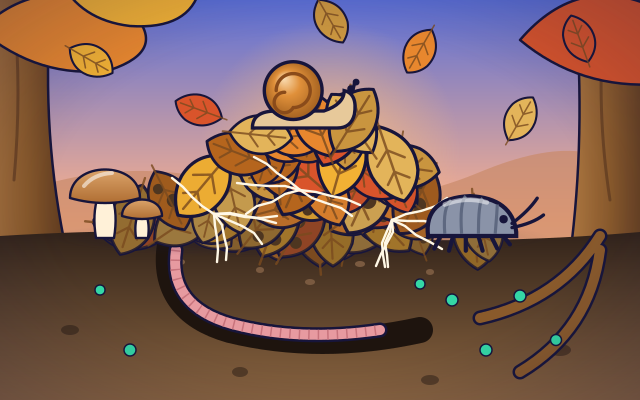
The interactive parts didn't load. The explanations below still work; try reloading the page.
How fallen leaves become soil
- Every autumn the trees drop their leaves, and a thick layer covers the ground. Yet the forest never fills up with old leaves. Something must be clearing them away.
- First come the small animals: woodlice, millipedes, snails and worms. They chew holes in the leaves and tear them into little pieces. Small pieces are much easier to rot.
- Next come the fungi. Their thin white threads grow over and through the leaf pieces. The threads give off juices that dissolve even the tough parts, and then soak up the food.
- Too small to see, bacteria cover every scrap. A pinch of soil holds millions of them. They finish off the soft leftovers and the droppings of the animals.
- After a year or two, the leaves have become dark, crumbly stuff called humus. The goodness that was locked inside them is now loose in the soil.
- The tree's roots take up that goodness with water. In spring it helps build new leaves. The same material goes round and round, from leaf to soil to leaf.
Look inside the forest floor
This is a slice through the forest floor. Tap each part to see who is at work there.
- Fresh leaves. The top layer is this year's leaves. They are still whole, dry and tough, and full of stored goodness.
- Shredders. Woodlice, millipedes and snails chew the damp leaves into small pieces. Their droppings are even smaller pieces, ready for fungi and bacteria.
- Earthworm. At night an earthworm pulls leaves down into its burrow. It eats them with soil and mixes the leftovers deep into the ground.
- Fungus threads. A web of white fungus threads spreads through the leaves. It dissolves the tough parts that animals cannot digest. Mushrooms are how it spreads its spores.
- Bacteria. Bacteria are far too small to see without a microscope. They live on every scrap in enormous numbers and finish off the soft remains.
- Humus. This dark, crumbly layer is what is left when the leaves are almost fully broken down. It holds water like a sponge and feeds the plants.
- Tree roots. Fine tree roots spread through the humus. They take in water with the goodness that the decomposers set free, and the tree uses it to grow.
Speed up time
Run time forward and watch the pile shrink. Then switch off the animals, the fungi or the bacteria and compare how much is left.
Experiment: What happens to a pile of leaves if the small animals, fungi and bacteria are kept away?
- Press "Fast forward" with all three helpers switched on. Watch the pile.
- Slide time back to the middle. Switch the helpers off one at a time.
- With everything off, slide time to the end. How much is left?
What we found: With all the helpers at work, most of the pile turned into dark soil in about two years. With no helpers it barely changed. The animals alone only make small pieces; it takes fungi and bacteria to turn them into soil.
Turn on JavaScript to try it yourself.
Make soil in a year
Turn this pile into soil within one year. Decide how wet it should be and whether to let the small animals in.
How decomposers really work
A tree spends all summer packing its leaves with useful materials. In autumn the leaves fall, and all of that lands on the ground. If nothing happened to them, the forest would be buried under old leaves, and the soil would slowly run out of the things that trees need.
Instead, a team of decomposers goes to work. Small animals such as woodlice, millipedes, snails and earthworms chew the leaves into bits. Fungi spread their white threads through the bits and dissolve the tough parts. Bacteria, far too small to see, finish off what is left. Each helper makes the job easier for the next one.
What remains is humus, a dark and crumbly material that makes soil rich. The goodness from the leaves is now loose in the soil water, where roots can take it up. Decomposers are nature's recyclers: the same material is used again and again.
How fast it goes depends on the weather. Decomposers like it warm and damp, with some air. In a warm rainforest a leaf can vanish in a few months. In a cool forest it can take two or three years. Our recycling comparison breaks down in one way: nobody is in charge here. Each helper is just eating its dinner.
Key words
- Decomposer
- A living thing that breaks down dead plants and animals.
- Detritivore
- A small animal that eats dead leaves and other dead bits.
- Humus
- The dark, crumbly part of soil made from rotted plants.
- Nutrients
- The goodness that plants need to grow, which they take from the soil.
- Enzyme
- A special juice that living things make to break food into tiny pieces.
Check your thinking
-
What do decomposers turn fallen leaves into?
Show the answer
Dark soil with goodness that plants can use. The leaves become humus, and their goodness goes back into the soil.
-
Why does it help when small animals chew the leaves into bits first?
Show the answer
Small bits give fungi and bacteria many more places to work. Fungi and bacteria work on surfaces. Many small bits have much more surface than one big leaf.
-
A pile of leaves is left in a very dry shed for two years. What do you expect to find?
Show the answer
Leaves that look almost the same. Decomposers need water. Without it they cannot live and work, so the leaves just sit there.
-
Why do leaves rot faster in a warm, wet rainforest than in a cool forest?
Show the answer
Decomposers work faster when it is warm and damp. Warmth and moisture keep the decomposers busy all year round.
-
In a bog the ground is soaked all year, and dead plants pile up as peat instead of rotting. What is the best explanation?
Show the answer
Waterlogged ground has very little oxygen, so decomposers work very slowly. Most decomposers need oxygen. In waterlogged ground the air spaces are full of water, so decay almost stops and plant material builds up.
You're a Plants & ecosystems expert!
You watched, looked inside, tried it, solved the challenge and went deeper. Pick another question below, or switch the age at the top to see this topic another way.
More about plants & ecosystems
 #240
Plants & ecosystems
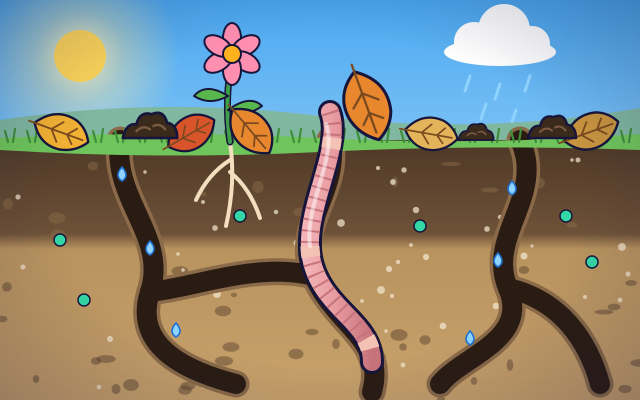
How do earthworms change the ground?
Follow tunnels and compare their effects on air spaces and organic material.
#240
Plants & ecosystems
How do earthworms change the ground?
Follow tunnels and compare their effects on air spaces and organic material.
 #241
Plants & ecosystems
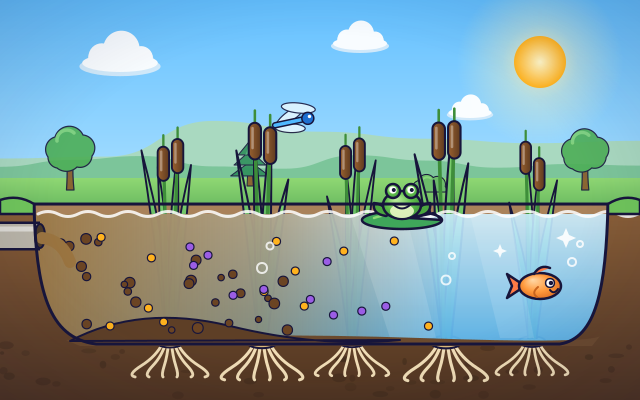
How do wetlands help clean water?
Trace settling particles, plant uptake, and microbial activity through a model wetland.
#241
Plants & ecosystems
How do wetlands help clean water?
Trace settling particles, plant uptake, and microbial activity through a model wetland.
 #242
Plants & ecosystems
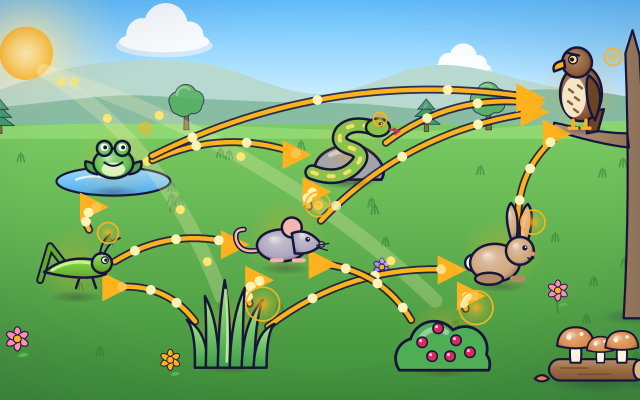
How does energy move through a food web?
Connect organisms and track energy transfers through their feeding relationships.
#242
Plants & ecosystems
How does energy move through a food web?
Connect organisms and track energy transfers through their feeding relationships.
 #243
Plants & ecosystems
How do predators and prey affect each other?
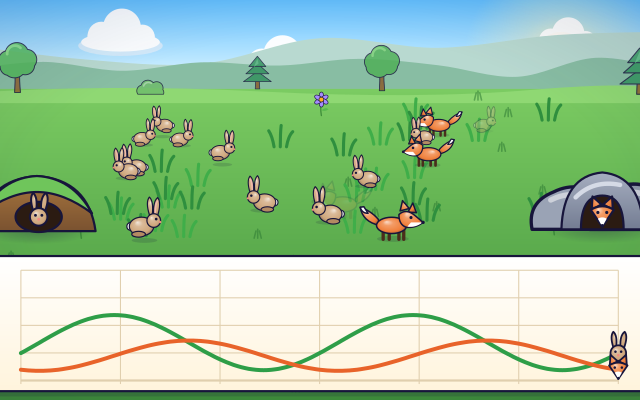
Adjust starting populations and observe their changing numbers in a simplified ecosystem.
#243
Plants & ecosystems
How do predators and prey affect each other?
Adjust starting populations and observe their changing numbers in a simplified ecosystem.
Keep exploring
Games to play next
- Classification ExplorerSort living things by what you can see, then follow and build yes-or-no keys.
- Habitat Builder 3DFind the right home for frogs, camels, polar bears and more.
- Label LabPut the right labels on beautiful science diagrams, from bean plants to heart chambers.
Guide for grown-ups
- How to start homeschooling: a step-by-step guide for familiesA guide for parents · 7 min read
Science games by grade
Science worksheets by grade
- Preschool Science Worksheets
- Pre-K Science Worksheets
- Kindergarten Science Worksheets
- 1st Grade Science Worksheets
- 2nd Grade Science Worksheets
- 3rd Grade Science Worksheets
- 4th Grade Science Worksheets
- 5th Grade Science Worksheets
- 6th Grade Science Worksheets
- 7th Grade Science Worksheets
- 8th Grade Science Worksheets