How does flower pollination work?
Bees, butterflies and the wind move pollen from one flower to another. That is how a flower starts to make seeds and fruit.
The big idea: Pollination means moving pollen from the anthers of one flower to the sticky stigma of another. Only then can the flower make seeds.
It's like a mail carrier: the bee picks up pollen at one flower and delivers it to the right address, the sticky tip of another flower of the same kind.
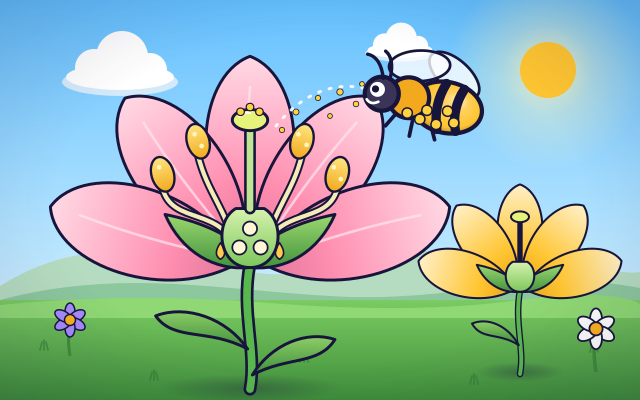
The interactive parts didn't load. The explanations below still work; try reloading the page.
From flower to flower
- A bee zooms over the meadow to a bright flower. She wants its sweet nectar. But the flower wants something from the bee too.
- While the bee drinks, she brushes against the anthers, the little bags at the top of the stamens. Sticky yellow pollen clings to her hairy body.
- At the next flower of the same kind, some pollen rubs off on the stigma, the sticky tip in the middle. That is pollination!
- Each pollen grain grows a thin tube down through the style to the ovary. There it reaches an ovule, and the ovule becomes a seed.
- Grasses and many trees do not use insects. They hang their anthers in the breeze and let the wind carry clouds of light pollen.
- After pollination the petals drop. The ovary swells into a fruit, like an apple, and the seeds inside can grow into new plants.
Look inside a flower
Tap each part of the flower. Find where pollen is made and where it has to land.
- Petal. Petals are colorful signs for insects. Their color and smell show where the nectar is.
- Sepal. Sepals are the small green leaves under the petals. They wrapped around the bud and kept it safe before it opened.
- Anther. The anther makes pollen. When it is ripe, it splits open and the yellow pollen is ready to stick to a visitor.
- Filament. The filament is the thin stalk that holds the anther up, right where a bee will brush past it. Filament plus anther is called a stamen.
- Stigma. The stigma is the sticky tip in the middle of the flower. Pollen has to land here for seeds to form.
- Style. The style is the stalk under the stigma. Each pollen grain grows a thin tube down through it.
- Ovary and ovules. The ovary holds the ovules, which are the seeds-to-be. After pollination the ovules become seeds and the ovary becomes the fruit.
- Nectar. Nectar is sugary water at the bottom of the flower. It is the reward that brings bees and butterflies inside, past the pollen.
Bee or wind: who carries pollen best?
Carry pollen with the bee from one flower to the other. Then switch to wind and blow pollen across. Count how much pollen arrives.
Experiment: A bee and the wind each carry pollen to another plant. Which one loses more pollen on the way?
- With the bee chosen, tap one flower and then the other.
- Read how much pollen left and how much landed.
- Choose Wind, press Blow the wind, and read the numbers again.
What we found: The bee flies straight to the next flower, so a good share of her pollen lands on the sticky tip. The wind blows pollen everywhere, so nearly all of it is lost. That is why wind plants make so much more pollen.
Turn on JavaScript to try it yourself.
Pollinate the garden
Pollinate every flower before the bee gets tired. Pollen only works on a flower of the same kind.
How a flower makes seeds
A plant cannot walk over to another plant. So how do two plants become the parents of a seed? They send pollen. Pollen is a fine yellow dust made in the anthers, the little bags that stand on thin stalks inside a flower.
For a seed to start, pollen has to land on the stigma, the sticky tip in the middle of a flower of the same kind. Moving it there is called pollination. Many flowers pay animals to do the job. Bees, butterflies, moths, beetles, birds and even bats come for sweet nectar, get dusted with pollen, and carry it to the next flower.
Other plants use the wind. Grasses, wheat, corn and trees such as oak and birch let the wind blow their pollen away. The wind cannot aim, so most of that pollen is lost. These plants make huge amounts of light, dry pollen. That floating pollen is what makes some people sneeze in spring.
When a pollen grain lands in the right place, it grows a tiny tube down to an ovule, which then becomes a seed. The ovary around the seeds swells into a fruit. Apples, cherries, pumpkins, tomatoes and almonds all start this way. Without pollinators, we would have far fewer of them.
Key words
- Pollen
- Fine dust made by flowers. It is needed to make seeds.
- Anther
- The part at the top of a stamen that makes pollen.
- Stigma
- The sticky tip in the middle of a flower where pollen must land.
- Ovule
- A seed-to-be inside the ovary.
- Nectar
- Sugary liquid that flowers make to reward their visitors.
- Cross-pollination
- When pollen goes from one plant to another plant of the same kind.
Check your thinking
-
What is pollination?
Show the answer
Moving pollen from an anther to a stigma. Pollination is the journey of pollen to the sticky stigma. Seeds can only start after that.
-
Why do many flowers make sweet nectar?
Show the answer
To bring in animals that carry pollen. Nectar is a reward. Visitors that come to drink it pick up pollen and deliver it to the next flower.
-
Grass flowers are small and green and have no smell. Why?
Show the answer
The wind carries their pollen, and wind does not need to be attracted. Bright petals and scent are for animals. The wind blows anyway, so grass saves the effort.
-
Why do wind-pollinated plants make so much more pollen than bee flowers?
Show the answer
Most of it blows away and never reaches a flower. The wind cannot aim. Only a tiny share lands on a stigma, so the plant has to send a huge amount.
-
What does the ovary of a flower turn into after pollination?
Show the answer
A fruit with seeds inside. The ovules become seeds and the ovary around them grows into the fruit.
You're a Plants & ecosystems expert!
You watched, looked inside, tried it, solved the challenge and went deeper. Pick another question below, or switch the age at the top to see this topic another way.
More about plants & ecosystems
 #227
Plants & ecosystems
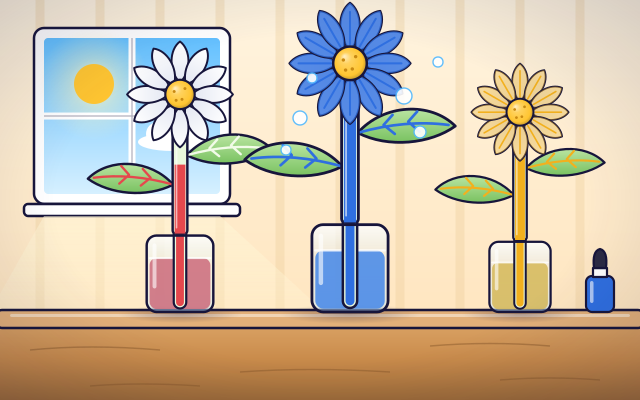
How does water travel from roots to leaves?
Follow colored water through a transparent plant and explore evaporation from leaves.
#227
Plants & ecosystems
How does water travel from roots to leaves?
Follow colored water through a transparent plant and explore evaporation from leaves.
 #228
Plants & ecosystems
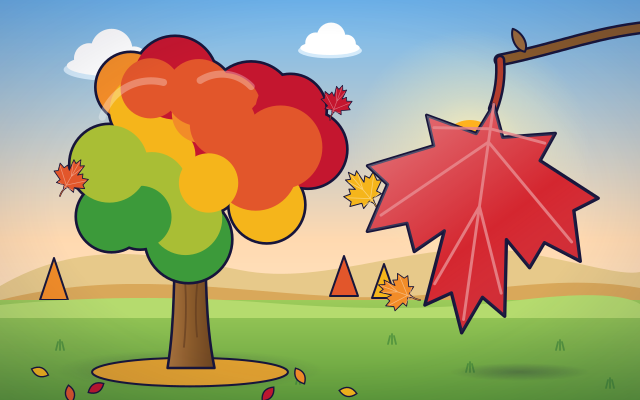
Why do leaves change color in autumn?
Reveal different pigments as the amount of chlorophyll changes through a seasonal timeline.
#228
Plants & ecosystems
Why do leaves change color in autumn?
Reveal different pigments as the amount of chlorophyll changes through a seasonal timeline.
 #229
Plants & ecosystems
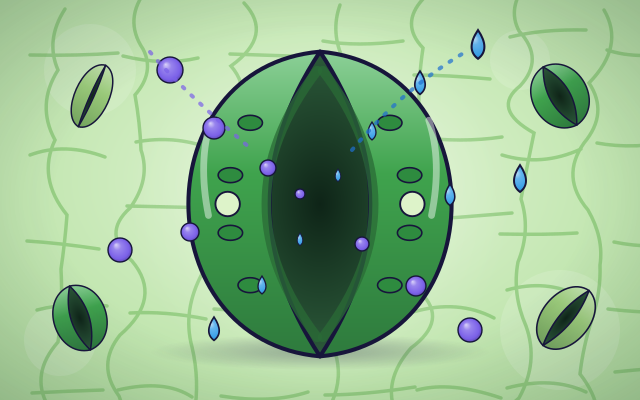
How do leaves control water loss?
Open and close virtual stomata while balancing gas exchange and water loss.
#229
Plants & ecosystems
How do leaves control water loss?
Open and close virtual stomata while balancing gas exchange and water loss.
 #230
Plants & ecosystems
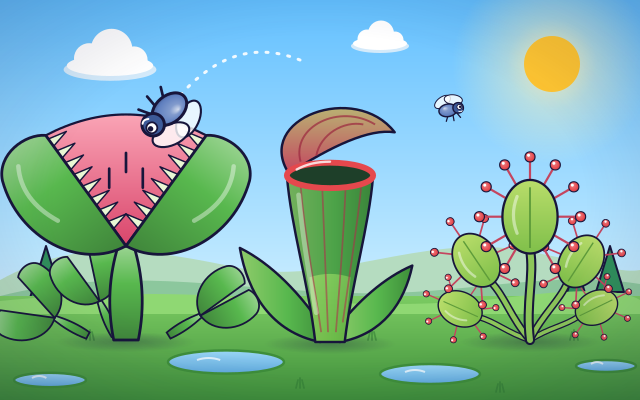
How do carnivorous plants catch insects?
Compare snap, pitcher, and sticky traps and trace the nutrients obtained.
#230
Plants & ecosystems
How do carnivorous plants catch insects?
Compare snap, pitcher, and sticky traps and trace the nutrients obtained.
Keep exploring
Games to play next
- Label LabPut the right labels on beautiful science diagrams, from bean plants to heart chambers.
- Classification ExplorerSort living things by what you can see, then follow and build yes-or-no keys.
- Habitat Builder 3DFind the right home for frogs, camels, polar bears and more.
Draw it or make it
- How to draw a simple flowerDrawing lesson
- Five-Petal Paper FlowerPaper craft
Guide for grown-ups
- How to start homeschooling: a step-by-step guide for familiesA guide for parents · 7 min read
Science games by grade
Science worksheets by grade
- Preschool Science Worksheets
- Pre-K Science Worksheets
- Kindergarten Science Worksheets
- 1st Grade Science Worksheets
- 2nd Grade Science Worksheets
- 3rd Grade Science Worksheets
- 4th Grade Science Worksheets
- 5th Grade Science Worksheets
- 6th Grade Science Worksheets
- 7th Grade Science Worksheets
- 8th Grade Science Worksheets