How does water travel from roots to leaves?
Roots soak up water, tiny tubes carry it up the stem, and the leaves let it out into the air. Follow the water with colored dye.
The big idea: A plant has thin tubes from its roots to its leaves. When water dries off the leaves, more water is pulled up the tubes to replace it.
It's like drinking through a straw: the leaves sip at the top by letting water dry off, and more water climbs up the stem from the roots.

The interactive parts didn't load. The explanations below still work; try reloading the page.
From roots to leaves
- A thirsty plant droops. Water it, and soon it stands up straight again. But the water went into the ground. How did it get to the top?
- Under the ground, thousands of tiny root hairs soak up water from the damp soil and pass it into the roots.
- Inside the root and stem are bundles of very thin tubes called xylem. The water travels up through them, like juice in a bunch of straws.
- The tubes branch into the veins of each leaf. From there, water escapes into the air through tiny holes in the leaf. You cannot see it leave.
- Water sticks to itself. Each bit that leaves a leaf pulls the next bit up behind it, like a long chain, all the way down to the roots.
- You can see it for yourself. Stand a white flower in colored water. The dye rides up the tubes with the water and colors the petals.
Look inside a see-through plant
Tap each part to follow the water from the soil to the air.
- Root hairs. Root hairs are tiny, thin threads near the tips of the roots. They reach between the bits of soil and soak up water.
- Root. Roots anchor the plant and collect the water from all the root hairs. They pass it to the tubes in the middle of the root.
- Xylem tubes. Xylem tubes are like a bundle of very thin straws. They carry water and minerals upward only, from the roots to every leaf.
- Phloem tubes. Phloem is a second set of tubes. It carries sugary food made in the leaves to the roots, flowers and fruit.
- Leaf veins. The veins of a leaf are the ends of the tubes. They spread water across the whole leaf and hold the leaf flat.
- Stomata. Stomata are tiny holes, mostly under the leaf. Water escapes through them as an invisible gas, and that pulls more water up the stem.
Race the colored water
Tap a dye bottle to color the water in both jars. Watch it climb the two see-through plants. Then change where the second plant stands.
Experiment: Two white flowers stand in dyed water, one on a sunny windowsill and one in a shady corner. Which flower changes color first?
- Tap a dye bottle. The water in both jars changes color.
- Watch the colored water climb each stem.
- Try the plastic bag and the fan for the second plant, then add a new color.
What we found: The flower in the sun changes color first. Sun and moving air dry the leaves faster, and every bit of water that leaves pulls more water up the stem. Under a plastic bag the air is damp, so almost nothing dries off and the water hardly moves.
Turn on JavaScript to try it yourself.
The two-color flower
The stem is split into two glasses. Make the flower match the picture, and get it done before 3 hours are up.
How water climbs a plant
A plant needs water in every leaf, but the water is down in the soil. Animals have a heart to pump liquid around. A plant has no pump at all. Even so, a tall tree lifts water higher than a ten-story building.
The journey starts at the roots. Tiny root hairs soak up water from the soil. The water moves into thin tubes called xylem, which run like a bundle of straws up the root, through the stem and into the veins of every leaf.
The lifting is done at the top. Leaves have thousands of tiny holes called stomata. Water dries off inside the leaf and floats out through these holes into the air. Water is sticky: each bit holds on to the next. So when some water leaves the leaf, it pulls the water behind it up the tube, the way a sip on a straw pulls up your drink.
That is why plants use more water on sunny, warm, windy days: their leaves dry faster, so the pull is stronger. If the soil runs dry, the pull has nothing to lift, the cells go soft and the plant droops. The straw idea is not perfect, though. You make suction with your mouth, but a plant does it just by letting water evaporate.
Key words
- Xylem
- Thin tubes that carry water up a plant.
- Transpiration
- Water drying off a plant's leaves into the air.
- Stomata
- Tiny holes in a leaf that let gases and water vapor in and out. One of them is a stoma.
- Cohesion
- Water sticking to itself.
- Root hair
- A tiny thread growing from a root that soaks up water from the soil.
- Wilting
- When a plant droops because it has lost too much water.
Check your thinking
-
Which part of a plant takes water from the soil?
Show the answer
The root hairs. Root hairs reach between the bits of soil and soak up the water there.
-
A white flower stands in blue water. Why do its petals turn blue?
Show the answer
The dye travels up the tubes with the water. The dye is carried along in the water through the xylem tubes and stays in the petals when the water evaporates.
-
On which day does a plant pull up the most water?
Show the answer
A sunny, warm, windy day. Sun, warmth and wind dry the leaves fastest, and each bit of water that leaves pulls more up.
-
A stem is split in two. One half stands in red water, the other in blue. What does the flower look like?
Show the answer
Red on one side and blue on the other. The tubes run straight up, so each half of the stem feeds the petals on its own side.
-
What pulls the water up a tall tree?
Show the answer
Water drying off the leaves pulls more water up behind it. Water sticks to itself. As it leaves the leaf, it tugs the rest of the water up the tubes.
You're a Plants & ecosystems expert!
You watched, looked inside, tried it, solved the challenge and went deeper. Pick another question below, or switch the age at the top to see this topic another way.
More about plants & ecosystems
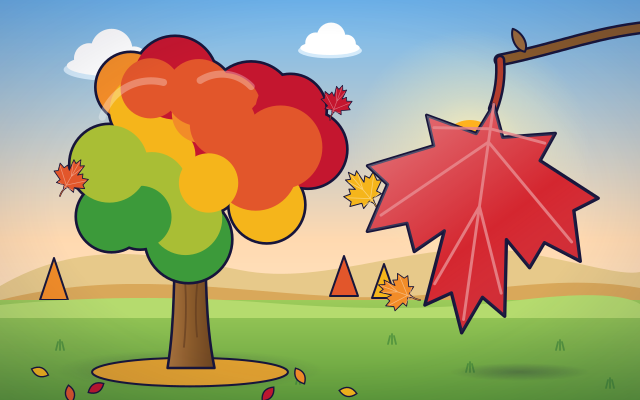 #228
Plants & ecosystems
Why do leaves change color in autumn?
Reveal different pigments as the amount of chlorophyll changes through a seasonal timeline.
#228
Plants & ecosystems
Why do leaves change color in autumn?
Reveal different pigments as the amount of chlorophyll changes through a seasonal timeline.
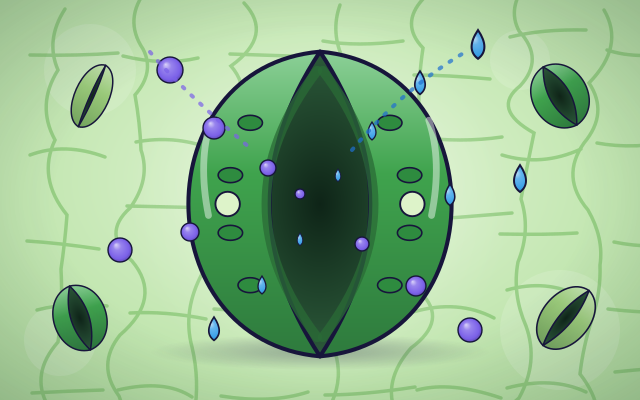 #229
Plants & ecosystems
How do leaves control water loss?
Open and close virtual stomata while balancing gas exchange and water loss.
#229
Plants & ecosystems
How do leaves control water loss?
Open and close virtual stomata while balancing gas exchange and water loss.
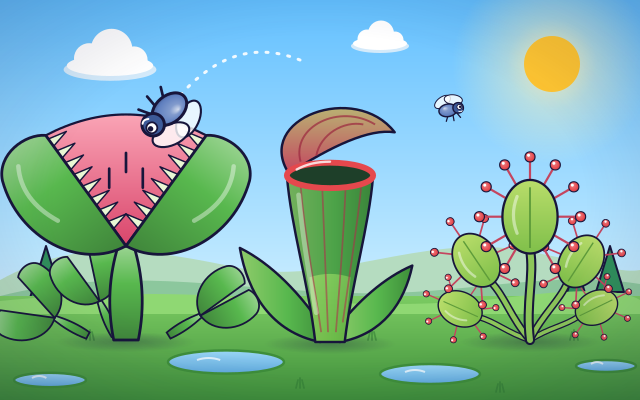 #230
Plants & ecosystems
How do carnivorous plants catch insects?
Compare snap, pitcher, and sticky traps and trace the nutrients obtained.
#230
Plants & ecosystems
How do carnivorous plants catch insects?
Compare snap, pitcher, and sticky traps and trace the nutrients obtained.
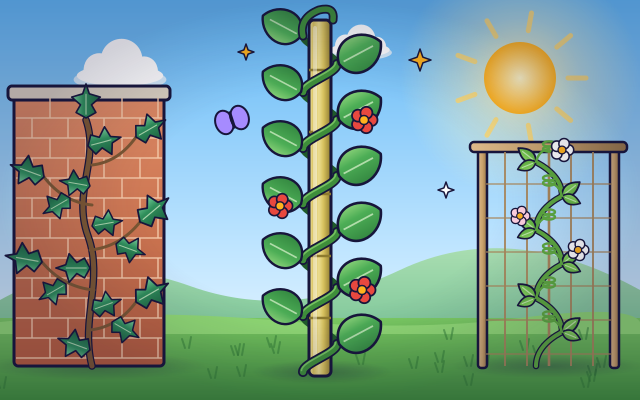 #231
Plants & ecosystems
How do climbing plants hold on?
Guide tendrils, twining stems, and clinging roots around different supports.
#231
Plants & ecosystems
How do climbing plants hold on?
Guide tendrils, twining stems, and clinging roots around different supports.
Keep exploring
Games to play next
- Label LabPut the right labels on beautiful science diagrams, from bean plants to heart chambers.
- Garden AutomationProgram a garden robot with sensor rules — then watch a whole day play out.
- Classification ExplorerSort living things by what you can see, then follow and build yes-or-no keys.
Guide for grown-ups
- How to start homeschooling: a step-by-step guide for familiesA guide for parents · 7 min read
Science games by grade
Science worksheets by grade
- Preschool Science Worksheets
- Pre-K Science Worksheets
- Kindergarten Science Worksheets
- 1st Grade Science Worksheets
- 2nd Grade Science Worksheets
- 3rd Grade Science Worksheets
- 4th Grade Science Worksheets
- 5th Grade Science Worksheets
- 6th Grade Science Worksheets
- 7th Grade Science Worksheets
- 8th Grade Science Worksheets