How do plants defend themselves?
Thorns, tough waxy leaves and bitter juices each stop a different hungry visitor. See which works on whom.
The big idea: Plants are rooted to the spot, so they defend themselves with sharp parts, tough parts and bad-tasting juices. Each defense works best on a different animal.
It's like a castle: spikes on the gate stop big visitors, thick walls stop small ones, and the cooks can make the food taste awful for raiders.
The interactive parts didn't load. The explanations below still work; try reloading the page.
How a plant protects itself
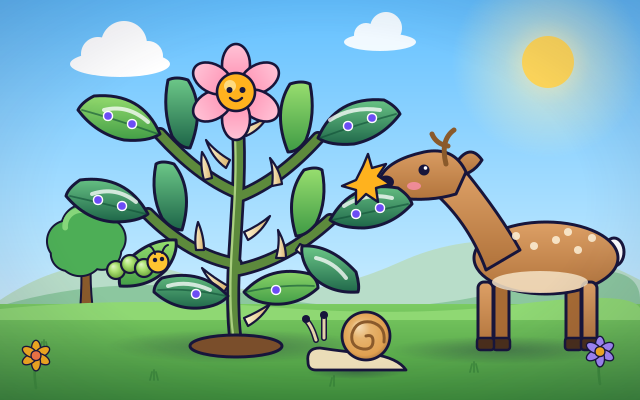
- A deer wanders up and starts eating. An animal could run or hide, but a plant is rooted in the ground. So how does a plant stay safe?
- Some plants grow thorns or spines. A big animal with a soft nose and lips feels the prickle, backs off and looks for an easier meal.
- A snail eats by scraping with a tongue like a tiny file. Thick, waxy, leathery leaves are too hard to scrape, so the snail gives up.
- A caterpillar is small enough to dodge thorns. But this leaf holds bitter juice. One taste, and the caterpillar spits it out and crawls away.
- A bite sets off an alarm inside the plant. A signal travels to other leaves, and they make extra bitter juice before the caterpillar reaches them.
- Each defense fits a different visitor. But defenses use up food the plant could spend on growing, so plants make just what they need.
Look closely at a plant's defenses
Tap each part of the branch to see how it keeps hungry animals away.
- Thorn. A thorn is a hard, sharp point on the stem. It pricks the soft nose and lips of a big animal that tries to bite the branch.
- Waxy coat. A layer of wax covers the leaf like a raincoat. Thick wax over a leathery leaf is hard to scrape or chew, and it keeps water in too.
- Stinging hairs. Tiny hairs make it hard for small insects to walk and bite. A nettle's hairs are hollow needles that snap and inject stinging juice.
- Bitter juice. Leaf cells store bitter chemicals. An insect that bites the leaf bursts the cells and gets a mouthful of bad-tasting juice.
- Sticky sap. When some plants are bitten, sticky sap oozes out. It gums up an insect's mouth and seals the wound like a bandage.
- Alarm scent. A damaged leaf gives off a smell. Other leaves pick it up and make more bitter juice. The smell can even call in insects that hunt the leaf-eaters.
Test the defenses
Switch on a defense, then tap a visitor to send it over. Which defense stops the deer? The snail? The caterpillar?
Experiment: Will thorns stop a tiny caterpillar?
- Switch on Thorns only.
- Tap the deer and watch. Then tap the caterpillar.
- Now try Bitter juice against the caterpillar.
What we found: Thorns stop the deer, because its big soft nose gets pricked. The caterpillar is so small that it walks between the thorns, but bitter juice stops it. Each defense fits a different visitor.
Turn on JavaScript to try it yourself.
Two visitors, two defenses
Look who is coming to eat. The plant has energy for only two defenses. Choose them, then press Start the day.
A plant's toolbox of defenses
A rabbit can run from a fox, and a snail can hide in its shell. A plant can do neither. It is rooted in one place for its whole life, and many animals want to eat it. So plants protect themselves with their own bodies.
Some defenses are things you can see and feel. Thorns and spines prick big animals such as deer and goats. Thick, waxy, leathery leaves are too hard for a snail to scrape. Tiny hairs trip up small insects, and a nettle's hairs even sting.
Other defenses are hidden inside. Many leaves hold bitter or harmful juices, so one bite is enough to send an insect away. Some plants leak sticky sap that gums up small mouths. A bitten plant can also raise an alarm: it makes more bitter juice in its other leaves and gives off a smell that warns its neighbors.
No defense works on everyone. A caterpillar walks right between thorns, and a deer hardly notices tiny hairs. And defenses are not free: building them uses food the plant could have used to grow. That is why each kind of plant has the defenses that fit the animals living around it. Our castle comparison breaks down here: a castle is built once, but a plant can add defenses only when it is attacked.
Key words
- Herbivore
- An animal that eats plants.
- Physical defense
- A part of the plant that makes it hard to bite, such as a thorn or a tough leaf.
- Chemical defense
- A juice inside the plant that tastes bad or is harmful to the animals that eat it.
- Cuticle
- The waxy coat on the outside of a leaf.
- Induced defense
- A defense the plant makes only after it has been bitten.
- Trade-off
- Getting more of one thing by giving up some of another, such as defense instead of growth.
Check your thinking
-
Why do plants need defenses at all?
Show the answer
They are rooted in place and cannot run or hide. A plant cannot move away from danger, so its protection has to be part of its body.
-
Which defense works best against a deer?
Show the answer
Thorns. A deer's big soft nose and lips get pricked by thorns.
-
A caterpillar is munching a thorny plant. Why did the thorns not stop it?
Show the answer
It is small enough to walk between the thorns. Thorns only prick big animals. A tiny caterpillar just walks around them.
-
Why does a plant not grow every defense it could?
Show the answer
Defenses use up food it needs for growing. Making thorns and bitter juice takes food and energy, so the plant makes only what it needs.
-
What happens in the plant's other leaves after one leaf is bitten?
Show the answer
They make more bitter juice. A signal spreads through the plant, and the other leaves get ready with extra bitter juice.
You're a Plants & ecosystems expert!
You watched, looked inside, tried it, solved the challenge and went deeper. Pick another question below, or switch the age at the top to see this topic another way.
More about plants & ecosystems
 #247
Plants & ecosystems
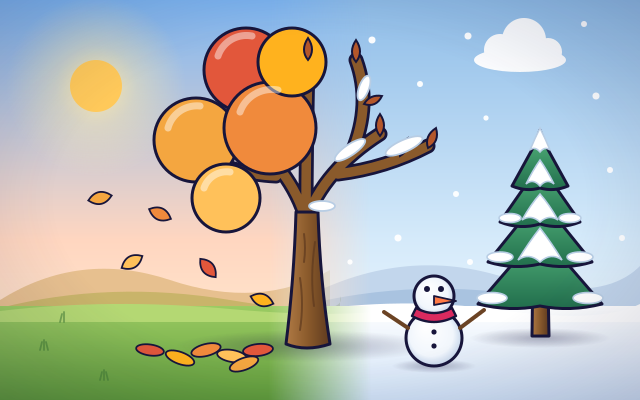
How do trees survive winter?
Follow seasonal changes in buds, leaves, and growth in selected tree species.
#247
Plants & ecosystems
How do trees survive winter?
Follow seasonal changes in buds, leaves, and growth in selected tree species.
 #248
Plants & ecosystems
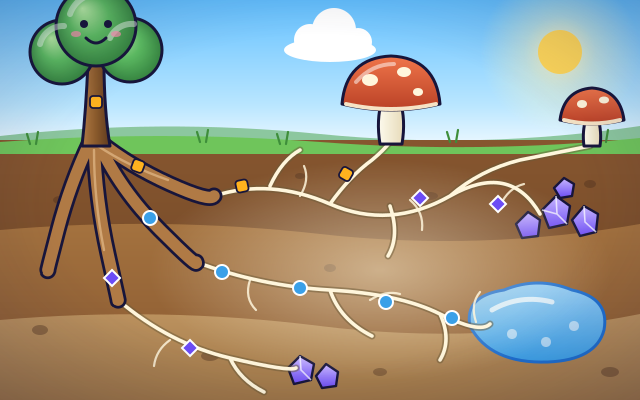
How do plant roots and fungi help each other?
Trace sugars, water, and minerals through a simplified underground partnership.
#248
Plants & ecosystems
How do plant roots and fungi help each other?
Trace sugars, water, and minerals through a simplified underground partnership.
 #249
Plants & ecosystems
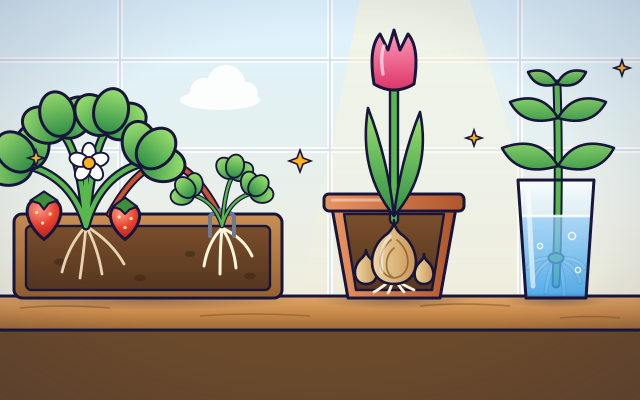
How do plants make new plants without seeds?
Explore runners, bulbs, and cuttings and follow them into new plants.
#249
Plants & ecosystems
How do plants make new plants without seeds?
Explore runners, bulbs, and cuttings and follow them into new plants.
 #250
Plants & ecosystems
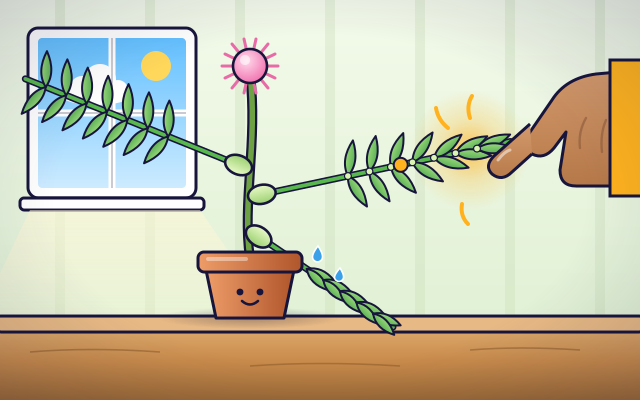
How do sensitive plants fold their leaves?
Trigger a virtual touch and watch changing water pressure move leaf joints.
#250
Plants & ecosystems
How do sensitive plants fold their leaves?
Trigger a virtual touch and watch changing water pressure move leaf joints.
Keep exploring
Games to play next
- Classification ExplorerSort living things by what you can see, then follow and build yes-or-no keys.
- Label LabPut the right labels on beautiful science diagrams, from bean plants to heart chambers.
- Garden AutomationProgram a garden robot with sensor rules — then watch a whole day play out.
Guide for grown-ups
- How to start homeschooling: a step-by-step guide for familiesA guide for parents · 7 min read
Science games by grade
Science worksheets by grade
- Preschool Science Worksheets
- Pre-K Science Worksheets
- Kindergarten Science Worksheets
- 1st Grade Science Worksheets
- 2nd Grade Science Worksheets
- 3rd Grade Science Worksheets
- 4th Grade Science Worksheets
- 5th Grade Science Worksheets
- 6th Grade Science Worksheets
- 7th Grade Science Worksheets
- 8th Grade Science Worksheets