How do trees survive winter?
Follow a tree through the year: why its leaves change color and fall, how its buds wait out the cold, and why a pine stays green.
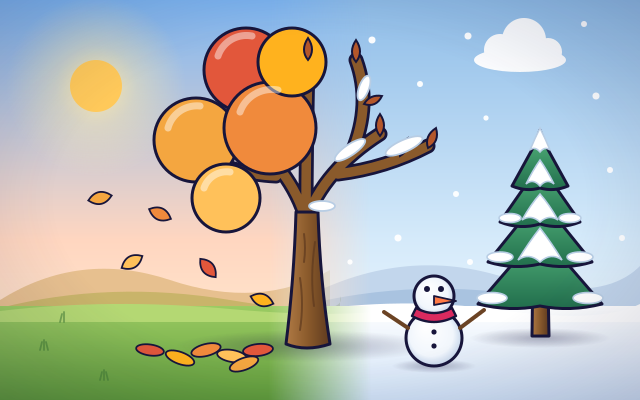
The big idea: Before winter a tree saves the goodness from its leaves, drops them and seals next year's leaves inside tough buds. Then it rests until warm, long days return.
It's like closing a beach shop for the winter: bring the stock inside, lock the shutters, and open again when the warm days come back.
The interactive parts didn't load. The explanations below still work; try reloading the page.
A tree's year
- In summer every leaf is a tiny food factory. The leaves use sunlight to make sugar, and the sugar feeds the whole tree.
- In fall the days grow shorter. The tree notices, and pulls the useful green stuff back into its branches. Yellow and orange were hiding there all along.
- Where each leaf stalk meets the twig, the tree grows a corky seal. The leaf breaks off there and falls, and the seal keeps the twig safe.
- All winter the tree rests. Next year's leaves are already folded inside each bud, wrapped in tough scales. Sugary sap helps keep the tree's living cells from freezing.
- A pine keeps its leaves all winter. Its needles are thin and coated in wax, so they lose very little water, and snow slides off the pointed tree.
- When the days get longer and warmer, sap rises and the buds swell. The scales fold back, and the tiny leaves unfold. The tree is awake!
Look inside a tree in winter
Tap each part to find out how it helps the tree get through winter.
- Winter bud. Each bud holds next year's leaves, folded up small. Tough scales wrap around them like a winter coat and keep them dry.
- Leaf scar. A leaf scar is the mark left where a leaf fell off. The tree sealed it with cork first, so no water can leak out and no germs can get in.
- Bark. Bark is made of dead, corky cells full of air. It works like a thick coat, keeping the living layer under it from getting too cold too fast.
- Sugary sap. In winter the tree's living cells are full of sugar. Sugary water freezes at a lower temperature than plain water, so the cells stay safe.
- Roots and food store. The tree saved food from summer in its roots and trunk. Under the snow and soil the roots stay warmer than the air, ready to feed the buds in spring.
- Evergreen needles. A pine does not drop its leaves in fall. Its needles are thin and waxy, so they hold on to their water, and they are ready to make food as soon as it warms up.
A tree's calendar
Drag the marker through the months and watch the tree and the close-up of its twig. Then try the pine. What is different in winter?
Experiment: What will the maple's buds look like in the middle of winter?
- Drag the marker to July and look at the twig in the close-up.
- Now drag it to January. What is on the twig?
- Choose the pine and compare it with the maple in January.
What we found: The buds are made in summer and stay closed all winter, with next year's leaves already folded inside. The maple drops its leaves, but the pine keeps its waxy needles.
Turn on JavaScript to try it yourself.
Three jobs before the snow
Help the tree get ready for winter. Do its three fall jobs in the right order.
How a tree gets through winter
Winter is hard on a tree. There is little sunlight for making food. Water in the ground is frozen, so the roots cannot drink it. And water inside the tree could freeze and burst its living cells. A tree cannot go indoors, so it prepares.
A broad, thin leaf is great in summer, but in winter it would lose water the tree cannot replace, and it would catch heavy snow. So trees such as maples and oaks get rid of their leaves. First the tree takes back the useful green stuff. That is when the yellow and orange colors show. Then it grows a corky seal at the bottom of each leaf stalk, and the leaf falls.
Next year's leaves are already waiting. They were made in summer and packed into buds, wrapped in tough scales. All winter the tree rests. Its living cells fill up with sugar, and sugary water does not freeze as easily as plain water. Food saved in the roots and trunk waits for spring.
Pines and firs do it differently. Their needles are thin and waxy, so they hold on to water and snow slides off them. They keep their leaves and can make a little food on mild days. When days grow long and warm again, buds on every kind of tree swell and open. Our bedtime comparison breaks down here: a sleeping child wakes when the alarm rings, but a tree checks both the warmth and the length of the days before it wakes.
Key words
- Deciduous
- A tree that drops all its leaves for part of the year.
- Evergreen
- A tree that keeps leaves all year, replacing them a few at a time.
- Dormancy
- A resting time when a tree stops growing to get through the cold.
- Bud
- A tiny packet of folded leaves or flowers, wrapped in scales, that waits to grow.
- Abscission layer
- The weak, sealed line at the bottom of a leaf stalk where the leaf breaks off.
- Phenology
- The study of when things happen in nature each year, such as buds opening and leaves falling.
Check your thinking
-
Why does a maple drop its leaves before winter?
Show the answer
Thin leaves would lose water and catch heavy snow. In winter the tree cannot replace water lost by its leaves, and snow on leaves could break branches.
-
When are the leaves inside a winter bud made?
Show the answer
The summer before. Buds form in summer and wait, sealed, through fall and winter.
-
Why do leaves turn yellow in fall?
Show the answer
The tree takes back the green, and yellow that was hidden shows. The yellow was in the leaf all summer, hidden under the green.
-
How does sugar help a tree in winter?
Show the answer
Sugary water is harder to freeze. Water with lots of sugar in it freezes at a lower temperature, so the cells stay safe.
-
Why can a pine keep its needles in winter?
Show the answer
They are thin and waxy, so they lose very little water. Needles hold on to their water, and snow slides off them.
You're a Plants & ecosystems expert!
You watched, looked inside, tried it, solved the challenge and went deeper. Pick another question below, or switch the age at the top to see this topic another way.
More about plants & ecosystems
 #248
Plants & ecosystems
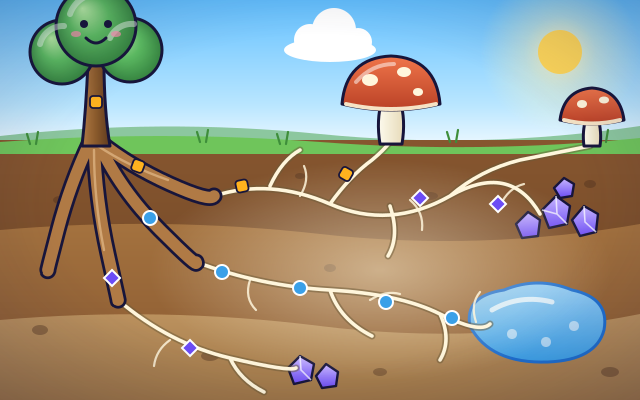
How do plant roots and fungi help each other?
Trace sugars, water, and minerals through a simplified underground partnership.
#248
Plants & ecosystems
How do plant roots and fungi help each other?
Trace sugars, water, and minerals through a simplified underground partnership.
 #249
Plants & ecosystems
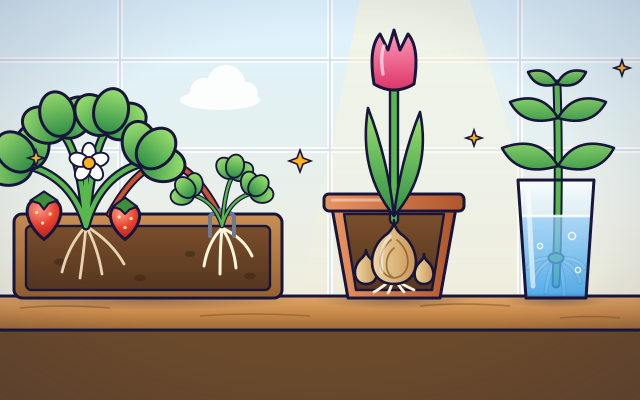
How do plants make new plants without seeds?
Explore runners, bulbs, and cuttings and follow them into new plants.
#249
Plants & ecosystems
How do plants make new plants without seeds?
Explore runners, bulbs, and cuttings and follow them into new plants.
 #250
Plants & ecosystems
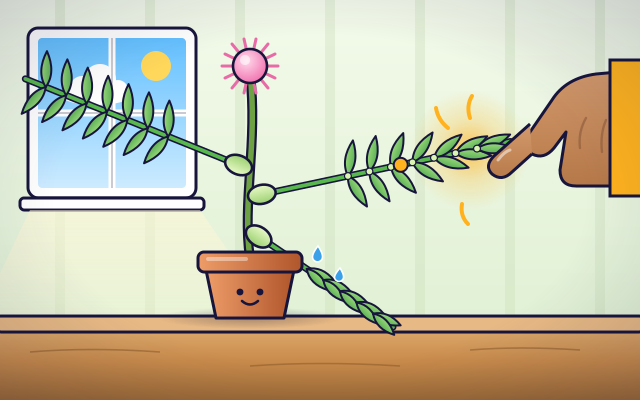
How do sensitive plants fold their leaves?
Trigger a virtual touch and watch changing water pressure move leaf joints.
#250
Plants & ecosystems
How do sensitive plants fold their leaves?
Trigger a virtual touch and watch changing water pressure move leaf joints.
 #93
Plants & ecosystems
How do plants grow and make their own food?
Explore roots and leaves, adjust light and water, and follow a simplified photosynthesis animation showing the roles of water, carbon dioxide, and sunlight.
#93
Plants & ecosystems
How do plants grow and make their own food?
Explore roots and leaves, adjust light and water, and follow a simplified photosynthesis animation showing the roles of water, carbon dioxide, and sunlight.
Keep exploring
Games to play next
- Habitat Builder 3DFind the right home for frogs, camels, polar bears and more.
- Classification ExplorerSort living things by what you can see, then follow and build yes-or-no keys.
- Label LabPut the right labels on beautiful science diagrams, from bean plants to heart chambers.
Draw it or make it
- How to draw a tree with branchesDrawing lesson
- Pop-Up Tree CardPaper craft
Guide for grown-ups
- How to start homeschooling: a step-by-step guide for familiesA guide for parents · 7 min read
Science games by grade
Science worksheets by grade
- Preschool Science Worksheets
- Pre-K Science Worksheets
- Kindergarten Science Worksheets
- 1st Grade Science Worksheets
- 2nd Grade Science Worksheets
- 3rd Grade Science Worksheets
- 4th Grade Science Worksheets
- 5th Grade Science Worksheets
- 6th Grade Science Worksheets
- 7th Grade Science Worksheets
- 8th Grade Science Worksheets