How does a refrigerator keep food cold?
A fridge doesn't make cold. It pumps heat out of the food box and lets it go into the kitchen.
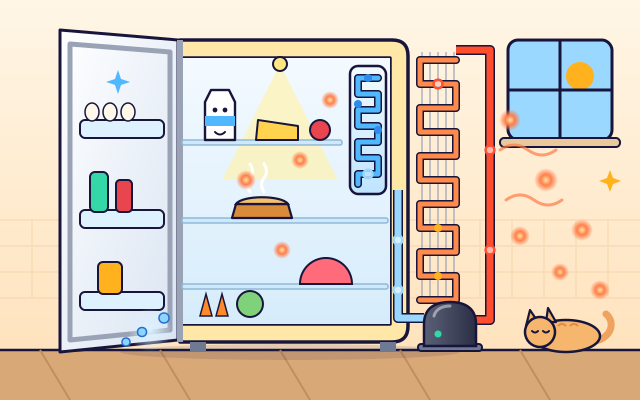
The big idea: A fridge is a heat mover. A special liquid soaks up heat inside, carries it out, and lets it go through the warm coils at the back.
It's like
The interactive parts didn't load. The explanations below still work; try reloading the page.
The great heat escape
- A kitchen is warm, but the food inside a fridge stays cold all day. Let's make the fridge see-through and find out how.
- Heat always moves from warm things to cold things. The fridge doesn't add cold. It takes heat away from the food.
- Inside the fridge, a special liquid called refrigerant flows through cold pipes. As it soaks up heat, it boils and turns into a gas.
- The gas travels to the compressor, a pump at the bottom. It squeezes the gas tightly, which makes it hot, hotter than the kitchen.
- The hot gas flows through the coils on the back of the fridge. Heat escapes into the kitchen, and the gas cools down and turns back into a liquid.
- Next, the liquid squeezes through a very thin tube. Its pressure drops, and it gets very cold. Then it flows back inside to collect more heat.
- When you open the door, heavy cold air spills out the bottom and warm kitchen air rushes in at the top. The fridge has to work harder to pump that heat out.
Look inside a refrigerator
Tap each part. Watch it work when you find it!
- Evaporator (cold coils). The evaporator coils are inside the fridge. Cold refrigerant in them soaks up heat from the air and boils into a gas.
- Compressor. The compressor is a pump driven by an electric motor. It squeezes the gas, which makes it hot, and pushes it around the loop.
- Condenser (warm coils). The condenser coils on the back of the fridge give heat to the kitchen. The hot gas inside cools and turns back into a liquid.
- Expansion valve. The liquid squeezes through a tiny opening. On the other side its pressure drops, and it becomes very cold.
- Refrigerant pipes. Refrigerant is a special fluid that boils at a very low temperature. It travels around a sealed loop of pipes again and again.
- Thermostat. The thermostat measures the temperature. When it gets too warm inside, it switches the compressor on. When it's cold enough, it switches it off.
- Insulation. The walls are filled with foam full of tiny bubbles of gas. It slows down heat sneaking in from the warm kitchen.
- Door seal. A rubbery strip with a magnet inside goes all around the door. It sticks to the fridge and stops warm air sneaking in.
Heat on the move
Put warm food inside and follow the heat. Then open the door and watch the thermometer and the compressor.
Experiment: Where does the heat from warm food go?
- Press “Put in warm pie” and follow the warm sparks.
- Watch where the sparks come out.
- Now open the door and watch the thermometer.
What we found: The heat isn't destroyed. The refrigerant carries it from the cold coils inside to the warm coils on the back, where it goes into the kitchen. Opening the door lets warm air in, so the fridge has to work harder.
Turn on JavaScript to try it yourself.
Build the cooling loop
Drag the cold coils, the warm coils and the compressor to the right places so the fridge can pump heat out.
Why a fridge feels warm at the back
Cold is not something a fridge can make. Cold just means "not much heat". So to make food cold, the fridge has to take heat away from it. Heat naturally moves from warm things to cold things, so the fridge keeps a set of very cold pipes inside, and the heat from the food moves into them.
Inside those pipes is a special fluid called refrigerant. When a liquid evaporates, it takes heat with it. That's why you feel chilly when you step out of a swimming pool. The refrigerant evaporates inside the fridge and carries heat away.
The compressor squeezes the refrigerant gas so it gets hot, hotter than the kitchen. Then it flows through the coils on the back, where its heat escapes into the room. That's why the back of a fridge feels warm. After cooling down, the refrigerant turns back into a liquid, squeezes through a thin tube, gets very cold and goes back inside. Round and round it goes.
Every time you open the door, cold air spills out and warm air comes in. The fridge must pump that heat out again, which uses electricity. So decide what you want before you open the door!
Key words
- Refrigerant
- The special fluid that carries heat around the fridge's loop of pipes.
- Evaporator
- The cold coils inside the fridge, where refrigerant boils and absorbs heat.
- Condenser
- The warm coils outside the fridge, where refrigerant releases heat and turns back into a liquid.
- Compressor
- The pump that squeezes the refrigerant gas and pushes it around the loop.
- Thermostat
- A switch that turns the compressor on when it's too warm inside and off when it's cold enough.
- Heat pump
- A machine that moves heat from one place to another.
Check your thinking
-
Where does the heat taken from the food end up?
Show the answer
In the kitchen, through the coils on the back. Heat can't be destroyed. The refrigerant carries it out to the warm coils on the back.
-
Why does leaving the fridge door open waste electricity?
Show the answer
Warm air gets in, so the fridge must pump more heat out. Every bit of warm air that gets in must be cooled again, so the compressor runs longer.
-
What happens to the refrigerant in the cold coils inside the fridge?
Show the answer
It boils and turns into a gas. Boiling takes heat. The refrigerant boils at a very low temperature, taking heat from the food.
-
If you leave a fridge door open in a closed kitchen, what happens to the kitchen over time?
Show the answer
It gets slightly warmer. The fridge just moves heat around the room, and its compressor adds extra heat from the electricity it uses, so the room warms slightly.
-
What does the compressor do to the refrigerant gas?
Show the answer
Squeezes it so it gets hot. Squeezing a gas makes it hot. Then it is hotter than the kitchen, so its heat can flow out.
You're a Everyday machines expert!
You watched, looked inside, tried it, solved the challenge and went deeper. Pick another question below, or switch the age at the top to see this topic another way.
More about everyday machines
 #32
Everyday machines
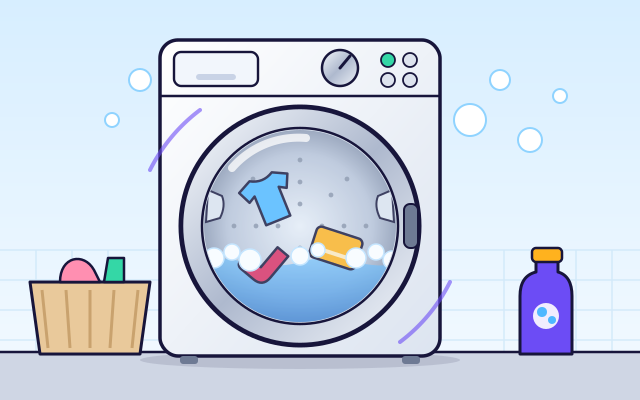
How does a washing machine clean clothes?
Load virtual laundry and watch the wash, rinse, drain, and spin stages. Look inside the drum and explore the roles of water, detergent, and movement.
#32
Everyday machines
How does a washing machine clean clothes?
Load virtual laundry and watch the wash, rinse, drain, and spin stages. Look inside the drum and explore the roles of water, detergent, and movement.
 #33
Everyday machines
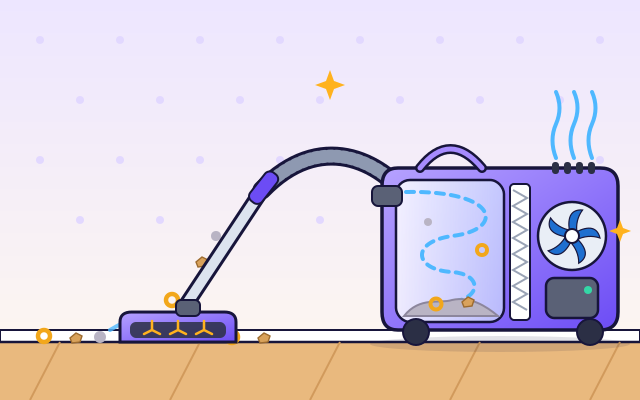
How does a vacuum cleaner pick up dirt?
Follow moving air and dust through the nozzle, filter, and collection bin. Compare airflow with a clean filter and a clogged filter.
#33
Everyday machines
How does a vacuum cleaner pick up dirt?
Follow moving air and dust through the nozzle, filter, and collection bin. Compare airflow with a clean filter and a clogged filter.
 #34
Everyday machines
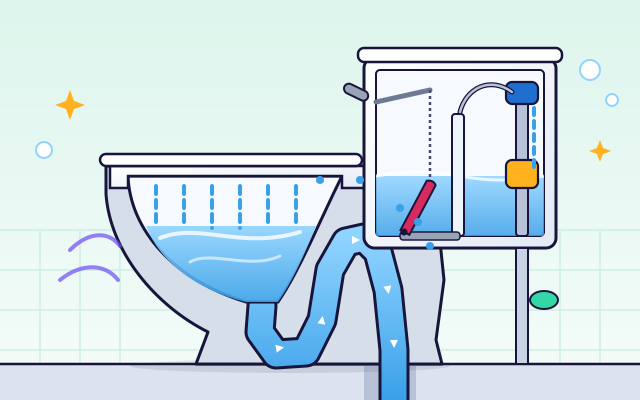
How does a toilet flush?
Press the handle on a cutaway toilet. Follow water from the tank through the bowl and waste pipe, then watch the tank refill.
#34
Everyday machines
How does a toilet flush?
Press the handle on a cutaway toilet. Follow water from the tank through the bowl and waste pipe, then watch the tank refill.
 #35
Everyday machines
How does a zipper work?
Pull an oversized zipper slowly and watch the slider join or separate its teeth. Explore why alignment matters and what happens when fabric gets caught.
#35
Everyday machines
How does a zipper work?
Pull an oversized zipper slowly and watch the slider join or separate its teeth. Explore why alignment matters and what happens when fabric gets caught.
Keep exploring
Games to play next
- Machine RepairFix levers, pulleys, gears and ramps so every contraption works.
- Circuit Workshop 3DWire up batteries, bulbs and switches on a 3D workbench.
- Clock TowerKeep the town on time: set the tower clock's hands just right.
Guide for grown-ups
- How to start homeschooling: a step-by-step guide for familiesA guide for parents · 7 min read
Science games by grade
Science worksheets by grade
- Preschool Science Worksheets
- Pre-K Science Worksheets
- Kindergarten Science Worksheets
- 1st Grade Science Worksheets
- 2nd Grade Science Worksheets
- 3rd Grade Science Worksheets
- 4th Grade Science Worksheets
- 5th Grade Science Worksheets
- 6th Grade Science Worksheets
- 7th Grade Science Worksheets
- 8th Grade Science Worksheets