How do restaurant orders reach the kitchen?
An order becomes a ticket, the ticket is shared between cooking stations, and one person makes sure every plate is ready at the same moment.
The big idea: The order is sent to the kitchen as a ticket. Each station cooks its own part, and the slowest dish is started first so everything is ready together.
It's like making breakfast: the toast goes in before you pour the juice, because toast takes longer, and both are ready together.
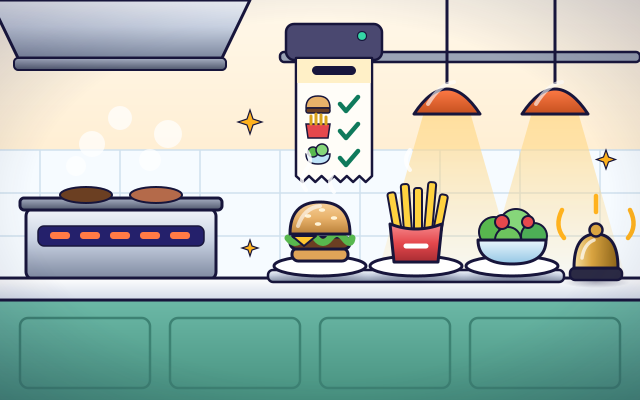
The interactive parts didn't load. The explanations below still work; try reloading the page.
How your order reaches the kitchen
- Mina and her dad order a burger, fries and a salad. The server taps each dish into a tablet, along with their table number: table 4.
- The order zips to the kitchen in a blink. A printer rolls out a ticket: the dishes, the table number and the time. The ticket hangs on a rail where the cooks can see it.
- A kitchen is split into stations. The grill cooks the burger, the fryer cooks the fries and the cold station builds the salad. Each cook sees only their own part of the ticket.
- A burger takes eight minutes, fries four and a salad two. So the burger starts first, the fries later and the salad last. That way all three finish at the same moment.
- The plates meet on a shelf called the pass, under warm lamps. One person checks them against the ticket. Burger, fries, salad. All here? Ding!
- The server reads the table number on the ticket and carries everything to table 4 together. Hot food hot, crisp salad crisp, and nobody watching the others eat.
Look inside a restaurant kitchen
Tap each part of the kitchen. Find out what job it does for one order.
- Order tablet. The server taps each dish and your table number into this tablet, and it sends the order to the kitchen.
- Ticket printer. A small printer in the kitchen prints each order as a ticket, seconds after the server sends it.
- Ticket rail. Tickets hang on this rail in the order they arrived, so the oldest order is cooked first.
- Grill station. The hot grill cooks burgers. It is often the slowest job, so it is usually started first.
- Fry station. A basket lowers the fries into hot oil for a few minutes. The cook lifts it out when the timer rings.
- Cold station. Salads and other cold dishes are put together here. It is quick, so it is done last to keep the leaves crisp.
- The pass. Finished plates wait here under warm lamps. Someone checks them against the ticket before they leave the kitchen.
- Order-up bell. A tap on the bell tells the server that a whole order is ready to collect.
All at once, or longest first?
Cook one order two ways: start everything at once, then start the longest dish first. Watch how long each plate waits under the lamp.
Experiment: A burger takes 8 minutes and a salad takes 2. If both are started at the same moment, what happens?
- Press "Start all at once" and watch the timeline.
- Read how long the first plate waited at the pass.
- Press "Start longest first" and compare.
What we found: Started together, the salad is finished after 2 minutes and then waits 6 more for the burger. Started longest first, each dish begins just in time and all three reach the pass together, fresh.
Turn on JavaScript to try it yourself.
Fire the order on time
Start each station at the right moment so all three dishes finish together. Then ring the bell and choose the right table.
How an order finds its way
When you order in a restaurant, your words have to reach several cooks, and the right food has to find its way back to you. The trick is a ticket. The server taps your order and table number into a tablet, and seconds later a ticket prints in the kitchen.
A kitchen is divided into stations, each with its own tools: a grill for burgers, a fryer for fries, a cold station for salads. Each cook makes one part of your order. Working at the same time, three cooks can finish a meal much faster than one cook doing everything in turn.
But the dishes take different times. If everything started together, the salad would be ready long before the burger and would sit getting warm and limp. So the kitchen starts the slowest dish first and the quickest dish last. Everything finishes at the same moment.
The finished plates meet at the pass, a shelf with warm lamps. One person, the expediter, checks the plates against the ticket and rings for the server, who uses the table number to bring it all to you. The breakfast comparison only goes so far: at home one person times two things, but a kitchen times dozens of dishes for many tables at once, which is why it needs tickets.
Key words
- Ticket
- The kitchen's copy of an order: the dishes, the table number and the time it was placed.
- Station
- One working area of a kitchen with its own job and tools, such as the grill or the fryer.
- The pass
- The shelf where finished plates are checked and handed from the kitchen to the servers.
- Expediter
- The person at the pass who checks each order and makes sure all its plates leave together.
- Fire
- Kitchen talk for "start cooking this now".
- Stagger
- Starting tasks at different times on purpose so that they finish together.
Check your thinking
-
How does your order get from your table to the cooks?
Show the answer
The server sends it from a tablet and a ticket prints in the kitchen. The tablet sends the order to the kitchen, where it prints as a ticket for the cooks.
-
Why does the kitchen start the burger before the salad?
Show the answer
The burger takes longer, and both should be ready together. Starting the slow dish first and the quick dish last makes them finish at the same moment.
-
A pizza takes 10 minutes and a soup takes 3. When should the soup be started so both are ready together?
Show the answer
7 minutes after the pizza. 10 minus 3 is 7. Started 7 minutes in, the soup's 3 minutes end just as the pizza is done.
-
What is the pass for?
Show the answer
Checking that an order is complete before it goes to the table. At the pass the plates are checked against the ticket, so the whole order leaves together.
-
Heat lamps keep plates warm at the pass. Why does a good kitchen still try to make the wait there as short as possible?
Show the answer
Food dries out, softens or wilts while it waits. The pass is a buffer for small timing errors, but quality drops the longer food sits there.
You're a Money, shops & services expert!
You watched, looked inside, tried it, solved the challenge and went deeper. Pick another question below, or switch the age at the top to see this topic another way.
More about money, shops & services
 #496
Money, shops & services
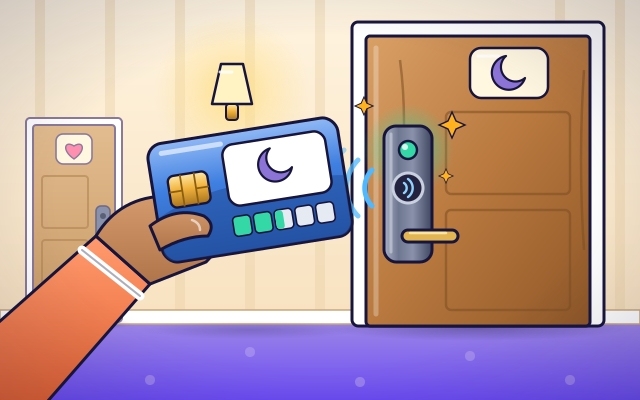
How do hotel key cards open the correct door?
Match a card's permission with a model lock and explore how access expires.
#496
Money, shops & services
How do hotel key cards open the correct door?
Match a card's permission with a model lock and explore how access expires.
 #497
Money, shops & services
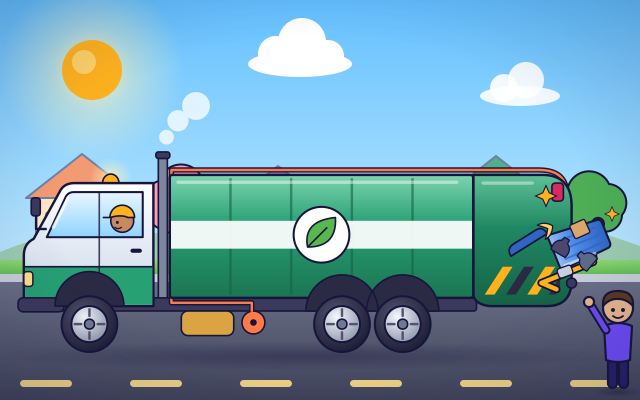
How do garbage trucks collect and compact waste?
Operate lifting equipment and follow waste through loading and compaction inside a cutaway truck.
#497
Money, shops & services
How do garbage trucks collect and compact waste?
Operate lifting equipment and follow waste through loading and compaction inside a cutaway truck.
 #498
Money, shops & services
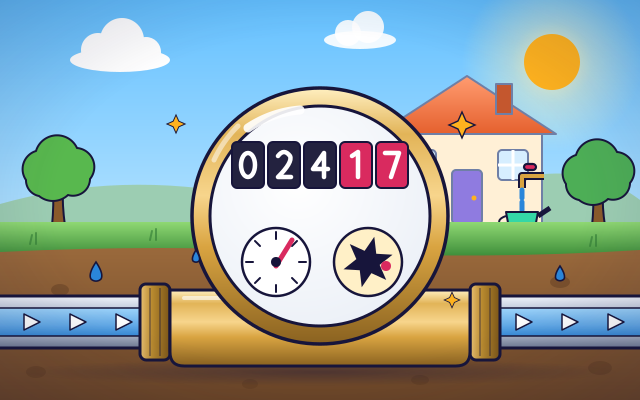
How do water meters measure household use?
Run virtual taps and follow measured flow into a household usage total.
#498
Money, shops & services
How do water meters measure household use?
Run virtual taps and follow measured flow into a household usage total.
 #499
Money, shops & services
How do digital tickets open entry gates?
Scan a fictional ticket, verify its permission, and update its entry status.
#499
Money, shops & services
How do digital tickets open entry gates?
Scan a fictional ticket, verify its permission, and update its entry status.
Keep exploring
Games to play next
- Festival PlannerPlace the stalls, book the acts and keep the budget — make every rule true.
- Timetable TerminalRead the departure board, count the minutes and catch your connection on time.
- Coin MarketRun a pretend market stall: pay exactly, use the fewest coins, and give the right change.
Guide for grown-ups
- How to start homeschooling: a step-by-step guide for familiesA guide for parents · 7 min read