How do sailboats use the wind?
A sail catches the wind, a fin under the boat grips the water, and together they send the boat almost anywhere.
The big idea: The wind pushes on the sail. A fin under the boat, called the keel, stops the boat sliding sideways, so the push sends the boat forward. The sail must be set at the right angle for each wind.
It's like squeezing a slippery bar of soap in your hands: the wind pushes one side, the water pushes the other, and the boat shoots forward.
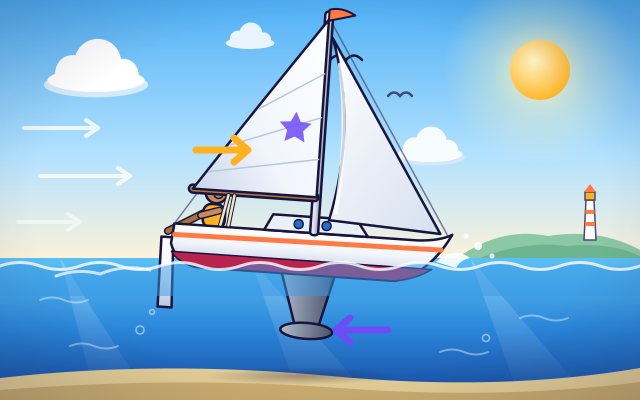
The interactive parts didn't load. The explanations below still work; try reloading the page.
How a sail uses the wind
- This sailboat has no engine and nobody is rowing. Its tall sail catches moving air. How can wind alone take it where the sailor wants to go?
- When the wind comes from behind, the sailor lets the sail out wide like a big open hand. The wind piles up against it and pushes the boat forward.
- When the wind comes from the side, the sail is pulled in halfway. Its curved shape bends the wind toward the back of the boat, and the wind pushes back on the sail.
- Part of that push points sideways. A long fin under the boat, the keel, grips the water and blocks the sideways slide. Only the forward part is left, so the boat goes ahead.
- No sailboat can sail straight into the wind. The sail cannot fill. It just flaps like a flag, and the boat drifts to a stop. Sailors call this the no-go zone.
- To reach a place upwind, the sailor zigzags. Sail to one side of the wind, turn the bow across it, and sail on the other side. Each turn is called a tack.
Look over and under a sailboat
Tap each part of the boat. Don't miss the parts hiding under the water!
- Mainsail. The mainsail is the big sail behind the mast. It is cut with a curve in it, so it fills into a smooth, rounded shape when the wind blows.
- Jib. The jib is the smaller sail in front of the mast. It adds more push and helps guide the wind smoothly around the mainsail.
- Mast. The mast is the tall pole that holds the sails up where the wind is stronger. Wires on each side keep it standing straight.
- Boom. The boom is the pole along the bottom of the mainsail. It swings out to the side to change the sail's angle to the wind. Sailors duck when it crosses the boat!
- Mainsheet. On a boat, a rope that controls a sail is called a sheet. Pull the mainsheet to bring the sail in. Ease it to let the sail out.
- Hull. The hull is the body of the boat. It is hollow and pointed at the front, so it floats and slips through the water easily.
- Keel. The keel is a long fin under the hull. It grips the water so the wind cannot shove the boat sideways. On many boats it is heavy, which helps keep the boat upright.
- Rudder and tiller. The rudder is a small fin at the back. The sailor moves it with a handle called the tiller. Water pushes on the turned rudder and swings the back of the boat.
Set the sail for every wind
Choose a wind direction, then drag the end of the boom to set the sail. Watch the speed. When does the sail flap? When does the boat fly?
Experiment: The wind blows from the side. Which sail position makes the boat go fastest?
- Choose wind from the side.
- Try the sail pulled in tight, then halfway, then all the way out.
- Now choose wind from the front. What does the sail do?
What we found: With the wind from the side, the sail works best about halfway out. Pulled in too tight, the wind cannot flow around it smoothly. Let out too far, it flaps like a flag. And with the wind from the front, no sail position works at all.
Turn on JavaScript to try it yourself.
Zigzag to the buoy
The buoy is straight upwind. Steer with the rudder, set the sail and zigzag your way to it.
How a boat sails across the wind
When the wind blows from behind, sailing is simple. The sail is let out wide, the wind pushes on it, and the boat goes the same way as the wind. Sailors call this running.
The clever part comes when the wind blows from the side. Now the sail is pulled in partway and it fills into a curve, like a bird's wing standing on end. The curved sail bends the wind toward the back of the boat. When the sail pushes the air one way, the air pushes the sail the other way: forward and sideways.
Under the boat is a fin called the keel. Water is hard to push through sideways, so the keel stops the boat from sliding sideways. The only way left to go is forward. It is a little like squeezing a bar of soap, though a boat is not really being squeezed: the keel only pushes back when the boat tries to slide.
A sailboat can never sail straight into the wind, because the sail just flaps. To go upwind, sailors zigzag. They sail a little to one side of the wind, then turn and sail a little to the other side. Each turn is called a tack.
Key words
- Keel
- The fin under a sailboat that stops it sliding sideways.
- Trim
- Setting the angle of the sail to suit the wind.
- Tack
- To turn the front of the boat across the wind so the sail fills on the other side.
- Luffing
- A sail flapping like a flag because it is let out too far or pointed too close to the wind.
- No-go zone
- The range of directions, about 40 degrees each side of the wind, where a sailboat cannot sail.
- Heeling
- A sailboat leaning over because the wind pushes sideways on its sails.
Check your thinking
-
What gives a sailboat its push?
Show the answer
Wind pushing on the sail. Moving air pushes on the sail. The keel and rudder only guide the boat.
-
The wind is blowing from behind the boat. How should you set the sail?
Show the answer
Let it out wide to catch as much wind as possible. Let out wide, the sail blocks the most wind, so the wind pushes hardest.
-
What would happen to a sailboat with no keel when the wind blows from the side?
Show the answer
It would slide sideways across the water. The keel grips the water. Without it, the sideways push from the sail just slides the boat sideways.
-
Your sail is flapping like a flag. What should you try first?
Show the answer
Pull the sail in until it fills. A flapping sail is out too far. Pulling it in gives it an angle to the wind, so it fills and pushes.
-
How does a sailboat reach a place that is straight upwind?
Show the answer
It zigzags, sailing a little to each side of the wind. No boat can sail straight into the wind, so sailors tack back and forth in a zigzag.
-
A sailor has stopped and wants to turn the boat with the rudder. Why does almost nothing happen?
Show the answer
A rudder needs water flowing past it to make a turning force. The rudder turns the boat by deflecting flowing water. With no flow there is nothing to deflect, so no force.
You're a Flight & transportation expert!
You watched, looked inside, tried it, solved the challenge and went deeper. Pick another question below, or switch the age at the top to see this topic another way.
More about flight & transportation
 #127
Flight & transportation
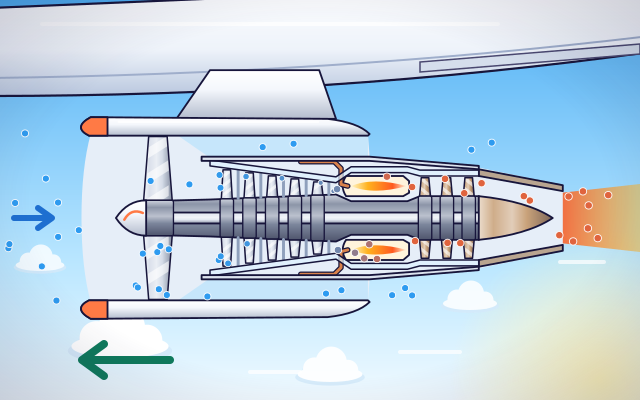
How do jet engines produce thrust?
Follow air through compression, heating, and expansion inside a transparent engine.
#127
Flight & transportation
How do jet engines produce thrust?
Follow air through compression, heating, and expansion inside a transparent engine.
 #128
Flight & transportation
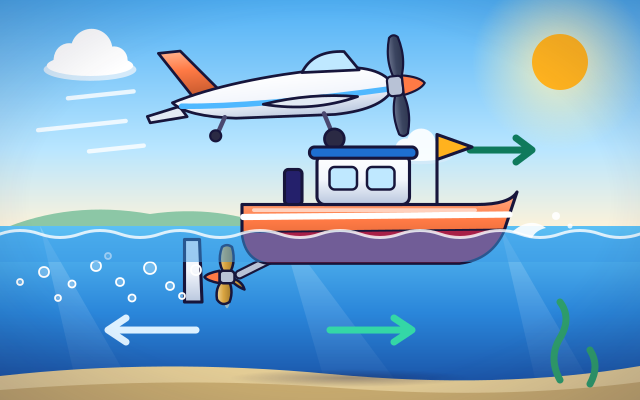
How do propellers push vehicles forward?
Rotate blades through air or water and inspect the direction of the resulting flow.
#128
Flight & transportation
How do propellers push vehicles forward?
Rotate blades through air or water and inspect the direction of the resulting flow.
 #129
Flight & transportation
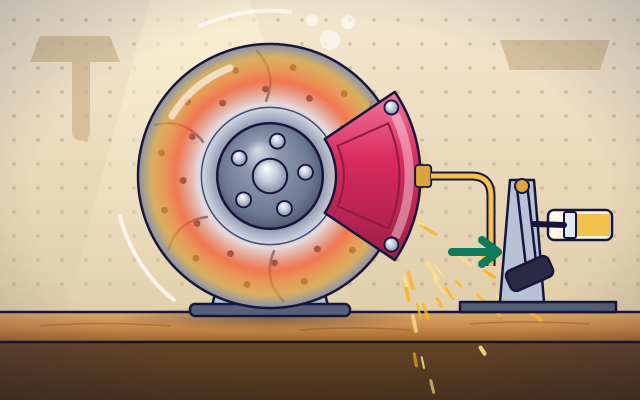
How do disc brakes stop a vehicle?
Press pads against a spinning disc and compare stopping under different simulated conditions.
#129
Flight & transportation
How do disc brakes stop a vehicle?
Press pads against a spinning disc and compare stopping under different simulated conditions.
 #130
Flight & transportation
How does a car's steering system work?
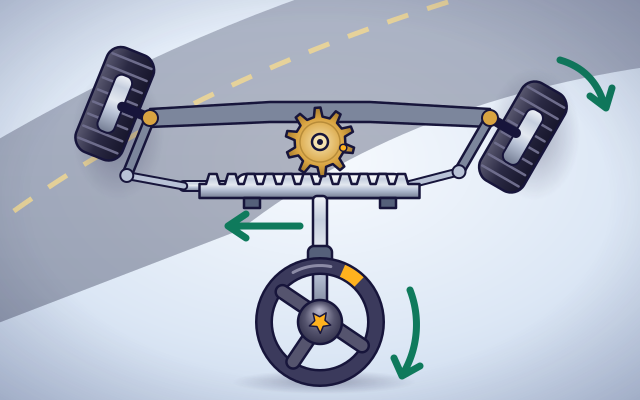
Trace steering-wheel movement through a rack, linkages, and the front wheels.
#130
Flight & transportation
How does a car's steering system work?
Trace steering-wheel movement through a rack, linkages, and the front wheels.
Keep exploring
Games to play next
- Downriver Kayak SlalomFind the rhythm of the current, one paddle stroke at a time.
- Plane Flight SimulatorTake off from the runway and thread numbered sky hoops in order. Every clean flight is a new personal best.
- Machine RepairFix levers, pulleys, gears and ramps so every contraption works.
Draw it or make it
- How to draw a sailboat in a harborDrawing lesson
- Paper BoatOrigami
Guide for grown-ups
- How to start homeschooling: a step-by-step guide for familiesA guide for parents · 7 min read
Science games by grade
Science worksheets by grade
- Preschool Science Worksheets
- Pre-K Science Worksheets
- Kindergarten Science Worksheets
- 1st Grade Science Worksheets
- 2nd Grade Science Worksheets
- 3rd Grade Science Worksheets
- 4th Grade Science Worksheets
- 5th Grade Science Worksheets
- 6th Grade Science Worksheets
- 7th Grade Science Worksheets
- 8th Grade Science Worksheets