How is sandpaper made?
Strong paper, a coat of glue and thousands of hard, sharp grains: see how a factory makes sandpaper, then make your own.
The big idea: Sandpaper is made in layers: strong backing paper, a coat of glue, hard sharp grains, then a second coat of glue that locks the grains in place. Big grains scrape fast. Tiny grains leave a smooth finish.
It's like sprinkles on a frosted cookie: the frosting is the glue, the sprinkles are the grains, and once the frosting sets they stay where they landed.
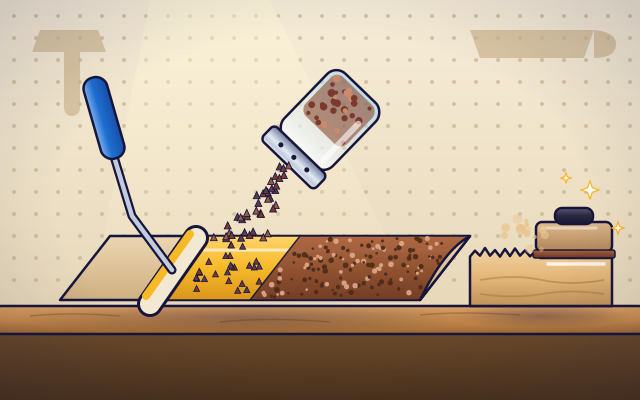
The interactive parts didn't load. The explanations below still work; try reloading the page.
How a factory makes sandpaper
- Kai rubs his wooden boat with sandpaper and the splinters disappear. The paper is covered in tiny sharp grains. How does a factory stick them on?
- It starts with a giant roll of strong paper or cloth, called the backing. The roll unwinds and travels through the factory like a long ribbon.
- A roller spreads an even layer of strong glue over the paper. It has to be wet and sticky when the grains arrive, so they can sink in.
- Next come the grains: tiny crystals much harder than wood. They fall onto the wet glue and stick, with their sharp tips pointing up.
- An oven dries the glue hard. Then a second coat of glue flows around the bottom of every grain and locks it in place. Only the sharp tips stick out.
- A blade chops the long ribbon into sheets. A number on the back tells you the grain size: a small number means big grains, and a big number means tiny grains.
Sandpaper, seen from the side
Here is a sheet of sandpaper cut through and enlarged many times. Tap each layer to see its job.
- Backing. The backing is strong paper or cloth. It holds everything together and bends without tearing, so you can wrap it around a block.
- First coat of glue. The first layer of glue is spread on the paper while it is wet and sticky. The grains land in it and stay put.
- Sharp grains. The grains are tiny, hard crystals with sharp edges. Each one works like a little scraper that shaves off a sliver of wood.
- Second coat of glue. The second layer of glue flows around the bottom of each grain and hardens. It locks the grains in so they do not break loose when you rub.
- Gaps between grains. The spaces between the grains give the sawdust somewhere to go. If the gaps fill up, the grains cannot reach the wood and the paper stops working.
- Grit number. The number printed on the back is the grit. A small number, like 60, means big grains for rough work. A big number, like 240, means tiny grains for a smooth finish.
Make sandpaper and test it
Make a sheet: glue, grains, bake. Test it on a block of rough wood. Then make a sheet with a different grain and compare the two blocks.
Experiment: You rub two rough blocks the same number of times. One sheet has big grains and one has tiny grains. What will you find?
- Pick the coarse grains. Roll on glue, sprinkle and bake.
- Sand the first block and look closely at its top.
- Now make a sheet with fine grains and sand the next block. Compare them.
What we found: Big grains take big bites, so they flatten the bumps quickly, but each one leaves a deep scratch. Tiny grains leave fine scratches you can hardly see, but they take such small bites that the big bumps are still there. That is why people start with coarse sandpaper and finish with fine.
Turn on JavaScript to try it yourself.
From rough to silky
Make this rough board feel silky. You can make up to 5 sheets of sandpaper. Which grains will you use first?
Layers that scratch
Sandpaper looks simple, but it is built in layers, like a sandwich. At the bottom is the backing: strong paper or cloth. On top of that is a layer of glue. Standing in the glue are thousands of hard, sharp grains. A second layer of glue wraps around the bottom of each grain to lock it in place.
The grains are the part that does the work. Each one is a tiny crystal that is much harder than wood. When you rub the paper along a board, every grain acts like a little scraper and shaves off a sliver. Thousands of grains make thousands of tiny scratches, and together they wear the bumps away.
The number on the back is called the grit. It tells you how big the grains are, but it runs backward: a small number means big grains. Big grains take big bites, so 60 grit paper flattens rough wood quickly, but it leaves scratches you can see and feel. Tiny grains, like 240 grit, take tiny bites and leave a smooth surface, but they are far too slow for big bumps.
That is why woodworkers use several sheets, one after another. They start coarse to level the wood, then switch to finer and finer paper. Each sheet rubs out the scratches left by the one before, until the scratches are too small to feel.
Key words
- Abrasive
- A hard, rough material used to rub another material away.
- Backing
- The strong paper, cloth or film that the glue and grains sit on.
- Grit
- A number that tells you the size of the grains. Bigger number, smaller grains.
- Make coat
- The first layer of glue. It catches the grains and holds them upright.
- Size coat
- The second layer of glue. It surrounds the base of each grain and locks it in.
- Open coat
- Sandpaper with spaces left between the grains so dust does not clog it.
Check your thinking
-
What keeps the grains from falling off sandpaper?
Show the answer
Two coats of hardened glue. The first coat catches the grains and the second coat locks them in.
-
A board is very rough. Which sandpaper should you start with?
Show the answer
Coarse, with big grains, like 60 grit. Big grains take big bites, so they level rough wood quickly. Then you switch to finer paper.
-
What happens if grains are sprinkled onto paper with no glue on it?
Show the answer
They roll off, because nothing holds them. Grains are just loose crystals. Without sticky glue to land in, they slide away.
-
One sheet says 80 on the back and another says 320. Which has the smaller grains?
Show the answer
The 320 sheet. Grit numbers run backward: the bigger the number, the smaller the grains.
-
Why are there little gaps between the grains?
Show the answer
To give the dust somewhere to go. If dust fills the gaps, the grains cannot reach the wood and the paper stops cutting.
-
What does electrostatic coating do that simply dropping the grains does not?
Show the answer
It stands the grains up with their sharp ends pointing out. The electric field lines each grain up along its long axis as it flies into the make coat, so the sharpest end faces the work.
You're a Making everyday things expert!
You watched, looked inside, tried it, solved the challenge and went deeper. Pick another question below, or switch the age at the top to see this topic another way.
More about making everyday things
 #317
Making everyday things
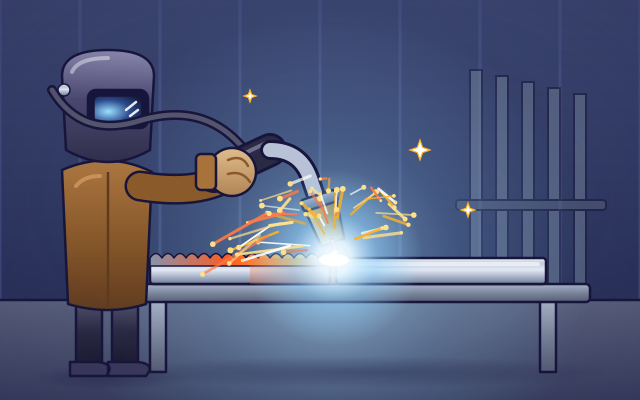
How does welding join metal?
Watch a simplified joint form and inspect the connection after cooling.
#317
Making everyday things
How does welding join metal?
Watch a simplified joint form and inspect the connection after cooling.
 #318
Making everyday things
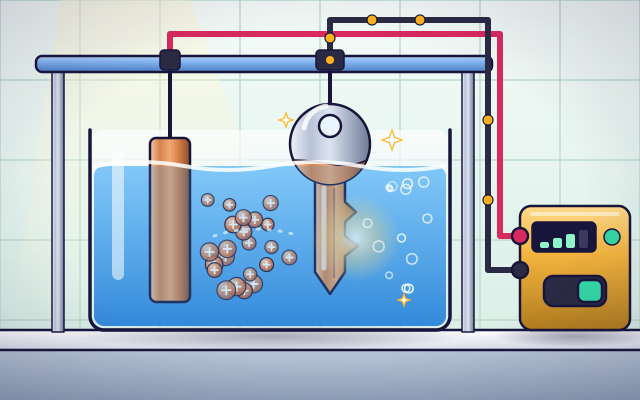
How does electroplating coat an object?
Follow preparation and plating as a thin metal layer forms on a surface.
#318
Making everyday things
How does electroplating coat an object?
Follow preparation and plating as a thin metal layer forms on a surface.
 #319
Making everyday things
How do laser cutters cut shapes?
Draw a pattern and guide a simulated laser along the cutting path.
#319
Making everyday things
How do laser cutters cut shapes?
Draw a pattern and guide a simulated laser along the cutting path.
 #320
Making everyday things
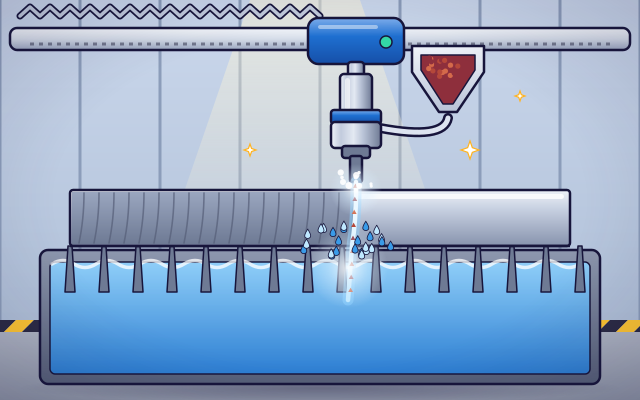
How do waterjet cutters cut tough materials?
Guide a simulated jet through different samples and compare the cuts.
#320
Making everyday things
How do waterjet cutters cut tough materials?
Guide a simulated jet through different samples and compare the cuts.
Keep exploring
Games to play next
- Machine RepairFix levers, pulleys, gears and ramps so every contraption works.
- Geometry Architect 3DCount, build and fold solids like a real architect.
- Sorting FactoryTurn a work order into if/else rules and watch the conveyor sort every item.
Guide for grown-ups
- How to start homeschooling: a step-by-step guide for familiesA guide for parents · 7 min read
Science games by grade
Science worksheets by grade
- Preschool Science Worksheets
- Pre-K Science Worksheets
- Kindergarten Science Worksheets
- 1st Grade Science Worksheets
- 2nd Grade Science Worksheets
- 3rd Grade Science Worksheets
- 4th Grade Science Worksheets
- 5th Grade Science Worksheets
- 6th Grade Science Worksheets
- 7th Grade Science Worksheets
- 8th Grade Science Worksheets