How do snowflakes form?
High in a cold cloud, water vapor freezes onto a speck of dust and grows into a six-sided ice crystal.
The big idea: Water in ice always joins in six-sided rings, so a snow crystal has six sides. Its corners catch the most water vapor, so they grow into arms.
It's like frost ferns spreading on a cold window. The tips stick out the farthest, so they catch the most water and grow the fastest.
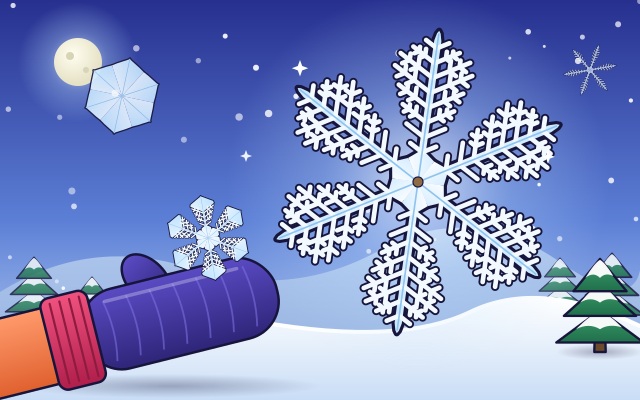
The interactive parts didn't load. The explanations below still work; try reloading the page.
How a snowflake grows
- Catch a snowflake on a dark mitten and look closely. It is a tiny ice crystal with six matching arms. Why six? Let's follow one from the start.
- A cloud is full of water vapor, which is water as an invisible gas. In the freezing cold, the vapor sticks to a tiny speck of dust and turns straight into ice.
- Water is made of tiny pieces called molecules. When they freeze, they always link up in rings of six. Ring joins ring, and the crystal becomes a six-sided plate.
- The six corners stick out farther into the damp air than the flat sides do. More vapor reaches them, so the corners grow fastest and stretch into six arms.
- The crystal tumbles through colder, warmer, damper and drier parts of the cloud. Each change adds a new pattern, and all six arms feel the same air, so they match.
- No two crystals take exactly the same path through the cloud, so no two end up exactly alike. Stars, plates, needles and columns: all built on six.
Look inside a snow crystal
Tap each part of the crystal. Each one shows a step in how it grew.
- Dust speck. Right at the center is a speck of dust far too small to see. The first ice froze onto it, so every snowflake has a tiny seed in its middle.
- Six-sided plate. The young crystal is a flat plate with six straight sides. Everything else grows out from its six corners.
- Main arm. An arm grew from each of the six corners. The arms are 60 degrees apart, which is why a snowflake never has five or eight arms.
- Side branches. Side branches sprout when the air is damp. They leave the arm at the same 60 degree angle, so the arm looks like a fern or a feather.
- Growing tip. The tip of each arm is the newest part of the crystal. It reaches farthest into the damp air, so it grows the fastest.
- Water vapor. Water vapor is water as an invisible gas. Its molecules drift through the air, bump into the crystal and freeze onto it.
- Rings of six. Zoom in millions of times and you find water molecules joined in rings of six. That hidden pattern gives the whole snowflake its six sides.
Snowflake lab: dry air and damp air
Drag the little flake around the cloud, or use the sliders. Try dry air and damp air, colder and warmer, and watch the arms change.
Experiment: What happens to a snowflake's arms when the air holds more water vapor?
- Keep the flake on the dry side and watch what grows.
- Drag it to the damp side while it is still growing.
- Compare the inside of each arm with its tip.
What we found: Dry air grows plain six-sided plates. Damp air feeds the corners so fast that they stretch into arms with feathery side branches. When the air changes halfway, the arm changes halfway too.
Turn on JavaScript to try it yourself.
Match the snowflakes
Grow three crystals to match the ones on the mitten: a plate, a fern star and a needle.
Why snowflakes have six sides
A snowflake is not a frozen raindrop. It starts high in a cloud where the air is colder than freezing. The cloud holds water vapor, which is water as an invisible gas. The vapor needs something to freeze onto, so the story begins with a speck of dust.
Water is made of tiny pieces called molecules. When they freeze, they always join in rings of six, like six friends holding hands in a circle. Ring links to ring, so the little crystal grows into a plate with six sides. That is why you will never find a snowflake with five arms or eight.
The six corners stick out into the damp air more than the flat sides do, so they catch more vapor and grow faster. In damp air the corners stretch into long arms with feathery side branches. In drier air the crystal stays a plain plate. A little below freezing it can even grow as a thin needle.
As the crystal falls, it passes through air that is colder or warmer, damper or drier. Each change adds a new pattern, the way a tree adds a new ring each year. All six arms meet the same air at the same time, so they nearly match. But no two crystals take the same path, so no two look exactly alike.
Key words
- Water vapor
- Water as an invisible gas mixed into the air.
- Ice nucleus
- The tiny speck of dust that a snowflake starts on.
- Deposition
- When a gas turns straight into a solid, as when water vapor becomes ice.
- Hexagon
- A flat shape with six straight sides.
- Dendrite
- A snow crystal with feathery, tree-like arms.
- Supercooled
- Still liquid even though it is colder than its freezing point.
Check your thinking
-
Why does a snow crystal have six sides?
Show the answer
Water molecules join in rings of six when they freeze. Frozen water molecules always link in six-sided rings, and the whole crystal repeats that pattern.
-
What does a snowflake start growing on?
Show the answer
A tiny speck of dust in a cloud. Water vapor needs something to freeze onto. A speck of dust gives the ice a place to start.
-
A snowflake has long feathery arms. What was the air like where it grew?
Show the answer
Cold and damp. Lots of water vapor feeds the corners fast, so they branch again and again.
-
Why do the six arms of one snowflake look so alike?
Show the answer
All six arms travel through the same air together. The arms are so close together that they meet the same cold and the same dampness at the same moment.
-
Why do corners grow faster than flat faces when vapor is plentiful?
Show the answer
A corner reaches farther into vapor-rich air, so more molecules arrive there. Growth is limited by diffusion. A point that sticks out collects vapor from more directions, grows faster and sticks out more.
-
Why are no two snowflakes exactly alike?
Show the answer
Each one takes its own path through the cloud. Tiny differences in cold and dampness along the way add up to a different pattern for every crystal.
You're a Earth & weather expert!
You watched, looked inside, tried it, solved the challenge and went deeper. Pick another question below, or switch the age at the top to see this topic another way.
More about earth & weather
 #447
Earth & weather
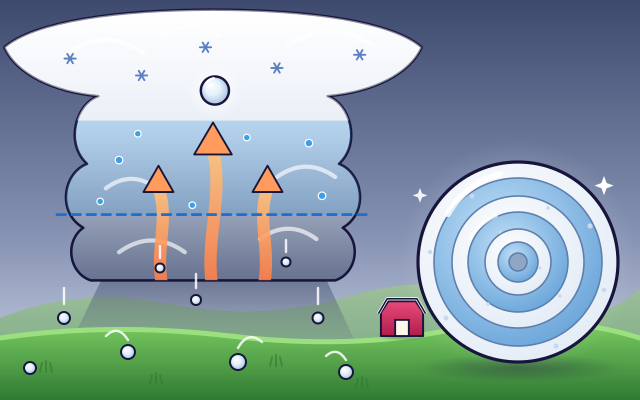
How do hailstones grow?
Follow an ice particle through a storm and watch additional layers accumulate.
#447
Earth & weather
How do hailstones grow?
Follow an ice particle through a storm and watch additional layers accumulate.
 #448
Earth & weather
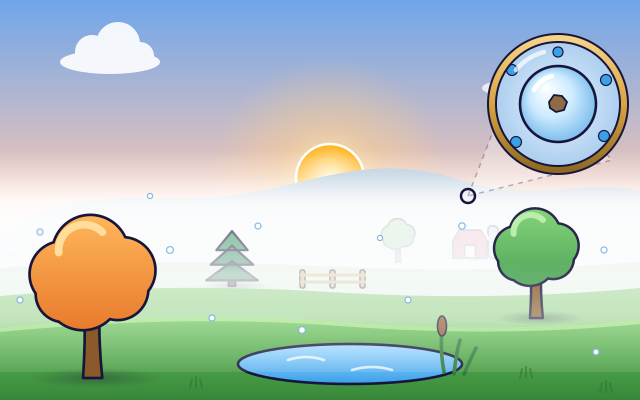
How does fog form near the ground?
Change air temperature and moisture and watch tiny droplets appear.
#448
Earth & weather
How does fog form near the ground?
Change air temperature and moisture and watch tiny droplets appear.
 #449
Earth & weather
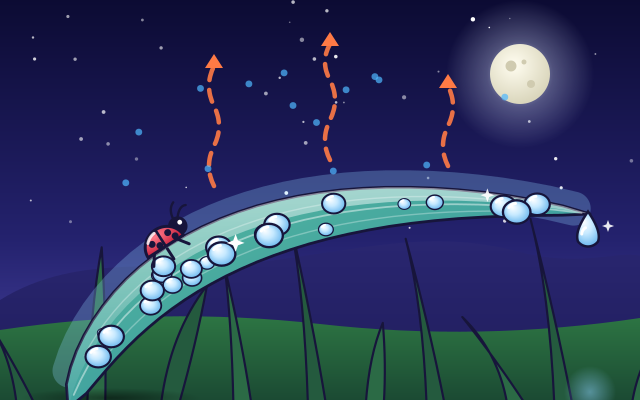
How does dew appear on grass?
Cool a model surface and follow water vapor condensing into droplets.
#449
Earth & weather
How does dew appear on grass?
Cool a model surface and follow water vapor condensing into droplets.
 #450
Earth & weather
How does frost form?
Explore ice crystals growing on a cold surface from water vapor.
#450
Earth & weather
How does frost form?
Explore ice crystals growing on a cold surface from water vapor.
Keep exploring
Games to play next
- Weather LabPredict the weather in a box, then run a fair test to find out why.
- Landform ExplorerMountains, valleys, peninsulas and deltas — learn the shapes of the land and find them on Earth.
- River MysterySomething changed the river. Sample sites with a limited budget, follow the evidence and find where the change begins.
Draw it or make it
- Six-Point Paper SnowflakePaper craft
Guide for grown-ups
- How to start homeschooling: a step-by-step guide for familiesA guide for parents · 7 min read
Science games by grade
Science worksheets by grade
- Preschool Science Worksheets
- Pre-K Science Worksheets
- Kindergarten Science Worksheets
- 1st Grade Science Worksheets
- 2nd Grade Science Worksheets
- 3rd Grade Science Worksheets
- 4th Grade Science Worksheets
- 5th Grade Science Worksheets
- 6th Grade Science Worksheets
- 7th Grade Science Worksheets
- 8th Grade Science Worksheets