How does a trigger spray bottle work?
Pull the trigger and follow the liquid: up a tube, past a little ball valve, through a pump and out of a tiny hole as mist.
The big idea: The trigger works a tiny pump. Squeezing pushes liquid out through a small hole. Letting go makes room in the pump, and liquid is pushed up the tube to fill it. Two one-way valves keep the liquid moving forward.
It's like a drinking straw and a water squirter in one: letting go sips liquid up the tube, and squeezing squirts it out through a tiny hole.
The interactive parts didn't load. The explanations below still work; try reloading the page.
Inside a spray bottle
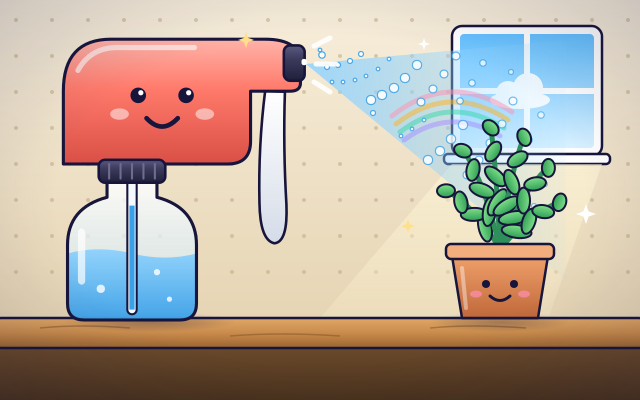
- This droopy fern needs a gentle shower. A spray bottle can turn plain water into a soft mist. But how does the water get from the bottom of the bottle to the nozzle at the top?
- The trigger pushes a plunger called a piston into a small chamber full of liquid. The liquid has less room, so it is pushed out. It lifts a tiny valve and rushes toward the nozzle.
- At the nozzle the liquid is forced through a very small hole. To get through, it has to speed up a lot. The fast, spinning liquid cannot stay together, and it breaks into thousands of tiny droplets: mist.
- When you let go, a spring pushes the piston back out. Now the chamber has more room and nothing to fill it. The outlet valve drops shut, and a little ball at the bottom lifts off its seat.
- The air inside the bottle presses down on the liquid. Because the pump now has an empty space, the liquid is pushed up the long dip tube, past the ball, and fills the chamber again.
- Every squeeze sprays, and every release refills. Squeeze, release, squeeze, release. The two valves act like one-way doors, so the liquid can only go forward. The fern loves it!
Look inside a trigger sprayer
Tap each part and watch the pump go. Follow the liquid from the bottle to the nozzle.
- Trigger. The trigger is a lever. Squeezing it with your fingers pushes the piston into the pump.
- Piston. The piston is a plunger that slides in a small tube. Pushing it in squeezes the liquid out. Pulling it back makes room for more.
- Spring. The spring is squashed when you squeeze. When you let go, it pushes the piston and the trigger back, ready for the next squeeze.
- Inlet valve. A tiny ball sits on a hole at the top of the tube. Liquid coming up lifts the ball and gets past. When you squeeze, the ball is pressed onto the hole, so the liquid cannot go back down.
- Outlet valve. This second valve opens when the liquid is pushed toward the nozzle. When you let go it shuts, so the pump cannot suck air back in through the nozzle.
- Nozzle. The nozzle has a very small hole. The liquid has to rush through it, and it breaks into mist. Turning the nozzle changes the spray from a mist to a straight stream.
- Dip tube. The dip tube is a long straw that reaches almost to the bottom of the bottle. Liquid travels up it to the pump.
Follow the liquid
This bottle is brand new, so its pump is empty. Pull the trigger and watch the tube, the two valves and the nozzle. Tap a plant to aim at it.
Experiment: The bottle is brand new. What will come out on the very first pull?
- Pull the trigger once. What comes out of the nozzle?
- Watch the dip tube and the little ball as the trigger springs back.
- Keep pulling. Count the pulls until a full spray comes out.
What we found: The first pull pushes out only air, because the pump is empty. As the trigger springs back, liquid climbs the tube. The second pull gives a sputter, and from the third pull on you get a full spray. Filling the pump like this is called priming.
Turn on JavaScript to try it yourself.
Mist or stream?
Water both plants. The tiny seedling up close needs a gentle mist. The tomato plant is far away. Tap a plant to aim, and choose the right nozzle.
Pumps, valves and mist
Hidden inside the head of a spray bottle is a tiny pump. It has a small chamber, a plunger called a piston, a spring, and two one-way valves. A one-way valve is like a door that only opens in one direction.
When you squeeze the trigger, the piston is pushed into the chamber. The liquid inside suddenly has less room, so it has to go somewhere. It cannot go back down the tube, because the first valve, a little ball, is pressed shut. So it pushes open the second valve and rushes to the nozzle.
The nozzle has a very small hole. To get through, the liquid has to speed up, just like water from a garden hose when you cover part of the end with your thumb. The fast liquid breaks apart into tiny drops, and that is the mist you see.
When you let go, the spring pushes the piston back. Now the chamber has empty space. The air in the bottle is pressing down on the liquid all the time, and it pushes liquid up the long dip tube to fill the space. It is like sipping through a straw, except that the spring does the sipping instead of your mouth. A new bottle needs a few pulls before it sprays, because the pump and the tube start out full of air.
Key words
- Pump
- A machine that moves a liquid or a gas from one place to another.
- Piston
- A plunger that slides back and forth in a tube to push or draw in a liquid or a gas.
- One-way valve
- A part that lets liquid pass in one direction but blocks it from going back.
- Nozzle
- The small opening that liquid sprays out of.
- Priming
- Filling a pump with liquid for the first time, so that it has something to push.
Check your thinking
-
What does squeezing the trigger do inside the pump?
Show the answer
It pushes the piston in, so the liquid is squeezed out. The piston takes up the room in the chamber, so the liquid has to leave through the nozzle.
-
Why does liquid climb the dip tube when you let go of the trigger?
Show the answer
The pump has empty space, and air in the bottle pushes the liquid up to fill it. The spring pulls the piston back and makes room. Air pressing on the liquid pushes it up into that room.
-
Why does a brand new spray bottle need a few pulls before it sprays?
Show the answer
The pump and tube are full of air at first. The first pulls push the air out. Each time you let go, liquid climbs a bit higher until the pump is full.
-
What would happen if the little ball valve at the bottom got stuck open?
Show the answer
Squeezing would push the liquid back down the tube instead of out of the nozzle. The ball is the one-way door. Without it, the liquid takes the easy way back down.
-
You make the nozzle opening smaller and squeeze just as fast. What happens to the liquid's speed and the pump pressure?
Show the answer
Both rise: the same flow through a smaller area must go faster. Flow rate is area times speed. Halving the area doubles the speed, and the pressure needed grows with the square of the speed.
You're a Everyday objects expert!
You watched, looked inside, tried it, solved the challenge and went deeper. Pick another question below, or switch the age at the top to see this topic another way.
More about everyday objects
 #151
Everyday objects
How do foaming soap dispensers make foam?
Watch liquid soap and air combine and pass through a fine mesh.
#151
Everyday objects
How do foaming soap dispensers make foam?
Watch liquid soap and air combine and pass through a fine mesh.
 #152
Everyday objects
How does a click pen extend and retract?
Inspect the spring and rotating mechanism inside a transparent retractable pen.
#152
Everyday objects
How does a click pen extend and retract?
Inspect the spring and rotating mechanism inside a transparent retractable pen.
 #153
Everyday objects
How does a mechanical pencil advance its graphite?
Press the button and watch tiny gripping parts move and hold the graphite.
#153
Everyday objects
How does a mechanical pencil advance its graphite?
Press the button and watch tiny gripping parts move and hold the graphite.
 #154
Everyday objects
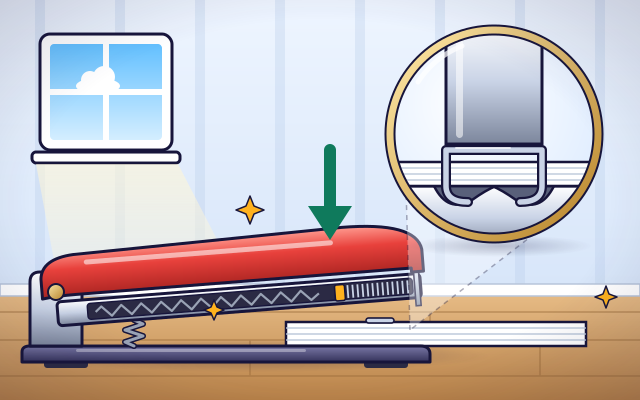
How does a stapler join sheets of paper?
Follow a staple as it pierces paper and bends against the stapler's base.
#154
Everyday objects
How does a stapler join sheets of paper?
Follow a staple as it pierces paper and bends against the stapler's base.
Keep exploring
Games to play next
- Machine RepairFix levers, pulleys, gears and ramps so every contraption works.
- Science QuizzesOlly's Science Quiz Show: plants, animals, the body, weather, space and more, for every grade.
Guide for grown-ups
- How to start homeschooling: a step-by-step guide for familiesA guide for parents · 7 min read
Science games by grade
Science worksheets by grade
- Preschool Science Worksheets
- Pre-K Science Worksheets
- Kindergarten Science Worksheets
- 1st Grade Science Worksheets
- 2nd Grade Science Worksheets
- 3rd Grade Science Worksheets
- 4th Grade Science Worksheets
- 5th Grade Science Worksheets
- 6th Grade Science Worksheets
- 7th Grade Science Worksheets
- 8th Grade Science Worksheets