
Life around the world Europe
A school day in Helsinki, Finland
Helsinki is the capital city of Finland. Children there have lessons, then a break in the school yard. Every school day, they eat a free warm lunch.
In Helsinki, Finland's capital, a lesson usually lasts 45 minutes, and pupils spend recess in the school yard. Every pupil gets a free warm lunch each school day. The 2026-2027 school year began on 12 August, and from 2026 every school is making a plan to help children move more.
Finnish rules define a lesson as 60 minutes with at least 45 of instruction, cap Grades 1-2 at five lessons a day, and guarantee every pupil a free meal each school day. Helsinki's 2026-2027 year runs from 12 August to 5 June, and in 2026 the city added an active-lifestyle goal and asked schools to make school days device-free.
Photo: Ilkka Simomaa, CC BY-SA 3.0, via Wikimedia Commons
Good morning, Helsinki
Helsinki is the capital city of Finland.
It is by the sea, far in the north of Europe. Each child has a local school, usually near home.
Helsinki is the capital of Finland, in the far south of the country, on a peninsula reaching into the Gulf of Finland. About 694,000 people lived in the city at the end of 2025.
Every child in Helsinki is given a place at a local school in their own neighborhood, usually within walking distance of home. Schools teach in Finnish or Swedish, and some also offer English or bilingual classes. In this topic we follow the city's own guides to see how a school day is shaped: lessons and recess, a free lunch, languages and the school year.
Helsinki, Finland's capital, had 694,392 residents at the end of 2025 (Statistics Finland). Compulsory education in Finland covers children aged 6 to 18 living permanently in the country, and primary school starts in the year a child turns 7 (Eurydice, updated October 2025). Primary and lower secondary education are given together, in comprehensive schools with Grades 1 to 9.
National law sets the frame, and the city fills in the details. Helsinki assigns every child a local school in its own admission area, usually within walking distance but not always the nearest. Schools teach in Finnish or Swedish, and the city also lists English-language, bilingual, Swedish-immersion and English-enriched education. This topic uses the City of Helsinki's school pages and its 2026-2027 guide for families, checked against Finland's national rules.
Lessons, then recess
A lesson usually lasts 45 minutes.
Then children go out to the school yard for recess. Grown-ups watch over them while they play. Sometimes lessons happen outside, too, even in a forest.
In Finland, a lesson is counted as 60 minutes, and at least 45 of those must be teaching time. A typical lesson is 45 minutes followed by a 15-minute break, though some lessons are 90 minutes long. Children in Grades 1 and 2 have at most five lessons a day.
In Helsinki, pupils spend recess in the school yard, watched by school staff. Lessons can also move outside, for example to a forest, the local area or the library. Families must send weather-appropriate gear for indoor and outdoor physical education.
Finland's rules define a lesson as 60 minutes, of which at least 45 must be instruction; the common pattern is 45 minutes of teaching and a 15-minute break, but 90-minute sessions are allowed. Minimum weekly lessons rise with age: 20 in Grades 1-2, 22 in Grade 3, 24 in Grade 4, 25 in Grades 5-6, 29 in Grades 7-8 and 30 in Grade 9. Grades 1-2 may have no more than five lessons a day, and other grades no more than seven (Eurydice).
Helsinki's own page says lessons usually last between 45 and 90 minutes, varying by school, that recess is spent in the school yard under staff supervision, and that teaching can happen in a forest, the local area or a library. From August 2026, promoting an active lifestyle became an objective of the city's comprehensive education: every school is drawing up a plan covering break-time activities, movement during the day and the use of the yard and surroundings in lessons.
A free warm lunch
At lunchtime, every child gets a free meal.
There is a warm dish, salad, bread and a drink. Children can choose between two main dishes. One of them has no meat.
Every school day, every pupil in Helsinki gets a free lunch. It includes a warm main course, a salad or grated vegetables, bread with spread and a drink, and sometimes a dessert. There are two main courses to choose from each day, one of them vegetarian, and the menu repeats every six weeks. Pupils may take more food if they are still hungry.
Free school meals have a long history in Finland. A 2008 national guide says 1948 is seen as the year when free school meals really started.
Finnish law guarantees pupils a balanced, supervised meal free of charge on every school day, and the Finnish National Agency for Education says nearly 850,000 pupils and students are entitled to a free school lunch. Its guidance describes a hot main dish of fish, meat or vegetables (beans or sprouts for vegetarians), a vegetable side, bread with spread and a drink of skimmed or semi-skimmed milk or buttermilk, and asks that meal breaks be calm and unhurried. Sweets, sugary drinks and energy drinks should not be regularly available.
In Helsinki, two main courses are offered daily, one vegetarian, on a six-week cycle, with a salad or raw vegetables, bread, spread and a drink. The National Board of Education's 2008 guide called 1948 the year free school catering really began, after smaller-scale meals since the early 1900s, and said that Finland was the first country to serve free school meals. It added that until the early 1960s school food was mainly soups and porridges, with children bringing bread and milk from home.
Languages, and no phones
Children in Helsinki start a new language in first grade.
They can learn English, Spanish, Chinese and more. At school, phones are mostly put away.
Helsinki pupils begin their first foreign language, called the A1 language, in Grade 1. Depending on the school, they can choose English, Spanish, Chinese, French, Swedish, German or Russian.
Finland has added lessons in pupils' school language, Finnish or Swedish, and Helsinki gives them to Grades 1 and 3. For 2026-2027 the city also added one more weekly lesson for Grades 5 and 6, to build reading and writing. Phones may be used only with a teacher's or principal's permission, and in spring 2026 schools were told to make school days fully free of mobile devices.
Helsinki pupils start their first foreign language (A1) in Grade 1, choosing among English, Spanish, Chinese, French, Swedish, German and Russian, depending on what the local school offers. Mother-tongue and literature lessons (Finnish or Swedish) have been increased nationwide, and Helsinki allocated the extra lessons to Grades 1 and 3; for 2026-2027 the city added one more weekly lesson of its own for Grades 5 and 6, aiming at reading and writing skills.
Device rules tightened in steps. The family guide (reviewed October 2025) said phones, tablets, headphones and smartwatches could not be used in lessons except for learning with a teacher's permission. In spring 2026 schools were told to update their rules so that school days are fully device-free; school boards approve each school's rules, and officials recommended a full ban for Grades 1-6, including breaks, and encouraged device-free breaks for Grades 7-9. Helsinki also raised its textbook budget by 1.5 million euros in 2026, favoring printed materials for theoretical subjects.
The school year
School in Helsinki starts in August.
There is a short autumn holiday, a Christmas holiday and a winter holiday. Then school ends in early June, and summer begins.
Finland's school year has 190 working days, a few fewer when certain holidays fall on a weekday. In Helsinki, the 2026-2027 autumn term runs from 12 August to 19 December 2026, with an autumn holiday from 12 to 16 October.
After the Christmas holiday, the spring term runs from 7 January to 5 June 2027, with a winter holiday from 22 to 26 February. Then comes the summer holiday, which is about ten weeks long.
Nationally, the school year has 190 working days, falling to as few as 187 when Epiphany, May Day or Independence Day lands on a weekday; it starts in mid-August and ends on the last working day of week 22, with a summer holiday of about ten weeks (Eurydice). The body that runs each school decides the start date; only the last day is the same everywhere.
Helsinki's comprehensive schools: autumn term 12 August to 19 December 2026 (autumn holiday 12-16 October); Christmas holiday 21 December 2026 to 6 January 2027; spring term 7 January to 5 June 2027 (winter holiday 22-26 February). The Finnish National Agency for Education counts 189 working days for 2026-2027 nationally: the 190 are reduced when Independence Day, Epiphany or May Day falls on a weekday other than Saturday, and Epiphany (6 January 2027) does. Schools may hold classes on one Saturday to replace a school day.
Getting to school
Most children go to a school near their home.
Many can walk there. If school is far away, children get a free bus pass.
Every Helsinki child is given a local school, usually within walking distance of home. If the trip is longer, the city helps: pupils in Grades 1 to 6 who live at least 2 kilometers from their local school get an HSL travel card that makes their school trips by public transport free. For Grades 7 to 9, the distance is 3 kilometers.
Before lessons, first and second graders can join free morning activities, and after school there are clubs and paid after-school care with outdoor play, exercise and a snack.
Helsinki assigns each child a local school by admission area; it is usually within walking distance but not necessarily the closest. Pupils in Grades 1-6 whose journey to the local school is at least 2 km receive an HSL travel card, making public transport free; for Grades 7-9 the threshold is 3 km. National law requires municipalities to provide free transport when the distance exceeds five kilometers or the route is difficult or dangerous (Eurydice), so the city's thresholds are lower than the national minimum.
The city runs free, voluntary morning activities before lessons for Grades 1-2 (and for some pupils in Grades 3-4 with a decision on learning support), and fee-based after-school activities for Grades 1-2 that include play, outdoor activities, exercise, small local excursions and a snack.
Amazing facts
-
Long ago, children in Finland brought bread and milk to go with their school soup.
Until the early 1960s, Finnish school meals were mostly soups and porridges, and children brought bread and milk from home to go with them.
According to the National Board of Education's 2008 guide, school food until the early 1960s mainly consisted of soups and porridge-type dishes, supplemented by bread and milk brought from home; rice and spaghetti appeared on school menus in the 1970s.
-
In Helsinki, the school lunch menu repeats every six weeks.
Helsinki schools offer two main courses every day, one of them vegetarian, on a menu that repeats every six weeks.
Helsinki's comprehensive schools run a six-week menu cycle with two daily main courses, one vegetarian; pupils may take more food and drink.
-
Children in Helsinki can learn Chinese or Spanish from first grade.
A Helsinki first grader can choose English, Spanish, Chinese, French, Swedish, German or Russian as a first foreign language, if a school offers it.
Helsinki lists seven possible A1 languages, started in Grade 1: English, Spanish, Chinese, French, Swedish, German and Russian; families may apply to another school if the local one does not teach their choice.
-
Helsinki schools sometimes have a lesson in the forest.
Helsinki's school guide says lessons can be held outside, for example in a forest, in the local area or at a library.
The City of Helsinki notes that teaching may take place outside the school building, giving a forest, the local area and the library as examples.
Words to know
- comprehensive school
- a school that teaches Grades 1 to 9 together, as schools in Finland do
- recess
- a break between lessons, often spent outside
- vegetarian
- food with no meat or fish
- term
- one part of a school year, with holidays before and after it
- A1 language
- in Finland, the first foreign language a pupil learns, starting in Grade 1
- compulsory education
- the years of schooling the law says every child must have
Discovery challenge
-
How long is a usual lesson in Finland?
How long does a typical lesson last in a Finnish school?
Finland counts a lesson as 60 minutes. At least how much of that must be instruction, which is also the typical lesson length?
- 15 minutes
- 45 minutes
- 2 hours
Show the answer
45 minutes
A lesson usually lasts 45 minutes. Then there is a break.
A typical lesson is 45 minutes, followed by a 15-minute break.
At least 45 of the 60 minutes must be instruction; 45 minutes of teaching plus a 15-minute break is the usual pattern.
-
How much do children pay for school lunch in Helsinki?
How much does a pupil in Helsinki pay for school lunch?
What does Finnish law say pupils pay for their school-day meal?
- Nothing, it is free
- One euro
- Ten euros
Show the answer
Nothing, it is free
School lunch is free for every child.
Every pupil gets a free lunch every school day.
The law requires a properly organized, supervised, balanced meal free of charge on every school day.
-
When did school start in Helsinki in 2026?
On what day did Helsinki's 2026-2027 school year begin?
On what date did Helsinki's comprehensive schools start the 2026-2027 autumn term?
- 12 August 2026
- 1 January 2026
- 1 October 2026
Show the answer
12 August 2026
School started in August, on the 12th.
The school year began on Wednesday, 12 August 2026.
12 August 2026; the autumn term runs to 19 December and the spring term ends on 5 June 2027.
-
How many lessons a day, at most, do the youngest children have?
What is the most lessons a day a pupil in Grade 1 or 2 can have in Finland?
What is the daily lesson cap for Grades 1-2 under Finland's rules?
- 5
- 9
- 12
Show the answer
5
The youngest children have five lessons a day or fewer.
Grades 1 and 2 have at most five lessons a day; older grades have at most seven.
Five lessons a day for Grades 1-2, seven for all other grades.
Explore next
-
 Watch
 Country
Finland
Finland is a northern European country covered mostly by forest and dotted with tens of thousands of lakes. About a third of it lies north of the Arctic Circle, where the summer sun shines all night. About 5.7 million people live there, most of them in the south.
-
Watch
City
Helsinki
Helsinki is the capital of Finland, on a peninsula in the Gulf of Finland. Founded in 1550 and made the capital in 1812, it has white stone buildings, a sea fortress on islands, and the world's most northern metro. About 694,000 people lived there at the end of 2025.
-
 Watch
Life around the world
A school day in Tokyo
In Tokyo, many children walk to their local school in neighborhood groups. Lessons are 45 minutes long in elementary school. At lunchtime, pupils set and clear the table in their classroom, and they share the job of cleaning their school. The school year starts in April.
-
 Watch
Life around the world
A school day in Nairobi, Kenya
Nairobi is the capital of Kenya. Children start school with two years of pre-primary, learn English and Kiswahili, study subjects such as mathematics and science, and in many public primary schools eat a lunch cooked fresh in the county's central kitchens.
-
 Watch
Life around the world
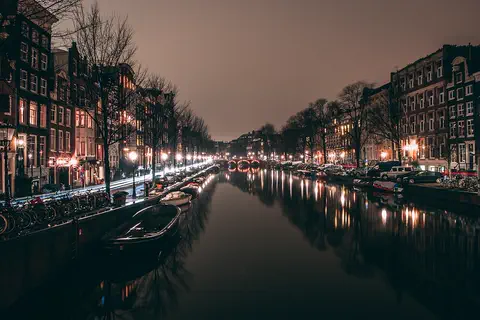
Getting around Amsterdam by bicycle
Amsterdam, the capital of the Netherlands, is flat and crossed by canals. In 2017, about 35 out of every 100 weekday trips made by people who live there were by bicycle, more than by car, bus, tram or metro. The city has added thousands of bike parking places, including a garage under the water by Central Station.
-
 Watch
Life around the world
The polar night in Tromsø, Norway
Tromsø lies far north of the Arctic Circle. From about 26 November to 17 January the sun stays below the horizon all day, a time called mørketid in Norwegian, the dark time. Around midday there are still a few hours of twilight. People wear reflectors on dark roads, and a study found that people farther north in Norway tended to feel more positive about winter.
-
 Watch
Life around the world
A day on the London Underground
The London Underground, or the Tube, began in 1863 as the world's first underground railway. In the year 2025/26, people made about 1.2 billion journeys on its 11 lines. Its famous map, first sketched by Harry Beck in 1931, shows how stations connect rather than how far apart they are.
-
 Watch
Life around the world
Water buses of Venice, Italy
Venice is spread over 118 small islands in a lagoon in northern Italy. Cars cannot drive into the old city, so people walk over its 400 or so bridges or take a vaporetto, a public water bus. The canals also carry water taxis, gondolas, and boats for fruit, garbage, ambulances and police.
For parents & teachers
What children will learn
- Describe the shape of a school day in Helsinki: lessons, recess and lunch.
- Explain what national rules and city choices each decide about school in Finland.
- Compare Helsinki's school year and free lunch with their own school.
- Read a school calendar and count terms and holidays.
Recommended ages: 4 to 12 · About 12 minutes
Talk about it
- How long are lessons at your school, and how long are your breaks?
- What might be good about having lunch free for every child? What would it take to organize it?
- Why might a city decide to make school days free of phones?
Try at home or in class
- Plan a balanced lunch on a paper plate: half vegetables, a quarter potatoes, rice or pasta, and a quarter fish, meat or beans, like Finland's school meal guide.
- Take a 'forest lesson' with a grown-up: go to a park and count, sort or draw leaves and sticks.
Key vocabulary: comprehensive school, recess, vegetarian, term, A1 language, compulsory education
Where these facts come from
- School day and practical matters , City of Helsinki
- Welcome to school! School year 2026-2027 (brochure for parents and guardians of first graders) , City of Helsinki Education Division
- School term dates and holidays , City of Helsinki
- School starts in Helsinki: more movement and textbooks, fewer mobile devices and changes to admission areas in East Helsinki (5 August 2026) , City of Helsinki
- Finland: Organisation of single-structure education , Eurydice, European Commission
- School meals in Finland , Finnish National Agency for Education (EDUFI)
- School meals in Finland: Investment in learning (2008) , Finnish National Board of Education (hosted by the Finnish Food Authority)
- Koulujen työ- ja loma-ajat lukuvuonna 2026-2027 (school working days and holidays, 2026-2027) , Finnish National Agency for Education (Opetushallitus)
- Helsinki , Encyclopaedia Britannica
- Population growth slowed down in 2025 (with table 11ra, key figures on population by region: Helsinki 694,392 on 31 December 2025) , Statistics Finland
Checked, not yet human-reviewed. Last updated October 24, 2026. Spotted a mistake? Tell us.