PlayOwl Discovery Encyclopedia
A whole universe of discoveries awaits!
Travel the world, meet incredible animals, experiment with amazing ideas, and discover how everything works.
Free for everyone, always. No account needed.

A slowly turning globe of the Earth. Pick a continent below to explore its countries and places.
Where shall we go first?
- Explore the World Travel around Earth, discover countries, cities, cultures, and remarkable places. 505 to explore
- What If? Lab Change the rules of nature and discover what happens. 349 to explore
- Amazing Animals Meet wildlife from across the planet and explore their habitats. 442 to explore
- How Things Work Discover how everyday things, science, technology, and nature work. 500 to explore


Today’s discoveries
-
Discovery of the Day
 Watch
Animal
Blue-footed booby
The blue-footed booby is a seabird of the tropical eastern Pacific, from Mexico to Peru and the Galápagos Islands. Its bright blue feet star in its courtship dance: birds with bluer feet are more likely to find a mate. It catches fish by diving into the sea from high in the air.
-
Animal of the Day
 Watch
Animal
Wolverine
The wolverine is a strong, stocky member of the weasel family that lives in the cold north of North America, Europe and Asia. It travels huge distances, eats almost anything it can find, and digs dens in deep snow for its babies. Its fierce reputation is often exaggerated: it avoids wolves and bears.
-
Amazing Place of the Day
 Watch
Natural wonder
Mount Fuji
Mount Fuji, 3,776 meters high, is the highest mountain in Japan and an active volcano that last erupted in 1707. Its almost perfect cone was built by three volcanoes, one on top of another, and it has inspired artists for hundreds of years.
-
Today's What If?
Watch What If? Lab What if snow were black? Clean snow is white because it reflects most of the sunlight that hits it, which helps it stay cold and frozen. Dark things soak up sunlight and warm up. In some mountains, dust blowing onto snow already makes it melt weeks earlier. Imagine snow that was black, and find out why color matters so much.
Watch an adventure with Olly
Tap one, then sit back: Olly tells the story.
-
 Watch
Animal
Black-tailed prairie dog
Black-tailed prairie dogs are sociable ground squirrels of North America's Great Plains. They dig huge underground towns, keep the grass short to watch for danger, and bark warnings to each other. Many other animals depend on their towns.
-
 Watch
Animal
Superb lyrebird
The superb lyrebird is a large, ground-living songbird of Australia's moist forests. It is a famous copycat: most of its song is made of sounds borrowed from other birds and even machines. The male has a spectacular tail that he throws over his head as he dances and sings.
-
 Watch
 Country
Tanzania
Tanzania is a country in East Africa, just south of the Equator, on the Indian Ocean. It has Mount Kilimanjaro, Africa's highest mountain, deep lakes in the East African Rift, and the Serengeti, where huge herds of wildebeest travel each year.
-
 Watch
Natural wonder
Komodo National Park
Komodo National Park, in Indonesia, is a group of rugged, dry islands between Sumbawa and Flores. Its three main islands, Komodo, Rinca and Padar, were made by volcanoes. The park contains most of the places where wild Komodo dragons, the largest living lizards, still live, along with rich coral reefs visited by turtles, dolphins and whales.
-
 Watch
Animal
Gila monster
The Gila monster (say HEE-luh) is the largest lizard native to the United States. Its bumpy black skin is patterned with pink or orange, it spends most of its life hidden underground, and it is one of the very few lizards with venom.
-
 Watch
Natural wonder
Galápagos Islands
The Galápagos Islands are a group of volcanic islands in the Pacific Ocean, about 1,000 kilometers off the coast of Ecuador. Many of their animals live nowhere else on Earth, and they helped inspire Charles Darwin's theory of evolution by natural selection.


Featured world destinations
See all-
 Watch
City
Mumbai
Mumbai, once called Bombay, is a giant port city on India's west coast, by the Arabian Sea. It grew on seven small islands that were joined into one, and it is India's main center of business and banking. At the 2011 census, more than 12 million people lived in the city and more than 18 million in its urban area.
-
 Watch
 Country
Burkina Faso
Burkina Faso is a landlocked country in West Africa, on a wide plateau of savanna that is grassy in the north and dotted with forest in the south. About 24 million people live there. Its name, chosen in 1984, means Land of Incorruptible People, and its capital is Ouagadougou.
-
 Watch
Landmark
Sagrada Família
The Sagrada Família is a huge church in Barcelona, Spain, designed by the architect Antoni Gaudí. Building began in 1882 and is still going on. In February 2026 its tallest tower was finished at 172.5 meters, making it the tallest church in the world.
-
 Watch
Landmark
Eiffel Tower
The Eiffel Tower in Paris was built in just over two years for the 1889 World's Fair. Its 18,038 iron parts are held together by 2.5 million rivets. It was meant to stand for 20 years; today it is 330 meters tall and millions of people visit every year.
-
 Watch
City
Ottawa
Ottawa is the capital of Canada. It stands where three rivers meet, beside the Ottawa River, which divides the provinces of Ontario and Quebec. It began as a lumber town called Bytown, became the capital in 1857, and had 1,017,449 people at the 2021 census.
-
 Watch
Landmark
Al-Aqsa Mosque
Al-Aqsa Mosque stands at the southern end of a huge raised plaza in the Old City of Jerusalem. Built in the early 700s, it has a silver-gray dome, and the golden Dome of the Rock stands nearby. The plaza is important to Muslims and to Jews.
-
 Watch
Landmark
CN Tower
The CN Tower in Toronto is 553 meters tall. It was built between 1973 and 1975 so that radio and TV signals could reach over the city's new tall buildings. For more than 30 years it was the tallest freestanding structure in the world, and today more than two million people visit it every year.
-
 Watch
City
Amsterdam
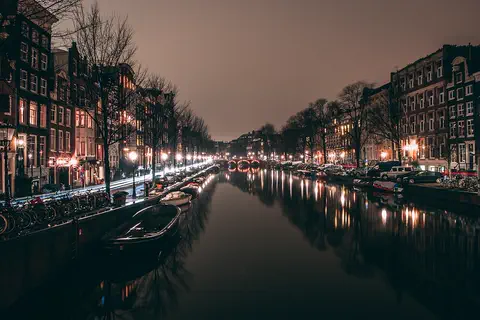
Amsterdam is the capital of the Netherlands. It began as a fishing village beside a dam on the Amstel River, which gave the city its name. Today about 942,000 people live among its rings of canals, hundreds of bridges, houseboats and bicycles.
Explore the ocean
See all-
 Watch
Journey
The spice routes by sea
For centuries, ships crossed the Indian Ocean between East Africa, Arabia, India, Sri Lanka and the islands of Southeast Asia, carrying spices such as pepper, cinnamon, cloves and nutmeg. Sailors used the monsoon winds, which blow one way for half the year and the other way for the rest, to make their voyages.
-
 Watch
3D
Animal
Lined seahorse
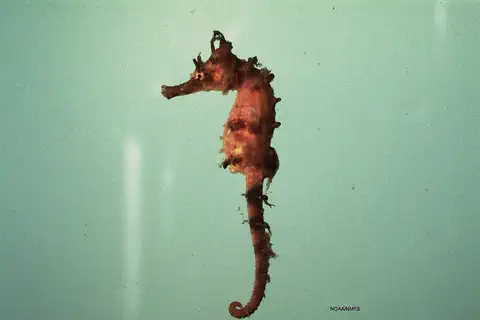
The lined seahorse is a small fish of the western Atlantic Ocean, from Canada and the United States down to Brazil. It has a horse-shaped head, a long snout with no teeth and a tail that grips seagrass. The male carries the eggs in a pouch until tiny seahorses are born.
-
 Watch
3D
Animal
Hawksbill sea turtle
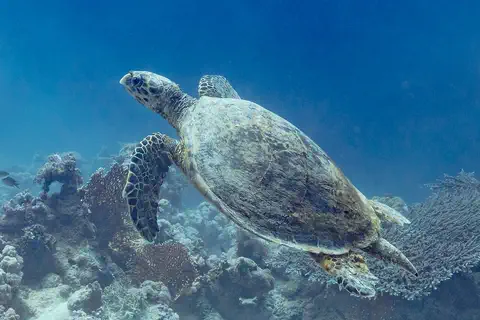
The hawksbill sea turtle lives in warm seas around the world, mostly near coral reefs. Its pointed, hawk-like beak reaches into cracks in the reef to find sponges, its favorite food. Its beautiful patterned shell once made it a target for hunters, and today it is critically endangered.
-
 Watch
Journey
The first flights across the Atlantic
In 1919, airplanes crossed the Atlantic Ocean for the first time. A US Navy flying boat, NC-4, crossed in stages, and then John Alcock and Arthur Brown flew nonstop from Newfoundland to Ireland in about 16 hours. In 1927, Charles Lindbergh flew alone and nonstop from New York to Paris in 33 and a half hours.
-
 Watch
3D
Animal
Blue tang
The blue tang is a royal-blue reef fish with black markings and a bright yellow tail. It lives on coral reefs across the Indian and Pacific Oceans, starts life yellow, and carries sharp blades at the base of its tail.
-
 Watch
Animal
Leatherback sea turtle
The leatherback sea turtle is the largest turtle on Earth. Instead of a hard shell it has tough, rubbery skin over a layer of tiny bones. It eats jellyfish, dives deeper than any other turtle and swims thousands of kilometers between feeding waters and the beaches where it lays its eggs.
-
 Watch
3D
Animal
Reef stonefish
The reef stonefish is a master of disguise. Its lumpy, warty skin and rocky colors make it look like a stone or a piece of coral on the sea floor. It waits without moving until a small fish or shrimp comes near, then gulps it in a flash. Sharp spines on its back protect it from enemies.
-
 Watch
Animal
Giant squid
The giant squid is one of the biggest animals without a backbone. Most of its length is two very long, stretchy feeding tentacles. It lives deep in oceans around the world, and it is so hard to find that the first photos of a living one in the wild were taken only in 2004.
Explore space
See all-
 Watch
Landmark
Baikonur Cosmodrome
Baikonur Cosmodrome is a huge rocket launch site on the flat grasslands of Kazakhstan. The Soviet Union began building it in secret in 1955. Sputnik 1, the first satellite, launched from here in 1957, and Yuri Gagarin, the first person in space, in 1961. Today Russia rents it from Kazakhstan, and crews have launched from it to the International Space Station as recently as 2025.
-
 Watch
 Country
Kazakhstan
Kazakhstan is the largest country in Central Asia and the ninth largest in the world. It has no ocean coast, but the Caspian Sea lies along its southwest edge. About 20.6 million people lived there in 2026, and its capital is Astana.
-
 Watch
3D
Animal
Tardigrade
Tardigrades, or water bears, are tiny eight-legged animals about a millimeter long or less. They live in damp moss, soil, fresh water and the sea all over the world, and they can survive drying out completely by curling into a little barrel called a tun.
Incredible wildlife
See all-
 Watch
Animal
Giant panda
The giant panda is a black-and-white bear that lives in misty mountain forests in China. About 99 percent of its food is bamboo, and it spends up to 16 hours a day eating. Pandas were once endangered, but protecting their forests has helped them, and they are now listed as Vulnerable.
-
 Watch
Animal
Tuatara
The tuatara looks like a spiny lizard, but it is not one. It is the last living member of a group of reptiles that lived alongside the dinosaurs. Today wild tuatara live only on small islands off New Zealand, where they come out at night, grow very slowly and can live for around 100 years.
-
 Watch
Animal
Colossal squid
The colossal squid lives deep in the icy Southern Ocean around Antarctica. It is thought to be the heaviest animal without a backbone: one caught in 2007 weighed about 470 kilograms. Its arms and tentacles carry sharp, turning hooks, and in 2025 scientists filmed a living one in the wild for the first time.
-
 Watch
Animal
Thorny devil
The thorny devil is a small Australian desert lizard covered in spikes from head to tail. Despite its fierce name it is slow and harmless, it eats nothing but ants, and tiny channels in its skin carry water to its mouth.
-
 Watch
Animal
Western diamondback rattlesnake
The western diamondback rattlesnake is a heavy-bodied snake of the deserts and dry grasslands of the southwestern United States and Mexico. It has diamond patterns, a black-and-white striped tail and a rattle that buzzes as a warning. It is venomous, so it is a snake to admire from far away, but it would much rather hide or slip away than meet a person.
-
 Watch
3D
Animal
American robin
The American robin is a very familiar bird over most of North America, with a gray-brown back, a warm orange breast and a cheery song. It runs across lawns pulling up earthworms, eats lots of berries in winter, and builds a mud-lined nest for its sky-blue eggs.
-
 Watch
Animal
Rainbow lorikeet
The rainbow lorikeet is a colorful parrot of northern and eastern Australia. It feeds mostly on nectar and pollen, which it collects with a brush-tipped tongue. Noisy, fast-flying flocks are a common sight in forests, parks and gardens.
-
 Watch
3D
Animal
Common ostrich
The common ostrich is the tallest and heaviest bird alive. It cannot fly, but it is the fastest runner on two legs, sprinting at about 70 kilometers an hour across the savannas and deserts of Africa. It also lays the biggest egg of any living animal.
For Little Explorers
-
 Watch
Animal
Guinea pig
The guinea pig is not a pig and does not come from Guinea. It is a rodent, first tamed thousands of years ago by people in the Andes mountains of South America. Today it is a popular pet around the world, and in parts of Peru, Ecuador and Bolivia it is still raised for food.
-
 Watch
 Country
Mongolia
Mongolia is a large, landlocked country in Asia, between Russia and China. Most of it is a high plateau of grassy steppe, with mountains in the west and the Gobi in the south, and about 3.6 million people lived there in 2025.
-
 Watch
3D
Animal
Horse
Horses are grazing animals built for running, with long legs that end in a single hard hoof. People tamed wild horses about 6,000 years ago on the grasslands of Europe and Asia, and horses changed history: they pulled plows, carried riders and connected faraway places.
-
 Watch
Natural wonder
Lake Victoria
Lake Victoria is the largest lake in Africa, and Britannica says only Lake Superior, in North America, is a bigger freshwater lake. It is shared by Kenya, Tanzania and Uganda. The lake is wide but shallow, its only outlet is the Nile, and it is home to hundreds of kinds of colorful fish called cichlids.
-
 Watch
 Country
Nigeria
Nigeria is a large country in West Africa, named after the Niger River. It has rainforests in the south and dry grasslands in the north, and it is Africa's most populous country, with about 238 million people in 2025 who speak hundreds of languages.
-
 Watch
Animal
Panther chameleon
The panther chameleon is a lizard famous for its brilliant colors. It lives on the island of Madagascar, grips branches with tong-shaped feet and a curling tail, looks two ways at once, and catches insects with a lightning-fast tongue. Males change their colors to send messages.
-
 Watch
3D
Animal
Veiled chameleon
The veiled chameleon lives in the dry mountains of Yemen and Saudi Arabia. It has a tall helmet-like casque on its head, eyes that can look two ways at once, feet that grip like hands and a super-fast sticky tongue. It changes color to show its mood, not to hide.
-
 Watch
 Country
Nepal
Nepal is a landlocked country in South Asia, between India and China. It climbs from flat, warm farmland in the south to the snowy Himalaya in the north, where Mount Everest stands, and about 29.6 million people lived there in 2025.
Free for every child, everywhere
Every country, animal, map, experiment and narrated adventure here is free, with no account and no ads. Grown-ups will find what each topic teaches, discussion questions and sources on every page.