
Photo: © Giles Laurent, gileslaurent.com, License CC BY-SA, CC BY-SA 4.0, via Wikimedia Commons
Kinds of animals




Meet some favorites
All 442 animals-
 Watch
Animal
Aardvark
The aardvark is a shy night digger of African savannas. It sniffs out ant and termite nests, rips them open with its spade-like claws and laps up the insects with a sticky tongue about 30 centimeters long. Its name means 'earth pig' in Afrikaans.
-
 Watch
Animal
Adélie penguin
The Adélie penguin is a medium-sized penguin, about 70 centimeters tall, with a black back, a white front and a bright white ring around each eye. It breeds in summer on rocky, ice-free ground all around Antarctica, building nests of pebbles, and spends the winter far out at sea among the pack ice.
-
 Watch
Animal
African buffalo
The African buffalo is a huge, cow-like grazer with heavy, curving horns. It lives in herds that can number in the thousands, and a herd will rush to protect a calf in danger. It lives across much of Africa south of the Sahara, from open savannas to rainforests.
-
 Watch
Animal
African fish eagle
The African fish eagle is a big eagle of Africa's lakes, rivers and coasts, with a white head, chest and tail and a chestnut-brown body. It snatches fish from the surface of the water, and its loud, ringing call is one of the best-known sounds of Africa.
-
 Watch
Animal
African forest elephant
The African forest elephant is a separate species from the bigger bush elephant. It lives in the rainforests of central and western Africa, eats lots of fruit and spreads the seeds of forest trees in its dung. It is Critically Endangered.
-
 Watch
Animal
African penguin
The African penguin is a penguin of warm, sunny coasts. It lives only in South Africa and Namibia, nests in burrows and under bushes, and hunts sardines and anchovies in the cold sea. Its numbers have fallen so far that it is now Critically Endangered, and people are working hard to protect it.
-
 Watch
3D
Animal
African wild dog
The African wild dog, or painted dog, has a patchy coat unlike any other dog's, big round ears and only four toes on its front feet. It lives in close packs that hunt together, share food and care for the pups. It is endangered: the IUCN estimated in 2025 that only about 1,676 adults are left in the wild.
-
 Watch
Animal
Aldabra giant tortoise
The Aldabra giant tortoise is one of the largest land tortoises on Earth. Wild ones live on Aldabra Atoll, a ring of coral islands in the Indian Ocean, where more than 100,000 of them graze, browse and shape the land like elephants do in Africa. They can live for more than 100 years.
-
 Watch
Animal
Alligator gar
The alligator gar is one of the largest freshwater fish in North America. It has a broad snout lined with teeth, armor-like scales, and a swim bladder that works like a lung, so it can gulp air in warm, still water. It lives in the big rivers, swamps and bayous of the southern United States, Mexico and Central America.
-
 Watch
Animal
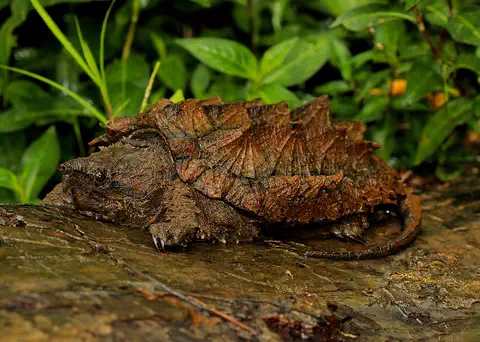
Alligator snapping turtle
The alligator snapping turtle is the largest freshwater turtle in the United States. It lies still on the bottom of rivers and lakes with its mouth open, wiggling a worm-like lure on its tongue to trick fish into swimming close. Its numbers have fallen, and it is now endangered.
-
 Watch
Animal
Alpaca
Alpacas are small, woolly members of the camel family from the high Andes Mountains of South America. People bred them from wild vicuñas thousands of years ago, mainly for their soft, warm fleece. Every alpaca lives with people.
-
 Watch
3D
Animal
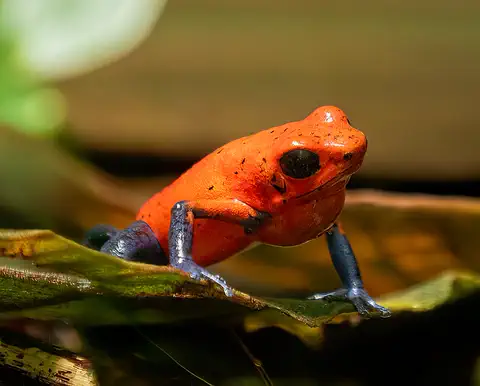
Amazon milk frog
The Amazon milk frog is a large tree frog that lives high in the treetops of the rainforest in northeastern South America. It is active at night, has big golden eyes, and lays its eggs in pools of rainwater trapped in holes in trees, where its tadpoles grow up.
Visit a habitat
All habitats
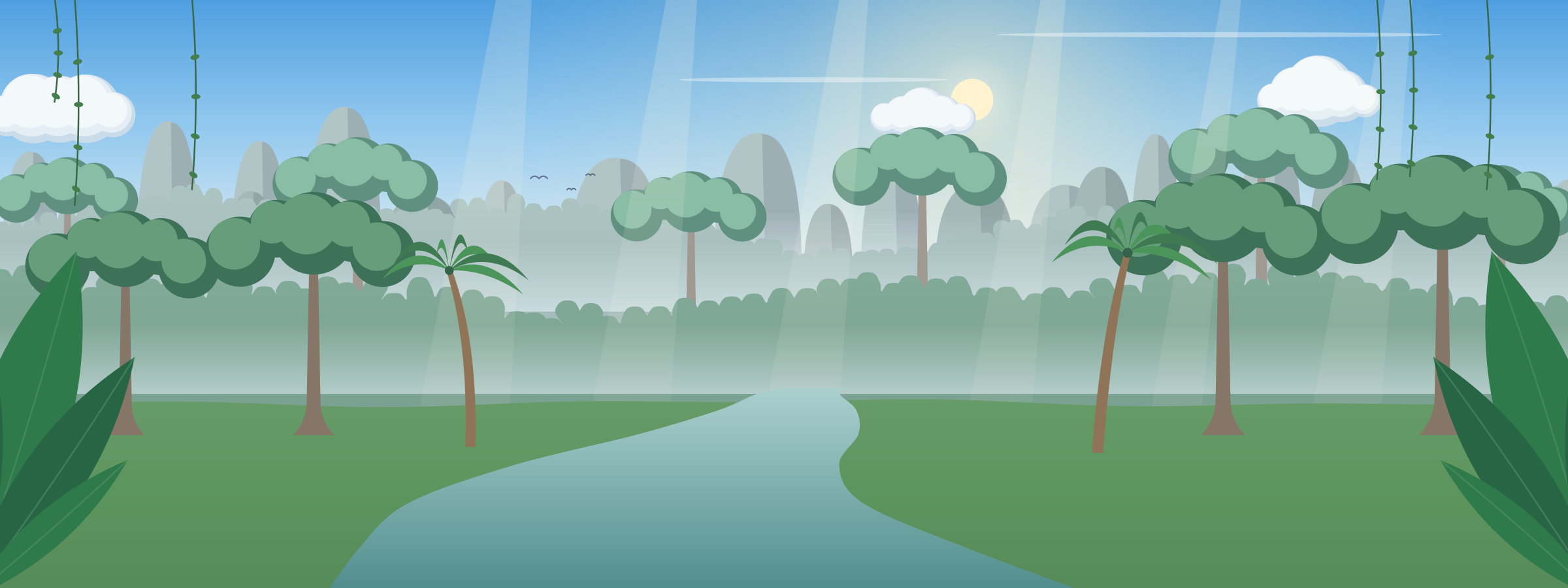
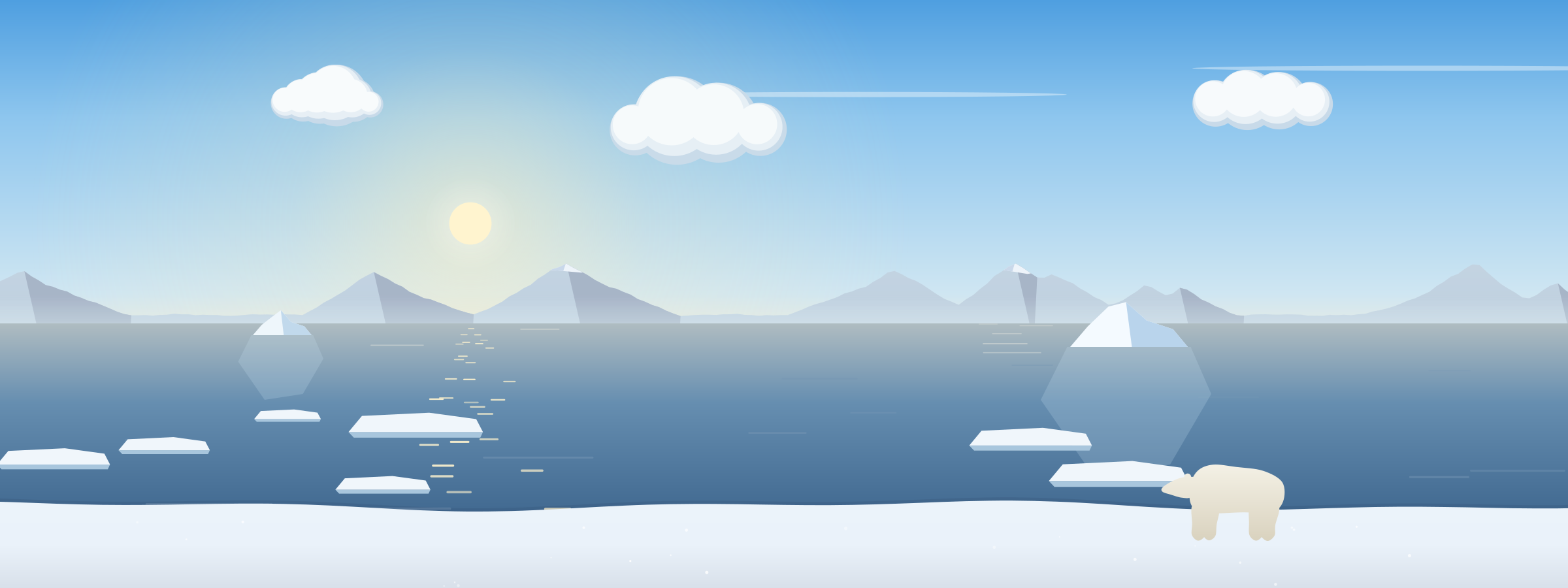
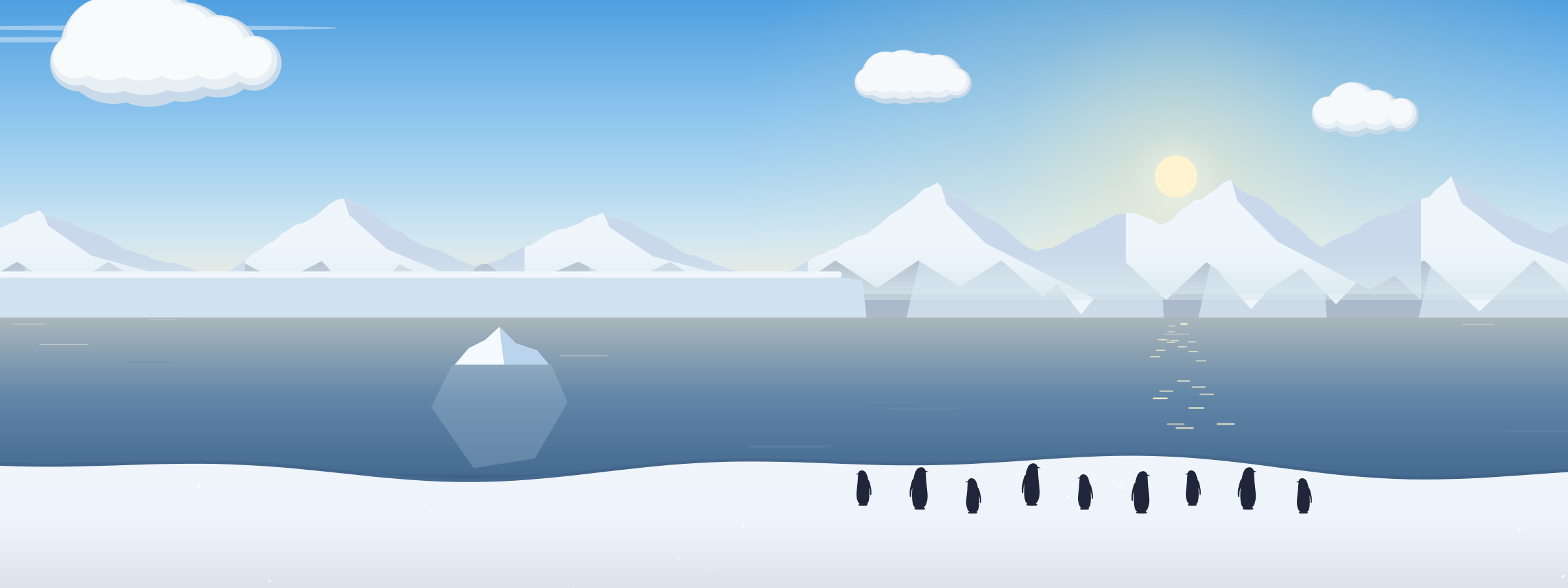
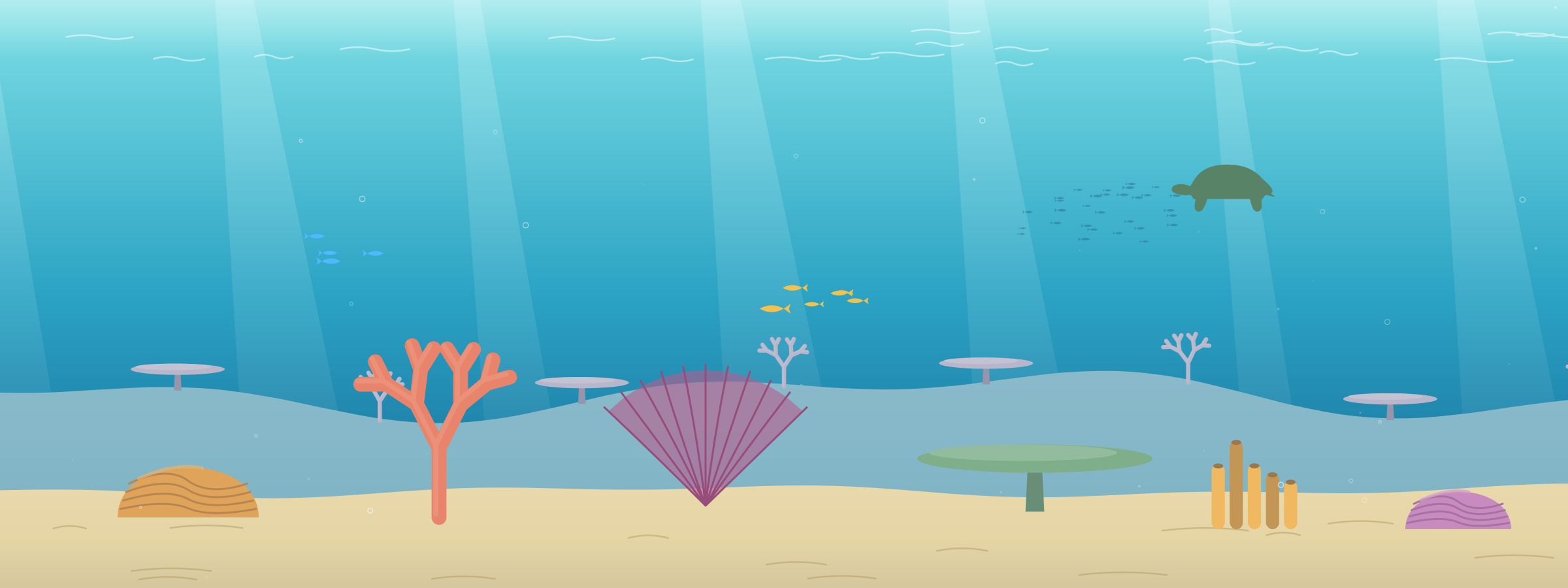

Turn them around in 3D
See all-
 Watch
3D
Animal
Llama
Llamas are South American cousins of camels, without the hump. People in the Andes Mountains bred them from wild guanacos thousands of years ago, and they still carry loads, give wool and even guard sheep. Llamas do not live in the wild: every llama lives with people.
-
 Watch
3D
Animal
Epaulette shark
The epaulette shark is a small, slender shark of Australia's Great Barrier Reef. It has a big black spot ringed with white above each front fin, and it can 'walk' along the reef, and even out of the water, by wriggling and pushing with its paddle-shaped fins. It can survive for a while in water with very little oxygen.
-
 Watch
3D
Animal
American alligator
The American alligator is a large, armored reptile of the swamps, marshes and lakes of the southeastern United States. Alligator mothers guard their nests and carry their babies to the water, and the holes alligators dig help many other animals survive dry seasons.
-
 Watch
3D
Animal
Ring-tailed lemur
The ring-tailed lemur is a primate that lives only on Madagascar, a big island off the coast of Africa. It has a striped tail with 13 black and white rings, sunbathes with its arms spread wide, and lives in groups where the females are in charge.
-
 Watch
3D
Animal
Madagascar hissing cockroach
The Madagascar hissing cockroach is one of the largest cockroaches in the world, up to 10 centimeters long, and it has no wings. It lives on the floor of rainforests on the island of Madagascar, where it eats fallen leaves and fruit. It makes a hissing sound by pushing air out of the breathing holes on its body.
-
 Watch
3D
Animal
Bald eagle
The bald eagle is one of North America's biggest birds, with a white head and tail, a dark brown body and a huge yellow bill. It lives near lakes, rivers and coasts and eats mostly fish. Once rare because of hunting and pesticides, it has made an amazing comeback.
-
 Watch
3D
Animal
Siamese fighting fish
The Siamese fighting fish, often called the betta, is a small freshwater fish from shallow, warm waters in Thailand. It can breathe air with a special organ, and males build nests of bubbles for their eggs. People have bred bettas for many centuries, giving pet bettas their bright colors and long fins.
-
 Watch
3D
Animal
Cheetah
The cheetah is the fastest land animal. It can go from standing still to 72 kilometers per hour in about two and a half seconds, and its top speed is around 100 kilometers per hour, as fast as a car on a highway. Cheetahs live mostly in Africa, with a very small group in Iran.
Animal sounds
See all-
 Watch
Animal
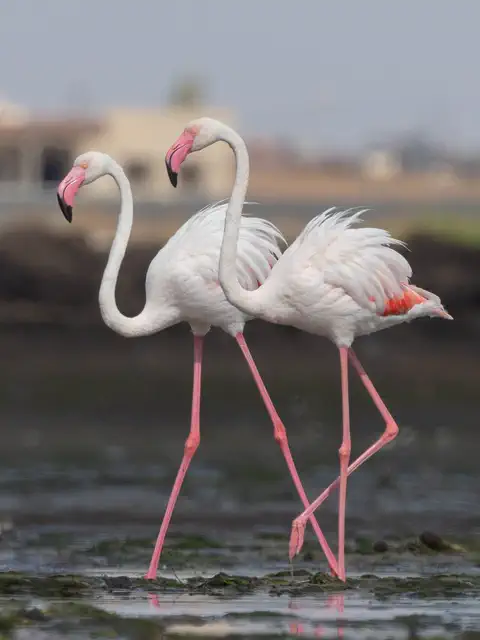
Greater flamingo
The greater flamingo is the tallest and heaviest flamingo, standing up to about 1.45 meters tall. It lives in salty lagoons and lakes across Africa, southern Europe, the Middle East and South Asia. It feeds by holding its bent bill upside down in the water and filtering out tiny animals, and it gets its pink color from what it eats.
-
 Watch
3D
Animal
Gray wolf
The gray wolf is the largest member of the dog family and the wild ancestor of pet dogs. Wolves live in family packs that hunt big animals like elk and moose together, and their howls can carry about 10 kilometers. After being wiped out in many places, wolves are coming back in parts of North America and Europe.
-
 Watch
3D
Animal
Red panda
The red panda is a cat-sized tree climber with rusty-red fur and a bushy ringed tail. It lives in cool mountain forests of the Himalayas and southern China and eats mostly bamboo leaves. Despite its name, it is not a close relative of the giant panda. It is endangered.
-
 Watch
Animal
Laughing kookaburra
The laughing kookaburra is one of the larger members of the kingfisher family. It lives in the woodlands of eastern Australia, pounces on insects, worms and small animals, and lives in family groups. Its famous 'laugh' is really a territorial call that warns other birds to stay away.
-
 Watch
Animal
Bar-tailed godwit
The bar-tailed godwit is a long-billed shorebird that breeds on Arctic tundra and spends the rest of the year on mudflats far to the south. Godwits from Alaska fly non-stop across the Pacific Ocean to New Zealand and Australia, and one young bird tracked in 2022 flew at least 13,560 kilometers without landing.
-
 Watch
Animal
Sperm whale
The sperm whale is the biggest whale with teeth. Its huge, boxy head is about a third of its body, it dives deep into the dark ocean to hunt squid, and it makes the loudest sounds of any animal.
-
 Watch
Animal
Kākāpō
The kākāpō is a large, moss-green parrot from New Zealand with an owl-like face. It cannot fly, it is active at night, and it eats only plants. It nearly died out, but careful work by New Zealand's Department of Conservation has grown the population to 325 birds (September 2026).
-
 Watch
Animal
Emu
The emu is Australia's tallest native bird and the second-largest bird in the world, after the ostrich. It cannot fly, but it can sprint at about 48 kilometers an hour. Emus are famous fathers: the male sits on the eggs for about eight weeks without eating, then looks after the striped chicks.
Ocean creatures
See all-
 Watch
3D
Animal
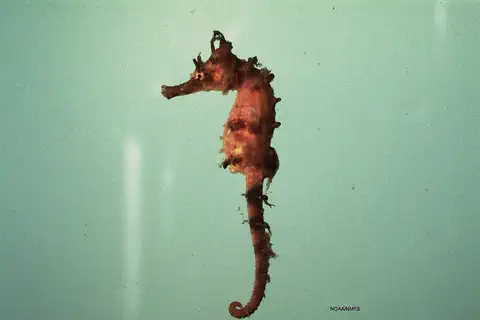
Lined seahorse
The lined seahorse is a small fish of the western Atlantic Ocean, from Canada and the United States down to Brazil. It has a horse-shaped head, a long snout with no teeth and a tail that grips seagrass. The male carries the eggs in a pouch until tiny seahorses are born.
-
 Watch
3D
Animal
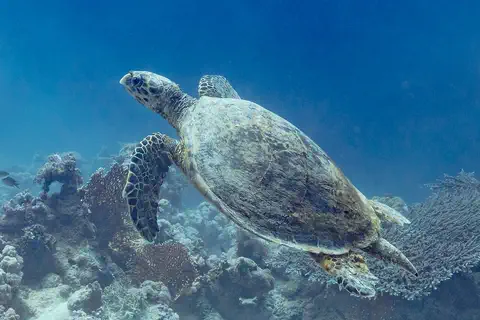
Hawksbill sea turtle
The hawksbill sea turtle lives in warm seas around the world, mostly near coral reefs. Its pointed, hawk-like beak reaches into cracks in the reef to find sponges, its favorite food. Its beautiful patterned shell once made it a target for hunters, and today it is critically endangered.
-
 Watch
3D
Animal
Blue tang
The blue tang is a royal-blue reef fish with black markings and a bright yellow tail. It lives on coral reefs across the Indian and Pacific Oceans, starts life yellow, and carries sharp blades at the base of its tail.
-
 Watch
Animal
Leatherback sea turtle
The leatherback sea turtle is the largest turtle on Earth. Instead of a hard shell it has tough, rubbery skin over a layer of tiny bones. It eats jellyfish, dives deeper than any other turtle and swims thousands of kilometers between feeding waters and the beaches where it lays its eggs.
-
 Watch
3D
Animal
Reef stonefish
The reef stonefish is a master of disguise. Its lumpy, warty skin and rocky colors make it look like a stone or a piece of coral on the sea floor. It waits without moving until a small fish or shrimp comes near, then gulps it in a flash. Sharp spines on its back protect it from enemies.
-
 Watch
Animal
Giant squid
The giant squid is one of the biggest animals without a backbone. Most of its length is two very long, stretchy feeding tentacles. It lives deep in oceans around the world, and it is so hard to find that the first photos of a living one in the wild were taken only in 2004.
-
 Watch
3D
Animal
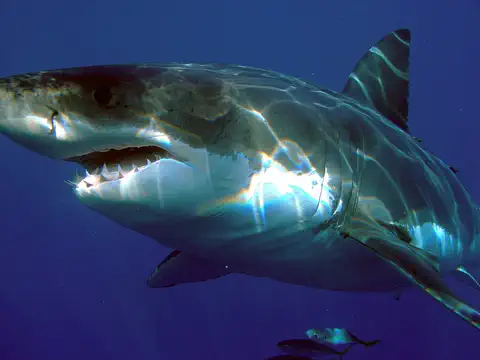
Great white shark
The great white shark is the largest of the mackerel sharks: a strong, torpedo-shaped fish with a gray back and a white belly. It hunts fish, seals and sea lions, and it is partly warm-blooded, which helps it stay active in cool water.
-
 Watch
Animal
Crown-of-thorns starfish
The crown-of-thorns starfish is a large sea star of Indian and Pacific Ocean reefs, with up to 21 arms and hundreds of sharp, toxic spines. It eats living coral by pushing its stomach out over it. Usually it is a normal part of the reef, but sometimes huge numbers appear, called outbreaks, and they can eat much of a reef's coral.
Birds of the world
See all-
 Watch
Animal
American goldfinch
The American goldfinch is a small finch that eats almost nothing but seeds. In summer the male is bright lemon yellow with a black cap and black wings, and in winter both males and females turn a soft olive brown. Goldfinches wait until late summer to build their nests.
-
 Watch
Animal
Barn owl
The barn owl is a pale, ghostly owl with a heart-shaped face that works like a dish to collect sound. It hunts mice and voles at night over fields and grassland, finding them by hearing alone if it has to. Barn owls live on every continent except Antarctica.
-
Watch
Animal
African fish eagle
The African fish eagle is a big eagle of Africa's lakes, rivers and coasts, with a white head, chest and tail and a chestnut-brown body. It snatches fish from the surface of the water, and its loud, ringing call is one of the best-known sounds of Africa.
-
 Watch
Animal
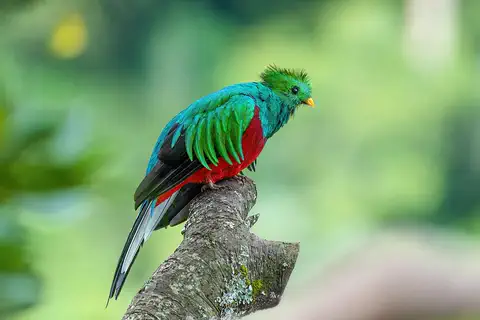
Resplendent quetzal
The resplendent quetzal is a glittering green and red bird of the cloud forests of southern Mexico and Central America. Males grow long, flowing plumes, up to about 90 centimeters. Quetzals eat mostly small fruits related to avocados, and the bird is the national emblem of Guatemala.
-
 Watch
Animal
Sociable weaver
The sociable weaver is a sparrow-sized bird of the dry savannas of southern Africa. Whole colonies, sometimes hundreds of birds, build and share one enormous thatched nest with many separate rooms. It is among the largest nests built by any bird.
-
 Watch
Animal
Greater roadrunner
The greater roadrunner is a long-legged member of the cuckoo family that lives in deserts and scrubby country in the southwestern United States and Mexico. It flies only a little but runs fast, chasing lizards, insects and even snakes, and it has clever ways of coping with desert heat.
-
 Watch
Animal
European herring gull
The European herring gull is a large, noisy gull of European coasts, with a pale gray back, pink legs and a yellow bill marked with a red spot. It eats almost anything, from crabs and fish to scraps people throw away, and many now nest on rooftops in towns. Even so, its numbers are falling in many places.
-
 Watch
3D
Animal
Southern crested caracara
The southern crested caracara is a large bird of prey from South America and a surprising member of the falcon family. It has a black crest, a bare orange-red face and long yellow legs, and it eats almost anything: dead animals, small creatures and insects.
Rainforest wildlife
See all-
 Watch
Animal
Burmese python
The Burmese python is one of the largest snakes in the world. In its home in South and Southeast Asia it has become rare because so many are caught, but in southern Florida, where people let pet pythons go, it has spread through the Everglades and eats many of the animals that live there.
-
 Watch
Animal
Brown-throated sloth
The brown-throated sloth is a three-toed sloth of the rainforests of Central and South America. It eats leaves, saves energy by moving very slowly, and its shaggy fur can turn green with tiny algae that grow in it.
-
 Watch
3D
Animal
Green iguana
The green iguana is a large lizard from the forests of Central and South America. It climbs high into trees to bask in the sun, eats leaves, flowers and fruit, and dives into rivers to get away from danger. It can grow to about 2 meters long, tail included.
-
 Watch
Animal
Goliath birdeater
The Goliath birdeater is a giant tarantula from the rainforests of northern South America. With legs spreading about 28 centimeters and a weight of up to about 170 grams, it is described as the heaviest spider in the world. Despite its name, it eats mostly worms and insects, not birds.
-
 Watch
Animal
Common vampire bat
Common vampire bats are small bats of warm parts of Mexico, Central and South America. They feed only on blood, mostly from livestock such as cattle, horses and pigs. They can walk, run and hop on the ground, and they share food with their roost mates.
-
 Watch
Animal
Tokay gecko
The tokay gecko is one of the biggest geckos in the world, a blue-gray lizard covered in orange spots. It lives in forests and on houses across South and Southeast Asia, hunts insects at night, climbs walls and ceilings with special toe pads, and gets its name from the male's loud to-kay call.
-
 Watch
Animal
Boa constrictor
The boa constrictor is a large, heavy snake of South America. Of all the boas, it lives in the greatest variety of places, from rainforests to dry scrub and farms. It catches food by squeezing, it has no venom, and mothers give birth to live babies.
-
 Watch
Animal
Proboscis monkey
The proboscis monkey is named for the grown-up male's huge, drooping nose. It lives only on Borneo, in forests along rivers, swamps and coasts. It eats mostly leaves and fruit, sleeps by the river every night and is a strong swimmer.
Desert wildlife
See all-
 Watch
Animal
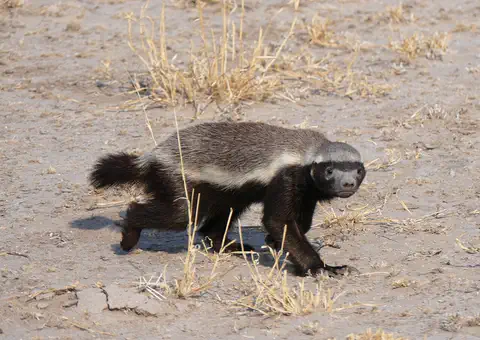
Honey badger
The honey badger, or ratel, is a stocky member of the weasel family that lives across Africa, the Middle East and India. Its gray or white back and black underside make it easy to spot. It digs with huge front claws, travels far to find food, and breaks into bees' nests for honey and bee grubs.
-
 Watch
Animal
Meerkat
Meerkats are small members of the mongoose family that live in dry, open country in southern Africa. They live in groups called mobs, dig for insects all day, and take turns as lookouts, standing tall and calling out if an eagle or jackal comes near. Everyone helps raise the babies.
-
Watch
3D
Animal
Ring-tailed lemur
The ring-tailed lemur is a primate that lives only on Madagascar, a big island off the coast of Africa. It has a striped tail with 13 black and white rings, sunbathes with its arms spread wide, and lives in groups where the females are in charge.
-
 Watch
Animal
Fennec fox
The fennec fox is the smallest member of the dog family. It lives in the Sahara and other deserts of North Africa, sleeps in cool burrows by day, and uses its enormous ears to hear insects moving under the sand at night.
-
Watch
3D
Animal
Cheetah
The cheetah is the fastest land animal. It can go from standing still to 72 kilometers per hour in about two and a half seconds, and its top speed is around 100 kilometers per hour, as fast as a car on a highway. Cheetahs live mostly in Africa, with a very small group in Iran.
-
 Watch
Animal
Short-beaked echidna
The short-beaked echidna is a spiny mammal that lays eggs. It lives all over Australia and in parts of New Guinea, digs into ant and termite nests with strong claws, and licks up the insects with a long, sticky tongue. It has no teeth at all.
-
 Watch
3D
Animal
Saiga antelope
The saiga antelope is a goat-sized antelope with an amazing floppy nose. Huge herds roam the dry steppes of Central Asia. Saigas were once nearly wiped out by hunting, but thanks to protection there are now more than a million.
-
 Watch
Animal
Arabian oryx
The Arabian oryx is a white desert antelope with long, straight horns and a black-and-white face. Hunting wiped it out in the wild, but animals kept in zoos were bred and returned to the deserts of Arabia. Today it lives wild again in five countries.
Polar wildlife
See all-
 Watch
Animal
Emperor penguin
The emperor penguin is the largest penguin in the world. It lives around Antarctica, and it is the only animal that breeds during the dark, freezing Antarctic winter. Fathers keep the egg warm on their feet for about two months, huddled together against the storms.
-
 Watch
3D
Animal
King penguin
The king penguin is the second-largest penguin in the world. It lives in huge, noisy colonies on windy islands in the Southern Ocean and dives deep to catch lantern fish. Its babies grow a thick coat of brown fluff and take more than a year to raise.
-
 Watch
Animal
Gray whale
The gray whale is a baleen whale of the North Pacific Ocean. It sucks up mud from the seafloor to catch tiny animals, and it makes one of the longest yearly journeys of any mammal: about 16,000 kilometers there and back between Arctic feeding seas and shallow lagoons in Mexico.
-
Watch
Animal
Bar-tailed godwit
The bar-tailed godwit is a long-billed shorebird that breeds on Arctic tundra and spends the rest of the year on mudflats far to the south. Godwits from Alaska fly non-stop across the Pacific Ocean to New Zealand and Australia, and one young bird tracked in 2022 flew at least 13,560 kilometers without landing.
-
 Watch
3D
Animal
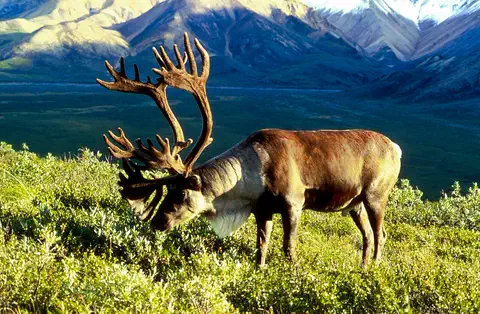
Reindeer
Reindeer, called caribou in North America, are deer of the Arctic tundra and northern forests. They are the only deer in which females grow antlers too. Some herds walk thousands of kilometers a year, and people in northern Europe and Asia have herded reindeer for a very long time.
-
 Watch
Animal
Greenland shark
The Greenland shark is a huge, slow-moving shark of the cold North Atlantic and Arctic Ocean. It grows very slowly in the cold, and in 2016 scientists used the lenses of its eyes to estimate that it can live for at least 272 years, longer than any other animal with a backbone that we know of.
-
 Watch
3D
Animal
Common murre
The common murre is a seabird of cold northern oceans that looks a little like a flying penguin. It dives deep to chase fish, nests in huge crowds on cliff ledges, and its chicks flutter down from the cliff to the sea before they can even fly.
-
Watch
3D
Animal
Gray wolf
The gray wolf is the largest member of the dog family and the wild ancestor of pet dogs. Wolves live in family packs that hunt big animals like elk and moose together, and their howls can carry about 10 kilometers. After being wiped out in many places, wolves are coming back in parts of North America and Europe.
Animals that need our help
See all-
 Watch
3D
Animal
Chambered nautilus
The chambered nautilus is a relative of octopuses and squids that lives inside a coiled shell full of sealed rooms. It moves up and down along deep reef slopes by changing how much gas and water are in its shell, and it finds food mostly by smell.
-
 Watch
Animal
Asian black bear
The Asian black bear is a black bear with a cream crescent on its chest, shaped like a new moon. It lives in forests and mountains from Iran and Pakistan across the Himalayas and Southeast Asia to China, Korea, Japan and the Russian Far East. It eats mostly plants, especially fruit and nuts, and in cold places it sleeps through the winter.
-
 Watch
Animal
Black rhinoceros
The black rhinoceros is the smaller of Africa's two rhinos. It has two horns and a pointed, hooked upper lip that it uses to pick leaves and twigs from bushes. It is Critically Endangered, but thanks to rangers and conservationists its numbers have been climbing again.
-
 Watch
Animal
Secretarybird
The secretarybird is a bird of prey that hunts on foot. It strides across the African savanna on the longest legs of any raptor, walking 20 to 30 kilometers a day, and stamps on grasshoppers, mice, lizards and even snakes with lightning-fast kicks.
-
 Watch
Animal
Snowy owl
The snowy owl is a large white owl that nests on the Arctic tundra. Unlike most owls it hunts in daylight, and in the endless light of an Arctic summer it may hunt at any hour. Lemmings are its favorite food.
-
 Watch
3D
Animal
Basking shark
The basking shark is the second-biggest fish in the world, after the whale shark. It swims slowly near the surface with its enormous mouth open, sieving tiny floating animals called zooplankton out of the water. It is gentle and lives mainly in cool seas.
-
 Watch
Animal
Giant clam
The giant clam, Tridacna gigas, is the largest clam alive. Its shell can grow more than a meter long. It sits on sunny coral reefs in the Indian and Pacific Oceans and gets most of its food from tiny algae living in its body. It is Critically Endangered.
-
 Watch
Animal
Giant panda
The giant panda is a black-and-white bear that lives in misty mountain forests in China. About 99 percent of its food is bamboo, and it spends up to 16 hours a day eating. Pandas were once endangered, but protecting their forests has helped them, and they are now listed as Vulnerable.
Animal superpowers
-
 Watch
3D
Animal
Sockeye salmon
The sockeye salmon is a Pacific salmon that usually grows up in a lake, spends a few years in the North Pacific Ocean, and then returns to the place it hatched to lay its eggs. On the way home it turns bright red with a green head.
-
 Watch
Animal
Giant Pacific octopus
The giant Pacific octopus is the largest octopus species in the world, living in cool waters of the North Pacific from Japan to Alaska and California. It hunts crabs and clams at night, changes color and skin texture at will, and can squeeze through a hole only a few centimeters wide.
-
 Watch
Animal
Atlantic salmon
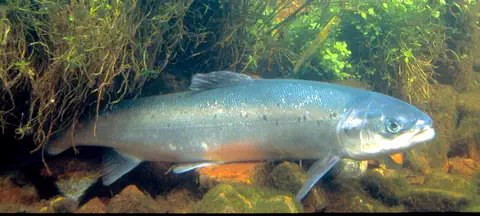
The Atlantic salmon hatches in a river, swims out to the North Atlantic Ocean to feed and grow, then returns to the very river where it was born to lay its eggs. Along the way it changes color and shape several times.
-
 Watch
Animal
Sand cat
The sand cat is a small wild cat of the deserts of North Africa, Arabia and Central Asia. Its sandy coat hides it on the dunes, its big ears hear prey moving under the sand, and thick fur on the soles of its feet protects it from scorching days and freezing nights.
-
 Watch
3D
Animal
Harpy eagle
Harpy eagles are among the largest and most powerful eagles in the world. They live in the lowland rainforests of Central and South America, where they hunt sloths and monkeys in the treetops. Forest loss and shooting have made them rare.
-
 Watch
3D
Animal
Bowhead whale
The bowhead whale is a giant baleen whale that spends its whole life in cold Arctic waters. Its enormous bow-shaped head can push through sea ice, its blubber is thicker than any other whale's, and some bowheads may live for more than 200 years.
-
 Watch
3D
Animal
Short-beaked common dolphin
The short-beaked common dolphin is one of the most numerous dolphins in the world. It lives in warm and cool seas around the globe, travels in groups of hundreds or even thousands, and is famous for leaping and riding the waves in front of boats.
-
 Watch
Animal
Common hippopotamus
The common hippopotamus is one of the biggest animals on land, yet it spends most of the day resting in rivers and lakes to keep cool. At night it walks out to graze, and its special skin makes its own sunscreen.