Life around the world
A day around the world: school, food, homes, games, weather and getting around, in real places.
31 to explore
-
 Watch
Life around the world
A day at McMurdo Station, Antarctica
McMurdo Station, on Ross Island, is the largest research station in Antarctica. In summer up to 1,100 people a week live and work there in about 146 buildings, with dormitories, a cafeteria, a library, labs and two airfields. It supplies science across the continent.
-
 Watch
Life around the world
A day on the London Underground
The London Underground, or the Tube, began in 1863 as the world's first underground railway. In the year 2025/26, people made about 1.2 billion journeys on its 11 lines. Its famous map, first sketched by Harry Beck in 1931, shows how stations connect rather than how far apart they are.
-
 Watch
Life around the world
A market day in Lagos, Nigeria
Lagos is Nigeria's largest city. Trucks bring tomatoes, peppers, onions and grains from farms in the north to big markets such as Mile 12. Traders sell in bulk early in the day, then smaller sellers carry the food across the city. Other markets, like Balogun, are famous for fabric.
-
 Watch
Life around the world
A school day in Helsinki, Finland
In Helsinki, Finland's capital, a lesson usually lasts 45 minutes, and pupils spend recess in the school yard. Every pupil gets a free warm lunch each school day. The 2026-2027 school year began on 12 August, and from 2026 every school is making a plan to help children move more.
-
 Watch
Life around the world
A school day in Nairobi, Kenya
Nairobi is the capital of Kenya. Children start school with two years of pre-primary, learn English and Kiswahili, study subjects such as mathematics and science, and in many public primary schools eat a lunch cooked fresh in the county's central kitchens.
-
 Watch
Life around the world
A school day in Tokyo
In Tokyo, many children walk to their local school in neighborhood groups. Lessons are 45 minutes long in elementary school. At lunchtime, pupils set and clear the table in their classroom, and they share the job of cleaning their school. The school year starts in April.
-
 Watch
Life around the world
Breakfast noodles in Hanoi
Pho is a soup of rice noodles, meat and a fragrant broth, and in Vietnam it is mostly eaten for breakfast. In Hanoi, near where pho is thought to have begun, cooks focus on a clear broth simmered with bones, meat, ginger, shallots and spices, served at street stalls from early morning.
-
 Watch
Life around the world
Cable car commute in La Paz, Bolivia
La Paz sits in a deep canyon, and its neighbor El Alto sits on the high plain above. Since May 2014, cable cars run by the state company Mi Teleférico have carried commuters between them and across the city. By 2025 there were 10 colored lines in La Paz and El Alto, about 33 kilometers long, and in 2024 the company carried 78.7 million passengers on its lines.
-
 Watch
Life around the world
Corn and chocolate in Oaxaca, Mexico
In Oaxaca, in southern Mexico, corn has a very long history: maize cobs from a cave in the Valley of Oaxaca were the oldest known in the Americas when they were dated in 2001. Corn is cooked with lime, ground into masa dough and made into tortillas. Oaxaca also has many cacao drinks, including chocolate whisked until foamy with a wooden molinillo.
-
 Watch
Life around the world
Floating gardens of Xochimilco, Mexico City
Xochimilco, in the south of Mexico City, still has chinampas: long garden islands built up from lake mud, branches and plants, edged with willow trees and surrounded by canals. Farmers have worked them since Aztec times. UNESCO lists Xochimilco as World Heritage, and FAO named the chinampa system an agricultural heritage site in 2017.
-
 Watch
Life around the world
Floating reed islands of the Uros, Lake Titicaca
In Puno Bay, on Lake Titicaca, Uro families live on islands they build from totora, a reed that grows in the lake's shallow water. Blocks of tangled reed roots form the base, layers of cut reeds go on top, and families keep adding fresh reeds. In 2013, Peru declared the Uros' knowledge of totora part of the nation's cultural heritage.
-
 Watch
Life around the world
Fog catchers of the Atacama, Chile
Chile's Atacama Desert is one of the driest places on Earth, yet thick sea fog called camanchaca drifts over its coastal hills. Fog catchers, tall nets of fine mesh, collect the tiny droplets, which drip into gutters and flow downhill to tanks.
-
 Watch
Life around the world
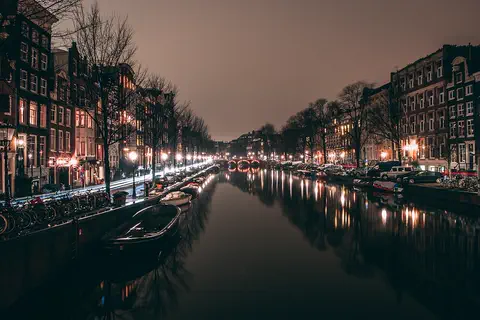
Getting around Amsterdam by bicycle
Amsterdam, the capital of the Netherlands, is flat and crossed by canals. In 2017, about 35 out of every 100 weekday trips made by people who live there were by bicycle, more than by car, bus, tram or metro. The city has added thousands of bike parking places, including a garage under the water by Central Station.
-
 Watch
Life around the world
Life along the Nile in Cairo
Cairo, Egypt's capital, has stood beside the Nile for more than 1,000 years. Around it lies desert, so people live close to the river: from space at night, their lights trace the Nile like a glowing flower. The river waters farms, and a new riverside walkway gives people a place to stroll.
-
 Watch
Life around the world
Living in a ger in Mongolia
A ger is a round, portable home with lattice walls, roof poles and a crown at the top, covered in layers of wool felt and canvas and tied with ropes. Herding families in Mongolia take it down and move it with their animals, and many families also live in gers around the capital, Ulaanbaatar.
-
 Watch
Life around the world
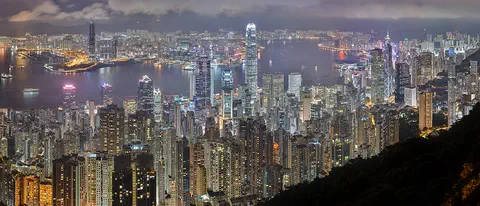
Living in a vertical city: Hong Kong
Hong Kong is hilly, and only about a quarter of its land is built on. Its 7.5 million people live close together, many in apartment buildings. A long chain of outdoor escalators climbs one hillside, ferries cross Victoria Harbour, and trains carry millions of passengers every day.
- Watch Life around the world Living root bridges of Meghalaya In the hills of Meghalaya, in northeast India, Khasi and Jaintia villagers guide the hanging roots of rubber fig trees across streams on bamboo frames. Over many years the roots take hold, thicken and grow together into living bridges that can carry people across rivers swollen by monsoon rain.
- Watch Life around the world Living with snow in Yakutsk Yakutsk, a city of more than 300,000 people beside the Lena River in Siberia, is one of the coldest cities in the world: in January, the average daily high is about -35°C. People dress in layers, many buildings stand on stilts above frozen ground called permafrost, and young children stay home from school on the coldest days.
-
 Watch
Life around the world
Lunch at a Singapore hawker center
A hawker center is a building full of small food stalls, each cooking its own dishes, with shared tables in the middle. Singapore built them to move street cooks indoors, and today they are where people from Chinese, Malay, Indian and other communities eat side by side. UNESCO calls them community dining rooms.
-
 Watch
Life around the world
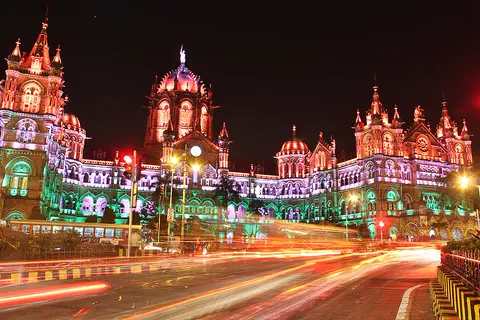
Lunchbox delivery in Mumbai
Every working day, Mumbai's dabbawalas collect home-cooked lunches in metal tiffin boxes, carry them by bicycle, on foot and on the city's local trains, and deliver them to offices by lunchtime. Colored letters, numbers and symbols painted on each box tell them where it goes, and the empty boxes travel home in the afternoon.
-
 Watch
Life around the world
Maple syrup season in Quebec, Canada
Each spring in Quebec, nights below freezing and days above it make sap flow in maple trees. Producers collect the watery, slightly sweet sap and boil it in evaporators until it becomes syrup; early in the season about 20 liters of sap make 1 liter. In 2025, Quebec made 90 percent of Canada's maple syrup.
-
 Watch
Life around the world
Northern lights over Fairbanks, Alaska
Fairbanks, in the middle of Alaska, sits under a ring-shaped zone where the aurora often appears. The University of Alaska Fairbanks says its viewing season runs from about 21 August to 21 April, when nights are dark enough. Around the winter solstice there are fewer than four hours of daylight, and winter cold shapes daily life.
-
Watch
Life around the world
Riding the Shinkansen from Tokyo to Osaka
The Tokaido Shinkansen, Japan's first bullet train line, opened in 1964 between Tokyo and Osaka. Today its trains reach 285 km/h, the fastest take 2 hours 21 minutes from Tokyo to Shin-Osaka, and in fiscal year 2023 the average delay was just 1.6 minutes per train.
-
 Watch
Life around the world
River boats from Manaus, Brazil
Manaus, a city of about 2.3 million people, sits where the dark Rio Negro meets the muddy Solimões. Rivers are the main way to reach most towns in Amazonas state. Big wooden boats called recreios carry passengers and cargo for a day or more, with hooks for hammocks, while fast boats called expressos cut the time.
-
 Watch
Life around the world
School of the Air in Alice Springs, Australia
Alice Springs School of the Air teaches about 100 children who live on cattle stations, in remote communities and in other far-off places across Central Australia. Lessons began over two-way radio in 1951. Today students see their teachers on video over satellite internet.
-
 Watch
Life around the world
Six months of night at the South Pole
At the Amundsen-Scott South Pole Station, the Sun sets once a year, around 20 March, and does not rise again for about six months. Up to 42 people spend the dark, freezing winter there with no flights in or out, sharing chores, meals and science.
- Watch Life around the world Te reo Māori in language nests, New Zealand A kōhanga reo, or "language nest," is an early-childhood center in New Zealand where young children are surrounded by te reo Māori, the Māori language, and Māori customs. Families started the first one in 1982 to help the language grow strong again.
-
 Watch
Life around the world
The 800 languages of Papua New Guinea
Papua New Guinea has more languages than any other country: Ethnologue lists 840 living indigenous languages there in 2026. Most have small communities of speakers. To talk across languages, many people use Tok Pisin, an official language, as well as English and Hiri Motu.
-
 Watch
Life around the world
The polar night in Tromsø, Norway
Tromsø lies far north of the Arctic Circle. From about 26 November to 17 January the sun stays below the horizon all day, a time called mørketid in Norwegian, the dark time. Around midday there are still a few hours of twilight. People wear reflectors on dark roads, and a study found that people farther north in Norway tended to feel more positive about winter.
- Watch Life around the world Underground homes of Coober Pedy, Australia Coober Pedy is an opal-mining town in the desert of South Australia, where summer temperatures can reach 52 °C. Many residents live in dugouts, homes carved into the hillsides, where NASA reports the temperature stays at an almost constant 23 °C. Even some churches and hotels are underground.
-
 Watch
Life around the world
Water buses of Venice, Italy
Venice is spread over 118 small islands in a lagoon in northern Italy. Cars cannot drive into the old city, so people walk over its 400 or so bridges or take a vaporetto, a public water bus. The canals also carry water taxis, gondolas, and boats for fruit, garbage, ambulances and police.