
Life around the world Asia
Lunch at a Singapore hawker center
In Singapore, people eat at hawker centers. Many small food stalls sit under one big roof. Families and friends share tables and try dishes from different stalls.
A hawker center is a building full of small food stalls, each cooking its own dishes, with shared tables in the middle. Singapore built them to move street cooks indoors, and today they are where people from Chinese, Malay, Indian and other communities eat side by side. UNESCO calls them community dining rooms.
Between 1971 and 1986, Singapore moved some 18,000 street hawkers into purpose-built hawker centers. Their stalls serve dishes shaped by the city's Chinese, Malay, Indian and other communities, and in 2020 UNESCO inscribed Singapore's hawker culture on its Representative List of the Intangible Cultural Heritage of Humanity.
Photo: MayZamora., CC BY 3.0, via Wikimedia Commons
Welcome to Singapore
Singapore is a small island country and a city too.
It is close to the equator. At lunchtime, lots of people head to a hawker center to eat.
Singapore is a city-state, a country made of one city, at the southern tip of the Malay Peninsula, just north of the equator. In June 2026 it had about 6.21 million people.
When people in Singapore want an everyday meal, many go to a hawker center. A hawker is a cook who sells food from a small stall. In this topic we visit a hawker center at lunchtime, find out how these places began, and see why their food comes from so many different communities.
Singapore is a city-state at the southern tip of the Malay Peninsula. At end-June 2026 its total population was 6.21 million, of whom 4.23 million were residents; about three in four residents live in public housing flats built by the Housing and Development Board (HDB), according to the Department of Statistics.
Hawker centers are woven into that housing. They were planned so that most HDB residents could walk to one or reach it by a short bus ride, and the National Environment Agency (NEA) now manages 123 markets and hawker centers across the island. This topic follows the National Heritage Board's history of hawker culture, the National Library Board's account of how street hawkers were resettled, UNESCO's 2020 inscription and NEA's current rules.
Many stalls under one roof
A hawker center is like a big open dining room.
Around the edges are lots of tiny kitchens, called stalls. Each stall cooks its own special food. In the middle are tables for everyone to share.
A hawker center brings many food stalls together under one roof. Each stall is run by a hawker, and many hawkers cook just one dish, which they have practiced for years. Diners sit at shared tables, so a family can buy noodles from one stall and rice from another and eat together.
When hawker centers are upgraded, they are kept without air-conditioning, which helps keep costs down, and NEA says they aim to offer affordable food in a clean place. People come for breakfast, lunch and dinner.
NEA describes hawker centers as bringing well-loved local food under one roof, so that people from all walks of life can enjoy affordable food in a clean and hygienic environment. UNESCO notes that people dine and mingle there over breakfast, lunch and dinner, and that many hawkers specialize in a single dish refined over many years.
The design reflects choices about cost. When centers were upgraded under the Hawker Centres Upgrading Programme from 2001, they received new tables, seats, ventilation, toilets and central areas for washing crockery, but were kept without air-conditioning to keep operating costs down and preserve their traditional atmosphere, according to the National Heritage Board. Newer centers, the National Library Board notes, are designed so they can use automated equipment such as centralized dishwashing, automated tray return and food waste digesters.
Food from many communities
People in Singapore come from many backgrounds.
Their families brought favorite recipes from Chinese, Malay and Indian kitchens. Now everyone can try chicken rice, laksa, roti prata and nasi lemak.
In the 1800s, Singapore was a busy port. People came from China, India, Malaysia, Indonesia and elsewhere, bringing the comfort food they grew up with. They cooked it with local ingredients, and over time a Singapore flavor grew.
Today, Singapore's residents are about 73.9 percent Chinese, 13.5 percent Malay, 9.0 percent Indian and 3.6 percent other groups (2026). Hawker favorites such as chicken rice, roti prata, laksa and nasi lemak are enjoyed by people from every community.
The National Heritage Board traces hawker food to 19th-century migrants from China, India, Malaysia, Indonesia and beyond, laborers, merchants, clerks and cooks who adapted their home dishes to local ingredients and techniques. Street hawking needed little capital, so many earned a living that way: Chinese hawkers carried mobile kitchens on bamboo poles, Malay hawkers sold fruit and grilled meat sticks that became known as satay, and Indian hawkers sold sweets, cakes and jellies.
UNESCO's inscription describes hawker centers as markers of Singapore as a multicultural city-state comprising Chinese, Malay, Indian and other cultures, with hawkers drawing on that confluence and adapting dishes to local tastes. The resident population's ethnic composition, 73.9 percent Chinese, 13.5 percent Malay, 9.0 percent Indian and 3.6 percent Others at end-June 2026, has been broadly stable for a decade.
From the street to the hawker center
Long ago, hawkers cooked right on the street.
Many had no easy way to get water. So Singapore built hawker centers with water, power and cleaning. Then the street cooks moved inside.
Before hawker centers, hawkers cooked and sold food on the streets. Without easy access to water or proper places for rubbish, it was hard to keep food clean, and diseases such as cholera and typhoid were a worry.
In 1966, Singapore began licensing hawkers. From 1971, the government built hawker centers with clean water, electricity, gas and daily cleaning, and moved hawkers in. By 1986, about 18,000 street hawkers had moved into more than 110 hawker centers.
After independence, the government licensed hawkers from 1 March 1966 under a new Hawkers' Code, finding about 24,000 street hawkers rather than the 50,000 once estimated, and first moved them from main roads to back lanes and car parks such as Glutton's Square on Orchard Road. The Hawker Centres Development Committee, formed in 1971, built the first centers at Collyer Quay (110 stalls), Boat Quay (80 stalls) and Yung Sheng Road in Jurong, keeping rents low so prices would not rise.
The Ministry of the Environment, formed in 1972, took over the program; by 1975 more than 15,000 hawkers had been rehoused, and 54 centers were built between 1974 and 1979. Proper water, electricity, gas and cleaning, plus regular medical checks for hawkers, helped prevent diseases such as typhoid and cholera. Resettlement was completed in early 1986, when the last group of about 80 street hawkers moved in; there were then about 113 hawker centers.
The community dining room
A hawker center is a place to meet.
Neighbors chat over coffee. Grandparents eat noodles slowly. Parents carry their children's favorite dishes from stall to stall.
UNESCO calls hawker centers "community dining rooms." Office workers grab a quick breakfast, retired people enjoy a slow bowl of noodles, neighbors meet to catch up, and parents collect their children's favorite dishes. People also play chess or listen to street musicians there.
Many hawker families pass their skills down. More than half of today's hawkers are second- or third-generation hawkers, cooking recipes handed down to them. In 2020, UNESCO added Singapore's hawker culture to its list of the world's intangible cultural heritage.
UNESCO's 2020 inscription describes hawker centers as community dining rooms where people from diverse backgrounds gather; activities such as chess-playing, busking and art-jamming also take place. It stresses their role as a social space embracing people from diverse socioeconomic backgrounds, strengthening community interaction.
Transmission is part of the heritage. Some of the oldest hawkers began in the 1960s, and many pass recipes, knowledge and skills to younger family members or apprentices; the National Heritage Board reports that more than half of today's hawkers are second- or third-generation. Community organizations, NGOs and schools support the practice through training programs, events and documentation projects.
Clean tables and new hawkers
When you finish eating, you take your tray back.
Then you clear your rubbish from the table. That keeps the table clean for the next person.
Since 1 June 2021, diners at Singapore's hawker centers have been required to return their dirty trays and crockery and clear their litter after eating, so the next person finds a clean table. From September 2021, people who ignored reminders could be warned or fined.
Singapore is also helping new hawkers start out. A training program begun in 2020 teaches cooking and running a stall, and a 2022 scheme helps retiring hawkers pass their recipes and stalls to newcomers.
In May 2021, NEA announced that diners must clear dirty trays, crockery and litter at hawker centers from 1 June 2021, citing COVID-19 hygiene and a cleaning workforce made up largely of seniors. Before a Clean Tables Campaign launched that February, the average tray and crockery return rate was only 33 percent, rising to 35 percent. After a three-month advisory period, enforcement began on 1 September 2021: first-time offenders who ignore officers' advice get a written warning, and repeat offenders may face fines.
To keep the trade alive, NEA introduced an Incubation Stall Programme in 2018, offering pre-fitted stalls at lower rent; the Hawkers' Development Programme, launched in 2020, combines training, apprenticeship and mentorship; and the Hawkers Succession Scheme (2022) helps retiring hawkers without family successors pass on skills, recipes and stalls. In 2019 the government announced 13 new hawker centers to be built by 2027.
Amazing facts
-
Long ago, a big street meal cost just a few cents.
In Singapore's early street-hawker days, three cents could buy a meal of three or four dishes.
The National Heritage Board notes that in the early street-hawking era, three cents could buy a meal of three to four dishes, served at a moment's notice.
-
One hawker center was built like a garden.
Newton Hawker Centre, built in 1971, was designed as "hawker stalls in a garden setting," with trees for shade.
Newton Hawker Centre (1971) was planned as "hawker stalls in a garden setting," with shade trees, hedges and shrubs beside a car park and public toilet.
-
Many hawkers cook their grandparents' recipes.
More than half of Singapore's hawkers today are second- or third-generation hawkers.
More than half of today's hawkers are second- and third-generation, most specializing in one dish and refining recipes passed down to them (National Heritage Board).
-
There are more than one hundred hawker centers in Singapore.
Singapore's National Environment Agency manages 123 markets and hawker centers.
NEA manages 123 markets and hawker centers and regulates their tenancies and public health.
Words to know
- hawker
- a person who cooks and sells food from a small stall
- stall
- a small shop or counter where one seller works
- city-state
- a country that is made up of one city and the land around it
- multicultural
- made up of people from many different cultures and backgrounds
- license
- official permission to do something, such as run a food stall
- apprentice
- a person who learns a skill by working with an expert
Discovery challenge
-
What does UNESCO call hawker centers?
UNESCO describes Singapore's hawker centers as what kind of place?
What phrase does UNESCO's 2020 inscription use for the social role of hawker centers?
- Community dining rooms
- Quiet libraries
- Sports stadiums
Show the answer
Community dining rooms
They are like big dining rooms where everyone eats together.
UNESCO calls them community dining rooms, where people from different backgrounds eat together.
The inscription describes them as "community dining rooms" where people from diverse backgrounds gather over breakfast, lunch and dinner.
-
Which of these is a famous Singapore hawker dish?
Which of these does the National Heritage Board call a world-famous Singapore hawker dish?
Which dish does the National Heritage Board's history of hawker culture describe as world-famous?
- Chicken rice
- Tacos
- Bagels
Show the answer
Chicken rice
Chicken rice is a hawker favorite.
The National Heritage Board calls chicken rice world-famous. Roti prata, laksa and nasi lemak are favorites too.
The National Heritage Board writes of "world-famous" chicken rice, alongside roti prata, laksa and nasi lemak.
-
By 1986, about how many street hawkers had moved into hawker centers?
By 1986, about how many street hawkers had moved into hawker centers?
Roughly how many street hawkers had been resettled into hawker centers when the program finished in 1986?
- About 18,000
- About 180
- About 18 million
Show the answer
About 18,000
About 18,000 hawkers moved inside. That is a lot of cooks!
About 18,000 street hawkers moved into more than 110 hawker centers.
The National Library Board reports some 18,000 hawkers moved to more than 110 centers by 1986, about 113 in all.
-
What should you do when you finish eating at a hawker center?
Since 2021, what must diners do after eating at a Singapore hawker center?
What did NEA make mandatory for diners at hawker centers from 1 June 2021?
- Return their tray and clear their litter
- Wash the dishes for the stall
- Pay a table-cleaning fee
Show the answer
Return their tray and clear their litter
Take your tray back and clear your rubbish.
Diners must return trays and crockery and clear their litter, so the next person gets a clean table.
From 1 June 2021, diners must clear dirty trays, crockery and litter; enforcement began on 1 September 2021.
Explore next
-
Watch
 Country
Singapore
Singapore is a city-state, a country that is also one city, on an island at the southern tip of the Malay Peninsula in Southeast Asia. It is small but crowded: about 6.21 million people lived there in 2026, and its port is one of the busiest in the world.
-
 Watch
Life around the world
Breakfast noodles in Hanoi
Pho is a soup of rice noodles, meat and a fragrant broth, and in Vietnam it is mostly eaten for breakfast. In Hanoi, near where pho is thought to have begun, cooks focus on a clear broth simmered with bones, meat, ginger, shallots and spices, served at street stalls from early morning.
-
 Watch
Life around the world
A market day in Lagos, Nigeria
Lagos is Nigeria's largest city. Trucks bring tomatoes, peppers, onions and grains from farms in the north to big markets such as Mile 12. Traders sell in bulk early in the day, then smaller sellers carry the food across the city. Other markets, like Balogun, are famous for fabric.
-
 Watch
Life around the world
A school day in Tokyo
In Tokyo, many children walk to their local school in neighborhood groups. Lessons are 45 minutes long in elementary school. At lunchtime, pupils set and clear the table in their classroom, and they share the job of cleaning their school. The school year starts in April.
-
Watch
Life around the world
Riding the Shinkansen from Tokyo to Osaka
The Tokaido Shinkansen, Japan's first bullet train line, opened in 1964 between Tokyo and Osaka. Today its trains reach 285 km/h, the fastest take 2 hours 21 minutes from Tokyo to Shin-Osaka, and in fiscal year 2023 the average delay was just 1.6 minutes per train.
-
 Watch
Life around the world
Lunchbox delivery in Mumbai
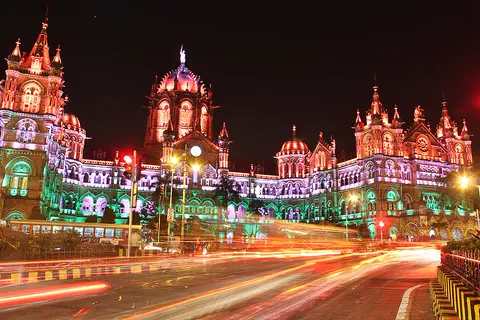
Every working day, Mumbai's dabbawalas collect home-cooked lunches in metal tiffin boxes, carry them by bicycle, on foot and on the city's local trains, and deliver them to offices by lunchtime. Colored letters, numbers and symbols painted on each box tell them where it goes, and the empty boxes travel home in the afternoon.
- Watch Life around the world Living root bridges of Meghalaya In the hills of Meghalaya, in northeast India, Khasi and Jaintia villagers guide the hanging roots of rubber fig trees across streams on bamboo frames. Over many years the roots take hold, thicken and grow together into living bridges that can carry people across rivers swollen by monsoon rain.
-
 Watch
Life around the world
Living in a vertical city: Hong Kong
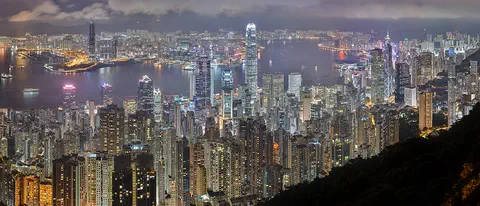
Hong Kong is hilly, and only about a quarter of its land is built on. Its 7.5 million people live close together, many in apartment buildings. A long chain of outdoor escalators climbs one hillside, ferries cross Victoria Harbour, and trains carry millions of passengers every day.
For parents & teachers
What children will learn
- Describe what a hawker center is and how it works.
- Explain how Singapore moved street hawkers into hawker centers, and why.
- Connect a city's food to the communities who live there.
- Understand that food traditions can be recognized as intangible cultural heritage.
Recommended ages: 4 to 12 · About 12 minutes
Talk about it
- Where do people in your town eat together? Who do you see there?
- Why do you think Singapore asks everyone to return their trays?
- Which dish from your family would you sell if you ran a hawker stall?
Try at home or in class
- Set up a pretend hawker center at home: each person runs a stall with one simple snack, and everyone shares one big table.
- Make a map of a hawker center with stalls around the edge and tables in the middle, and label where trays are returned.
Key vocabulary: hawker, stall, city-state, multicultural, license, apprentice
Where these facts come from
- Hawker culture in Singapore, community dining and culinary practices in a multicultural urban context (inscribed 2020, 15.COM) , UNESCO Intangible Cultural Heritage
- The History and Evolution of Singapore's Hawker Culture , National Heritage Board (Roots.gov.sg)
- Hawkers and Hawker Centres After Independence , National Library Board, Singapore (Curiocity)
- Hawker Management: Overview , National Environment Agency, Singapore
- Mandatory for diners to return dirty trays, crockery and clean table litter at hawker centres, coffeeshops and food courts (14 May 2021) , National Environment Agency, Singapore
- Population Trends 2026 , Department of Statistics Singapore
Checked, not yet human-reviewed. Last updated October 27, 2026. Spotted a mistake? Tell us.