How does an air conditioner cool a room?
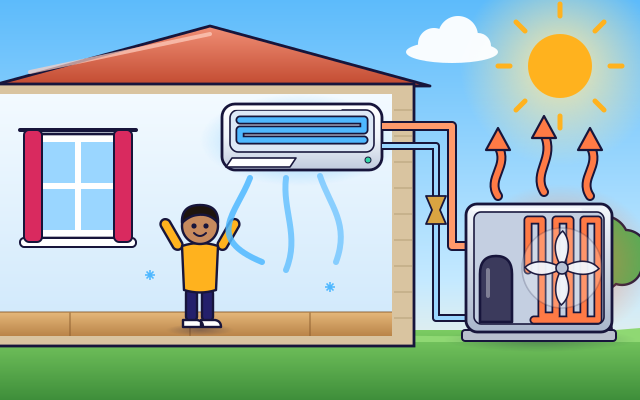
An air conditioner does not make cold. It soaks up heat indoors with a cold coil and dumps it outdoors with a hot one.
The big idea: A cold coil inside takes heat out of the room's air. A special liquid in pipes carries that heat through the wall, and a hot coil outside gives it to the outdoor air.
It's like a sponge mopping up a spill: soak it up here, carry it over there, squeeze it out, come back for more. An air conditioner does that with heat.
The interactive parts didn't load. The explanations below still work; try reloading the page.
Moving heat from indoors to outdoors
- On a hot day, heat creeps in through the walls and the window, and the room warms up. The orange dots show the heat in the air. To cool the room, that heat has to go somewhere.
- The unit on the wall has a coil of pipe with very cold liquid inside. A fan pulls warm room air over the coil. The coil soaks up the air's heat, and cool air blows back out.
- Now the stuff in the pipe is carrying the room's heat. It flows through a hole in the wall to the big box outside.
- A pump called the compressor squeezes the gas. Squeezing makes it hotter than the outdoor air, so the heat flows out of the hot coil, and a big fan blows it away.
- The liquid squeezes through a tiny hole and suddenly has room to spread out. That makes it very cold again, ready to go back inside and soak up more heat.
- Round and round the loop goes, carrying heat out a little at a time. The room cools down, and all its heat ends up outdoors. Nothing was made cold: the heat was moved.
Look inside an air conditioner
This kind has two boxes joined by pipes: one in the room and one in the yard. Tap each part.
- Air filter. Room air passes through a fine mesh first. It catches dust and fluff, so the coil stays clean.
- Cold coil (evaporator). This zigzag pipe is very cold. When warm room air touches it, the heat moves from the air into the pipe.
- Indoor fan. A long roller-shaped fan pulls room air in over the cold coil and blows it back out, cooler.
- Drain hose. Damp air leaves drops of water on the cold coil, just like on a cold glass. A hose carries the water outside.
- Expansion valve. The liquid is pushed through a very narrow opening. On the other side it spreads out and turns very cold.
- Compressor. The compressor is the pump that pushes the refrigerant around the loop. It squeezes the gas hard, which makes it very hot.
- Hot coil (condenser). The outdoor coil is hotter than the air around it, so the heat from your room flows out of it into the yard.
- Outdoor fan. A big fan pushes outdoor air through the hot coil to carry the heat away. Stand near it and you feel warm air.
Follow the heat outdoors
Switch the air conditioner on and set the thermostat. Follow the heat through the pipes. Then tap the window to open it and see what changes.
Experiment: When the air conditioner cools the room, where does the room's heat go?
- Switch the air conditioner on and watch the orange heat dots.
- Follow the pipes through the wall. What is the outdoor unit blowing out?
- Tap the window to open it. What happens to the room now?
What we found: The heat is not destroyed. The cold coil takes it out of the room air, the refrigerant carries it through the wall, and the outdoor unit blows it into the yard. With the window open, hot air comes in as fast as the heat goes out, so the room never gets cool.
Turn on JavaScript to try it yourself.
Comfy for less
Keep the room in the green comfy band for at least 15 of the 30 minutes. Shut the window, set the thermostat and press Start the test. Use as little electricity as you can.
Soak up heat here, dump it there
Cold is not a thing you can make. Cold just means there is less heat. So to cool a room, an air conditioner has to take heat out of it and put that heat somewhere else. It moves the heat outdoors.
The trick is a special liquid called a refrigerant, sealed inside a loop of pipe. In the unit on your wall, the refrigerant is very cold. A fan blows room air over its coil, and heat moves from the warm air into the cold pipe, because heat always flows from warmer things to cooler things. The air comes out cooler. The refrigerant, now carrying the heat, flows through the wall.
Outside, a pump called the compressor squeezes the refrigerant. Squeezing a gas heats it up, and it becomes hotter than the outdoor air, even on a hot day. Now the heat flows out of the hot coil into the air, helped by a big fan. Then the refrigerant squirts through a tiny hole, spreads out and turns cold again, ready for another trip.
Because it only moves heat, an air conditioner works best when you help it. Shut windows and doors, close the curtains on the sunny side, and do not set the thermostat lower than you need. It is a bit like mopping up a spill with a sponge, but heat is not a liquid: you cannot see it, and it leaks back in through every wall.
Key words
- Refrigerant
- The special liquid sealed in the pipes. It soaks up heat when it boils and gives it out when it turns back into liquid.
- Evaporator
- The cold coil indoors, where the refrigerant takes in heat.
- Compressor
- The pump that squeezes the refrigerant gas, making it hot, and pushes it around the loop.
- Condenser
- The hot coil outdoors, where the heat is let out.
- Thermostat
- A switch that senses the room temperature and turns the cooling on and off to hold the temperature you chose.
- Coefficient of performance (COP)
- Heat moved divided by electrical energy used. A COP of 3 means 3 units of heat moved for each unit of electricity.
Check your thinking
-
What does an air conditioner do with the heat in a room?
Show the answer
It carries the heat outdoors. Heat cannot be destroyed, only moved. The refrigerant carries it to the outdoor unit.
-
Why should windows be shut while the air conditioner is running?
Show the answer
Hot outdoor air comes in and brings back the heat that was just moved out. Every bit of heat that leaks in has to be pumped out again, which wastes electricity.
-
Why does the compressor squeeze the refrigerant before it reaches the outdoor coil?
Show the answer
Squeezing makes it hotter than the outdoor air, so its heat can flow out. Heat flows from hot to cold. The refrigerant must be hotter than the yard to give its heat away.
-
Why does water drip from an air conditioner's hose?
Show the answer
Damp air leaves water on the cold coil, like drops on a cold glass. Cold air cannot hold as much water vapor, so the water turns to drops on the coil and drains away.
-
You set the thermostat to 18 degrees on a hot day instead of 24. What happens?
Show the answer
The unit runs much longer and uses more electricity. A lower setting does not cool the room any faster. It only makes the unit keep going until the room is colder than you need.
You're a Everyday machines expert!
You watched, looked inside, tried it, solved the challenge and went deeper. Pick another question below, or switch the age at the top to see this topic another way.
More about everyday machines
 #144
Everyday machines
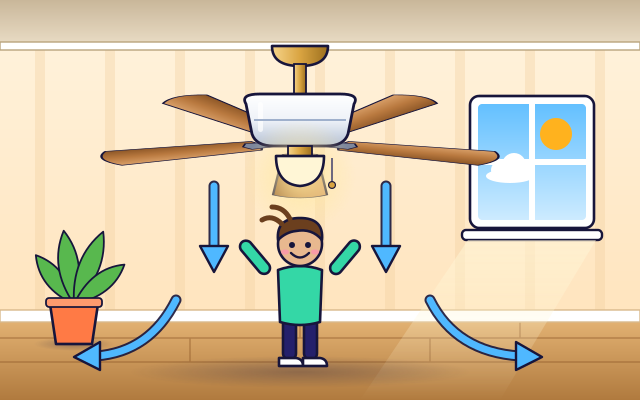
How do ceiling fans help us feel cooler?
Change blade speed and follow airflow around a person in a room.
#144
Everyday machines
How do ceiling fans help us feel cooler?
Change blade speed and follow airflow around a person in a room.
 #145
Everyday machines
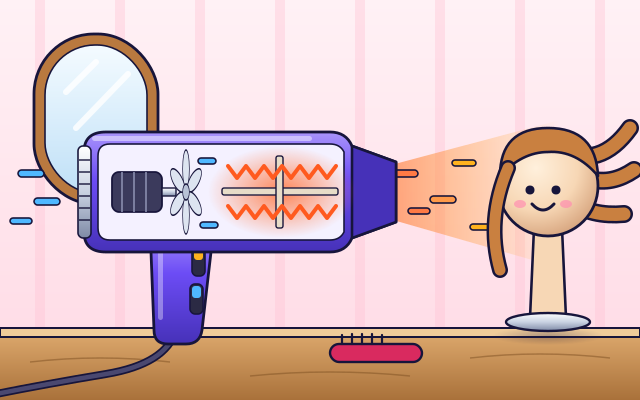
How does a hair dryer work?
Trace air past a heating element and compare airflow, temperature, and drying.
#145
Everyday machines
How does a hair dryer work?
Trace air past a heating element and compare airflow, temperature, and drying.
 #146
Everyday machines
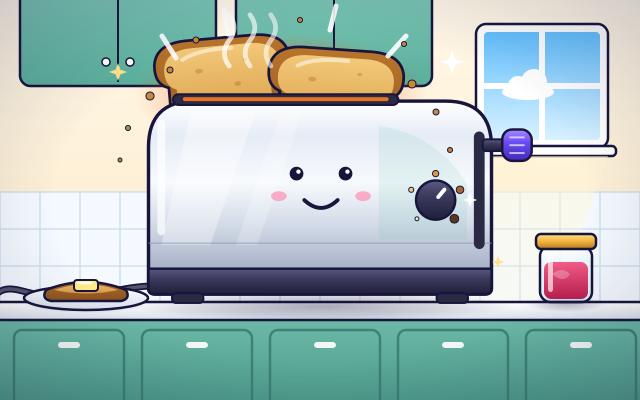
How does a toaster brown bread?
Watch heating elements warm bread and control browning with a virtual timer.
#146
Everyday machines
How does a toaster brown bread?
Watch heating elements warm bread and control browning with a virtual timer.
 #147
Everyday machines
How does an iron remove wrinkles?
Explore how heat, moisture, and pressure change the arrangement of fabric fibers.
#147
Everyday machines
How does an iron remove wrinkles?
Explore how heat, moisture, and pressure change the arrangement of fabric fibers.
Keep exploring
Games to play next
- Machine RepairFix levers, pulleys, gears and ramps so every contraption works.
- Circuit Workshop 3DWire up batteries, bulbs and switches on a 3D workbench.
- Clock TowerKeep the town on time: set the tower clock's hands just right.
Guide for grown-ups
- How to start homeschooling: a step-by-step guide for familiesA guide for parents · 7 min read
Science games by grade
Science worksheets by grade
- Preschool Science Worksheets
- Pre-K Science Worksheets
- Kindergarten Science Worksheets
- 1st Grade Science Worksheets
- 2nd Grade Science Worksheets
- 3rd Grade Science Worksheets
- 4th Grade Science Worksheets
- 5th Grade Science Worksheets
- 6th Grade Science Worksheets
- 7th Grade Science Worksheets
- 8th Grade Science Worksheets