How do ceiling fans help us feel cooler?
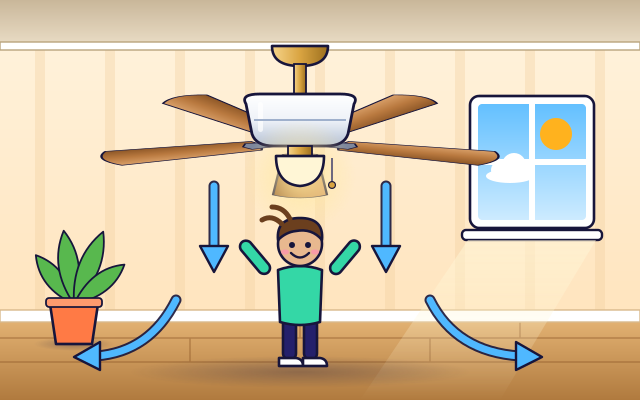
Tilted blades push air down and around the room. The moving air carries heat away from your skin, so you feel cooler even though the room is just as warm.
The big idea: Your body warms a thin layer of air right next to your skin. A fan's breeze sweeps that warm, damp layer away, so your sweat dries faster and more heat can leave you.
It's like blowing on hot soup. Your breath is not cold. It pushes the warm, steamy air off the soup so fresh air can take away more heat.
The interactive parts didn't load. The explanations below still work; try reloading the page.
Why a breeze feels cool
- It is warm, and the air is still. Your body makes heat all the time, and it warms a thin layer of air that clings to your skin like an invisible blanket.
- Switch on the fan. Each blade is tilted, like a ramp. As it sweeps round, it pushes the air in front of it downward, toward the floor.
- The air rushes down under the fan, spreads out across the floor, climbs the walls and flows back along the ceiling. The fan stirs the whole room in two big loops.
- The moving air sweeps away that warm, damp blanket. Fresh air takes its place, your sweat dries faster, and more heat leaves your body. You feel cooler.
- Now look at the thermometer on the wall. It has not changed at all. The fan cools people, not air. So when everyone leaves the room, switch it off.
- Warm air rises and gathers under the ceiling. In winter, many fans can turn backwards, slowly. They pull air up and nudge that warm air down the walls, with no chilly breeze.
Look inside a ceiling fan
Tap each part of the fan to see what it does.
- Blades. The long blades do the work. Each one is tilted, so as it sweeps round it scoops air and pushes it down.
- Blade arms. Metal arms join each blade to the motor. They hold every blade at the same tilt, so the fan spins smoothly.
- Electric motor. Inside the round case is an electric motor. Coils of copper wire become magnets when electricity flows, and they pull the spinning part round and round.
- Downrod and mount. A metal rod hangs the fan from a strong bracket that is screwed into a ceiling beam. It keeps the blades a safe distance below the ceiling.
- Direction switch. A small switch on the motor case makes the fan turn the other way. One way pushes air down for summer. The other pulls air up for winter.
- Speed control. A knob on the wall, a pull chain or a remote sets the speed. A faster fan makes a stronger breeze.
Room air and feels-like
Change the fan speed and drag the child around the room. Compare the thermometer on the wall with how the child feels.
Experiment: Does a ceiling fan make the air in the room colder?
- With the fan off, read the wall thermometer and the child's label.
- Turn the fan up with the child under it. Read both again.
- Drag the child to the far side of the room. What changes?
What we found: The thermometer on the wall never changes: the fan does not cool the air. But the breeze sweeps away the warm, damp air next to the child's skin, so the child feels several degrees cooler. Far from the fan the breeze is weak and the cooling almost disappears.
Turn on JavaScript to try it yourself.
Comfy for everyone
Three people share one fan. Make everyone feel comfy, then press the button to check. Use as little electricity as you can.
Fans cool people, not rooms
Your body is like a little heater. It makes heat all day long, and it has to get rid of that heat to stay comfortable. Some of the heat warms the air touching your skin. Some leaves when sweat dries, because drying takes heat away with it.
When the air is still, the air next to your skin gets warm and damp and just stays there. It works like a thin blanket, so heat leaves you slowly and you feel hot. A breeze blows that blanket away and brings fresh air that can take more heat and more dampness. That is why moving air feels cool.
A ceiling fan makes the breeze with tilted blades. Each blade is set at an angle, so as it sweeps round it pushes air down. The air spreads across the floor, rises up the walls and flows back along the ceiling to the fan. Faster blades or more tilt move more air.
The fan does not make the air any colder. A thermometer in the room reads the same with the fan on or off. So a fan only helps while you are in its breeze, and it is a waste to leave it running in an empty room. It is like blowing on hot soup, with one difference: the soup just cools down, but your body keeps making new heat, so you need the breeze to keep going.
Key words
- Evaporation
- A liquid turning into a gas. When sweat evaporates, it takes heat away from your skin.
- Convection
- Heat being carried away by moving air or water.
- Pitch
- The angle at which a fan blade is tilted. A flat blade moves no air.
- Boundary layer
- The thin layer of air right next to your skin.
- Humidity
- How much water vapor is in the air. In humid air, sweat dries slowly.
Check your thinking
-
What does a ceiling fan do to the temperature of the air in a room?
Show the answer
Nothing: the air stays the same temperature. A fan only moves air. A thermometer reads the same with the fan on or off.
-
Why does a breeze make you feel cooler?
Show the answer
It sweeps away the warm, damp air next to your skin. Fresh air takes more heat from your skin and lets your sweat dry faster.
-
What would happen if a fan's blades were perfectly flat, with no tilt?
Show the answer
They would slice through the air without pushing it down. It is the tilt that lets each blade push air downward as it sweeps round.
-
Why should you switch a fan off when you leave the room?
Show the answer
It cools people, not air, so in an empty room it cools nothing. With nobody in the breeze the fan just uses electricity.
-
In winter, why might a fan be run slowly backwards?
Show the answer
To bring the warm air under the ceiling back down into the room. Warm air rises. Pulling air up in the middle sends the warm air down the walls.
You're a Everyday machines expert!
You watched, looked inside, tried it, solved the challenge and went deeper. Pick another question below, or switch the age at the top to see this topic another way.
More about everyday machines
 #145
Everyday machines
How does a hair dryer work?
Trace air past a heating element and compare airflow, temperature, and drying.
#145
Everyday machines
How does a hair dryer work?
Trace air past a heating element and compare airflow, temperature, and drying.
 #146
Everyday machines
How does a toaster brown bread?
Watch heating elements warm bread and control browning with a virtual timer.
#146
Everyday machines
How does a toaster brown bread?
Watch heating elements warm bread and control browning with a virtual timer.
 #147
Everyday machines
How does an iron remove wrinkles?
Explore how heat, moisture, and pressure change the arrangement of fabric fibers.
#147
Everyday machines
How does an iron remove wrinkles?
Explore how heat, moisture, and pressure change the arrangement of fabric fibers.
 #148
Everyday machines
How does a pressure cooker cook food?
Watch pressure, temperature, and the valve in a simplified sealed-pot simulation.
#148
Everyday machines
How does a pressure cooker cook food?
Watch pressure, temperature, and the valve in a simplified sealed-pot simulation.
Keep exploring
Games to play next
- Machine RepairFix levers, pulleys, gears and ramps so every contraption works.
- Circuit Workshop 3DWire up batteries, bulbs and switches on a 3D workbench.
- Clock TowerKeep the town on time: set the tower clock's hands just right.
Guide for grown-ups
- How to start homeschooling: a step-by-step guide for familiesA guide for parents · 7 min read
Science games by grade
Science worksheets by grade
- Preschool Science Worksheets
- Pre-K Science Worksheets
- Kindergarten Science Worksheets
- 1st Grade Science Worksheets
- 2nd Grade Science Worksheets
- 3rd Grade Science Worksheets
- 4th Grade Science Worksheets
- 5th Grade Science Worksheets
- 6th Grade Science Worksheets
- 7th Grade Science Worksheets
- 8th Grade Science Worksheets