How does an iron remove wrinkles?
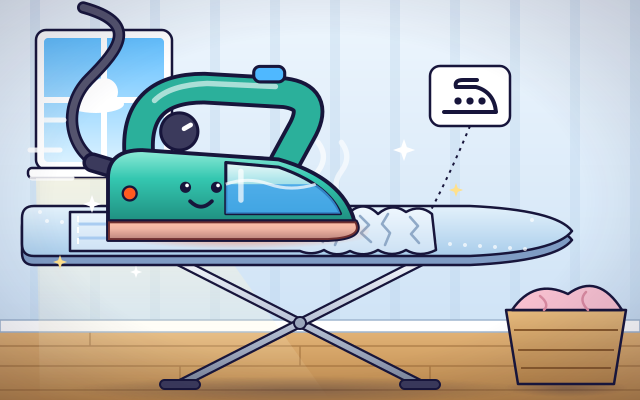
Zoom into a wrinkled cloth and see how heat, steam and a firm press let its tiny fibers lie flat again.
The big idea: Cloth fibers are held in place by tiny links. Heat and steam loosen the links, the iron's weight presses the fibers straight, and the links lock again as the cloth cools.
It's like combing damp hair with a warm hair dryer: heat and water let the hairs move, and they keep their new shape when they cool and dry.
The interactive parts didn't load. The explanations below still work; try reloading the page.
How an iron smooths cloth
- Fresh from the laundry basket, this cotton cloth is full of wrinkles. Pulling it flat with your hands does not work. Why do the wrinkles stay?
- Zoom in a very long way. Cotton is made of long, thin fibers lying side by side. Tiny links join each fiber to its neighbors and hold the bends in place.
- Electricity heats the iron's metal plate. When the hot plate touches the cloth, the fibers shake faster and many of the links between them let go.
- Water from the tank drips onto the hot plate and turns to steam. The steam pushes into the cloth, and its water slips between the fibers and loosens even more links.
- The iron is heavy, and you push down on it too. That pressure squeezes the loosened fibers flat and straight as the iron glides over them.
- When the iron moves on, the cloth cools and dries in seconds. The links form again, but now they hold the fibers in their new, flat shape. Smooth!
Look inside a steam iron
Tap each part of the iron and watch what it does.
- Soleplate. The soleplate is the smooth, flat metal bottom. It gets hot, spreads the heat evenly and glides over the cloth without snagging.
- Heating element. A heating wire is buried inside the soleplate. Electricity makes the wire very hot, and the wire heats the whole plate.
- Thermostat and dial. The dial sets how hot the iron gets. A bendy metal strip acts as the switch: when the plate is hot enough the strip bends and turns the heat off, and when it cools the strip straightens and turns it on again.
- Water tank. The tank holds water for making steam. You can see the water level through its clear side.
- Steam vents. Water drips from the tank onto the hot plate and boils at once. The steam shoots out through small holes in the soleplate, straight into the cloth.
- Handle. The handle is made of plastic, which lets very little heat through, so it stays cool enough to hold while the plate is hot.
- Power cord. The cord brings electricity from the wall to the heating wire. A bendy sleeve where it joins the iron stops it from wearing out as the iron moves.
Cold iron or hot iron?
Drag the iron across the cloth, or tap it to glide. Change the heat and the steam, and watch the links between the fibers in the magnifier.
Experiment: Which will smooth a cotton cloth better: a cold iron or a hot iron?
- Leave the heat dial at Off and tap the iron to glide it across.
- Look at the cloth and at the links in the magnifier.
- Turn the dial to High and glide again. What changed?
What we found: A cold iron only squashes the cloth for a moment, because the links between the fibers stay locked. A hot iron loosens the links, so its weight can press the fibers straight, and they stay straight when they cool. Steam loosens even more links, so a medium heat with steam works well too.
Turn on JavaScript to try it yourself.
Iron the laundry
Iron two things: a cotton cloth and a polyester shirt. Read the dots on each care label, pick the right heat and make both smooth without damage.
Fibers, links and heat
A cotton shirt is woven from threads, and each thread is twisted from thousands of tiny fibers. Each fiber is made of long, thin chains lying side by side. Tiny links hold neighboring chains together, a bit like rungs joining the two sides of a ladder.
When clothes are washed, water gets between the chains and the links let go. If the wet cloth is then left in a crumpled heap, the links form again as it dries, but in bent positions. That is a wrinkle: fibers locked into a fold.
An iron undoes this with three helpers. Heat makes the chains shake so hard that many links break. Steam adds water, which slips between the chains and loosens even more. Then pressure, from the heavy iron and your push, squeezes the loose fibers flat.
The last step happens by itself. When the iron moves on, the cloth cools and dries in a few seconds, and the links form again, this time holding the fibers flat. Different fabrics need different heat. Cotton likes it hot, but polyester is a kind of plastic and too much heat harms it, so always follow the dots on the care label. It works like styling damp hair, although hair and cotton are made of different stuff.
Key words
- Fiber
- One of the very thin strands that threads and cloth are made of.
- Hydrogen bond
- A tiny, weak link that helps hold fibers in their shape.
- Soleplate
- The flat, heated metal bottom of an iron.
- Thermostat
- A switch that turns the heat on and off to keep a steady temperature.
- Polymer
- A very long molecule made of many small pieces joined in a chain.
Check your thinking
-
Why does a cold iron not remove wrinkles?
Show the answer
The links between the fibers stay locked. Without heat or water the links hold the fibers in their bent shapes, so they spring back.
-
How does steam help an iron?
Show the answer
Its water slips between the fibers and loosens more links. Water gets between the fibers and helps the links let go, so wrinkles come out at a lower heat.
-
Why does the cloth stay smooth after the iron has moved on?
Show the answer
As it cools and dries, the links form again in the flat shape. The links come back when the cloth cools and dries, and now they hold the fibers flat.
-
A shirt's care label shows an iron with one dot. What should you do?
Show the answer
Use low heat. One dot means low heat, about 110 degrees. Fabrics such as polyester are harmed by more.
-
How does an iron's thermostat keep the soleplate near the chosen temperature?
Show the answer
A bimetallic strip bends when hot and opens the heating circuit, then closes it again as it cools. The two metals of the strip expand by different amounts, so it curls with temperature and works as a heat-operated switch.
You're a Everyday machines expert!
You watched, looked inside, tried it, solved the challenge and went deeper. Pick another question below, or switch the age at the top to see this topic another way.
More about everyday machines
 #148
Everyday machines
How does a pressure cooker cook food?
Watch pressure, temperature, and the valve in a simplified sealed-pot simulation.
#148
Everyday machines
How does a pressure cooker cook food?
Watch pressure, temperature, and the valve in a simplified sealed-pot simulation.
 #149
Everyday machines
How does an electric kettle switch itself off?
Follow steam to a switching mechanism and watch the heating circuit disconnect.
#149
Everyday machines
How does an electric kettle switch itself off?
Follow steam to a switching mechanism and watch the heating circuit disconnect.
 #162
Everyday machines
How does an electric toothbrush move its head?
Follow motor movement into rotating or vibrating brush mechanisms.
#162
Everyday machines
How does an electric toothbrush move its head?
Follow motor movement into rotating or vibrating brush mechanisms.
 #200
Everyday machines
How does a steam cleaner work?
Follow water through heating and delivery, then watch steam loosen simulated dirt.
#200
Everyday machines
How does a steam cleaner work?
Follow water through heating and delivery, then watch steam loosen simulated dirt.
Keep exploring
Games to play next
- Circuit Workshop 3DWire up batteries, bulbs and switches on a 3D workbench.
- Machine RepairFix levers, pulleys, gears and ramps so every contraption works.
- Clock TowerKeep the town on time: set the tower clock's hands just right.
Guide for grown-ups
- How to start homeschooling: a step-by-step guide for familiesA guide for parents · 7 min read
Science games by grade
Science worksheets by grade
- Preschool Science Worksheets
- Pre-K Science Worksheets
- Kindergarten Science Worksheets
- 1st Grade Science Worksheets
- 2nd Grade Science Worksheets
- 3rd Grade Science Worksheets
- 4th Grade Science Worksheets
- 5th Grade Science Worksheets
- 6th Grade Science Worksheets
- 7th Grade Science Worksheets
- 8th Grade Science Worksheets