How does a toaster brown bread?
Push the lever, watch thin wires glow red-hot, and find out how a timer decides between pale, golden and burnt.
The big idea: Electricity makes thin wires glow red-hot. Their heat dries the bread's surface and then browns it. A timer switches the heat off and a spring pops the toast up.
It's like the Sun warming your face: glowing wires send out heat rays that cross the gap and warm the bread without ever touching it.
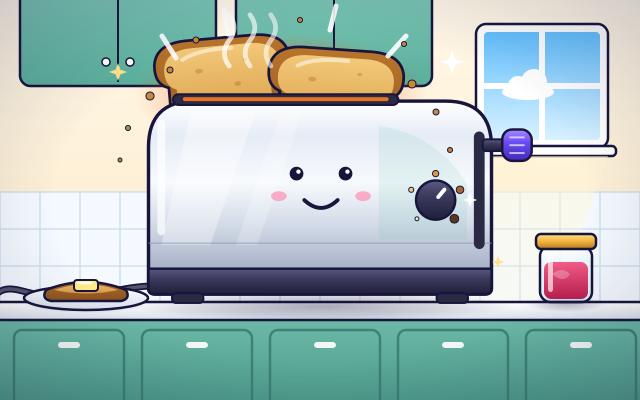
The interactive parts didn't load. The explanations below still work; try reloading the page.
What happens inside a toaster
- A slice of soft, pale bread goes into the slot. A few minutes later it comes out crisp and golden. What happens in between?
- Pushing the lever lowers the bread on a metal carriage and squashes a spring. At the bottom, a magnet grabs the carriage and holds it down, and the power switches on.
- Electricity flows into long, thin wires on both sides of the bread. The wires are hard for electricity to push through, so they get very hot and glow.
- The wires never touch the bread. Their heat travels across the gap as invisible rays. First the rays dry the surface, so steam comes out. Then the dry surface gets hot enough to turn brown.
- The dial sets a timer. The longer it runs, the browner the toast. When the time is up, the timer cuts the power, the wires cool and the magnet lets go.
- With nothing holding it down, the squashed spring pushes the carriage up. Pop! Hot wires, heat rays and a timer turned bread into toast.
Look inside a toaster
Tap each part of the toaster. Watch what it does when you find it.
- Lever. The lever is the handle you push. It is joined to the carriage inside, so pushing it lowers the bread and switches the toaster on.
- Bread carriage. The bread stands on a metal shelf called the carriage. It slides down to hold the bread between the hot wires, and back up when the toast is ready.
- Heating wires. Thin wires zigzag across a heatproof sheet on each side of the bread. Electricity makes them glow red-hot, and their heat rays toast the bread.
- Spring. Pushing the lever squashes this spring. The squashed spring is always trying to push back up, and when it is let go, it pops the toast out.
- Magnet latch. This is an electromagnet: a magnet that only works while electricity flows through it. It holds the carriage down. When the power stops, it lets go.
- Timer dial. The dial sets how long the toaster stays on. A low number means a short time and pale toast. A high number means a long time and dark toast.
- Crumb tray. Crumbs fall to the bottom and land on this tray. A grown-up slides it out and tips the crumbs away when the toaster is cool and unplugged.
Timer test: pale, golden or burnt?
Set the timer and push the lever down on the toaster. Toast a few slices with different times and compare them on the rack.
Experiment: You toast one slice for a short time and one for a long time. How will they compare?
- Set the timer to a short time and push the lever down.
- Watch the steam and the color until the toast pops up.
- Now set a long time and toast another slice. Compare the two on the rack.
What we found: The longer the timer, the darker the toast. For the first part of the time nothing seems to happen, because the heat is busy warming the bread and boiling water out of its surface. Only a dry surface can get hot enough to brown, and then it keeps browning until the heat stops.
Turn on JavaScript to try it yourself.
Toast to order
The order is golden toast, but the bread is frozen. Choose a time, push the lever and serve a golden slice.
Heat, steam and browning
Inside a toaster are long, thin wires made of a special metal mix. Electricity can flow through them, but not easily. Pushing electricity through something that resists it makes heat, the same way rubbing your hands together makes them warm. The wires get so hot that they glow red and orange.
The wires do not touch the bread. Instead, their heat travels across the gap as invisible rays, a bit like the warmth you feel from the Sun or a campfire. Unlike a campfire, though, nothing is burning. The glow comes only from electricity.
Bread has a lot of water in it. At first, the heat boils water out of the surface, and you can see a little steam. While the surface is wet, it cannot get much hotter than boiling water. Once it is dry, it heats up much more, and then something new happens: the sugars and proteins in the bread change into brown, crunchy, tasty stuff. That is toast!
Browning never stops by itself, so a toaster needs a timer. When you push the lever, a spring is squashed and a magnet holds the bread down. When the timer runs out, the power switches off, the magnet lets go and the spring pops the toast up.
Key words
- Heating element
- A wire that gets hot when electricity flows through it.
- Resistance
- How hard it is for electricity to flow through something.
- Infrared
- Invisible heat rays given off by hot things.
- Maillard reaction
- The change that turns hot, dry food brown and tasty.
- Electromagnet
- A magnet that only works while electricity flows through it.
Check your thinking
-
How does heat get from the wires to the bread?
Show the answer
Heat rays cross the gap. The wires glow and send out heat rays. The rays cross the gap, so the wires never need to touch the bread.
-
What holds the bread down while it toasts?
Show the answer
A magnet that works with electricity. An electromagnet holds the carriage down against the spring. When the timer cuts its power, it lets go.
-
One slice toasts for twice as long as another. What do you expect?
Show the answer
It comes out darker. Browning keeps going for as long as the heat is on, so more time means darker toast.
-
Why does bread steam before it turns brown?
Show the answer
The water in its surface has to boil away first. A wet surface cannot get much hotter than boiling water. It must dry before it can heat up enough to brown.
-
The power goes out halfway through toasting. What happens to the toast?
Show the answer
It pops up, because the electromagnet lets go. The electromagnet only holds while current flows. Without power it releases, and the spring lifts the carriage.
-
A frozen slice and a fresh slice toast for the same time. Why is the frozen one paler?
Show the answer
It spent part of the time thawing and warming, so it had less time above the browning temperature. Browning needs a dry surface above about 140 degrees Celsius. Thawing and extra warming use up time before that point.
You're a Everyday machines expert!
You watched, looked inside, tried it, solved the challenge and went deeper. Pick another question below, or switch the age at the top to see this topic another way.
More about everyday machines
 #147
Everyday machines
How does an iron remove wrinkles?
Explore how heat, moisture, and pressure change the arrangement of fabric fibers.
#147
Everyday machines
How does an iron remove wrinkles?
Explore how heat, moisture, and pressure change the arrangement of fabric fibers.
 #148
Everyday machines
How does a pressure cooker cook food?
Watch pressure, temperature, and the valve in a simplified sealed-pot simulation.
#148
Everyday machines
How does a pressure cooker cook food?
Watch pressure, temperature, and the valve in a simplified sealed-pot simulation.
 #149
Everyday machines
How does an electric kettle switch itself off?
Follow steam to a switching mechanism and watch the heating circuit disconnect.
#149
Everyday machines
How does an electric kettle switch itself off?
Follow steam to a switching mechanism and watch the heating circuit disconnect.
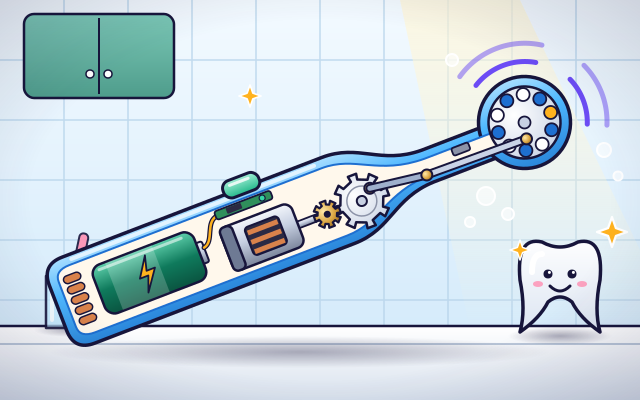 #162
Everyday machines
How does an electric toothbrush move its head?
Follow motor movement into rotating or vibrating brush mechanisms.
#162
Everyday machines
How does an electric toothbrush move its head?
Follow motor movement into rotating or vibrating brush mechanisms.
Keep exploring
Games to play next
- Circuit Workshop 3DWire up batteries, bulbs and switches on a 3D workbench.
- Machine RepairFix levers, pulleys, gears and ramps so every contraption works.
- Clock TowerKeep the town on time: set the tower clock's hands just right.
Guide for grown-ups
- How to start homeschooling: a step-by-step guide for familiesA guide for parents · 7 min read
Science games by grade
Science worksheets by grade
- Preschool Science Worksheets
- Pre-K Science Worksheets
- Kindergarten Science Worksheets
- 1st Grade Science Worksheets
- 2nd Grade Science Worksheets
- 3rd Grade Science Worksheets
- 4th Grade Science Worksheets
- 5th Grade Science Worksheets
- 6th Grade Science Worksheets
- 7th Grade Science Worksheets
- 8th Grade Science Worksheets