How does a hair dryer work?
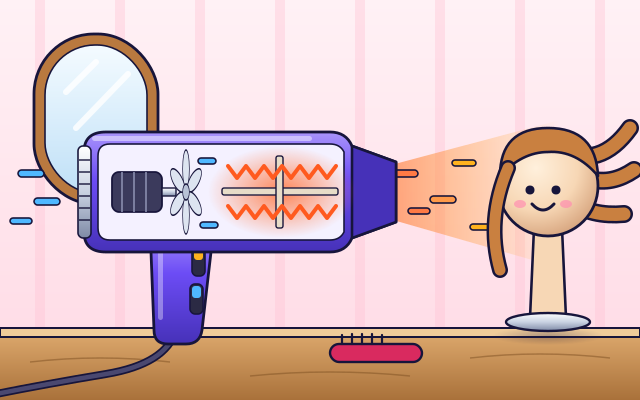
A fan pulls air in at the back, a glowing wire heats it, and the warm wind carries the water out of your hair.
The big idea: A hair dryer does two jobs at once. Its fan makes air move, and its heating wire makes that air warm. Warm, moving air turns the water in wet hair into vapor and carries it away.
It's like washing on a clothesline. It dries fastest on a warm, windy day. A hair dryer makes its own warm wind and points it right at your hair.
The interactive parts didn't load. The explanations below still work; try reloading the page.
Fan plus heater equals dry hair
- This practice head has wet hair. Left alone, the water slowly turns into vapor and drifts away, but that can take an hour or more. How can we speed it up?
- Inside the dryer, a small electric motor spins a fan. The fan pulls room air in through the grille at the back and pushes it down the barrel and out of the nozzle.
- Next, the air rushes past a long coil of special wire. Electricity makes the wire glow hot, and the air picks up that heat on its way through. Out comes a warm wind.
- Warm air can hold much more water vapor than cool air, and moving air sweeps the damp air away. Together they pull the water out of the hair in minutes.
- If the back gets covered, almost no air flows, and the wire would get much too hot. A safety switch feels the heat and switches the wire off until it has cooled down.
Look inside a hair dryer
Follow the air from the back to the front. Tap each part it passes.
- Intake grille. Air enters through this grille at the back. Its fine mesh stops hair and fluff from being sucked onto the hot wire.
- Electric motor. A small electric motor turns the fan. It uses only a little of the dryer's electricity. Most goes to the heater.
- Fan. The fan's tilted blades push air down the barrel, the same way a ceiling fan pushes air down into a room.
- Heating element. This zigzag wire is the heater. Electricity has to push hard to get through it, and that makes the wire hot, like the wires in a toaster.
- Safety switch. A small strip of metal sits in the hot air. If the air gets too hot, the strip bends and breaks the circuit, so the heater switches off.
- Nozzle. The nozzle squeezes the air into a narrow, fast stream, so you can aim it where you want.
- Heat and fan switches. One switch chooses how fast the fan spins. The other chooses how much of the heating wire is switched on.
Airflow, heat and drying
Choose the fan speed and the heat, and drag the dryer nearer or farther. Time how long the hair takes to dry, then wet it and try again.
Experiment: Which air dries wet hair fastest?
- Dry the hair with the fan on High and the heat on Cool. Note the time.
- Wet the hair again. Now use High and Hot.
- Wet it once more and try Low and Hot. Read the air at the hair.
What we found: Hot air moving fast wins. Moving air on its own does dry hair, but slowly. Heat on its own is not enough either: slow air gets very hot, which is bad for hair, and it carries less water away. The best drying needs both a strong flow and warmth.
Turn on JavaScript to try it yourself.
Quick but not too hot
Dry the thick hair as fast as you can, but keep the air at the hair at 60 °C or less. For 3 stars, finish in 11 seconds.
A fan, a hot wire and a safety switch
Wet hair dries when the water on it turns into an invisible gas called water vapor and floats away. This is called evaporation. It happens by itself, but slowly, because the air around the hair soon fills up with vapor and has no room for more.
A hair dryer speeds things up in two ways. First, a fan pulls air in at the back and blows it out of the front. Moving air sweeps the damp air away from the hair and brings fresh, dry air. Second, the air passes a long coil of wire that electricity makes very hot. Warm air can hold much more water vapor than cool air, and the warmth helps the water turn into vapor.
Here is a surprise: slower air comes out hotter. The wire makes the same heat either way, so when less air goes past, each bit of air takes more heat. That is why hair dryers must never have their back covered, and why they contain a safety switch that turns the heater off if the air gets too hot.
Hair dryers use a lot of electricity, about as much as a hundred LED light bulbs, so they are only for short jobs. They must never be used near a bath or a sink full of water, and children use them with a grown-up. A clothesline on a warm, windy day works the same way, except that a hair dryer makes its own wind and its own warmth.
Key words
- Evaporation
- Liquid water turning into water vapor, an invisible gas, and mixing into the air.
- Heating element
- A wire that gets hot when electricity flows through it.
- Resistance
- How hard it is for electricity to flow through something. Pushing electricity through a high resistance makes heat.
- Bimetal strip
- Two different metals joined together. It bends when it warms up, so it can work a switch.
- Airflow
- How much air passes each second.
Check your thinking
-
What are the two main jobs inside a hair dryer?
Show the answer
A fan moves the air and a hot wire warms it. Moving air and warmth together dry hair quickly.
-
Why does warm, moving air dry hair faster than still air?
Show the answer
Warm air can hold more water vapor, and moving air carries the damp air away. Both things help evaporation: warmth lets the air take up more vapor, and the flow keeps bringing fresh air.
-
With the heat on Hot, what happens to the air when the fan slows down?
Show the answer
It comes out hotter. The same heat goes into less air, so each bit of air gets hotter.
-
Why must the back of a hair dryer never be covered?
Show the answer
Too little air gets in, so the wire and the air get much too hot. The heater needs a steady stream of air to carry its heat away.
-
Why is the air cooler when it reaches your hair than when it leaves the nozzle?
Show the answer
It mixes with the cooler air in the room on the way. The hot jet stirs into the room's air and shares its heat.
You're a Everyday machines expert!
You watched, looked inside, tried it, solved the challenge and went deeper. Pick another question below, or switch the age at the top to see this topic another way.
More about everyday machines
 #146
Everyday machines
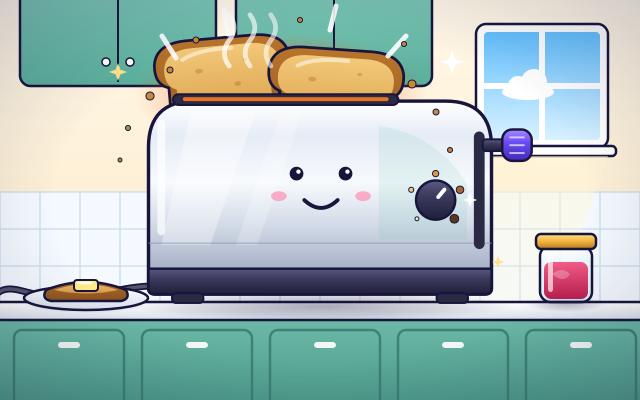
How does a toaster brown bread?
Watch heating elements warm bread and control browning with a virtual timer.
#146
Everyday machines
How does a toaster brown bread?
Watch heating elements warm bread and control browning with a virtual timer.
 #147
Everyday machines
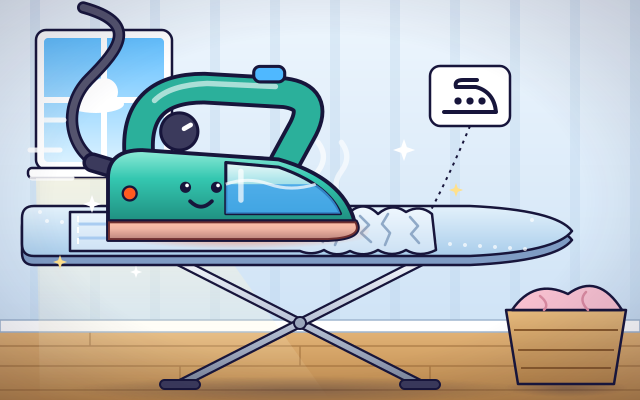
How does an iron remove wrinkles?
Explore how heat, moisture, and pressure change the arrangement of fabric fibers.
#147
Everyday machines
How does an iron remove wrinkles?
Explore how heat, moisture, and pressure change the arrangement of fabric fibers.
 #148
Everyday machines
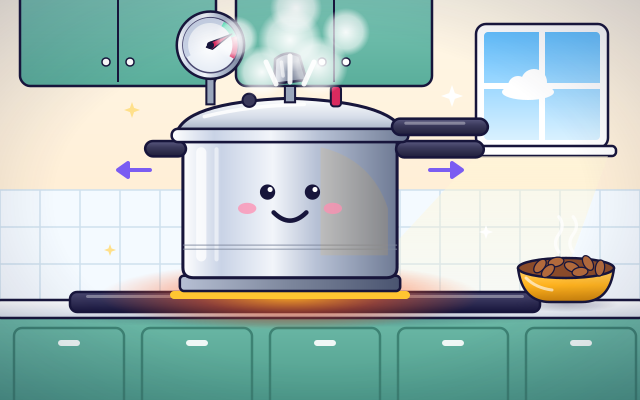
How does a pressure cooker cook food?
Watch pressure, temperature, and the valve in a simplified sealed-pot simulation.
#148
Everyday machines
How does a pressure cooker cook food?
Watch pressure, temperature, and the valve in a simplified sealed-pot simulation.
 #149
Everyday machines
How does an electric kettle switch itself off?
Follow steam to a switching mechanism and watch the heating circuit disconnect.
#149
Everyday machines
How does an electric kettle switch itself off?
Follow steam to a switching mechanism and watch the heating circuit disconnect.
Keep exploring
Games to play next
- Circuit Workshop 3DWire up batteries, bulbs and switches on a 3D workbench.
- Machine RepairFix levers, pulleys, gears and ramps so every contraption works.
- Clock TowerKeep the town on time: set the tower clock's hands just right.
Guide for grown-ups
- How to start homeschooling: a step-by-step guide for familiesA guide for parents · 7 min read
Science games by grade
Science worksheets by grade
- Preschool Science Worksheets
- Pre-K Science Worksheets
- Kindergarten Science Worksheets
- 1st Grade Science Worksheets
- 2nd Grade Science Worksheets
- 3rd Grade Science Worksheets
- 4th Grade Science Worksheets
- 5th Grade Science Worksheets
- 6th Grade Science Worksheets
- 7th Grade Science Worksheets
- 8th Grade Science Worksheets