How does air pollution form and spread?
Burning things puts gases and tiny particles into the air. Wind spreads them, sunlight changes them, and still air traps them. Cleaner machines make less.
The big idea: Air pollution is gases and tiny particles, mostly from burning fuel. Wind thins it out and carries it away, but calm air under a warm lid lets it build up.
It's like a drop of food coloring in water. Stirring spreads it until you can hardly see it, but it only truly goes when less is dripped in.
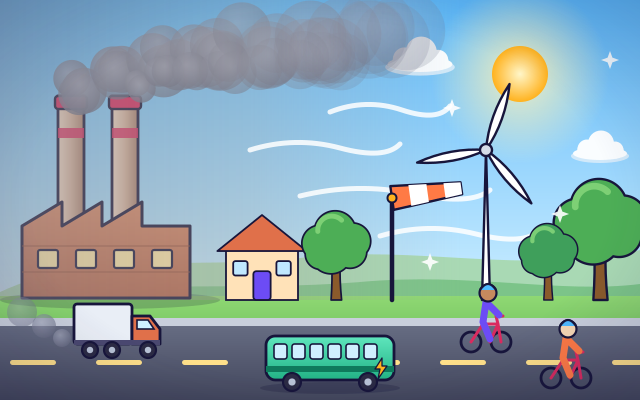
The interactive parts didn't load. The explanations below still work; try reloading the page.
How air gets dirty and clean again
- Some mornings the far hills look faded, as if someone drew a gray curtain. That haze is air pollution: things mixed into the air that should not be there.
- Most air pollution comes from burning: fuel in engines, coal or gas in factories and power plants, wood in stoves. Dust and wildfire smoke add some too.
- Zoom in. Smoke is tiny solid specks, many times thinner than a hair, so light that they float for days. Mixed in are gases you cannot see at all.
- When the wind picks up, it stretches the smoke into a long, thin plume and mixes it with lots of clean air. The haze fades here, though the smoke is carried somewhere downwind.
- Sunlight can change pollution. On hot, bright afternoons it makes exhaust gases react and form a new gas called ozone, the main part of brownish summer smog.
- On calm, cold nights a layer of warm air can settle above the town like a lid on a pot. Smoke rises, hits the lid, spreads out sideways and builds up.
- The best fix is to make less in the first place. Filters catch soot in chimneys, electric buses and bikes replace exhaust pipes, and clean heating replaces smoky stoves. Many cities have much cleaner air than they did fifty years ago.
What is in the air over a town?
Tap each thing in the town to see how it adds to, moves or measures the pollution.
- Factory chimney. Factories and power plants burn fuel and send smoke up tall chimneys. A filter inside the chimney can catch most of the soot.
- Car exhaust. Engines burn fuel and push the leftover gases out of the exhaust pipe, right at street level where people breathe.
- Tiny particles. Soot and dust particles are so small that thousands could sit on a pinhead. Together they make the air look hazy.
- Invisible gases. Burning also makes gases such as nitrogen dioxide. You cannot see them one by one, but lots of it makes the air look brownish.
- Sun-made smog. Strong sunlight makes exhaust gases react and form ozone. Near the ground, ozone is a pollutant. High up in the sky, it is a helpful sunscreen for the planet.
- Wind. The windsock shows the wind. Stronger wind mixes smoke into more clean air, so the town's air is clearer.
- Warm-air lid. Sometimes warm air sits above cold air and stops smoke from rising. The pollution is trapped underneath until the weather changes.
- Air quality monitor. An air monitor measures the pollution all day. Its color code tells people when the air is clean and when to take it easy outdoors.
Model town: wind and smoke
Drag the windsock to change the wind, and tap the factory, the cars and the house to clean them up. What makes the haze over the town thin out?
Experiment: The town makes the same smoke all day. What happens to the haze when the wind gets stronger?
- Leave everything smoky. Drag the windsock down so the air is calm, and watch the sky.
- Now drag it up so the wind is strong.
- Where did the smoke go? Then try cleaning a source instead.
What we found: Strong wind thins the haze: it mixes the smoke into far more clean air and carries it away. But the smoke still exists and drifts over someone else. Cleaning the source is the only change that makes less pollution.
Turn on JavaScript to try it yourself.
Clean air for sports day
It is a calm day and the wind blows gently toward the school. You may clean up three sources. Get the school's air monitor to green, then press Check the air.
What makes air dirty, and what cleans it
Clean air is mostly two invisible gases, nitrogen and oxygen. Air pollution is anything extra that can harm living things or spoil the view. Most of it comes from burning: gasoline and diesel in engines, coal and gas in power plants, wood in stoves and fires. Burning makes gases, and it makes soot, which is tiny specks of unburned carbon.
The specks are so small that they do not fall. They drift wherever the air goes. On a windy day the smoke from a chimney is stretched out and mixed with lots of clean air, so there is very little in each breath. On a still day it hangs around. If warm air sits on top of cold air, it acts like a lid and the pollution builds up underneath until the weather changes.
Sunshine adds a twist. Strong sunlight makes some exhaust gases react and form ozone, a gas that stings eyes and lungs. That is why smog warnings often come on hot summer afternoons. On such days people may be asked to drive less and to take it easy outdoors.
Here is the good news. Wind only moves pollution, but people can stop making it. Filters in chimneys, cleaner engines, electric buses, trains, bikes and clean energy all cut it at the source. Cities that passed clean-air laws now have far cleaner air than they did when your grandparents were children.
Key words
- Particulate matter
- Tiny solid specks or droplets floating in the air, such as soot and dust.
- Emission
- Something released into the air, such as smoke from a chimney or gas from an exhaust pipe.
- Smog
- Dirty, hazy air over a town. The word mixes 'smoke' and 'fog'.
- Ozone
- A gas made of oxygen. High in the sky it protects us from the Sun; near the ground it is a pollutant.
- Inversion
- Warm air sitting on top of cold air, like a lid that traps pollution.
- Downwind
- In the direction the wind is blowing toward.
Check your thinking
-
Why is the air over a town usually cleaner on a windy day?
Show the answer
Wind mixes the smoke with lots of clean air and carries it away. The same smoke is spread through much more air, so each breath holds less of it.
-
Which change makes less pollution, instead of just moving it?
Show the answer
Swapping a diesel bus for an electric bus. Wind and tall chimneys only spread pollution out. An electric bus has no exhaust pipe at all.
-
On a calm, cold night smoke hangs low over a valley town. What is holding it down?
Show the answer
A lid of warmer air above it. Warm air above cold air stops the smoke from rising, so it spreads out underneath and builds up.
-
A school is east of a factory. On which day does the factory's smoke reach the school?
Show the answer
When the wind blows from the west toward the east. Wind carries smoke downwind. A west wind blows from the factory toward the school.
-
How big is a speck of fine soot?
Show the answer
Many times thinner than a hair. Fine soot is far too small to see one speck at a time. That is why it floats for days.
You're a Earth & weather expert!
You watched, looked inside, tried it, solved the challenge and went deeper. Pick another question below, or switch the age at the top to see this topic another way.
More about earth & weather
 #469
Earth & weather
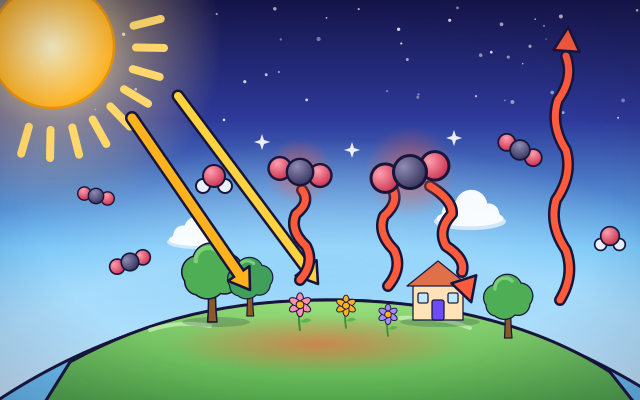
How do greenhouse gases warm the planet?
Compare incoming sunlight and outgoing heat in a simplified atmospheric model.
#469
Earth & weather
How do greenhouse gases warm the planet?
Compare incoming sunlight and outgoing heat in a simplified atmospheric model.
 #470
Earth & weather
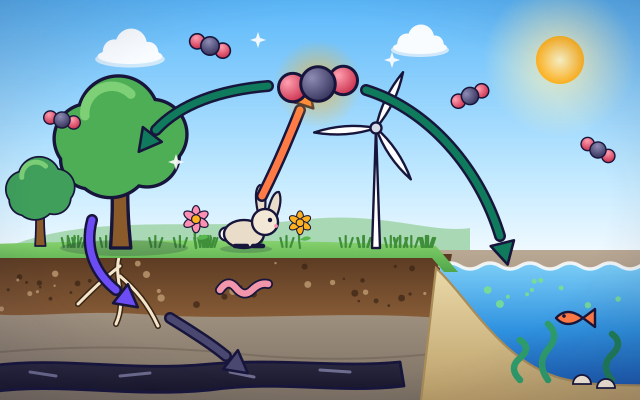
How does carbon move through the environment?
Follow carbon between air, plants, animals, soil, oceans, and fuels.
#470
Earth & weather
How does carbon move through the environment?
Follow carbon between air, plants, animals, soil, oceans, and fuels.
 #69
Earth & weather
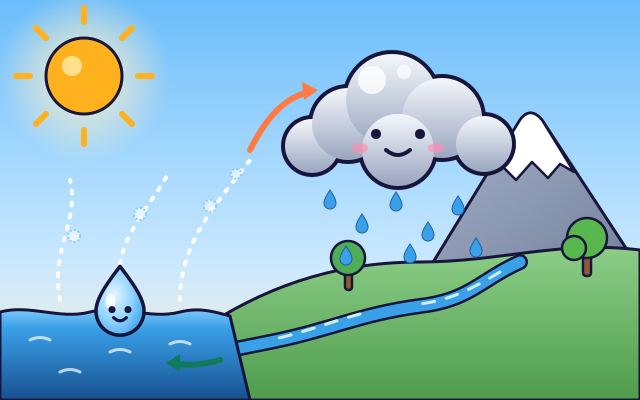
How do clouds form, and why does it rain?
Follow a water droplet through evaporation, condensation, rainfall, and its return to rivers or oceans. Change conditions in a simple water-cycle simulation.
#69
Earth & weather
How do clouds form, and why does it rain?
Follow a water droplet through evaporation, condensation, rainfall, and its return to rivers or oceans. Change conditions in a simple water-cycle simulation.
 #70
Earth & weather
How do rainbows form?
Position sunlight, water droplets, and an observer. Follow light as it bends and reflects, and explore why different colors appear at different angles.
#70
Earth & weather
How do rainbows form?
Position sunlight, water droplets, and an observer. Follow light as it bends and reflects, and explore why different colors appear at different angles.
Keep exploring
Games to play next
- River MysterySomething changed the river. Sample sites with a limited budget, follow the evidence and find where the change begins.
- Weather LabPredict the weather in a box, then run a fair test to find out why.
- Landform ExplorerMountains, valleys, peninsulas and deltas — learn the shapes of the land and find them on Earth.
Guide for grown-ups
- How to start homeschooling: a step-by-step guide for familiesA guide for parents · 7 min read
Science games by grade
Science worksheets by grade
- Preschool Science Worksheets
- Pre-K Science Worksheets
- Kindergarten Science Worksheets
- 1st Grade Science Worksheets
- 2nd Grade Science Worksheets
- 3rd Grade Science Worksheets
- 4th Grade Science Worksheets
- 5th Grade Science Worksheets
- 6th Grade Science Worksheets
- 7th Grade Science Worksheets
- 8th Grade Science Worksheets