How does carbon move through the environment?
Carbon is the stuff living things are built from. The same carbon atoms travel between air, plants, animals, soil, sea and rock, over and over.
The big idea: Plants take carbon dioxide from the air to build themselves. Animals eat plants and breathe carbon back out. Some carbon gets stored for a long time in soil, sea and underground.
It's like a library book: the same book is borrowed, read and returned again and again. Carbon is borrowed by a leaf, a rabbit, the soil, and returned to the air.
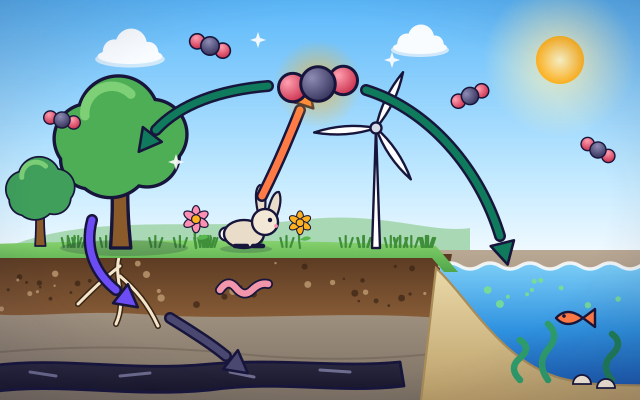
The interactive parts didn't load. The explanations below still work; try reloading the page.
The journey of a carbon atom
- Meet a carbon atom. It is far too small to see. Right now it is in the air, joined to two oxygen atoms. Together they make a gas called carbon dioxide.
- A leaf takes in the carbon dioxide. Using sunlight and water, the plant keeps the carbon to build sugar, leaves and wood, and lets the oxygen go. This is photosynthesis.
- A rabbit eats the plant, so the carbon becomes part of the rabbit. The rabbit uses its food for energy and breathes carbon dioxide back out. You do exactly the same.
- Fallen leaves and dead plants and animals carry carbon into the ground. Fungi, worms and bacteria break them down and breathe most of it back out. The rest stays in the soil.
- Carbon dioxide dissolves in seawater. Tiny floating plants use it, and sea animals build shells from it. When they die, some shells sink and, after ages, turn into rock.
- Hundreds of millions of years ago, swamp forests were buried and slowly became coal, and tiny sea creatures became oil and gas. Burning them sends that carbon back to the air in an instant, much faster than plants and seas can take it up.
- People are helping the cycle back into balance: growing and protecting forests, looking after soil, and making energy from sun and wind so the buried carbon can stay buried.
Where carbon is stored
Carbon is stored in many places. Tap each one to see how carbon gets in and out.
- Air. In the air, carbon is in carbon dioxide gas. There is only a tiny bit, but every plant on land depends on it.
- Plants. Plants take carbon dioxide in through tiny holes in their leaves and use it to grow. A big tree is a tall store of carbon.
- Animals. Animals cannot take carbon from the air. They get it by eating plants, or by eating animals that ate plants, and they breathe it back out.
- Soil. Dead leaves, roots and animals leave carbon in the soil. Tiny living things break them down and slowly breathe it out again.
- Ocean. The sea soaks up carbon dioxide from the air and lets some go again. Sea plants and animals use it, and shells carry it to the deep.
- Coal, oil and gas. Coal, oil and gas are the remains of living things that were buried hundreds of millions of years ago. Their carbon has been locked away ever since.
- Burning. Burning joins carbon to oxygen and makes carbon dioxide. Burning coal, oil or gas moves very old carbon into the air in moments.
Follow a carbon atom
Tap a glowing place to send the carbon atom there. Can you make a quick loop back to the air? Can you find the slowest hiding place?
Experiment: Which path keeps carbon out of the air the longest?
- Send the atom from the air to a plant, to an animal, and back to the air. Read how long each stop lasts.
- Now send it from a plant into the soil and down to the coal.
- Compare the times. Which stop is the longest?
What we found: The loop through a plant and an animal takes only days to years. Soil holds carbon for decades or centuries. Carbon buried as coal stays underground for hundreds of millions of years, unless people dig it up and burn it.
Turn on JavaScript to try it yourself.
Balance the carbon
More carbon is going into the air than coming out. Tap things in the picture to change them, then run 20 years. Stop the air's carbon from rising.
How carbon gets around
Carbon is one of the building blocks of everything alive. Wood, leaves, fur, bones, bread and you are all built around carbon atoms. But nothing makes new carbon. The carbon in your breakfast was in the air not long ago, and before that it may have been in a fish, a fern or a dinosaur.
The fast loop goes like this. A plant takes carbon dioxide from the air and uses sunlight to build it into sugar. An animal eats the plant. Both the plant and the animal use sugar for energy, and that turns the carbon back into carbon dioxide, which they breathe out. When they die, fungi and bacteria finish the job.
There are slow paths too. Some carbon stays in soil for hundreds of years. The sea soaks up a huge amount, and shells that sink to the bottom can turn into rock. Long ago, whole forests were buried and slowly became coal. That carbon stayed underground for hundreds of millions of years.
Burning coal, oil and gas moves that old carbon into the air much faster than plants and seas can take it out, so the amount in the air is rising. The good news is that people know how to fix this: grow and protect forests, care for soils, and get energy from the sun and wind so the buried carbon can stay where it is.
Key words
- Carbon dioxide
- A gas made of one carbon atom joined to two oxygen atoms. Plants take it in; animals and fires give it out.
- Photosynthesis
- How plants use sunlight to turn carbon dioxide and water into sugar and oxygen.
- Respiration
- How living things get energy from food. It makes carbon dioxide, which is breathed out.
- Decomposer
- A living thing, such as a fungus or bacterium, that breaks down dead plants and animals.
- Fossil fuel
- Coal, oil or natural gas: fuel formed from living things buried hundreds of millions of years ago.
- Carbon store
- A place where carbon stays for a while, such as a forest, the soil or the sea.
Check your thinking
-
Where does a tree get most of the carbon in its wood?
Show the answer
From carbon dioxide in the air. Leaves take in carbon dioxide and the plant builds it into sugar and wood. The soil supplies water and minerals.
-
How does carbon in a rabbit get back to the air?
Show the answer
The rabbit breathes it out as carbon dioxide. Animals use food for energy. That joins carbon to oxygen, and they breathe the carbon dioxide out.
-
Which of these stores carbon for the longest time?
Show the answer
Coal deep underground. Coal has held its carbon for hundreds of millions of years. Grass and rabbits hold theirs for months or a few years.
-
Which of these helps bring the carbon cycle back into balance?
Show the answer
Protecting forests and using energy from sun and wind. Forests take carbon out of the air, and clean energy leaves buried carbon underground. A taller chimney only spreads the gas.
-
About how much of the carbon dioxide people emit is taken up by land and ocean together?
Show the answer
A little over half. Land plants and the ocean each absorb roughly a quarter to a third; the rest accumulates in the atmosphere.
You're a Earth & weather expert!
You watched, looked inside, tried it, solved the challenge and went deeper. Pick another question below, or switch the age at the top to see this topic another way.
More about earth & weather
 #69
Earth & weather
How do clouds form, and why does it rain?
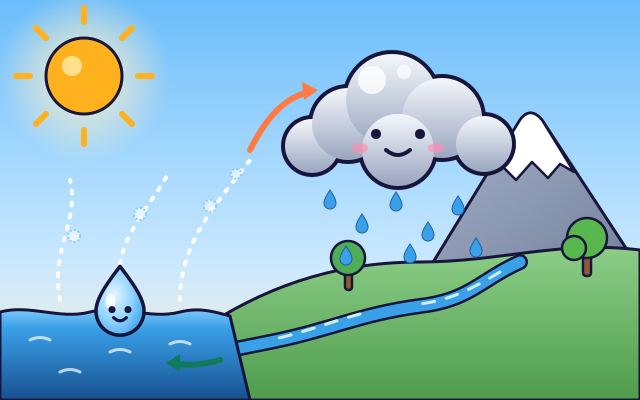
Follow a water droplet through evaporation, condensation, rainfall, and its return to rivers or oceans. Change conditions in a simple water-cycle simulation.
#69
Earth & weather
How do clouds form, and why does it rain?
Follow a water droplet through evaporation, condensation, rainfall, and its return to rivers or oceans. Change conditions in a simple water-cycle simulation.
 #70
Earth & weather
How do rainbows form?
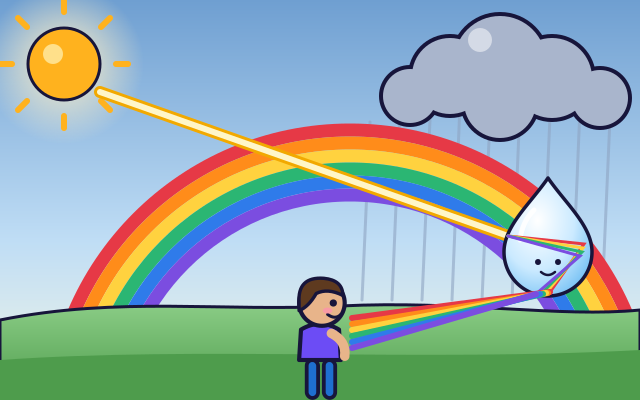
Position sunlight, water droplets, and an observer. Follow light as it bends and reflects, and explore why different colors appear at different angles.
#70
Earth & weather
How do rainbows form?
Position sunlight, water droplets, and an observer. Follow light as it bends and reflects, and explore why different colors appear at different angles.
 #71
Earth & weather
How do lightning and thunder happen?
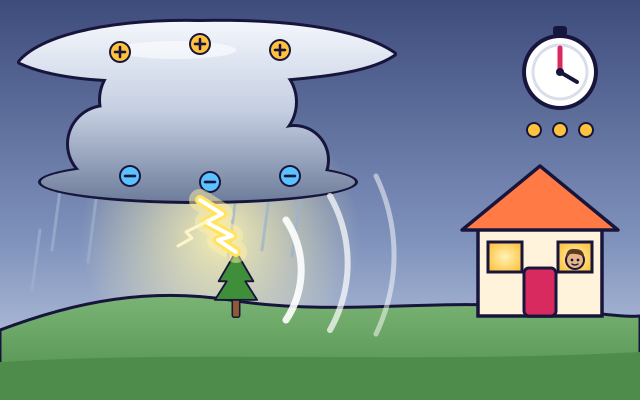
Explore a simplified storm cloud and the buildup of electrical charge. Compare when a flash is seen and its thunder is heard at different distances.
#71
Earth & weather
How do lightning and thunder happen?
Explore a simplified storm cloud and the buildup of electrical charge. Compare when a flash is seen and its thunder is heard at different distances.
 #72
Earth & weather
How do volcanoes erupt?
Look beneath a volcano and follow magma, gases, and pressure in a simplified model. Compare different volcano shapes and eruption styles.
#72
Earth & weather
How do volcanoes erupt?
Look beneath a volcano and follow magma, gases, and pressure in a simplified model. Compare different volcano shapes and eruption styles.
Keep exploring
Games to play next
- Globe ExplorerSpin a real 3D globe, flip to the flat map, and find continents, oceans and countries.
- Weather LabPredict the weather in a box, then run a fair test to find out why.
- Landform ExplorerMountains, valleys, peninsulas and deltas — learn the shapes of the land and find them on Earth.
Guide for grown-ups
- How to start homeschooling: a step-by-step guide for familiesA guide for parents · 7 min read
Science games by grade
Science worksheets by grade
- Preschool Science Worksheets
- Pre-K Science Worksheets
- Kindergarten Science Worksheets
- 1st Grade Science Worksheets
- 2nd Grade Science Worksheets
- 3rd Grade Science Worksheets
- 4th Grade Science Worksheets
- 5th Grade Science Worksheets
- 6th Grade Science Worksheets
- 7th Grade Science Worksheets
- 8th Grade Science Worksheets