How do clouds form, and why does it rain?
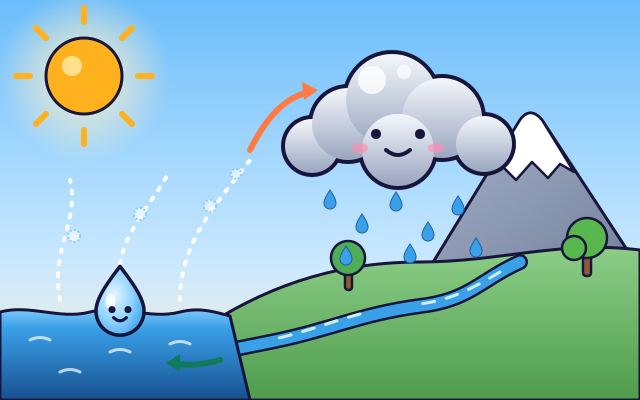
Follow one drop of water from the sea, up into a cloud, down as rain and back again.
The big idea: The sun turns water into an invisible gas called water vapor. Rising air cools, the vapor turns back into tiny droplets that make a cloud, and when the droplets grow heavy they fall as rain.
It's like
The interactive parts didn't load. The explanations below still work; try reloading the page.
The journey of a water drop
- Meet Dewy, a drop of water in the sea. Every day the sun shines on the ocean and warms the water near the top.
- Warm water molecules move fast. Some escape from the surface and float into the air as water vapor, an invisible gas. This is called evaporation.
- As the air rises it cools down. Cold air can't hold as much vapor, so the vapor turns back into tiny droplets around specks of dust or sea salt. This is condensation.
- Billions of tiny droplets together make a cloud. Inside, droplets bump into each other and join up, growing bigger and bigger. The cloud turns gray.
- When droplets get too heavy for the rising air to hold up, they fall as rain. It takes about a million cloud droplets to make one raindrop! If it is cold enough, they fall as snow.
- Rain runs downhill into streams and rivers, and some soaks into the ground. The rivers carry the water back to the sea, and the trip starts all over again. That's the water cycle!
Explore the water cycle
Tap each part of the water cycle. Watch what the water does there!
- The sun. The sun powers the whole water cycle. Its heat gives water the energy to evaporate and makes air rise.
- Ocean and evaporation. The ocean holds almost all of Earth's water. Warm water at the top evaporates and becomes invisible water vapor in the air.
- Water vapor. Water vapor is water as a gas. You can't see it, but it is in the air around you right now.
- Cloud and condensation. Rising air cools. Vapor turns back into tiny liquid droplets around specks of dust or salt. Billions of them make a cloud.
- Rain. Cloud droplets bump together and grow. When they are too heavy to float, they fall as rain.
- Snow on the mountain. High on the mountain it is cold, so water falls as snow. The snow is stored there until warm weather melts it into streams.
- River (runoff). Water always flows downhill. Rain that runs over the ground gathers in streams and rivers that carry it back to the sea.
- Groundwater. Some rain soaks into the soil and trickles down between rocks. This groundwater moves slowly and can fill wells and springs.
- Plants (transpiration). Plants pull water up from the ground. Some escapes from tiny holes in their leaves as vapor. This is called transpiration.
Water cycle lab
Turn the sun up and down. Watch the invisible vapor rise, the cloud grow and the rain fall. Follow Dewy all the way around!
Experiment: What happens to the clouds and the rain when the sun shines hotter on the sea?
- Turn the sun down low and watch for a while.
- Now turn the sun up high.
- Watch how fast the vapor rises, how big the cloud grows and when it rains.
What we found: A hotter sun warms the water more, so more water evaporates. More vapor rises, cools and condenses, so the cloud grows bigger and heavier until it rains. With a cool sun, only a little water evaporates and the cloud stays small and dry.
Turn on JavaScript to try it yourself.
Rain on the farm, not the picnic
Fill the cloud over the sea, then blow it over the farm so the crops get rain. Keep the picnic dry!
How clouds turn into rain
Water can be a solid (ice), a liquid (water) or a gas (water vapor). When the sun warms the sea, lakes or even a puddle, some of the water turns into vapor and mixes into the air. You can't see vapor, but it is all around you.
Warm air rises. As it goes up, it spreads out and cools. Cool air can't hold as much vapor, so some of the vapor turns back into liquid. It forms tiny droplets around specks of dust, smoke or sea salt. Billions of these droplets together make a cloud.
Cloud droplets are so small that rising air keeps them floating. Inside the cloud they bump into each other and join together. When a drop gets big and heavy enough, it falls. That is rain! In cold weather the water falls as snow, sleet or hail instead.
The rain soaks into the ground, waters plants or runs into rivers that carry it back to the sea. Then the sun warms it again. The same water has been going around this cycle for billions of years, so the water you drink may once have been in a dinosaur's puddle!
Key words
- Evaporation
- When liquid water turns into an invisible gas called water vapor.
- Condensation
- When water vapor cools and turns back into tiny liquid droplets.
- Precipitation
- Water falling from clouds as rain, snow, sleet or hail.
- Dew point
- The temperature at which air is so full of vapor that droplets start to form.
- Runoff
- Rainwater that flows over the ground into streams and rivers.
- Humidity
- How much water vapor is in the air.
Check your thinking
-
What gives water the energy to evaporate from the sea?
Show the answer
Heat from the sun. The sun's heat gives water molecules enough energy to escape into the air.
-
What is a cloud made of?
Show the answer
Billions of tiny water droplets or ice crystals. A cloud is made of tiny liquid droplets or ice crystals. Vapor itself is invisible.
-
Why does rising air make clouds?
Show the answer
It cools down, and cool air can't hold as much vapor. Air cools as it rises. Cooler air can't hold as much vapor, so droplets form.
-
Air at the ground is 24 °C with a dew point of 16 °C. About how high is the cloud base?
Show the answer
About 1,000 m. The difference is 8 °C, and 8 × 125 m = 1,000 m.
-
Where does most rainwater end up after it runs into rivers?
Show the answer
Back in the ocean. Rivers carry the water back to the ocean, ready to evaporate again.
-
Why does it take a while for a cloud to rain?
Show the answer
Tiny droplets must bump and join until they are heavy enough to fall. Cloud droplets are too small to fall. They have to grow much bigger first.
You're a Earth & weather expert!
You watched, looked inside, tried it, solved the challenge and went deeper. Pick another question below, or switch the age at the top to see this topic another way.
More about earth & weather
 #70
Earth & weather
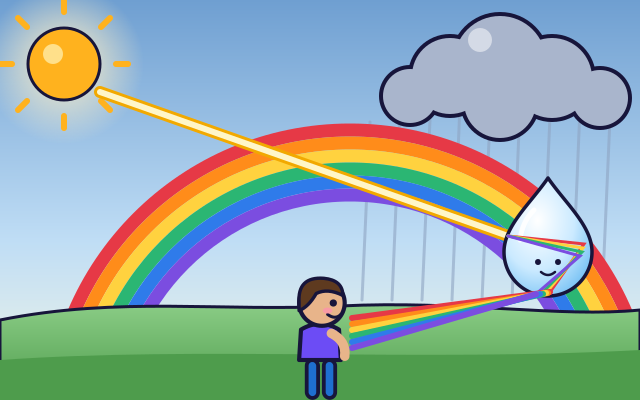
How do rainbows form?
Position sunlight, water droplets, and an observer. Follow light as it bends and reflects, and explore why different colors appear at different angles.
#70
Earth & weather
How do rainbows form?
Position sunlight, water droplets, and an observer. Follow light as it bends and reflects, and explore why different colors appear at different angles.
 #71
Earth & weather
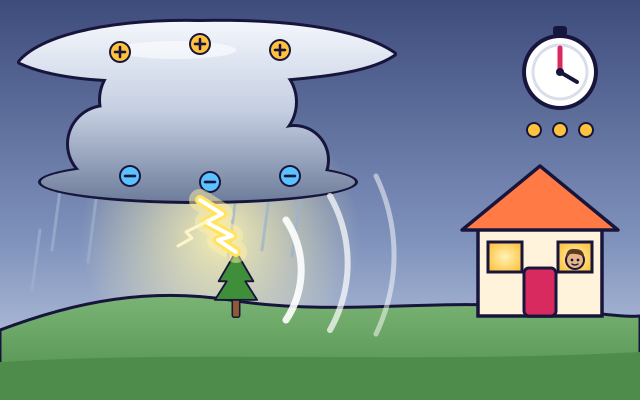
How do lightning and thunder happen?
Explore a simplified storm cloud and the buildup of electrical charge. Compare when a flash is seen and its thunder is heard at different distances.
#71
Earth & weather
How do lightning and thunder happen?
Explore a simplified storm cloud and the buildup of electrical charge. Compare when a flash is seen and its thunder is heard at different distances.
 #72
Earth & weather
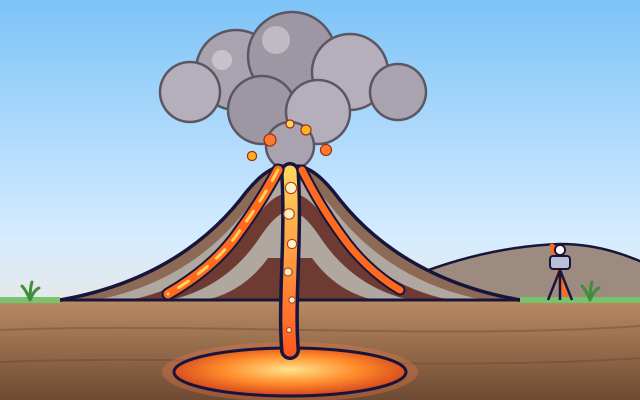
How do volcanoes erupt?
Look beneath a volcano and follow magma, gases, and pressure in a simplified model. Compare different volcano shapes and eruption styles.
#72
Earth & weather
How do volcanoes erupt?
Look beneath a volcano and follow magma, gases, and pressure in a simplified model. Compare different volcano shapes and eruption styles.
 #73
Earth & weather
How do earthquakes happen?
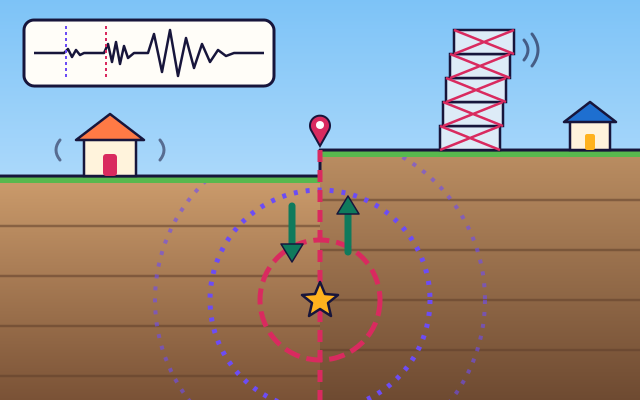
Move sections of Earth's crust, watch a fault slip, and follow earthquake waves. Compare how different model buildings respond to shaking.
#73
Earth & weather
How do earthquakes happen?
Move sections of Earth's crust, watch a fault slip, and follow earthquake waves. Compare how different model buildings respond to shaking.
Keep exploring
Games to play next
- Weather LabPredict the weather in a box, then run a fair test to find out why.
- River MysterySomething changed the river. Sample sites with a limited budget, follow the evidence and find where the change begins.
- Landform ExplorerMountains, valleys, peninsulas and deltas — learn the shapes of the land and find them on Earth.
Draw it or make it
- How to draw a cloudDrawing lesson
Guide for grown-ups
- How to start homeschooling: a step-by-step guide for familiesA guide for parents · 7 min read
Science games by grade
Science worksheets by grade
- Preschool Science Worksheets
- Pre-K Science Worksheets
- Kindergarten Science Worksheets
- 1st Grade Science Worksheets
- 2nd Grade Science Worksheets
- 3rd Grade Science Worksheets
- 4th Grade Science Worksheets
- 5th Grade Science Worksheets
- 6th Grade Science Worksheets
- 7th Grade Science Worksheets
- 8th Grade Science Worksheets